
Why Atlanta creatives debate its status as the arts Black mecca

Atlanta has a burgeoning Black arts scene, with creative professionals diving in multiple visual and performance avenues.
The strength and visibility of creative professionals in Atlanta have sparked the city’s recognition as a Black mecca for the arts.
Aspiring artists flock to the city to pursue nontraditional lines of work. From theater companies to galleries, artists create community through unique safe havens to share interests in a city that some claim lacks financial support and resources to uplift the cultural soul of Atlanta.
Here, we speak with Black artists who call Atlanta home. Still, they are not shy to speak up on how they feel the city is slipping away from offering a space to foster their talents.
Amena Brown, spoken word artist
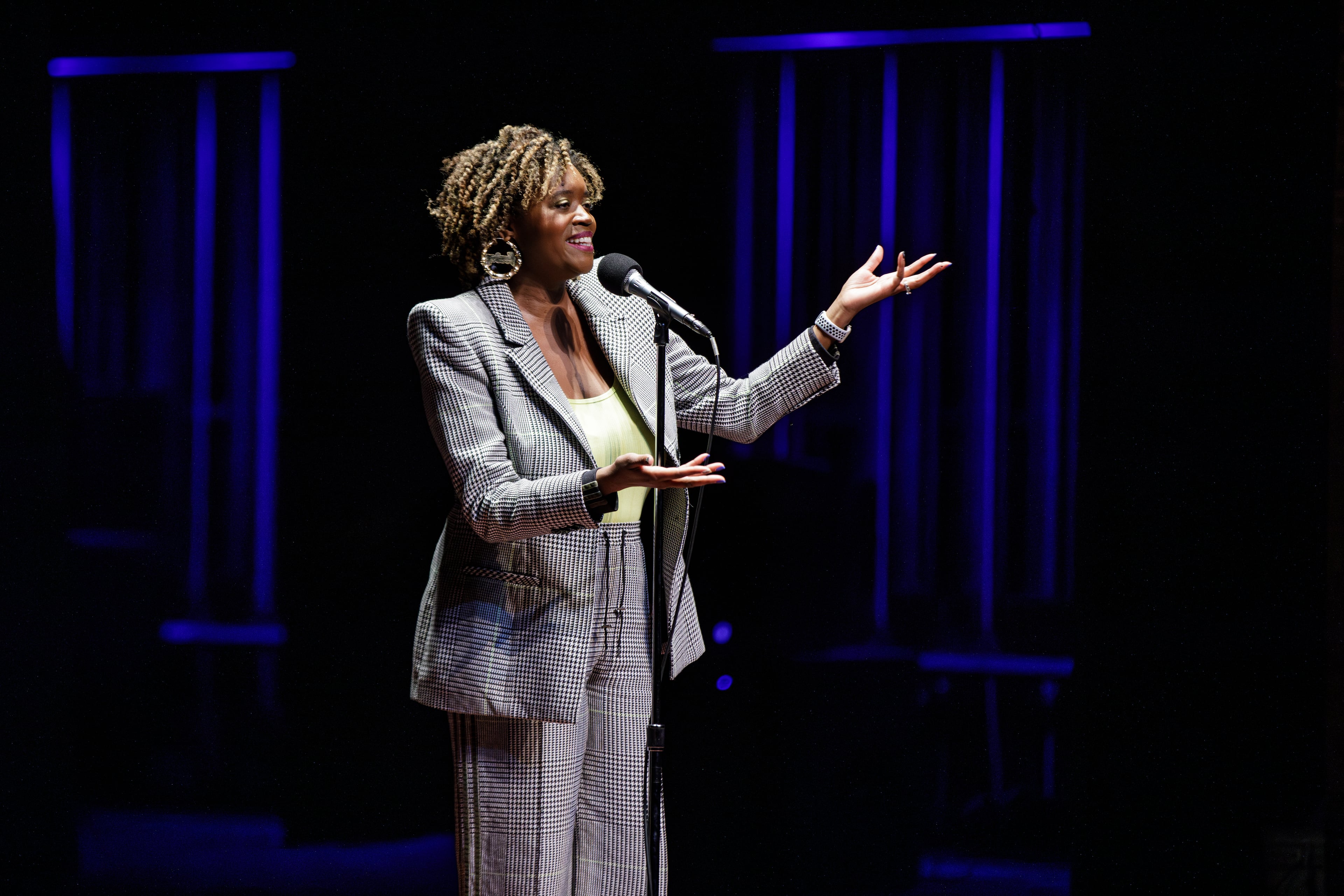
Amena Brown finds she is able to embrace her intersectionality as a poet, rap-lyric enthusiast and church girl.
Growing up in San Antonio, she says felt she had to choose which type of Black girl she wanted to be rather than celebrate her wholeness.
But now, in Atlanta, her life has come together like a mosaic.
“Atlanta brings all the layers,” she said. “Atlanta wants to be bougie; she wants to be hood; she wants to be intellectual; she wants to be ratchet. She wants to be all the things.”
Childhood inspiration came from seeing the names of Black authors in her mother’s library, which included Toni Morrison’s “Beloved.” Though Brown admits not fully understanding the content at the time, she knew she had found something “beautiful.”
“That gave me this impetus of somehow you become a writer whose words get put in a book,” she said.
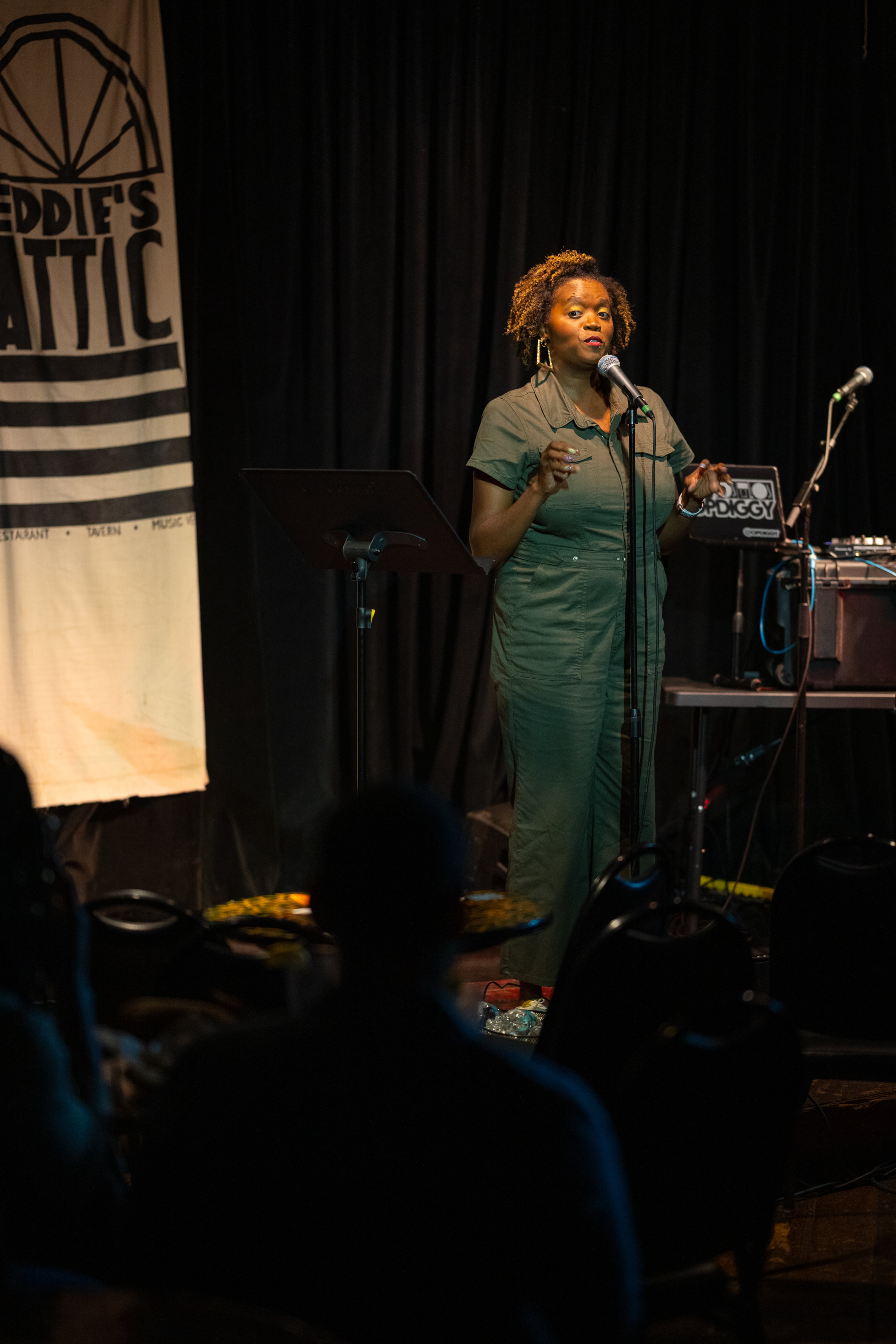
It wasn’t until Brown attended Spelman College that becoming a professional poet was more than just an idea.
Atlanta had a vast open mic scene in the 1990s, and Brown was adamant in participating at off-campus events that she credits for helping to build her artistry.
“I moved here and felt like I really found my people,” she said.
Unlike Brown’s arrival to Atlanta she says the city doesn’t currently have the same enthusiasm and resources for spoken word artistry. Along with metro Atlanta becoming less affordable and losing elements of its local culture, artists pay more to participate in open mic events that are becoming harder to find.
As a solution, she believes artists need to collaborate more in order to create spaces for one another to thrive.
“(Atlanta) is absolutely a Black art mecca city, and I think will remain that,” Brown said. “But the only way we remain that is if artists have a reason to stay. If they don’t have a reason to stay here, then we begin to lose the soul of the city.”
Angela Harris, choreographer

Angela Harris is on a mission to create opportunities for Black ballerinas so they can be represented in a field that has largely focused on Eurocentric aesthetics.
She acknowledges the field contains racist notions and that much of the history has been whitewashed to elevate an exclusionary mindset. However, Harris is adamant about battling the racial implications and teaches about the influence Black Americans have had on ballet, including choreography influenced by jazz and neoclassical dance.
“Black people and Black culture are part of that. You can’t talk about American ballet without talking about Black people,” Harris said.

Being in Atlanta gives her that space to rewrite the narrative.
“Atlanta produces so much talent. How are we not recognized as an arts mecca?” Harris asked.
However, Harris admits Atlanta has its setbacks with ballet’s inaccessibility and the overall lack of artistic funding.
“The arts and culture of Atlanta is what is driving people to invest in Atlanta. If Atlanta wasn’t such a culturally rich city in terms of the experiences that people living here are able to experience, it would be a different city than it is right now,” she said. “I think that side of things is often taken for granted by people who just expect that to be here.”
Originally from Baltimore, Harris came to the Atlanta area over 20 years ago to dance with the Georgia Ballet.
Unlike her early years as the only Black dancer in companies, the students she works with now have peers who look like them. She’s had multiple students who have appeared on Broadway and another who has worked with Spike Lee.

“Atlanta is a really fertile ground for new ideas and innovation,” Harris said. “I don’t think I could have started my company and grown my company anywhere else but Atlanta.”
Fabian Williams, visual artist
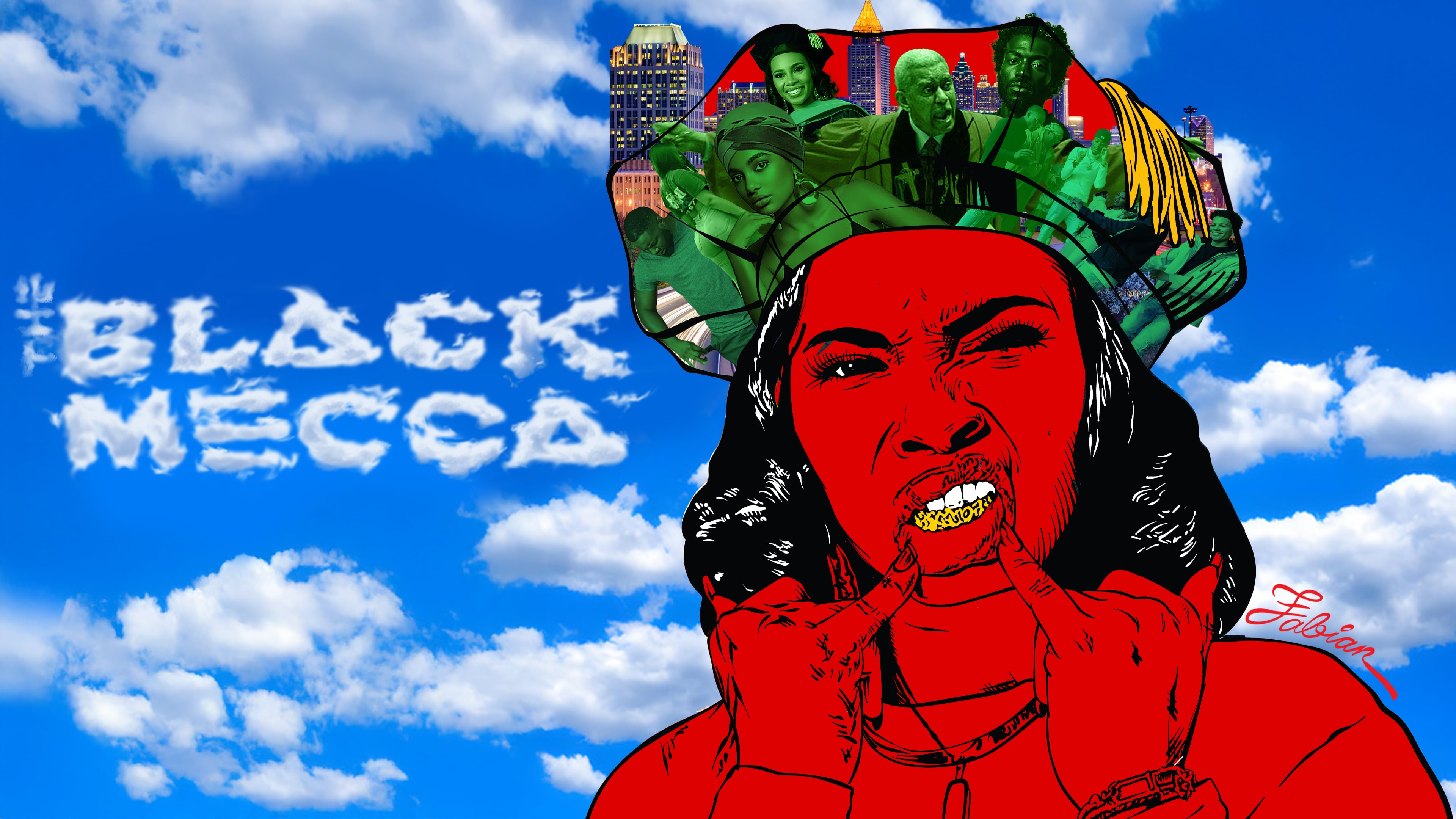
Fabian Williams believes the Rev. Martin Luther King Jr. was an early futurist, in that the civil rights leader envisioned a better world that could have been described as a sort of utopia.
Though much of his previous work has focused on social-political conflicts and major historical moments, Williams, a visual artist, wants to venture into what an alternative America would look like.
“The ‘I Have a Dream’ speech was a version of a positive future,” Williams said. “( King) spoke about (a) harmonious future here on Earth.
Therefore, Williams, who was raised in Fayetteville, North Carolina, says Black Atlanta has been a pioneer in prophesying a utopian America.
However, physical imagery is rarely depicted to remind people to remain hopeful, to provide society with examples of what to expect for a positive future or a guideline of how to prosper.
Williams wants to fill the void and use Atlanta as his canvas.
“I’m imagining a reality that I want to see,” he said. “The idea is that you know reality bends to how you perceive it.”

Despite his creative vision, Williams has noted Atlanta’s issues with financially sustaining the arts community. Claiming there’s never enough resources to craft the city to its potential, he said this will prompt artists to leave and for Atlanta to live in the past. That entire futuristic notion birthed from one of the country’s greatest philosophers will be totally disregarded.
“Atlanta will ride off the legacy of creatives. Nobody is saying Atlanta influences everything because of the highways,” Williams said. “It’s because of the art, because of its creativity. Even down to the dream King came up with was very good, creative.”
Okorie Johnson, instrumentalist

Okorie Johnson says the most significant time of his life as an artist has been in Atlanta, a spiritual haven that allows him to be “weird” without constraints.
“My cultural, my artistic, my spiritual center was here in the city,” Johnson said.
Moving from Washington, D.C., to attend Morehouse College as an English major in 1993, Johnson only brought his cello — an instrument he had been playing since he was 6 years old — so that he could play in an orchestra with other nonmusic majors. However, once he heard a student in his dorm play the rock song “Plush” by Stone Temple Pilots, his outlook as a musician changed. Up until then, he wasn’t used to hearing Black people listening to rock.
The other student noticed Johnson took an interest and invited him to play with his cello.
“I really consider that moment the beginning of my adult life, specifically because all of the important people in my life I would meet as a result of the cello,” Johnson said.

Since rocking out in the dormitory, Johnson has had his own band, grooved with neo-soul musician India. Arie and played with folk artist Doria Roberts.
“The cello really is this spiritual force that just kind of orchestrates things in my life,” Johnson said, adding that Atlanta gives him a spiritual calling.
“Ever since I started trying to be creative here in Atlanta, I have been encouraged and met with positive invitations. It is collaborative in a way that I don’t think other cities are. It is not competitive,” he said.
“In Atlanta, there’s enough space for everybody. At least my experience has been one of not so much the weirder the better, but weird is not a disqualifier.”
Nevaina Graves Rhodes, actress
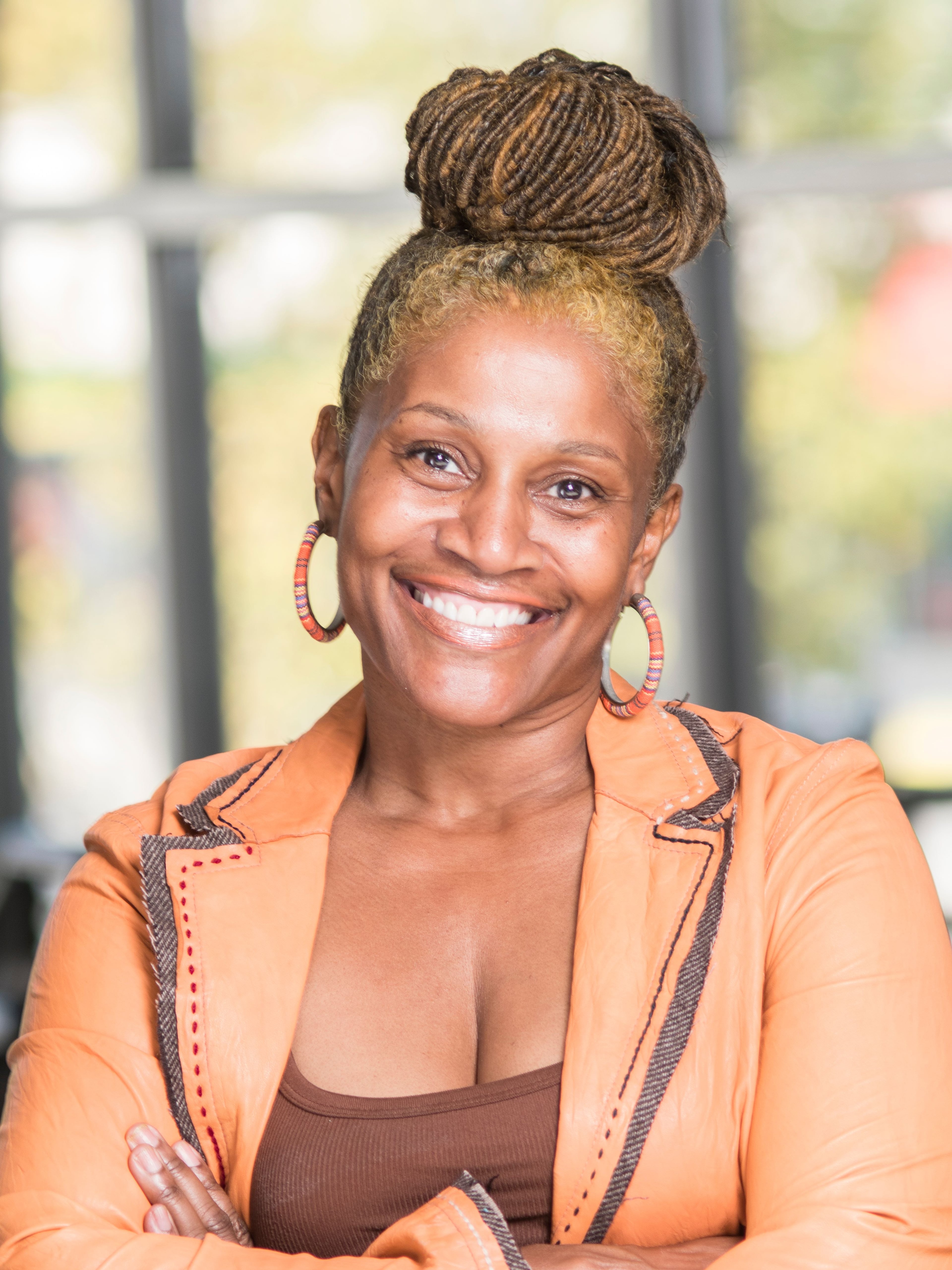
Acting is therapeutic for Winston-Salem, North Carolina, native Nevaina Graves Rhodes. A stage and television actress, Rhodes also directs a drama therapy group, The Soul Spa Experience, as a creative method to help women heal from physical and emotional trauma.
Rhodes moved to Atlanta after graduating from the University of North Carolina at Chapel Hill, landing a teaching job at the Academy Theatre and acting gigs at Horizon Theatre and True Colors Theatre Company.
She has found community within the arts circles of Atlanta, which she says provides more compassion than she’s experienced in L.A.’s film scene.
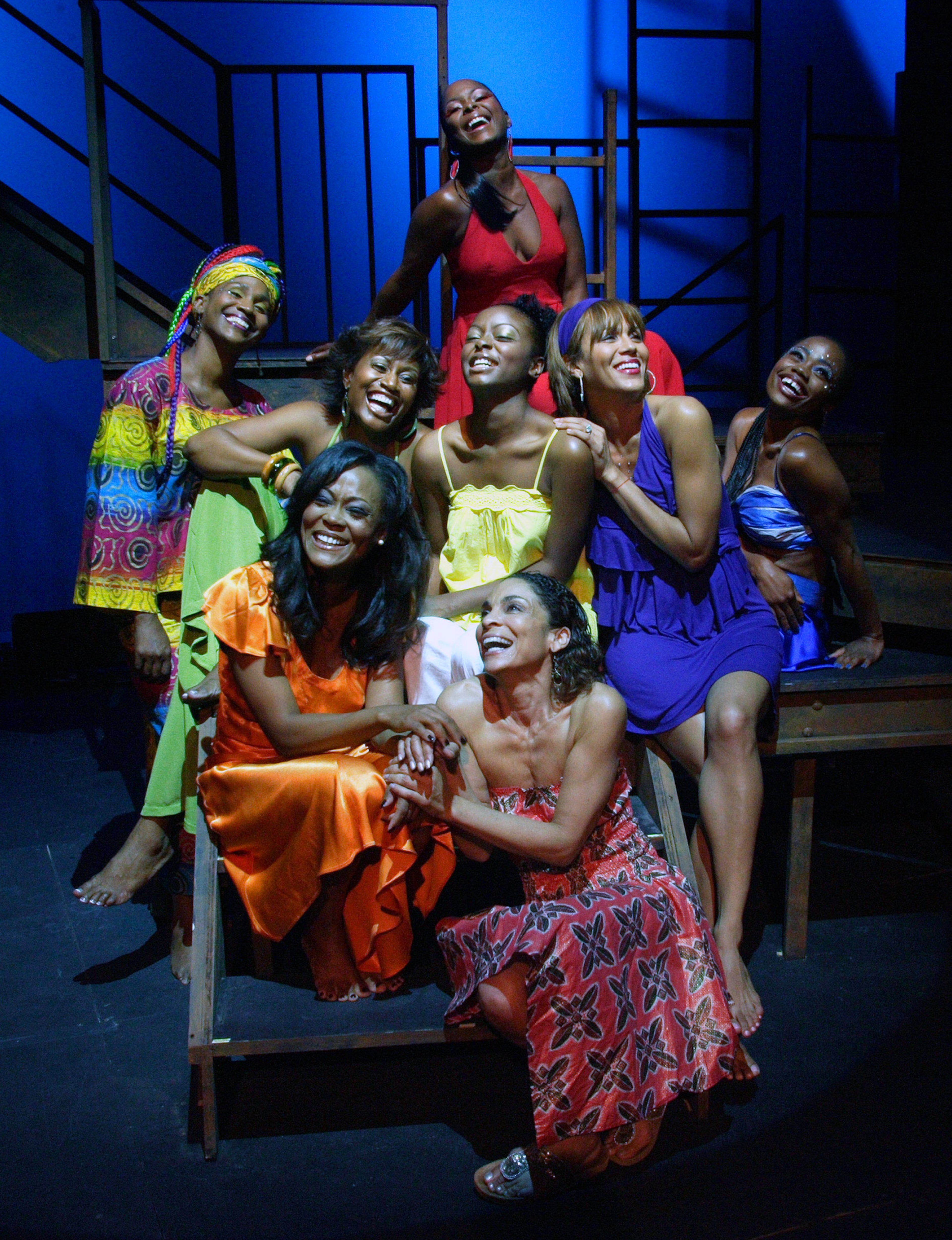
Rhodes felt the energy of the West Coast to be disingenuous and camaraderie between the actors was lacking. Instead, the performers were more interested to know the details of her acting resume more than who she was as a person.
“Being here just allowed me more an authentic experience of who I am,” Rhodes said.
However, she is leery of Atlanta losing the integrity that she grew to love.
“The more Hollywood Atlanta becomes, the more that floss culture is what people are going after or drawn to or trying to create,” she said, referencing the performative nature of social media, “which can, many times, pull you away from craft and professionalism and passion and all of that.”
Nicki Salcedo, novelist

Atlanta gives Nicki Salcedo the opportunity to write for herself, unlike other regions where she says she’s expected to fulfill tropes of Black oppression at the expense of creating narratives based in the South.
Born in Jamaica but raised in Stone Mountain, Salcedo says a large downfall of the overall writing industry is the perception major publishers have of people who live in Georgia.
“The publishing world really demonizes the South. We’re backward. We’re country. Nobody wants to read a book,” Salcedo said.
She detailed how she sent a book about a Black character to a top publisher in New York, only to be instructed that it needed to include some aspect of racism. Attempting to explain to the publisher that race was not central to the plot, she ultimately opted out of taking the company’s advice and chose to write the book how she saw fit.
“I never wrote the story New York deemed acceptable for me; I write the story that’s acceptable for me,” Salcedo explained. “I find the publisher that’s acceptable for me, and I always find a way to tell the story I want to tell.”
She admits that her notoriety could have expanded if she took the direction of the New York publisher, but she’s firm that writers should create stories for themselves.

Remaining in Atlanta and opting for Southern-based publishers, Salcedo wanted to go with a company Belle Books — that valued women and marginalized voices. She has also praised the support of local writers.
“What’s super interesting about Atlanta is how helpful other writers are. Established writers have helped me over the years,” she said. “Atlanta has a lot of openness.”
ABOUT THIS SERIES
“Atlanta: America’s Black Mecca?” is an original content series from UATL that explores that question with data-driven, thoughtful reporting that prioritizes the voices of locals and transplants who call this city home. These stories will appear in the paper, uatl.com and ajc.com each month through January.
Got a Black mecca story to tell? We want to hear about your experiences. Hit us up at uatl@ajc.com.
About the Author

Brooke Leigh Howard is a reporter for The Atlanta Journal-Constitution's Black culture team, UATL.