
‘My Father’s Shadow’: Nigerian film shows fatherhood and democracy

Akinola Davies Jr. knew filmmaking could help him grieve, celebrate family and connect with international audiences a decade ago.
His older brother, Wale, was watching a television special hosted by Oprah Winfrey and heard her ask viewers to write letters addressed to relatives who died.
Instead, he wrote a screenplay for a short film about their father, who died when Davies was 20 months old. Davies’ brother, who’s two years older, had trouble getting his thoughts on paper, but Davies saw it as an opportunity to explore father-son bonds.
“Every time he (my brother) wrote it, he would breakdown and cry. It created a space of curiosity for me to imagine what masculinity, my father’s personality, my mom as a single parent would’ve looked like with him, and what absence does,” Davies, 40, told UATL.
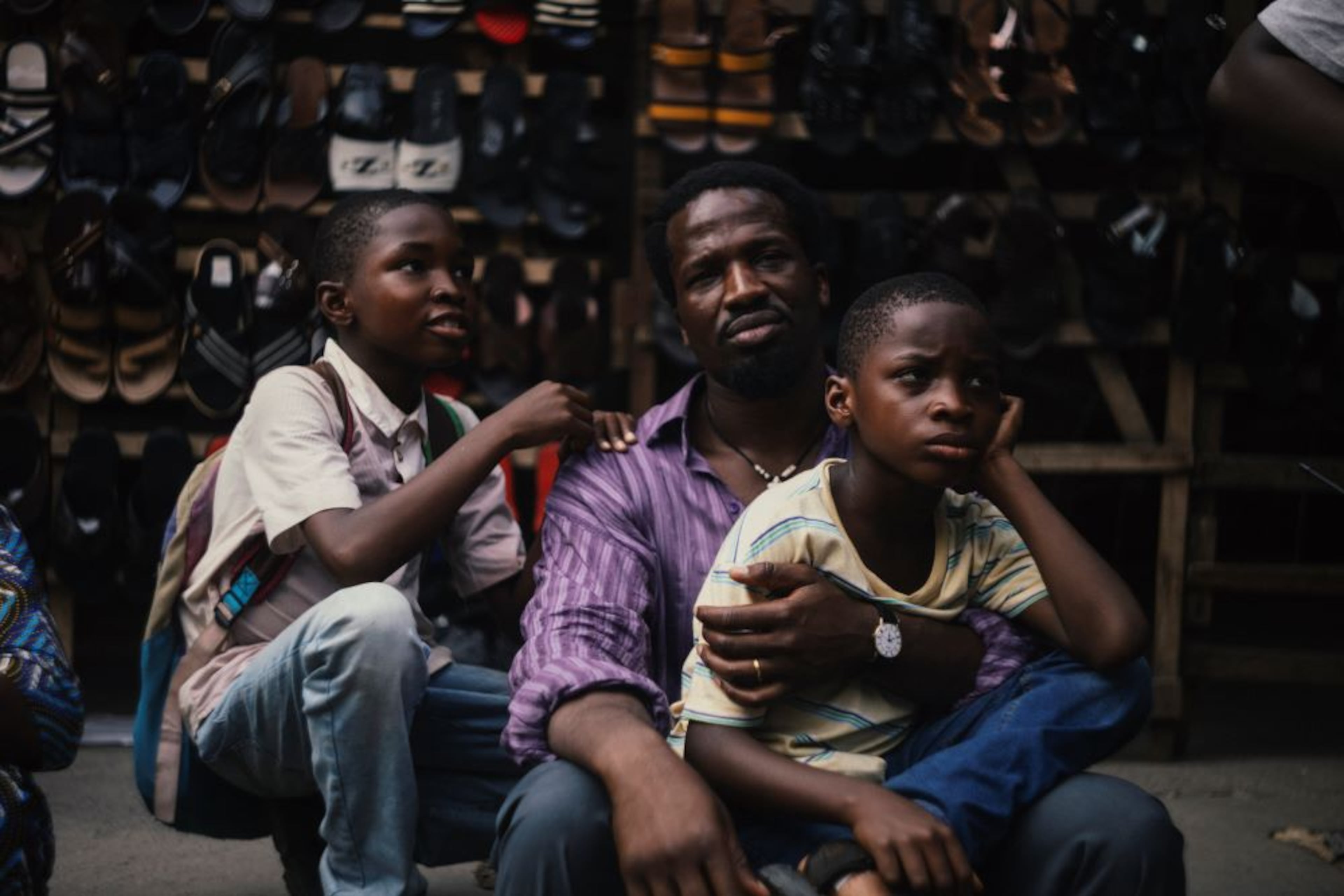
Davies, a filmmaker and writer born in London and raised in Nigeria, makes his feature directorial debut with “My Father’s Shadow,” a poignant film co-written and executive produced with his brother about two boys traveling from rural Nigeria to Lagos with their father to recover his unpaid wages.
Set during a 1993 presidential election in Nigeria, the brothers learn about their absentee father, their homeland and the nation’s political climate on their travels. It made them more aware of their father’s influence, his peers, Nigerian culture and citizens’ concerns.

“My Father’s Shadow” was named this year’s U.K.’s official entry for the Oscars’ Best International Film category. It opens in Atlanta at Tara Theatre on March 20.
The film premiered in the U.K. in February.
Davies shot on 16 mm film to resemble family portraits. He hopes his artistic choices can instill pride in Black audiences.
“In European cinema, they’ve always been able to anchor themselves and their cities as a form of prestige. We must do the same and put ourselves on that level,” Davies said.
“Black skin, Lagos, the cast and crew deserve to see their work on the most beautiful format, because it shifts something in the way we perceive ourselves and changes the way Black people experience each other.”
“My Father’s Shadow” has generated buzz from film festivals and during awards season. Last year, it was the first-ever Nigerian film screened at Festival de Cannes and received Special Mention for the Camera d’Or.
Davies earned a British Academy of Film and Television Arts Award for Outstanding Debut by a Writer, Director or Producer last month.
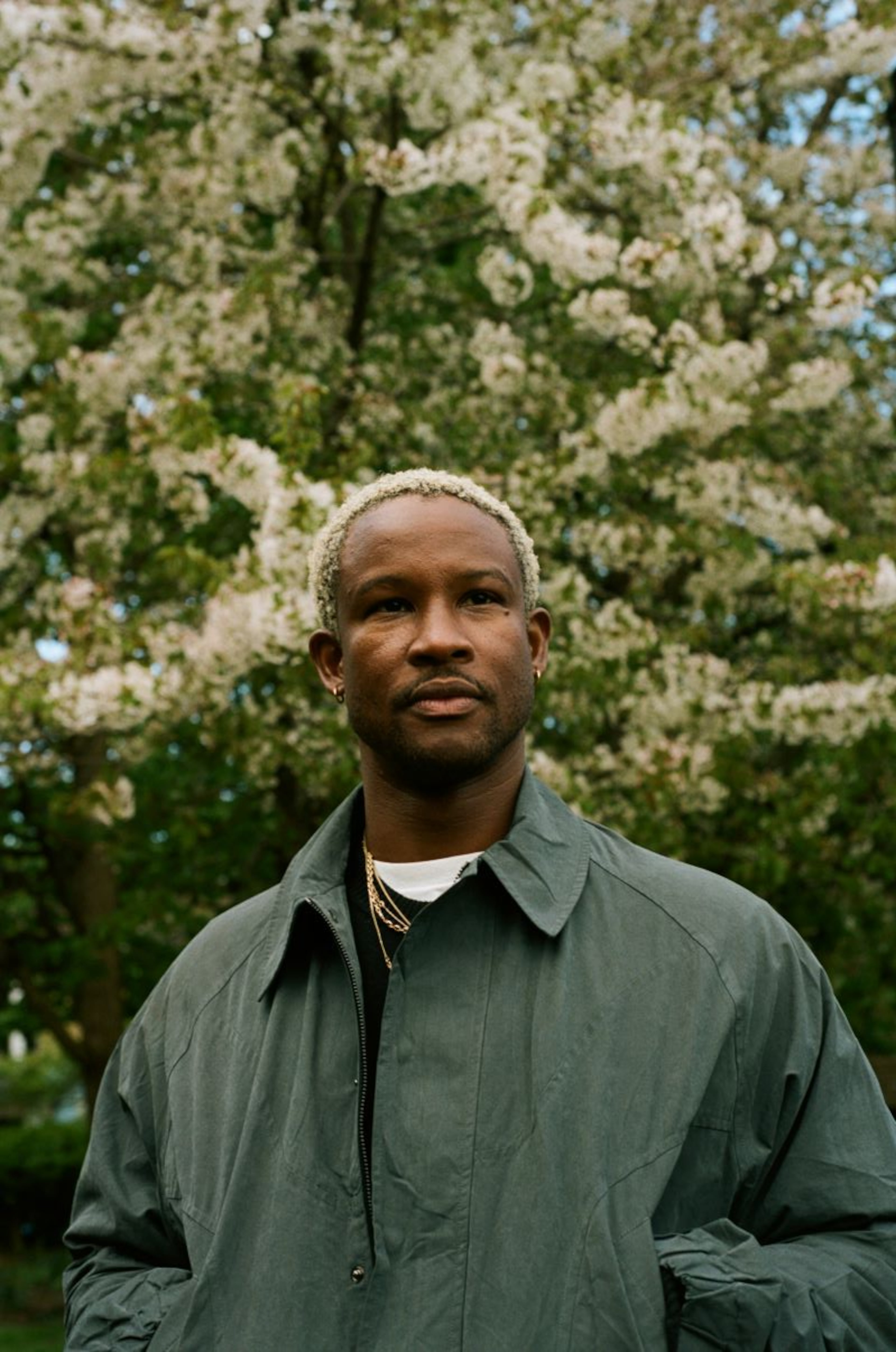
Davies is pleased his first film is receiving praise at the same time as “Sinners,” a film directed by Black filmmaker Ryan Coogler. “Sinners” is the most Oscar-nominated film in history.
Davies and Coogler were present at this year’s BAFTA Awards when film producer John Davidson, who has Tourette’s syndrome, yelled a racial slur at Coogler and “Sinners” lead actor Michael B. Jordan during the ceremony.
Davies said his success, along with Coogler’s, can help elevate opportunities for Black films and storytellers.
“It’s an honor to be in the same rooms with Ryan, because he’s transcended film for Black people across the globe and should be protected at all costs. A win for one of us is a win for all of us, and I hope we get to make films until we’re old men,” Davies said.
As a teenager, Davies became interested in filmmaking after visiting a classmate from his boarding school, whose father was a film editor, on weekends. He began studying films directed by Ava DuVernay, Ousmane Sembene, Mati Diop, Hirokazu Koreeda and Alfonso Cuaron.
He also enjoyed music video directors Hype Williams, Spike Jonze, Michel Gondry and gaffer Christian Epps.
In 2009, Davies knew it was time to try his luck. He saved money and enrolled in New York Film Academy’s three-month workshop.
Though Davies couldn’t afford film school, the workshop gave him confidence.
“It was one of the first places I felt seen, encouraged, got familiar with the process of filmmaking and found community,” he said.
Davies started apprenticing under photographers in London but felt stifled by capturing still portraits. He started directing television commercials and music videos.
He wanted to create opportunities for Black talent.
“Whenever I’d see an image, I’d get so caught up in my imagination of the context behind the image. The difficulty is encouraging the powers that be to trust in enthusiastic Black creatives,” Davies said.
In 2020, “Lizard,” Davies’ short film co-written with his brother about an intuitive young girl at a church in Lagos, received Sundance Film Festival’s Grand Jury Prize. The accolade encouraged them to turn “My Father’s Shadow” into a feature film.
Davies said he and his brother’s work ethic complement each other. “He thinks in words, I think in pictures, and we push each other,” he said.
Davies’ film arrives at a time when voter suppression is used to turn Black citizens from the polls. The film includes a scene with Nigerian citizens reacting to a presidential candidate disrupting the results of the election in Nigeria.
He said the film is how he stands in solidarity with Black communities for social justice.
“America is equally spiraling into totalitarianism with imperial constructs that are forcibly fed by people who form the status quo, and this film is an offering for our brothers and sisters to understand our experiences,” he said.
“We lived under hostile dictatorship and saw firsthand what that does to people.”
“My Father’s Shadow.” starting Friday, March 20. Tara Theatre, 2354 Cheshire Bridge Road NE, Atlanta. taraatlanta.com
About the Author

Christopher A. Daniel is a Black Culture reporter for The Atlanta Journal-Constitution. He is an Atlanta-based, award-winning journalist, cultural critic and ethnomusicologist. He previously taught courses at Morehouse College, Clark Atlanta University and Georgia State University.