
Civil rights center opens children’s gallery, capping $58 million expansion
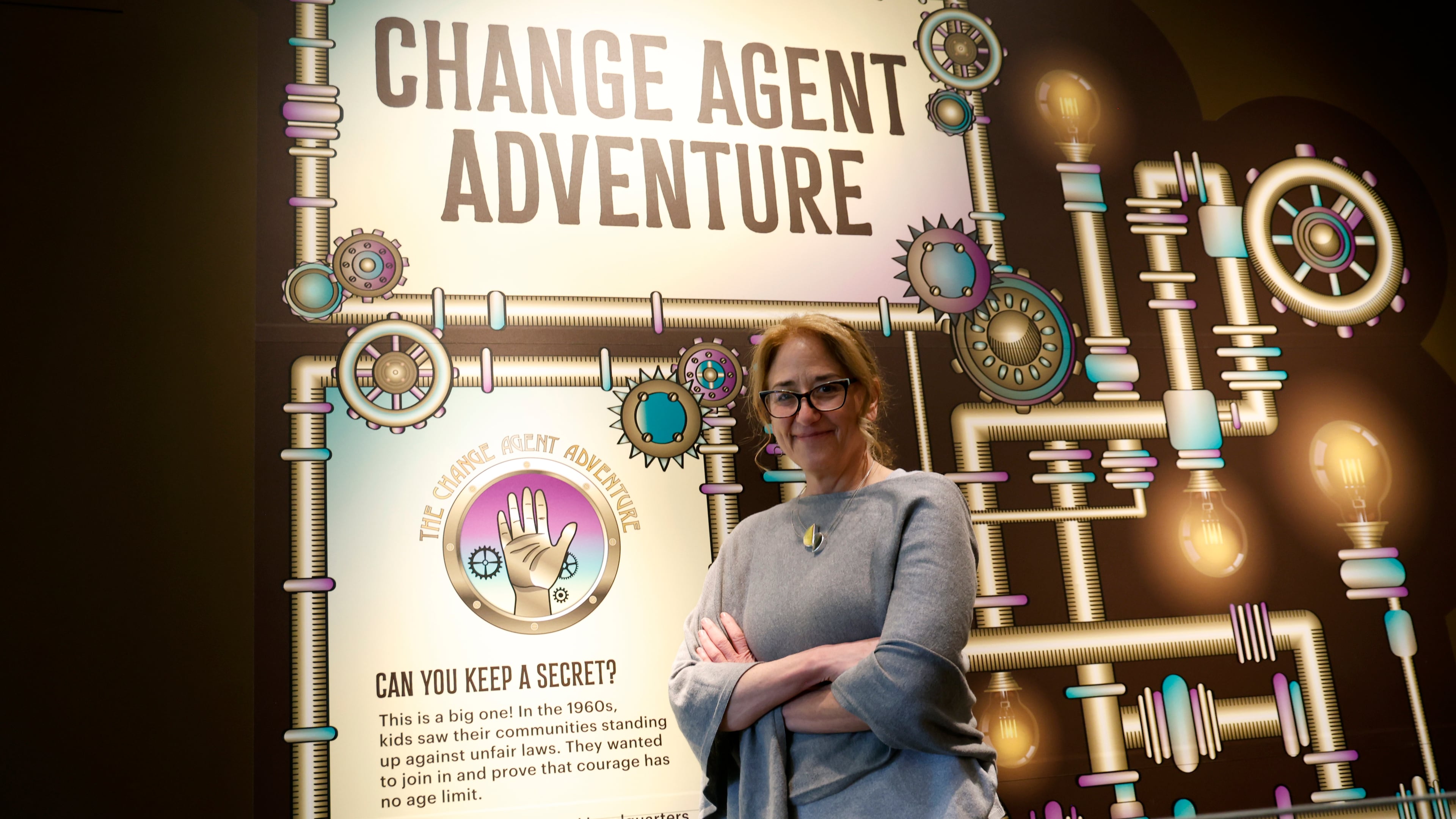
As president and CEO of the National Center for Civil and Human Rights, Jill Savitt moves through heavy history every day in the museum’s downtown halls.
There is the “Lunch Counter Sit-In Simulation,” where visitors are thrust into the tension and courage of activists confronting racism firsthand. There are four stained-glass windows memorializing the 1963 bombing of the 16th Street Baptist Church in Birmingham, where four young girls were killed. And a giant portrait of Emmett Till, smiling just months before his brutal murder, would galvanize a movement.
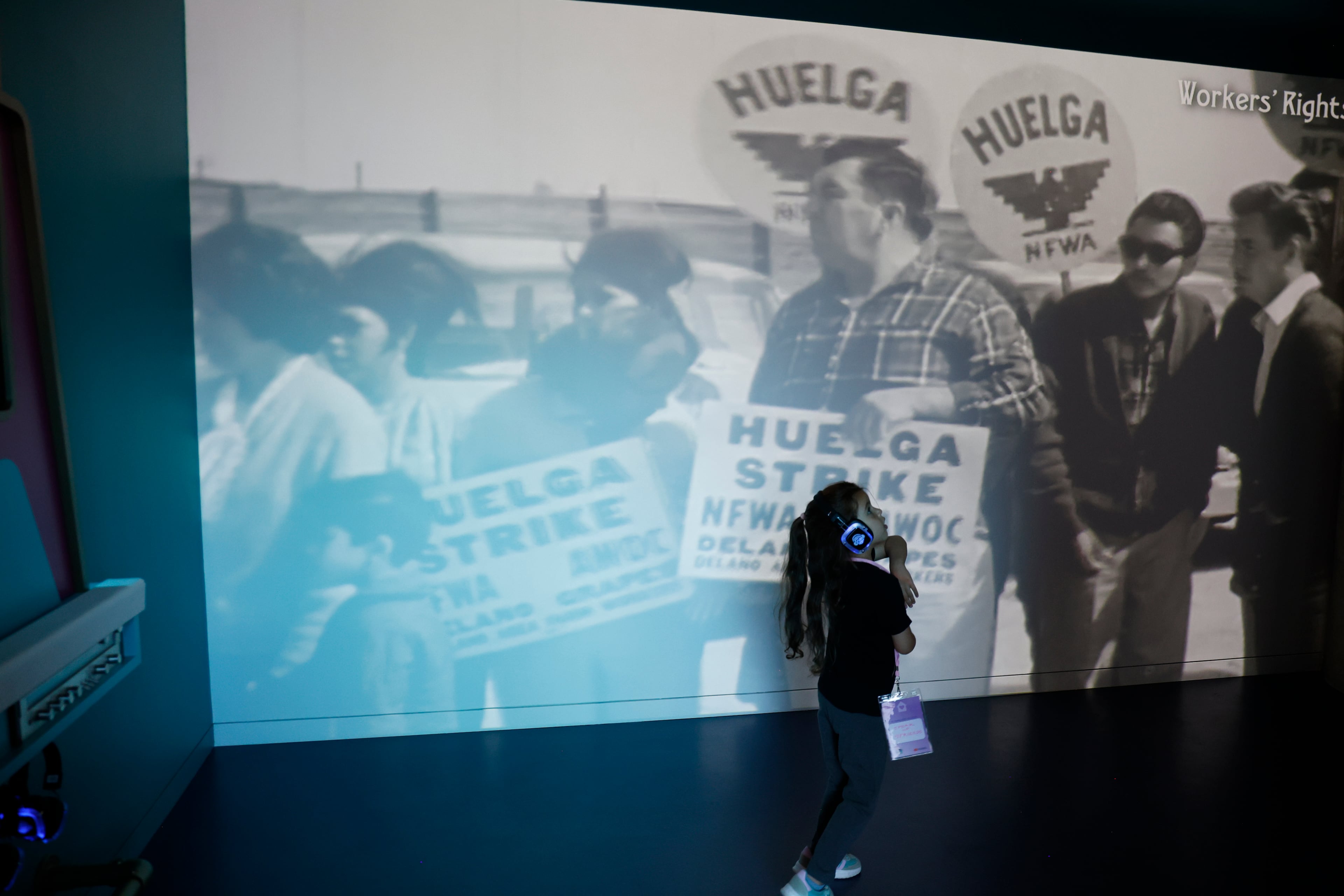
So when Savitt stepped into the center’s new Diversity Disco, slipped on a pair of headphones and heard music no one else could hear, she danced.
Alone, moving to her own rhythm.
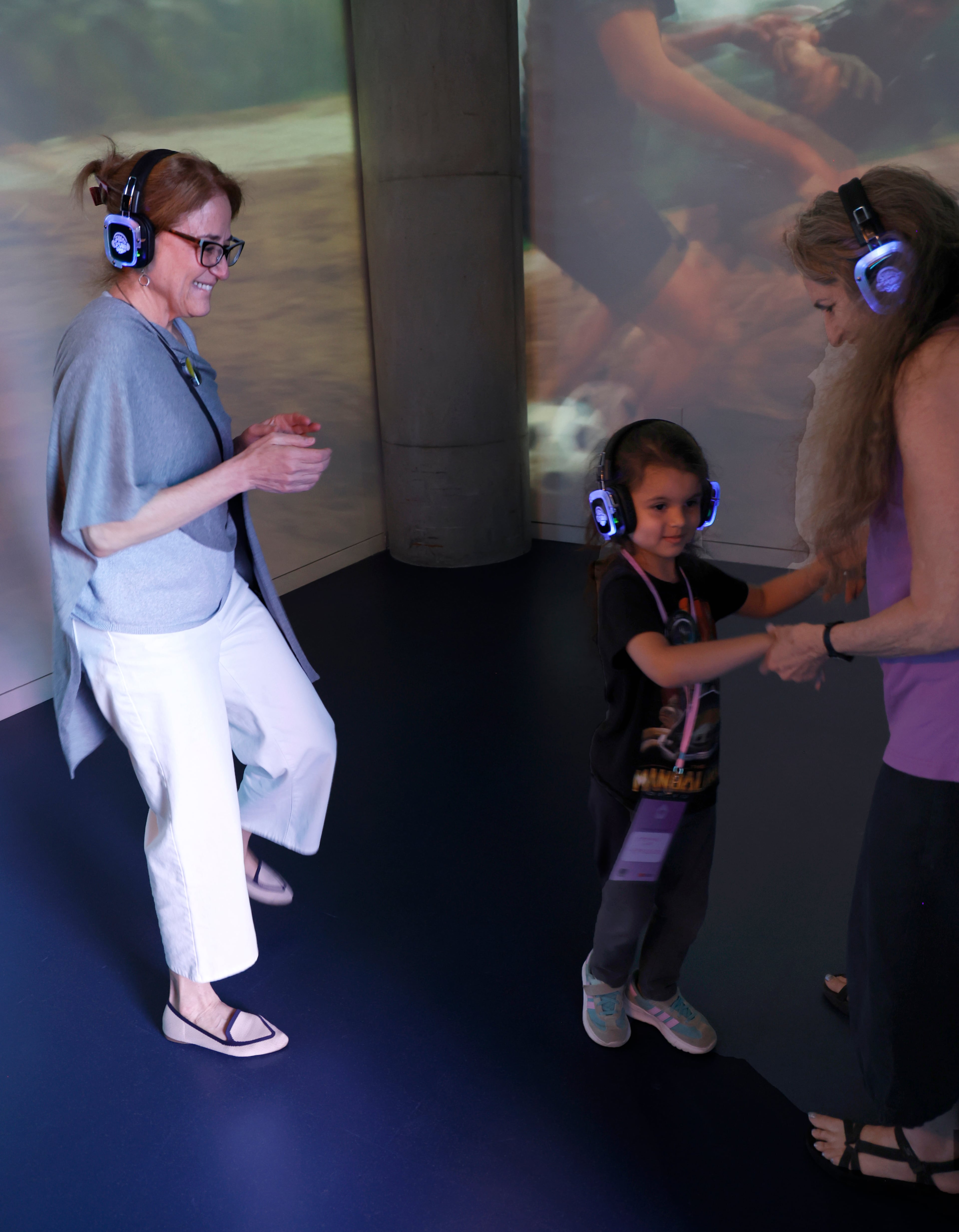
Soon, a group of children wandered in, watching her, smiling as they waited their turn.
“I get a great sense of hope and possibility from kids,” Savitt said. “They are not yet fully formed, so there’s an opportunity to influence the course of their lives. We need to reach young people and create something for them that feels like an adventure.”
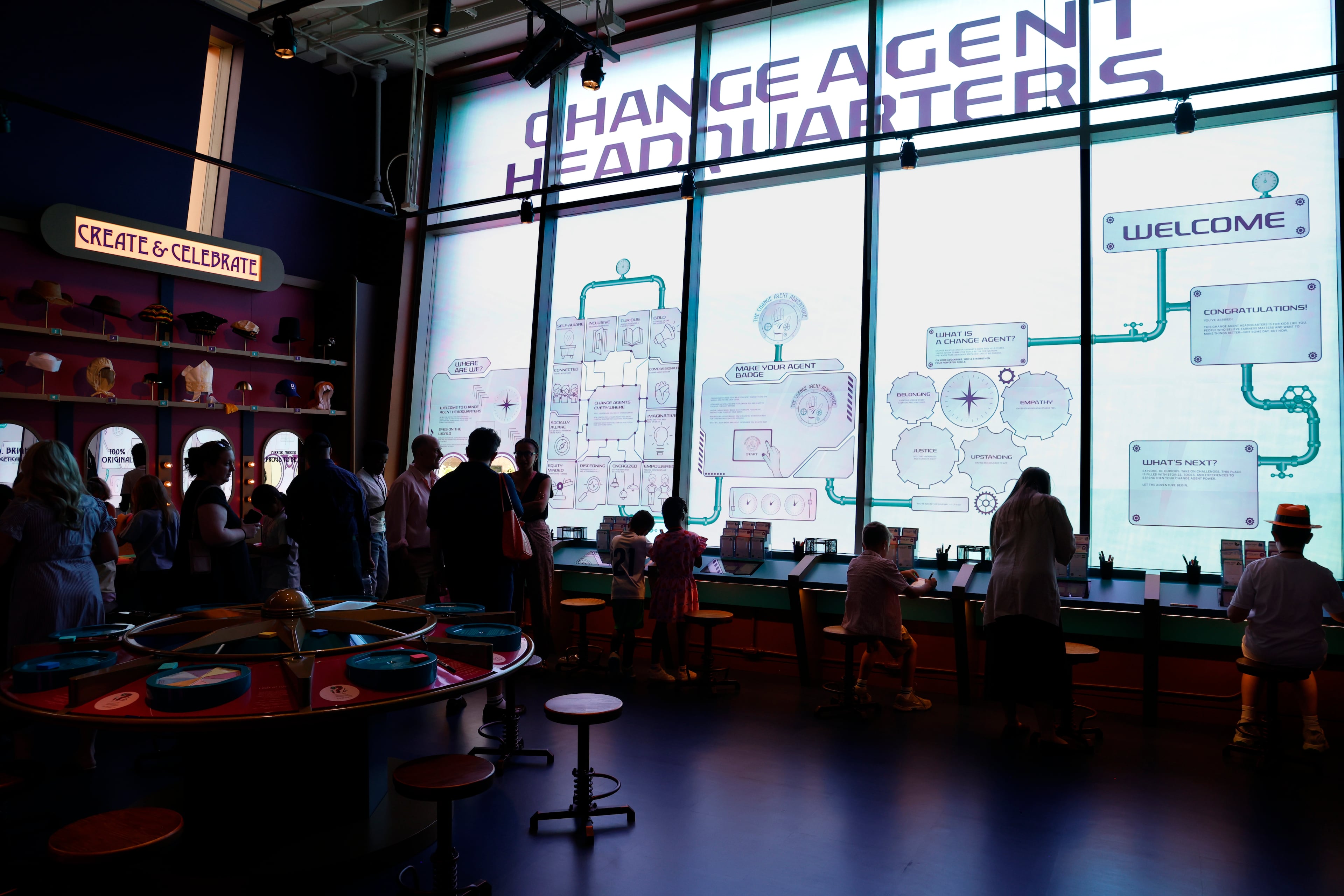
On Saturday, Savitt and the center will officially open the Change Agent Adventure: Children’s Gallery, an immersive space designed for children 12 and under — where play, collaboration, creativity and, yes, dancing become tools for learning civic engagement.
Earlier this week, that idea came to life as students and parents from the Georgia Cyber Academy, a tuition-free public virtual charter school, visited for an early tour.
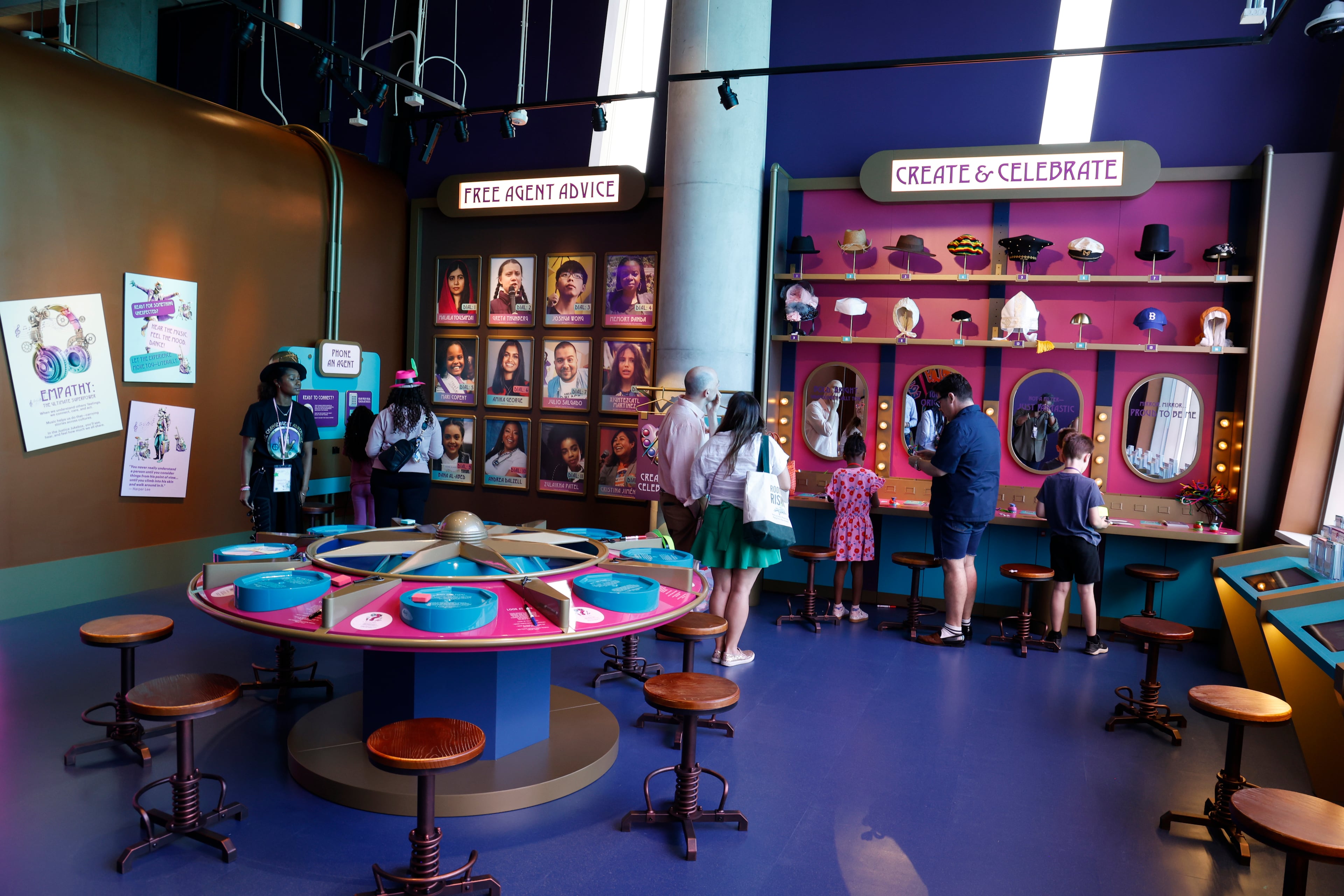
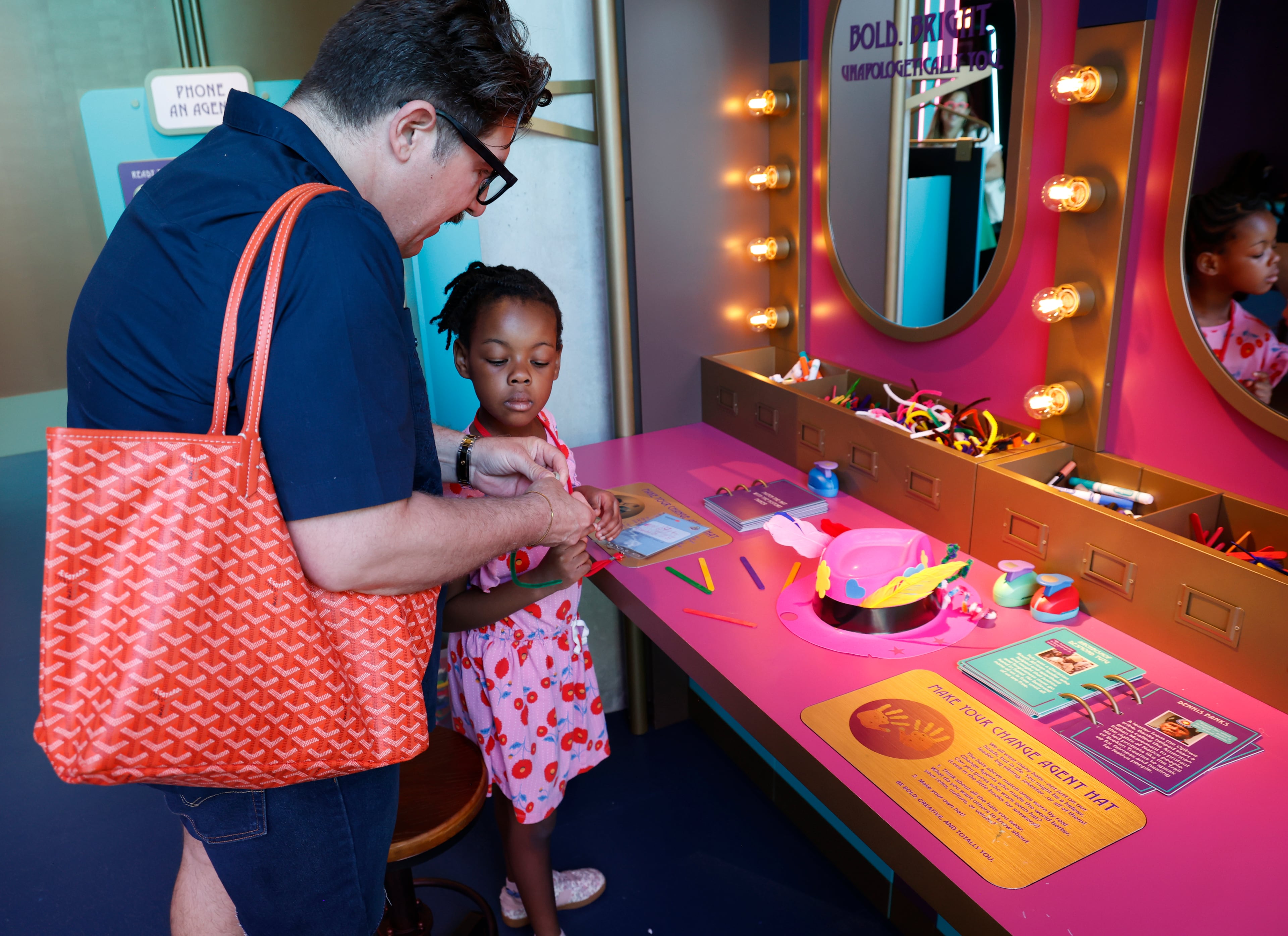
Young visitors entered through a “magic elevator” into a secret headquarters, completing missions, creating badges and hats and working together through challenges designed to teach participation and community.
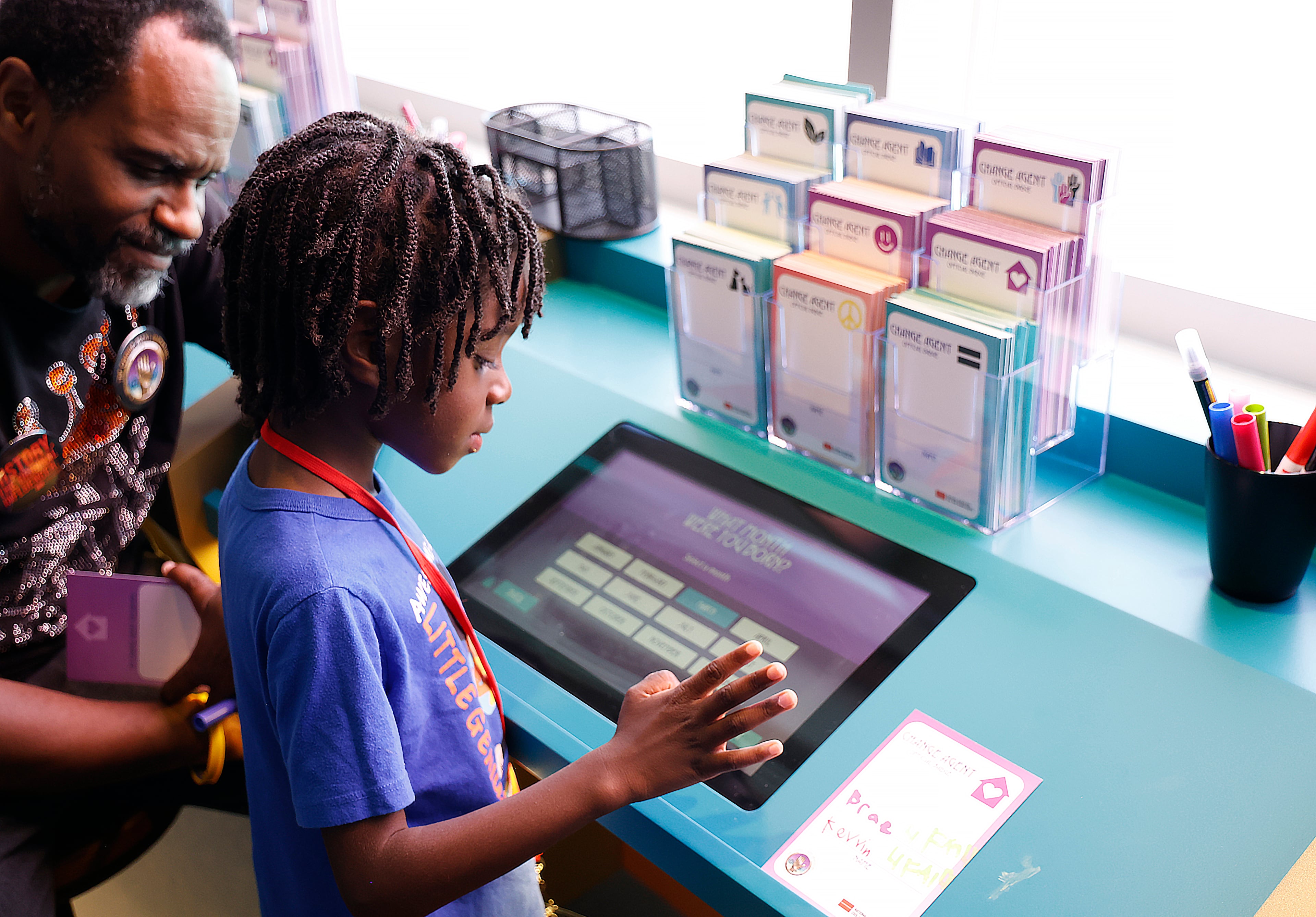
Others drifted between a silent disco, an arcade and hands-on activity zones — all built to keep them moving, creating and engaged.
The concept, Savitt said, draws directly from the past.
“Kids in the 1960s wanted to be involved in what was going on around them,” she said. “They saw their parents and their communities engaged around civil rights. So we created a place we wish they had — a secret headquarters where they can hone those same instincts.”
For Tonette Price, assistant director of community partnerships and events for Georgia Cyber Academy, the experience was exactly what she hoped it would be.
“It’s living history,” she said. “It’s hands-on, fun and direct. With younger children, especially around sensitive topics, something like this is really extraordinary.”
Parents saw it the same way.
Keith McNeil, visiting from Fairburn with his wife, Joy, and daughters Trinity and Serenity, said the family was interested in seeing how the museum would translate civil rights history for younger audiences.
They were impressed.
“It helps them understand the past and how they can shape the future,” he said. “Letting kids explore and experience things like this helps them grow.”
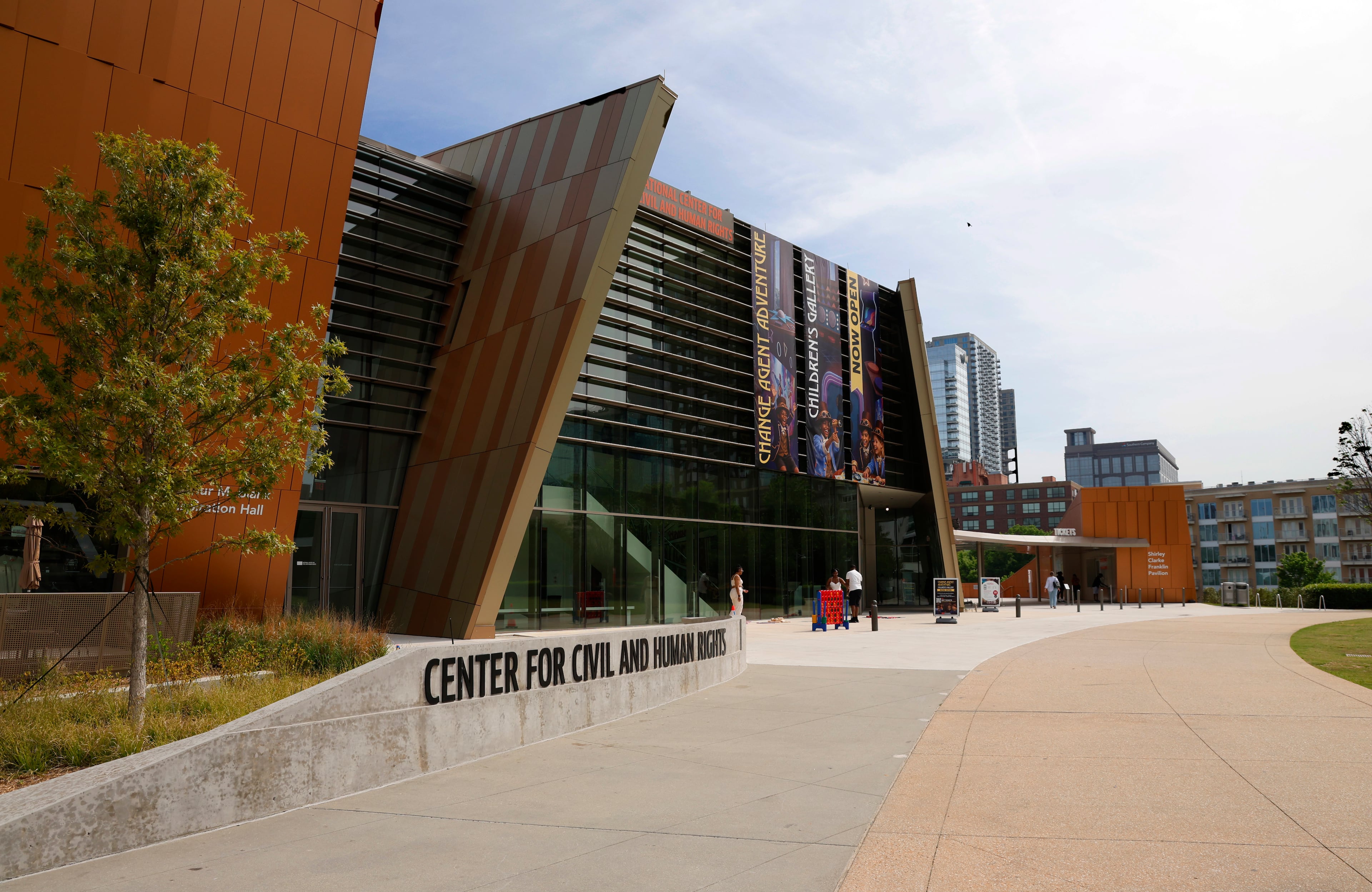
The gallery marks the final phase of the center’s $58 million reimagining, a project that added two new wings and expanded the 12-year-old museum’s footprint by roughly 50% — about 24,000 square feet — pushing the campus well beyond its original 42,000.
Those additions are part of a broader redesign of the space and the visitor experience. The three-story west wing, named for Atlanta businessman Arthur M. Blank, anchors the expansion. Across the campus, the Shirley Clarke Franklin Pavilion adds classrooms, flexible event space and a rooftop gathering area, extending the center’s reach beyond exhibitions into education and community use.
The expansion also updates core exhibits and adds classrooms while reimagining how visitors move through the building.
The Martin Luther King Jr. papers, once tucked away, now sit in a central, unavoidable location. The Lunch Counter Sit-In Simulation has nearly doubled in size, expanding to nine seats, while new reflective spaces and an “Atlanta Alcove” give visitors room to process the experience and connect it to the city that helped shape the movement.
When the museum reopened last November, the children’s gallery and “Broken Promises,” an exhibit focused on Reconstruction, both centerpieces of the Blank wing, were still unfinished. “Broken Promises” opened in December. Saturday’s opening of Change Agent Adventure: Children’s Gallery completes the project.

“We have completed the expansion,” Savitt said, adding with a laugh, “and spent all the money.”
Savitt said the new children’s gallery is projected to add 20,000 new annual visitors.
Before the pandemic, the center drew about 200,000 visitors annually. Attendance has since dipped to roughly 150,000, a gap Savitt said underscores the urgency of broadening the audience and creating reasons for people to return.
That shift toward younger audiences is intentional.
Blank, a longtime supporter, often noted the lack of offerings for children. The museum sits in the middle of the downtown tourism district, alongside Centennial Olympic Park, the World of Coca-Cola, the Georgia Aquarium and the College Football Hall of Fame.
Enhancing the museum with an ambitious children’s gallery, Savitt said, was deliberate — a response to what the museum lacked.
“It is up to all of us to make a difference,” she said. “If kids like something, they should lead on it. And if they don’t like something, they should change it.”