
How the Atlanta Soccer Map celebrates city’s diversity
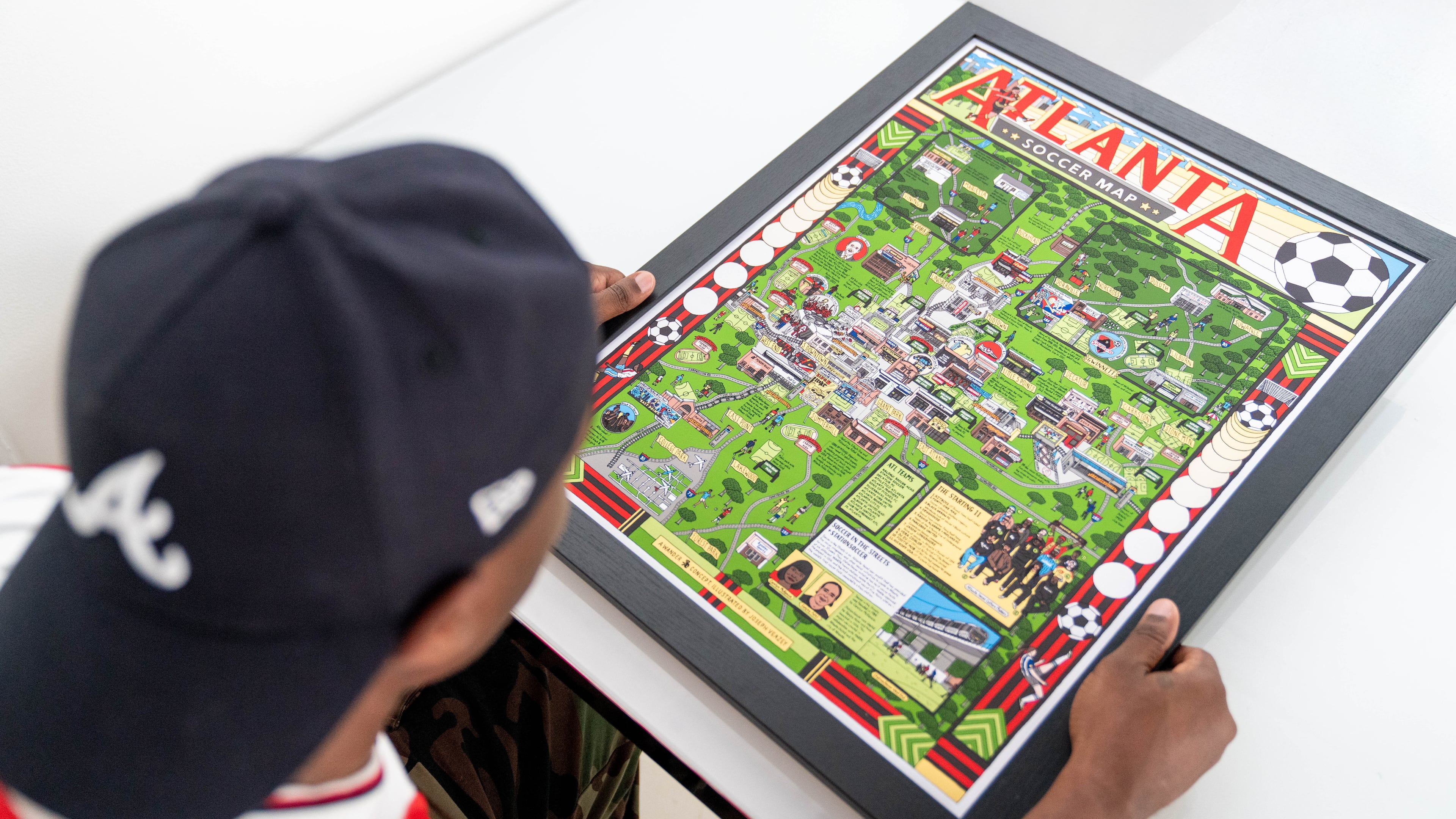
Like many good ideas, the Atlanta Soccer Map arose from a group chat.
This one took place in 2025. It was a digital brainstorm between reps from nonprofit Soccer in the Streets and local Black and brown creatives, centered on 2026 FIFA World Cup activations in Atlanta.
The group of creative directors, visual storytellers and football lovers wondered: what they could collectively produce that would speak to the potentially 300,000 visitors expected to show up and to folks already here.
“How can we give them a guide to the World Cup, a real one? How can we actually give them a guide to what the culture is and feels like,” creative director and content creator Gavin Guidry recalls.
Released this week, the Atlanta Soccer Map is that collective’s visual response to those questions. It’s a hand-drawn piece by artist Joseph Veazey, curated by the local soccer community, geared toward die-hards, casuals and folks new to the beautiful game in metro Atlanta. It’s an intricately detailed celebration of places, spaces and people that shape its namesake’s football ecosystem.
Its creators hope it can spark future conversations and collaborations for the metro area’s diverse football community long after the World Cup.
The Atlanta Soccer Map sets a spotlight on landmarks, bars, gathering spots, murals, fields, shops and individuals driving football culture locally. It features over 90 entries, including a “Starting 11″ of people and local organizations — Deng House, DJ EU, Kitboys Club, Footie Mob, Jason Longshore — dubbed “Atlanta Soccer Culture Makers.”
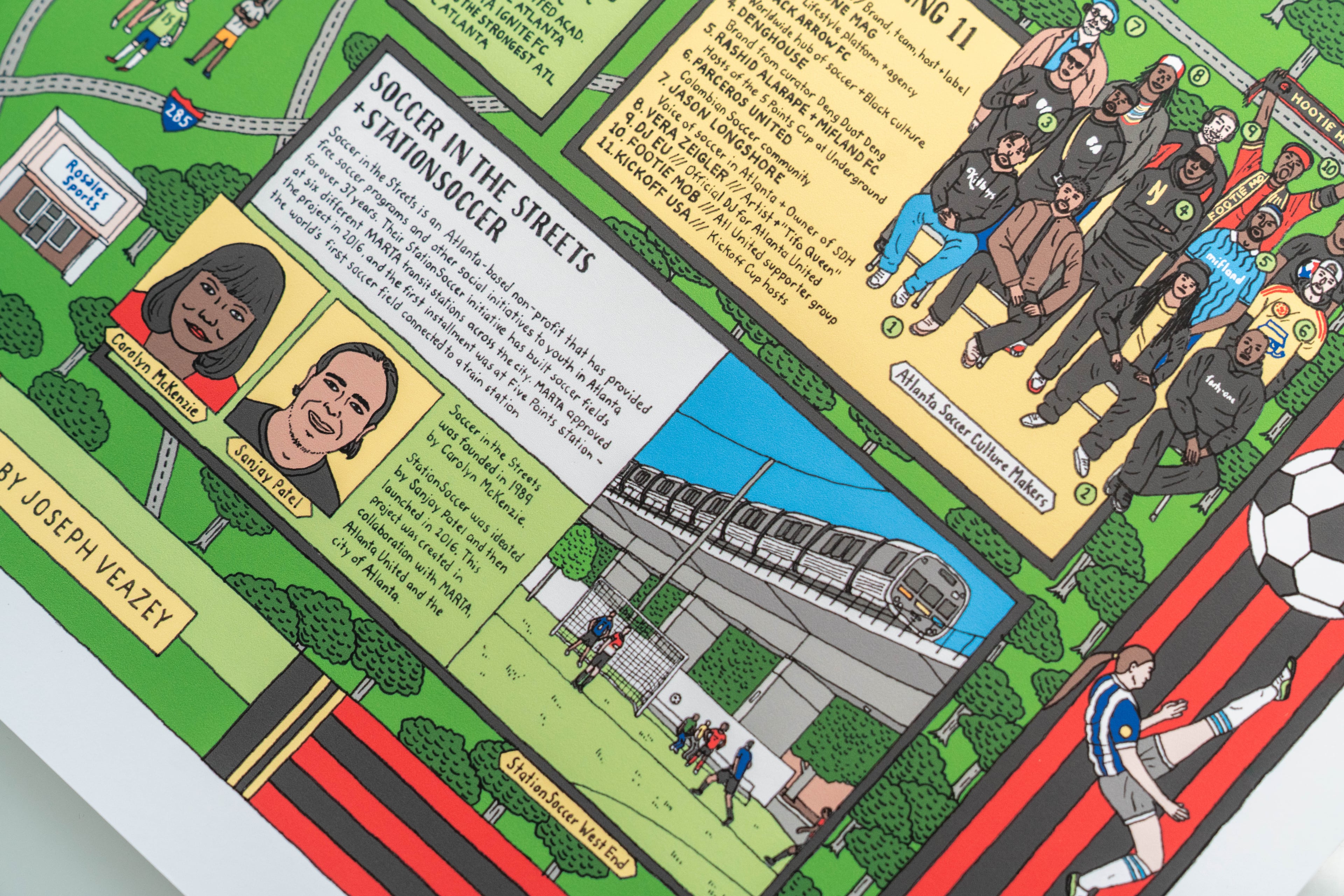
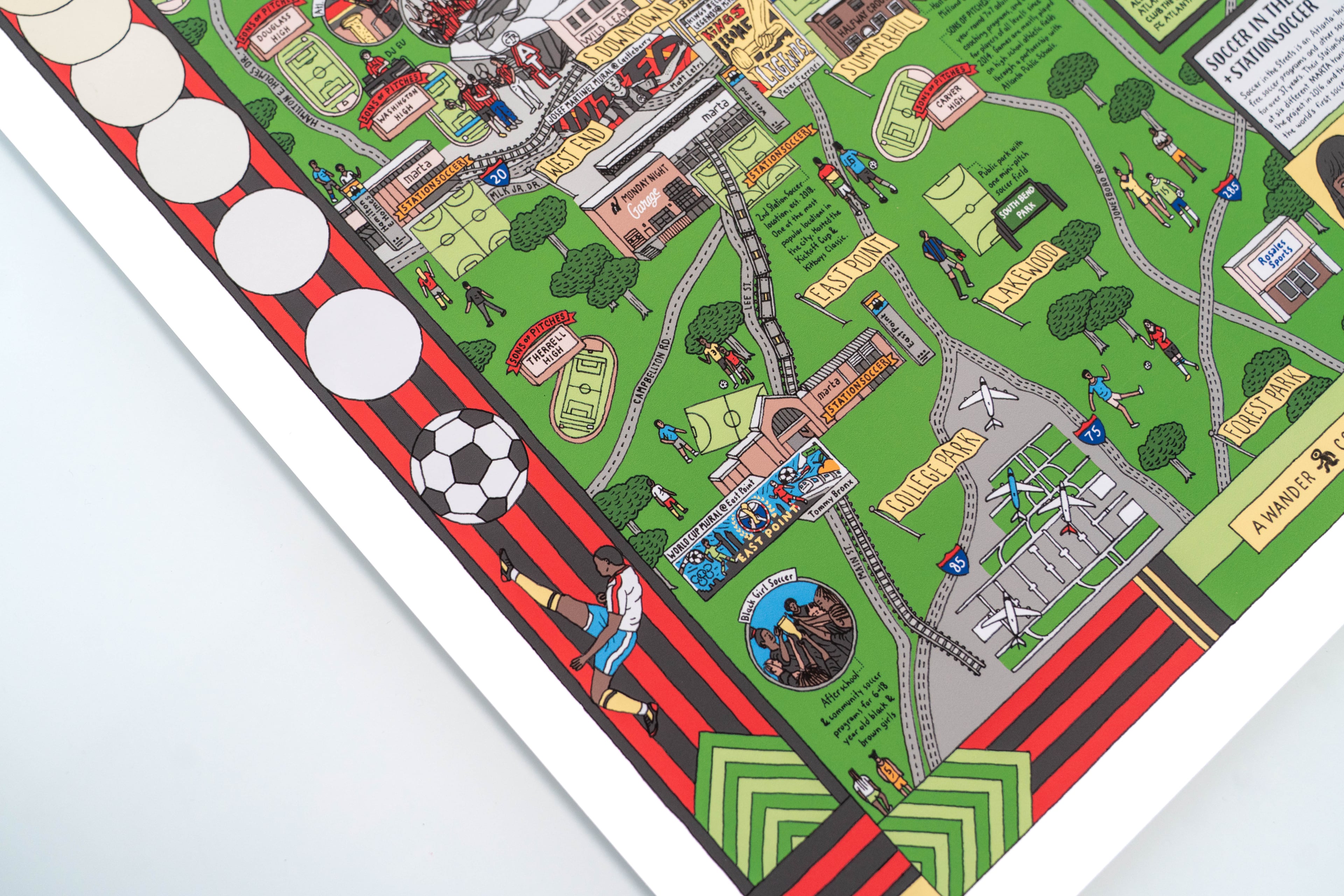
Locations include World Cup watch parties, bars (Brewhouse, Fado, Meehans), pitches (Station Soccer), organizations (Black Girl Soccer, Soccer in the Streets); and shops (Soccer House, Soccer Locker).
It was curated by the Atlanta Arts Collective, a group that includes Guidry’s creative hub Wander, agency Brighton & Chelsea from Marcus Hollinger and Forty-One, a football lifestyle platform specializing in digital and experiential storytelling.
Working with Veazey, the group didn’t just want to build wall candy; they wanted to codify their burgeoning culture.
“One of the pain points that came up was how a lot of outside entities like to drop into Atlanta and tell the story of soccer in Atlanta,” said Hollinger, who is also co-owner of Portrait Coffee in West End.
To that point, Guidry and the team made sure that folks who were highlighted also had a say in it. From the StationSoccer pitches at nearby MARTA stops to Black Girl Soccer’s community programs in College Park, learned voices were sought out.
“We wanted to really go to the people who were putting Atlanta soccer culture on the map, making things that were breaking through and hear what places were important to them,” said Guidry, who in addition to Soccer in the Streets, has worked closely with organizations such as Black Arrow FC and Kickoff USA.
Guidry led the project, and when it was time to create the actual map, he wanted Veazey’s vision. Veazey’s previous work includes the Atlanta Rap Map — a hand-painted look at artists, venues, neighborhoods — and Barbecue Map.
Veazey spent over 100 hours working on it, sketching the line work by pen, scanning it in, and then digitally coloring it.
The Atlanta Rap Map measured in at 24 by 36 inches. Despite it’s frequent appearance in local boutiques, barbershops and restaurants, Veazey felt it’s larger size might’ve dissuaded potential buyers. It’s why the Soccer Map is at 18 by 24 inches.
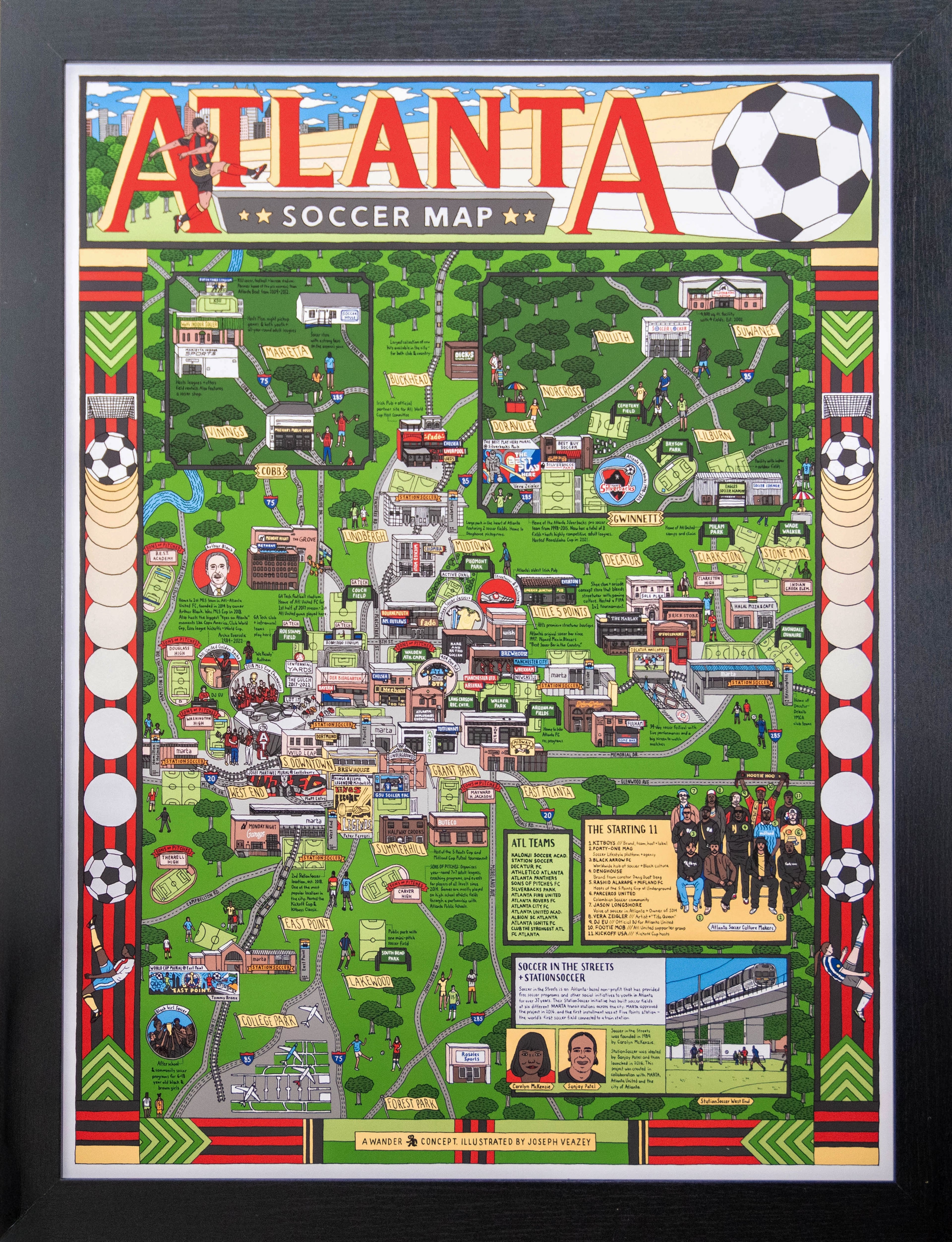
Veazey, a Lilburn native, was happy to see spots like the pitch at Bryson Park and Gwinnett County soccer staples represented. The Rap Map went on to spark conversations about gentrification. The Soccer Map? Veazey sees it as way to engage in just how deep the city’s soccer roots run, as well as its diversity.
Creating a representation of his hometown’s connection to soccer, also meant being floored by its breadth.
“Seeing that just makes me think what other kind of subcultures are going on that you’re not aware of,” he said. “It blew my mind, once I’ve got it all visualized, of how deep it goes.”
If anyone understands that depth, it’s Gillian Williams. Along with El Johnson and Tyler Phillips, Williams co-founded Forty-One. Williams, a first generation American born to Jamaican immigrants, grew up in metro Atlanta playing the game up through high school. Williams uses her love for the game and past gig on the management team for Janelle Monae’s Wondaland Arts Society to bring curated experiences to her work at Forty-One.
The idea for Forty-One took shape in 2022 as a digital magazine after the World Cup host sites were announced. The goal was to ensure that stories told about soccer across the African and Caribbean diaspora featured voices from those communities.
A content and events platform, Forty-One is named after 41 nations in the Confederation of North, Central America and Caribbean Association Football (CONCACAF). Through content and other activations, Forty-One also aims to shed light on women, people of color and LGBTQ voices in football.
To that end, the map includes women’s sports bar Jolene Jolene, Vera Zeigler aka “the Tifo Queen of Atlanta” and nonprofit Black Girl Soccer.
“This culture isn’t just for the boys, it’s for everyone and the map is a good starting point and reflection of that,” Williams said.
Johnson speaks to both Forty-One and Atlanta’s soccer community when asked what he sees looking at the map. “I think we’ve been able to create pockets, create a little bit of something for everybody,” he said.
The Soccer Map is available for purchase in Veazey’s online store. It will also be included in Discover Atlanta’s official World Cup content guide. Throughout the tournament, there are plans for release parties and programming promoting the map.
“The Atlanta soccer culture and the American soccer culture at large is being written in real time,” Guidry said.
“This is certainly an artifact that we hope will be a part of Atlanta and the culture for the long haul.”