
Soul Veg, Atlanta’s pioneering Black vegan restaurant, closes after 47 years
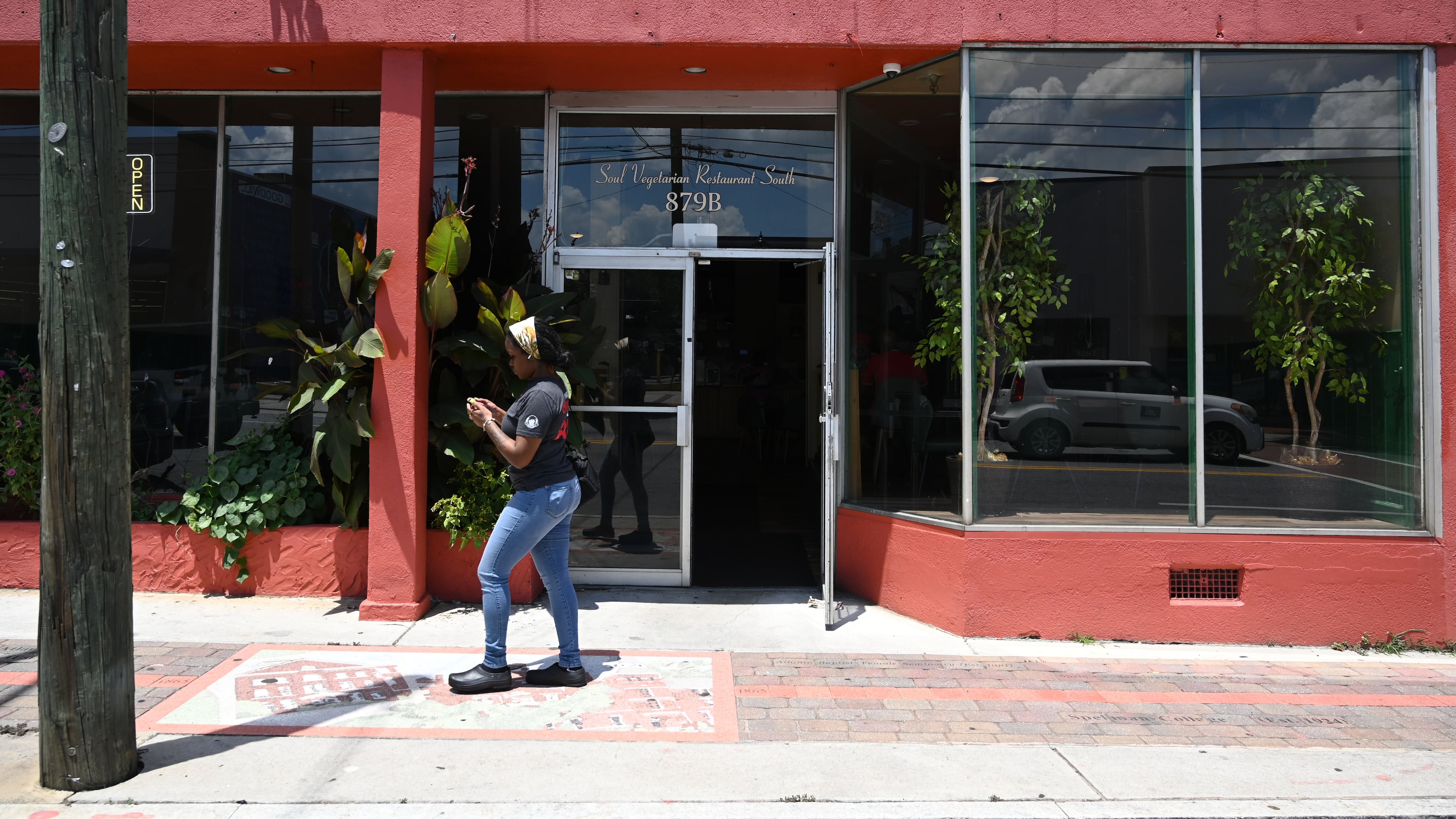

It was a 15-minute walk Amour Carthy would look forward to every week.
In 1993, she was a student at Spelman College who would walk from campus down to Ralph David Abernathy Boulevard with one thing in mind: eating at Soul Vegetarian.
Carthy hung with a conscious, hip-hop crowd who put her on. She was a sucker for the eggless salad and carob shakes.
A history major with an interest in Black Diasporic studies, she also was eager to chat with elders and young people who worked at Soul Vegetarian from the African Hebrew Israelite Nation of Jerusalem.
There, she found connection to the entire West End and its Black culture.
“It was food that was an entry point into the full service community,” she said.
Like Carthy, that community was saddened by news that Soul Vegetarian — rebranded as The New Soul Veg Restaurant & Cafe’ — is closing.
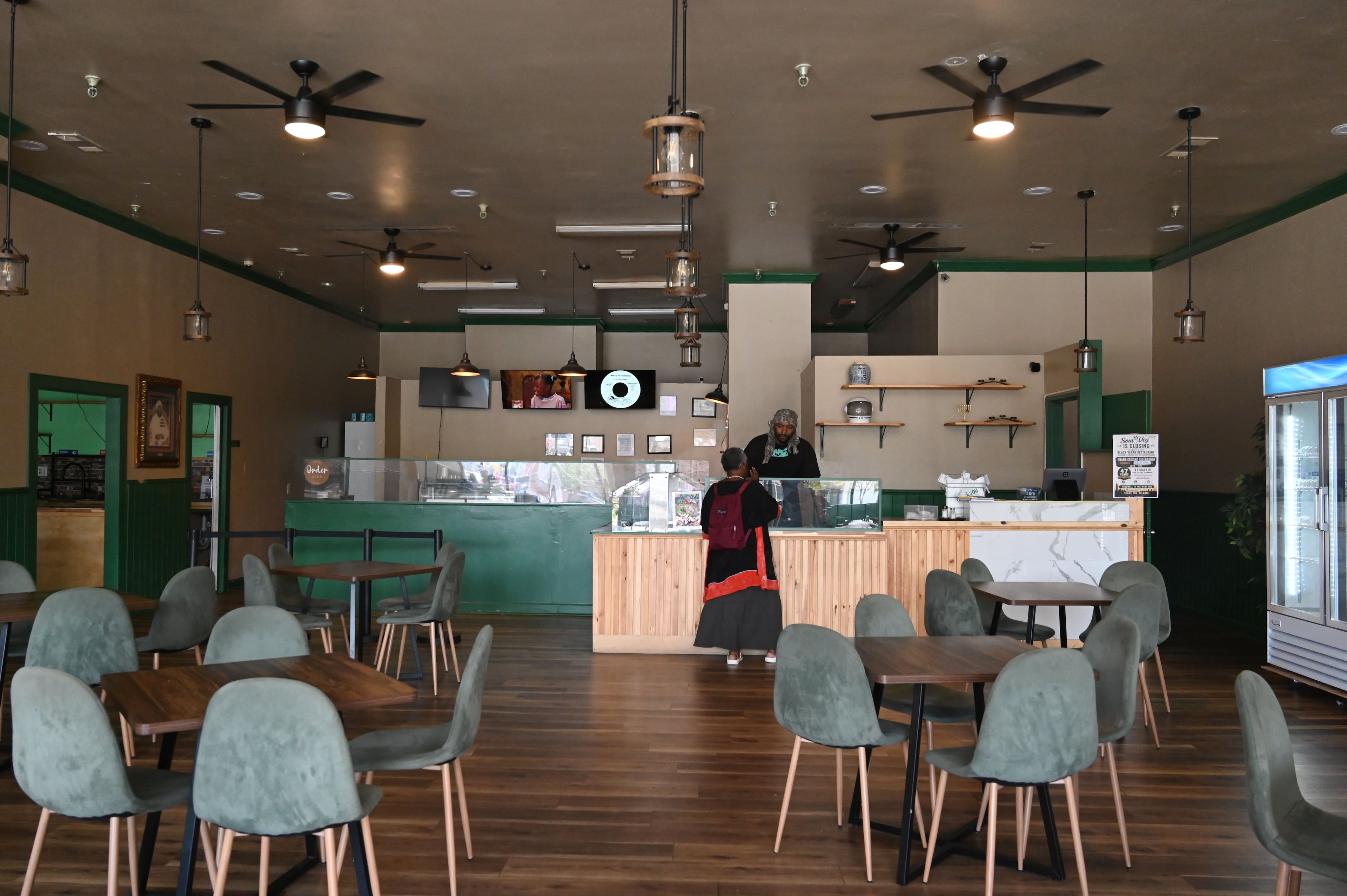
The restaurant announced that after 47 years in West End, it’s closing its doors July 12. A closing party is planned for the same day.
Long before vegan restaurants became commonplace across Atlanta, Soul Vegetarian, commonly Soul Veg, helped make plant-based eating feel familiar, welcoming and distinctly Black. It wasn’t simply serving meatless food. It tied healthy eating to Black culture, spirituality and community, introducing generations of Atlantans to a lifestyle that has since become mainstream.
Area haunts such as Slutty Vegan, Tassili’s Raw Reality Café, Vegan Dream Doughnuts, The Local Green, Bakari’s Pizza and Kava found their footing on a path laid by Soul Veg.
With its closing, a West End community that once thrived on vegan and vegetarian dining is losing its OG.
Past and present staff who spoke to The Atlanta Journal-Constitution said yes, building issues in addition to time, money and a lack of business ultimately ended Soul Veg’s run.
However, its lasting impact is immeasurable.
The first Soul Vegetarian opened in 1979 on 625 Peachtree Street. Building issues led to a West End move in 1982.
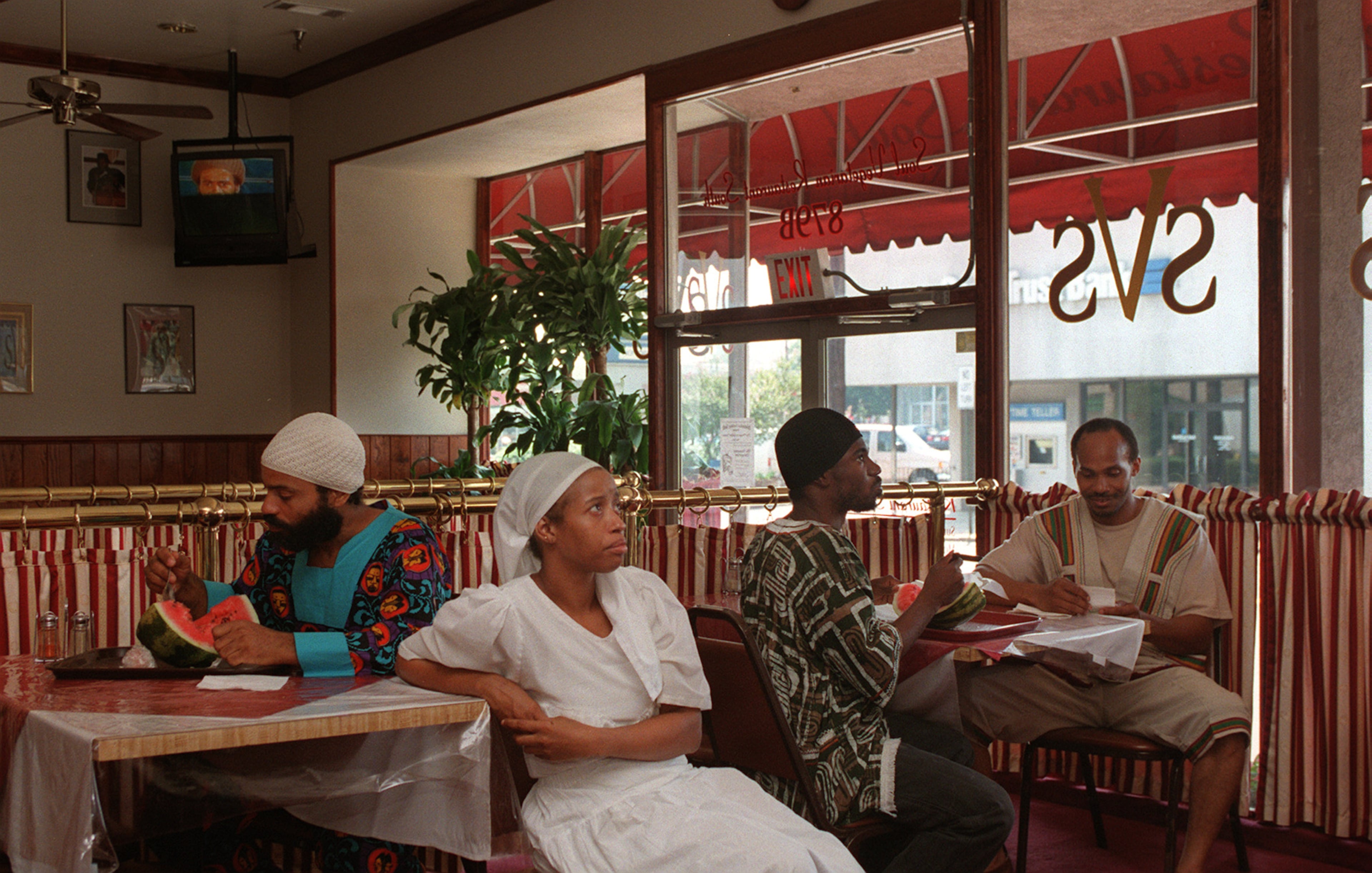
It was opened by members of the African Hebrew Israelite Nation of Jerusalem, who were spreading a gospel of healthy, natural eating to reverse negative health outcomes prevalent in Black communities.
A menu based around soul food was an effort to counter skepticism around a veggie-focused diet and meet Black folks’ palates where they were most comfortable.
The restaurant added a Chicago location and has since popped up in other cities, including Washington, D.C.
One of those people there in its early aughts was St. Micael Shaleahh, a co-founder.
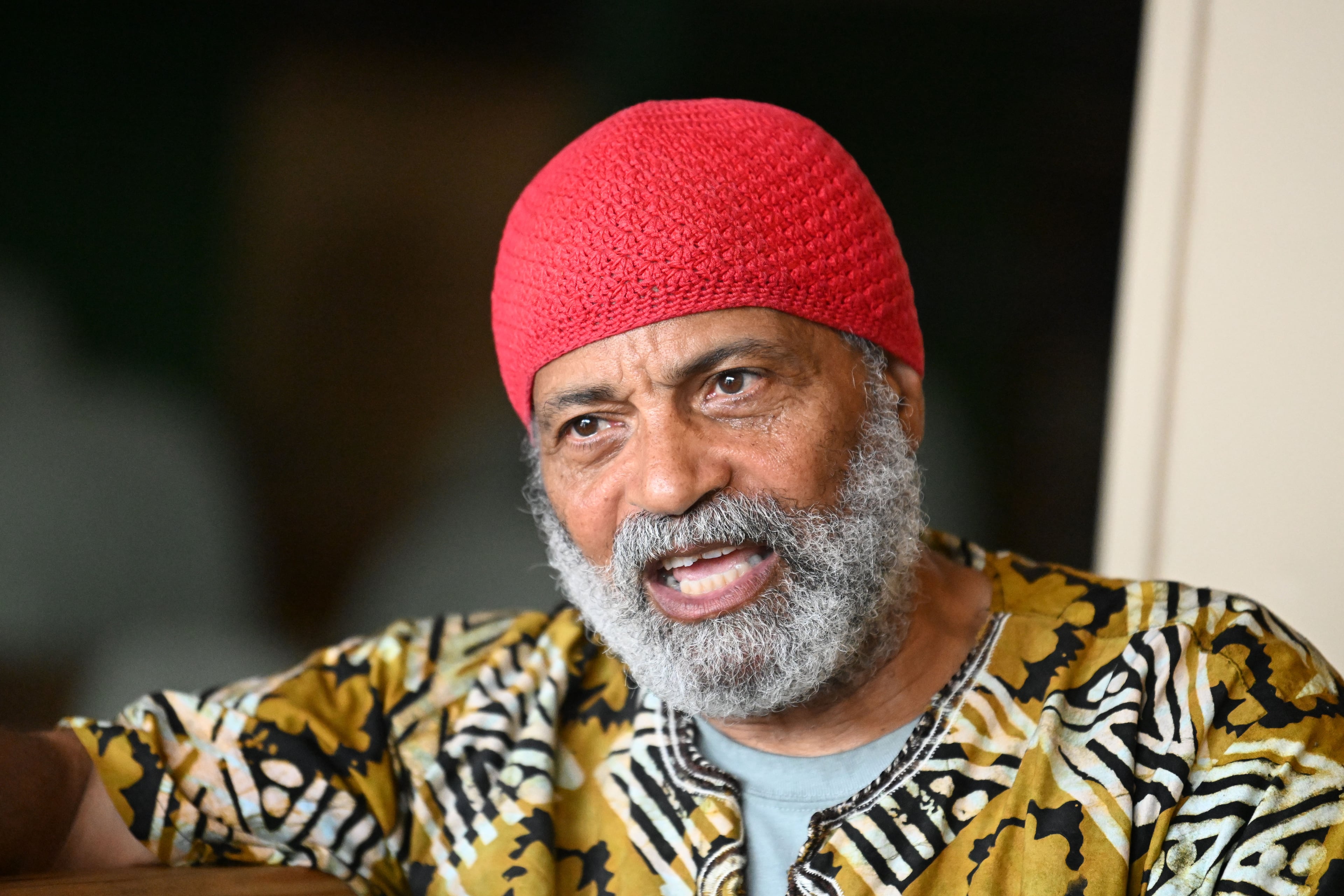
Shaleahh, a California native, was a student at Morehouse College in the late 1970s and considered himself a Black nationalist.
Sitting inside Soul Veg’s dining room, he reflects on two moments that changed his way of thinking and led him to the African Hebrew Israelite Nation of Jerusalem: hearing its leader, Prince Asiel Ben Israel, speak at Morris Brown College in 1978 and reading “Dick Gregory’s Natural Diet for Folks Who Eat: Cookin’ with Mother Nature.”
He notes how this section of West End feels less alive than it did in Soul Veg’s heyday. Then, the restaurant was just a hook to bring folks into learning opportunities, events and programming geared toward educating all walks and generations of Black life.
Soul Veg was always more than its food.
It was meant to be a space for learning and engaging, whether you were a part of African Hebrew Israelite Nation of Jerusalem or not.
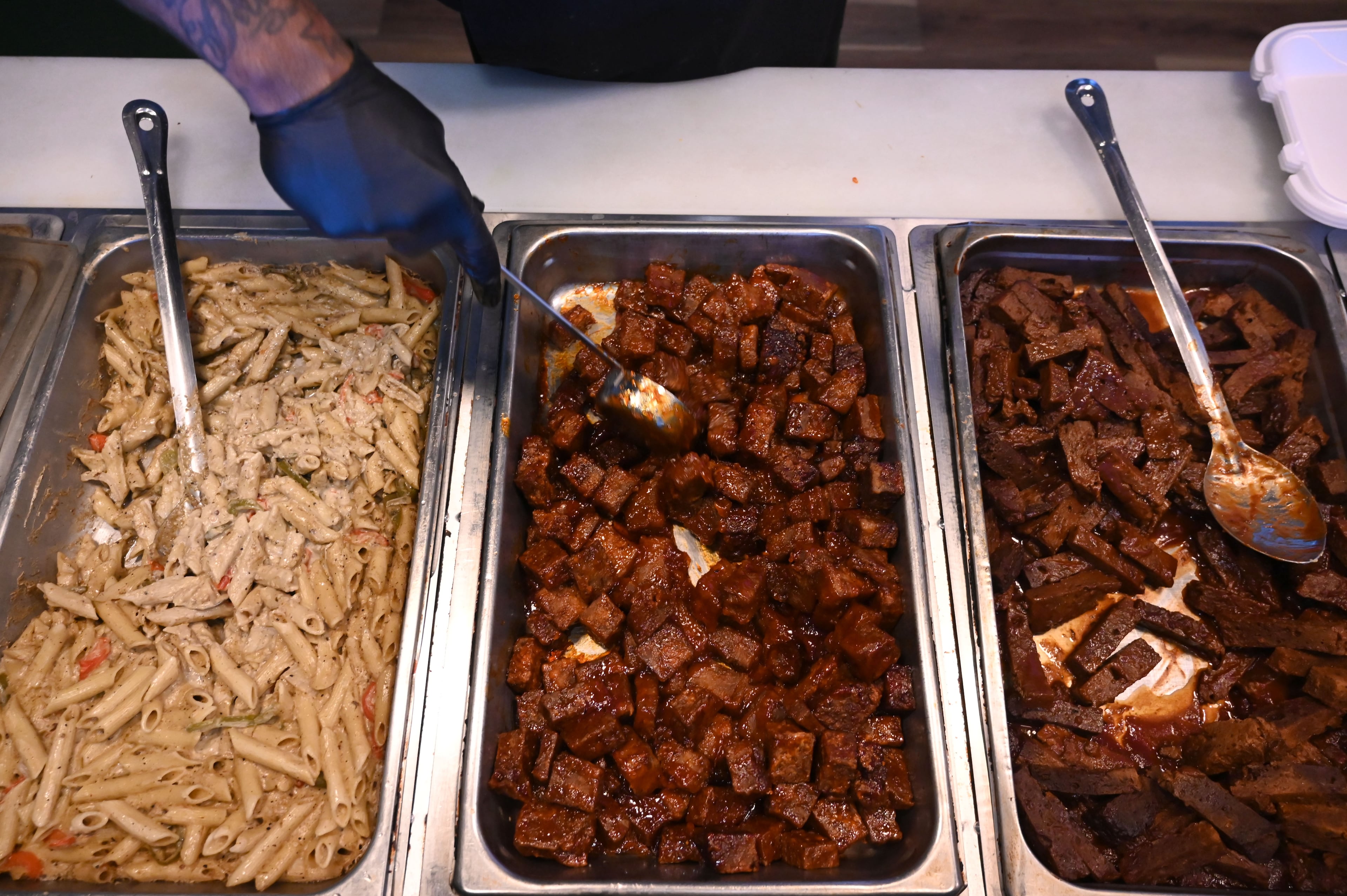
Barbecue kalebone, collards and vegan mac n’cheese were just delectable, health-conscious bonuses.
When asked about what its impending closure means for the community, Shaleahh takes a moment, staring out toward Ralph David Abernathy.
“It’s heavy, but the reality is that it’s time for some changes,” he said.
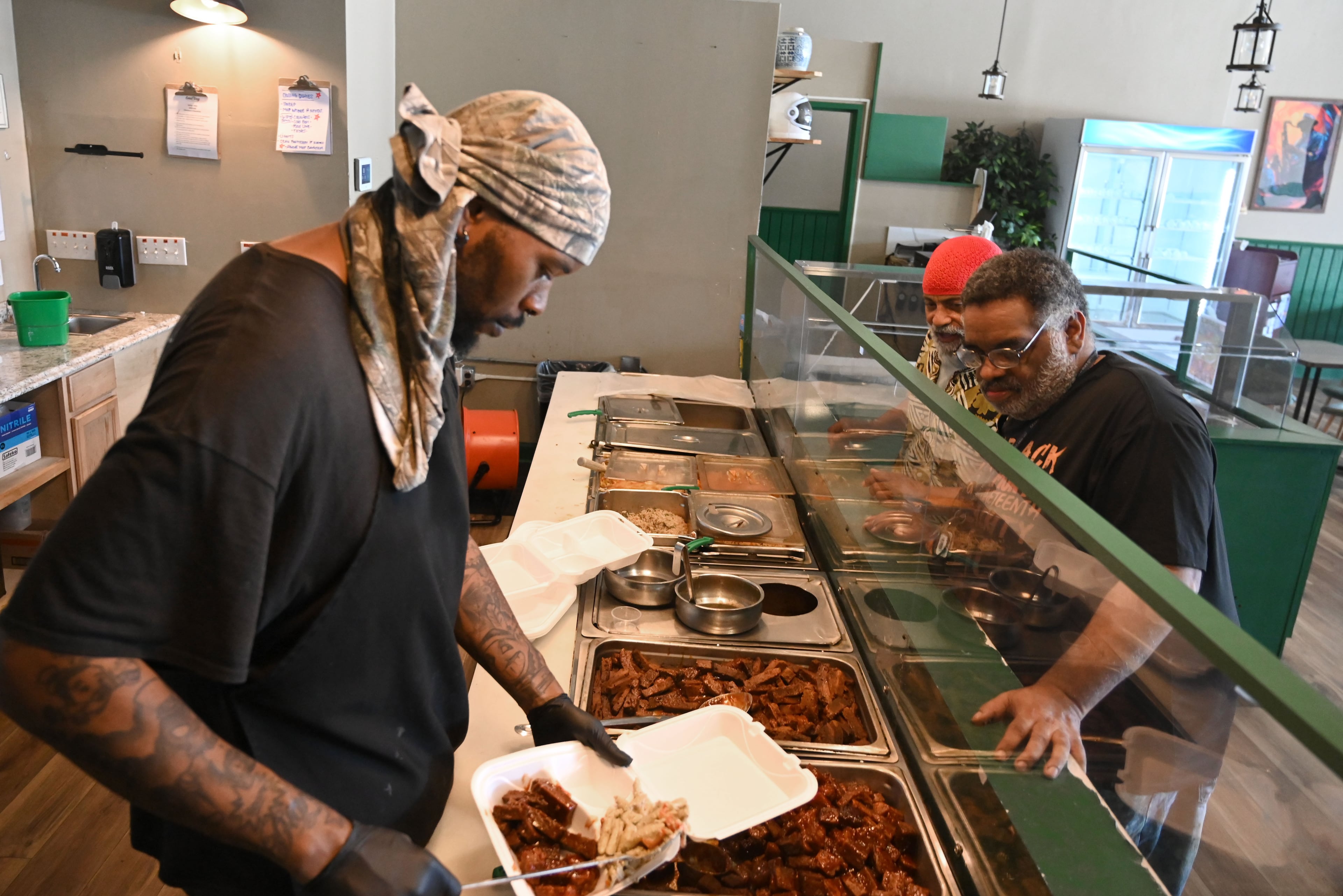
Indeed, it’s a loss that carries weight; just don’t expect a funeral.
“This would be more like a celebration of life because of the things that we brought to the communities,” said Neetskeeyah Yungai, who served as Soul Veg’s head chef from 2004 through 2024.
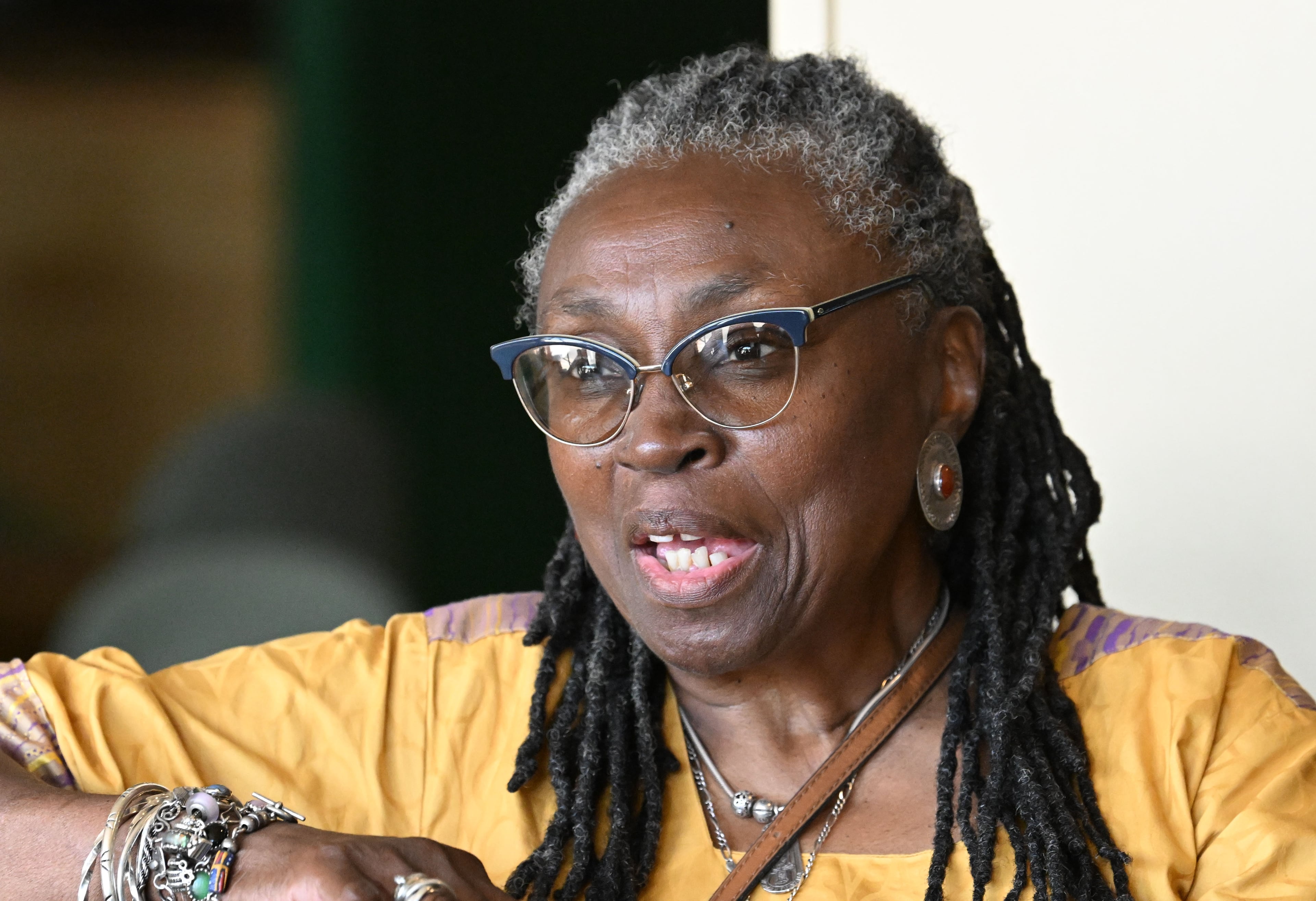
She’s fed Mike Epps, André 3000 and Dick Gregory.
The Chicago native started at the restaurant in her 50s, leaving in her 70s. She left during the most recent ownership shift.
On Thursday, she stopped by the restaurant to visit Shaleahh there one last time.
What she’ll miss most is baking pot pies and watching customers marvel at her son’s lentil burger.
“The one thing I love is that so many people every day came in here for the first time,” she said.
For the majority of its run, Soul Veg was led by Prince Rahm Ben Yehuda until he handed ownership over to Edenic Management & Consulting LLC.
It’s an ownership group that includes past customers and members of the African Hebrew Israelite Nation of Jerusalem.
One of those is Ahneeahm Ben Khazriel.
Khazriel, 36, was a longtime customer and actively engaged with the Soul Vegetarian Complex before his group took over ownership two years ago.
He was first introduced to the space as a high school dropout who moved to town from Minnesota. The community gave him guidance and purpose.
When his team relaunched as The New Soul Veg & Cafe in 2025, he wanted to carry on with the idea that it wasn’t simply a restaurant concept — it was meant to be “a holistic complex.”
Besides dining, the three-story space has lent itself to community programming such as bookstores, workshops, guests, thinkers, authors, speakers and activists.
Winnie Mandela once came by to speak.
Ben Yehuda was getting older, and with the pandemic came a downward business spiral.
Ben Khazriel and his friends felt the end was near, so they wanted to extend Soul Veg’s lifeline. After some negotiations, they reached a deal, and Ben Yehuda went back home to spend time with his family before he passed.
“It would have closed. It really shouldn’t have been open. He was just doing wizardry,” Ben Khazriel said.
To keep the lights on, his team got high-level support from an investor in Chicago, home of Soul Veg City restaurant on the South Side.
The investor insisted Ben Khazriel and his team put some more TLC into the space that was in a serious state of decay.
They installed new flooring, put in a new oven, replaced rotted wood and even installed a spa downstairs. Then, the spa flooded.
Those updates, mixed with flood damage, ran their costs into the high six-figure range.
“It just made a situation where it wouldn’t make sense to renew the lease,” Khazriel said.
Not to mention, the business, which once sustained the entire complex, was increasingly in decline.
“We were profitable enough for the restaurant to cover the bills for the building, but that wasn’t the goal. The goal was multiple other areas,” he said.
The storied banquet hall that hosted so many Black luminaries was supposed to be a major moneymaker. The struggling infrastructure changed that.
“You can’t rent out a spot and there’s Sheetrock falling in your drink,” he said, adding that this is the end of not just the restaurant’s time in West End but the community center as well.
There is still a barbershop around the corner, with a different landlord that’s staying behind.
Soul Vegetarian No. 2 in Poncey-Highland will remain open, as it’s run by a different ownership group connected to the African Hebrew Israelite Nation of Jerusalem.
“It’s very inspiring to know that the movement grows and lives out beyond the capacity of any particular one institution,” Ben Khazriel said.
“But even more important than the institution is the influence that we had on the hearts and minds of the people.”
People like Carthy, who says Soul Veg taught her how to be a proper vegetarian and build relationships around food.
At 51, she’s still keeping the same diet, albeit with some shrimp here and there.
“There’s nothing like that. And especially for the Black community … I’ve been looking,” she said.
That legacy may never be duplicated in Atlanta again: a food business with Black folks in mind that didn’t operate for profit’s sake, Ben Khazriel says.
“It was always about the transformation and elevation of our minds and our hearts and the restoration of our people,” he said.
“Let’s appreciate Soul Veg for what it was, but more importantly, understand the principle for why it was and carry that principle with us into the future.”