
Activists concerned Roswell’s project will disregard Black history
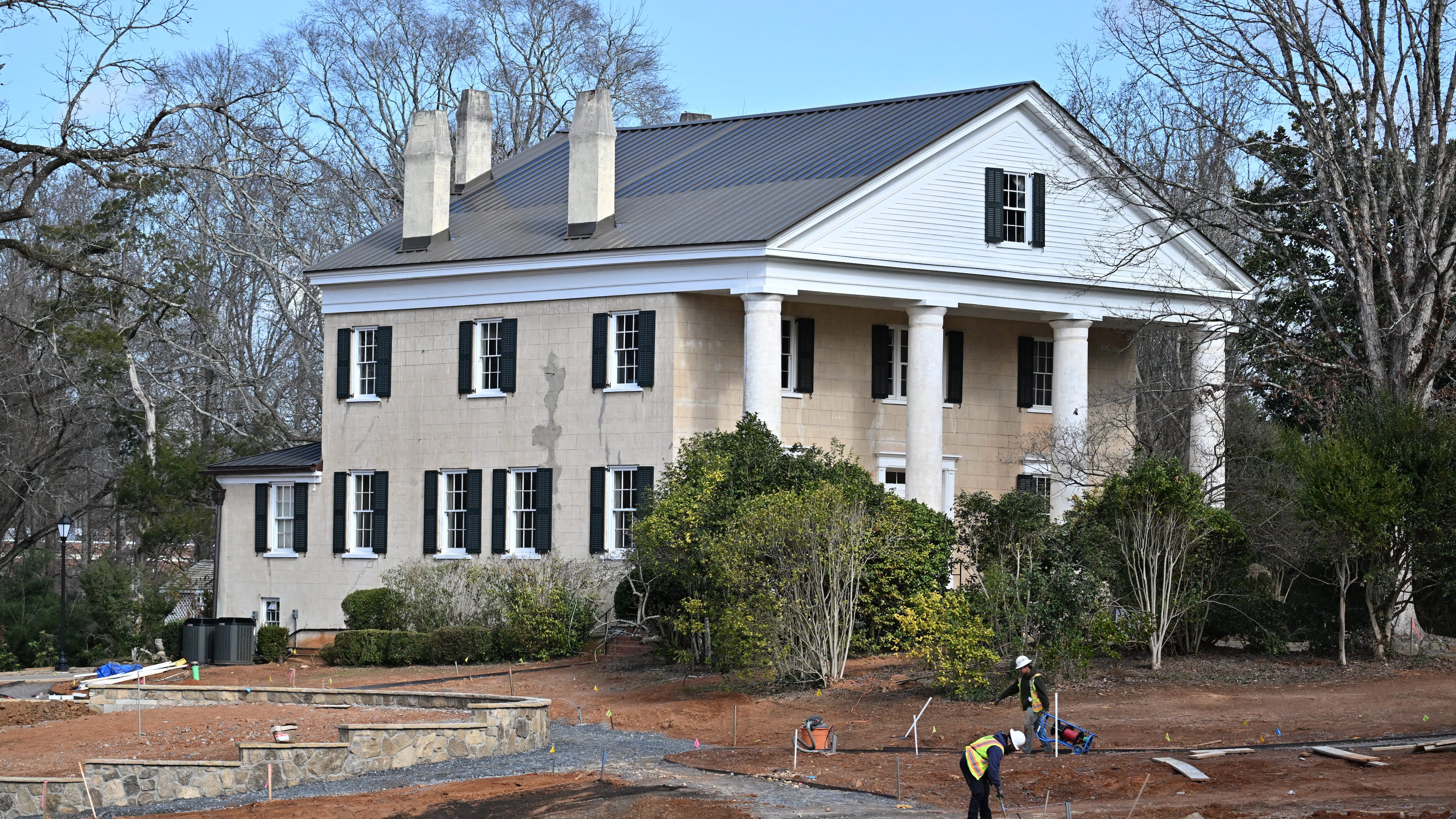
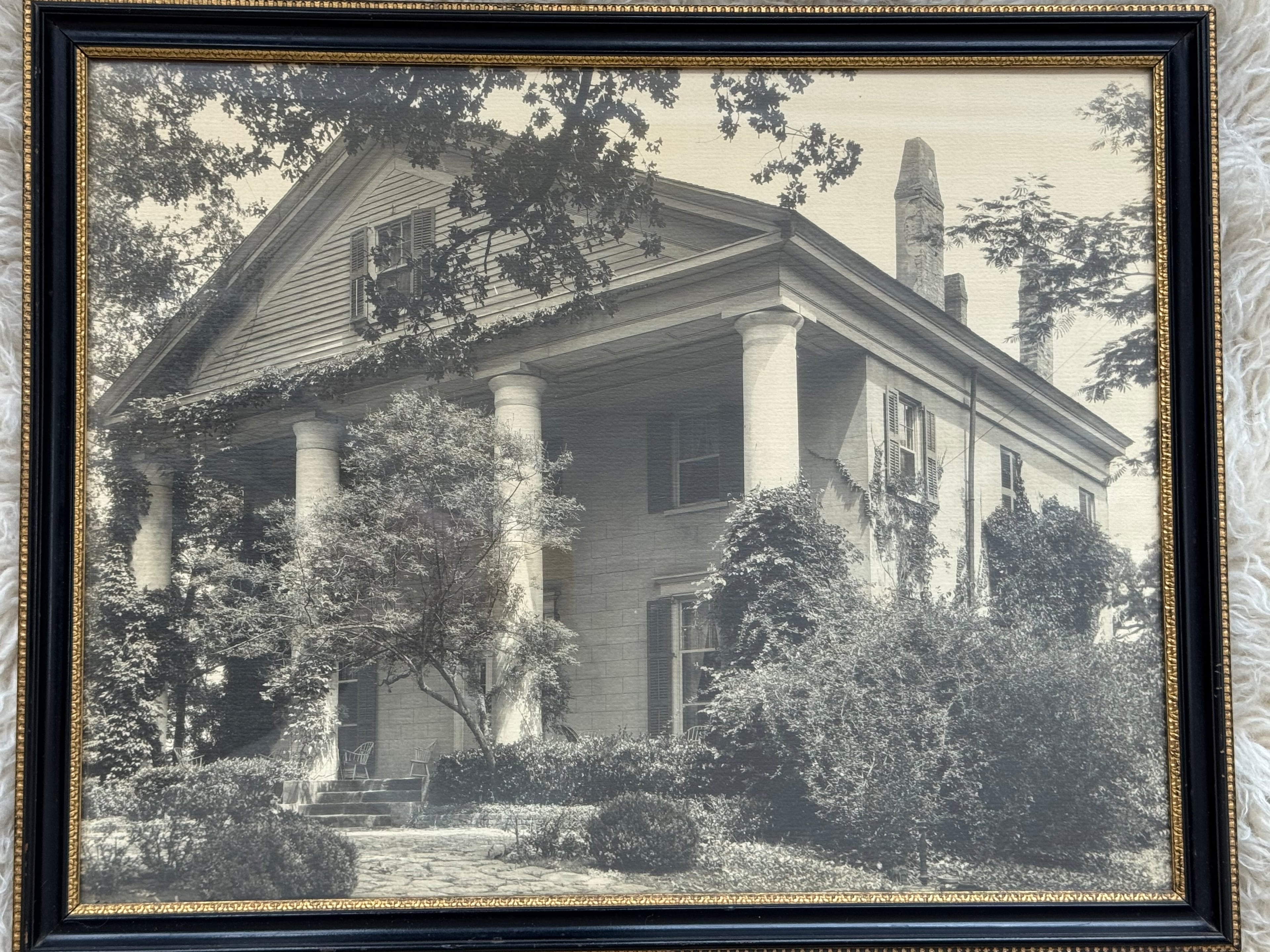
In a town just outside Atlanta, America’s antebellum-era castles are designed in Greek Revival architecture and stacked on tall pillars to emphasize grandiose presence. Wide porches appear welcoming, and long driveways leading up to them prepare visitors for a fantasy “of Southern hospitality.”
“A romantic antebellum idyll,” recalled Sally Hansell, former owner of one such castle, Mimosa Hall & Gardens in Roswell.
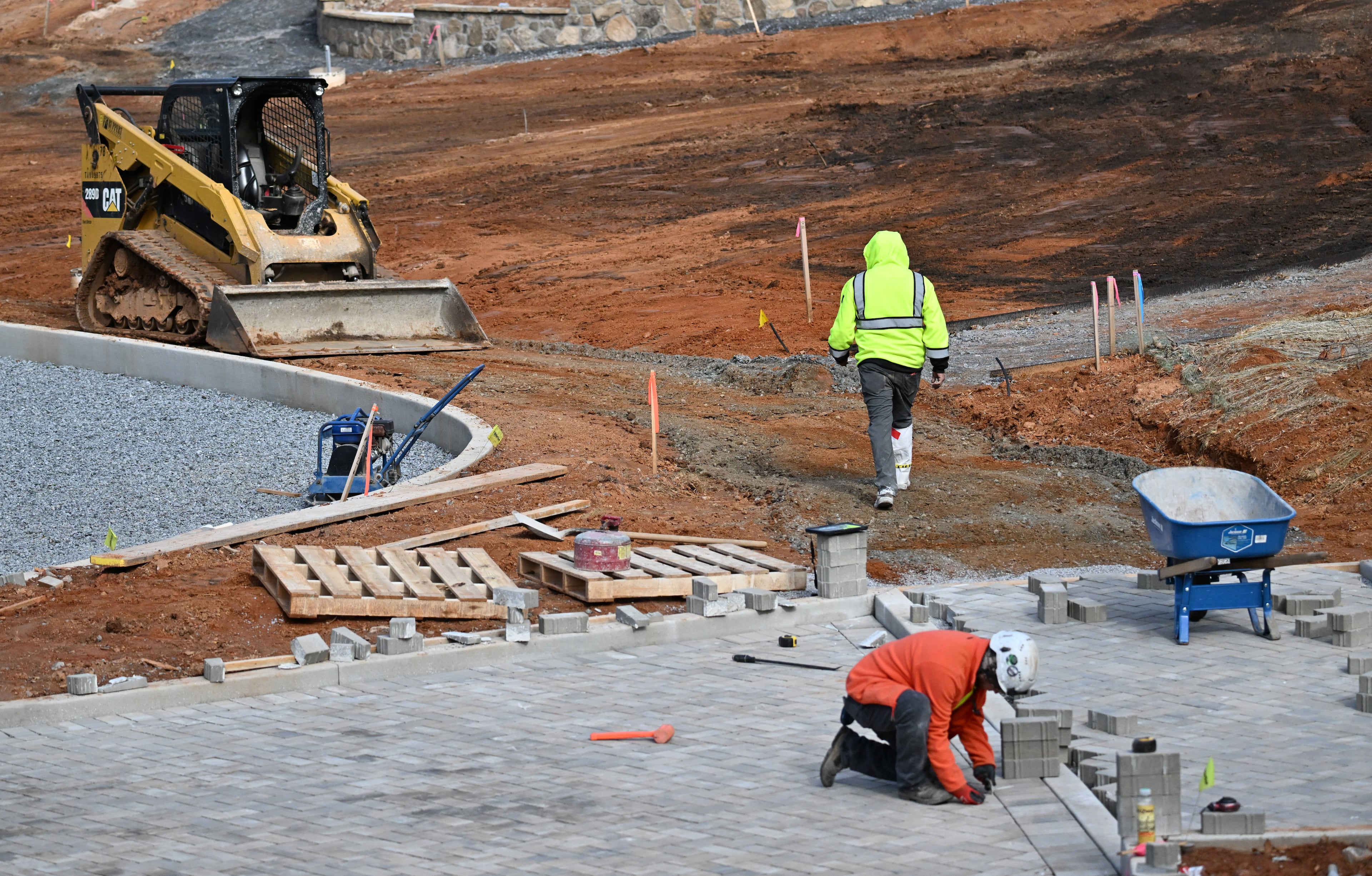
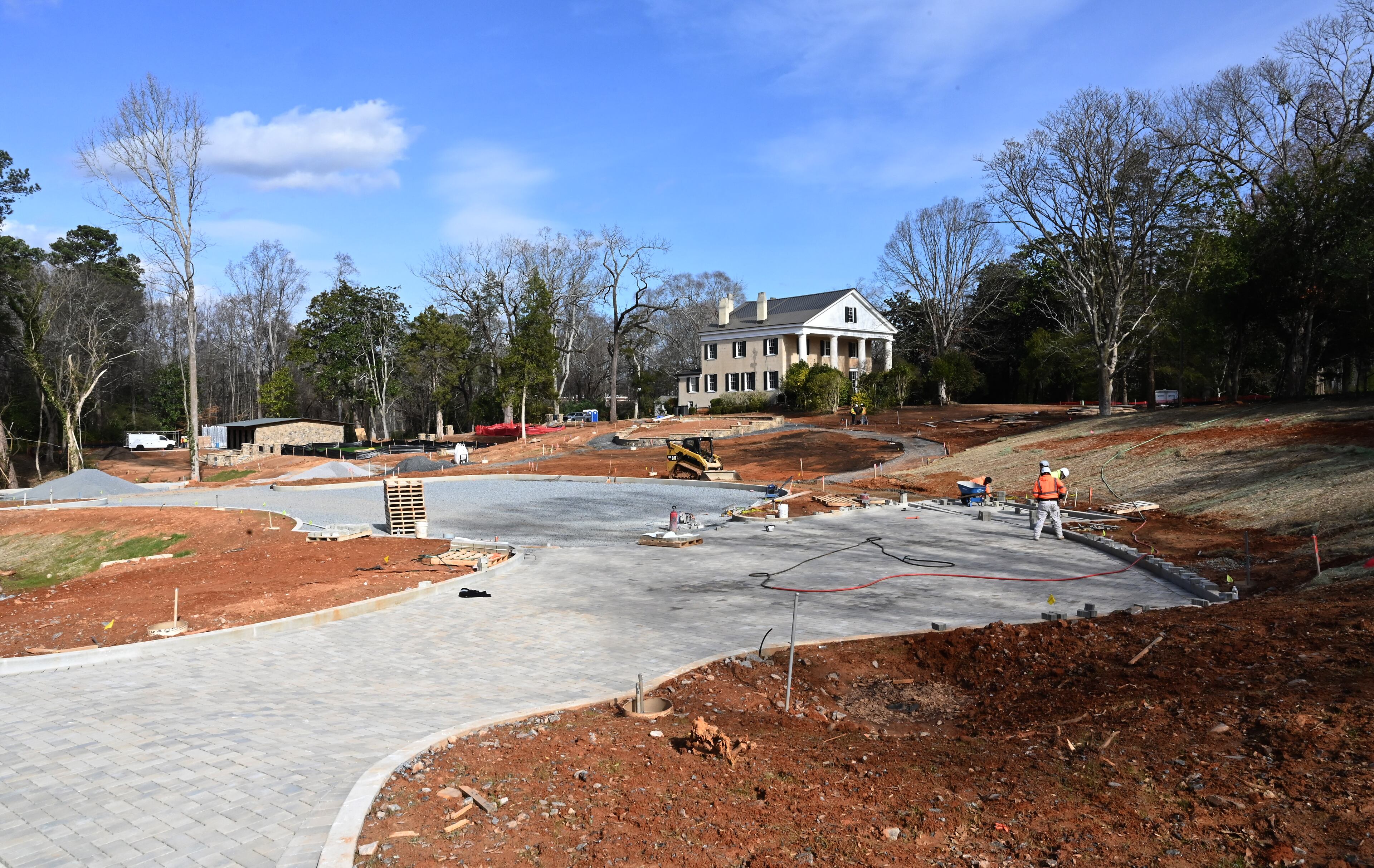
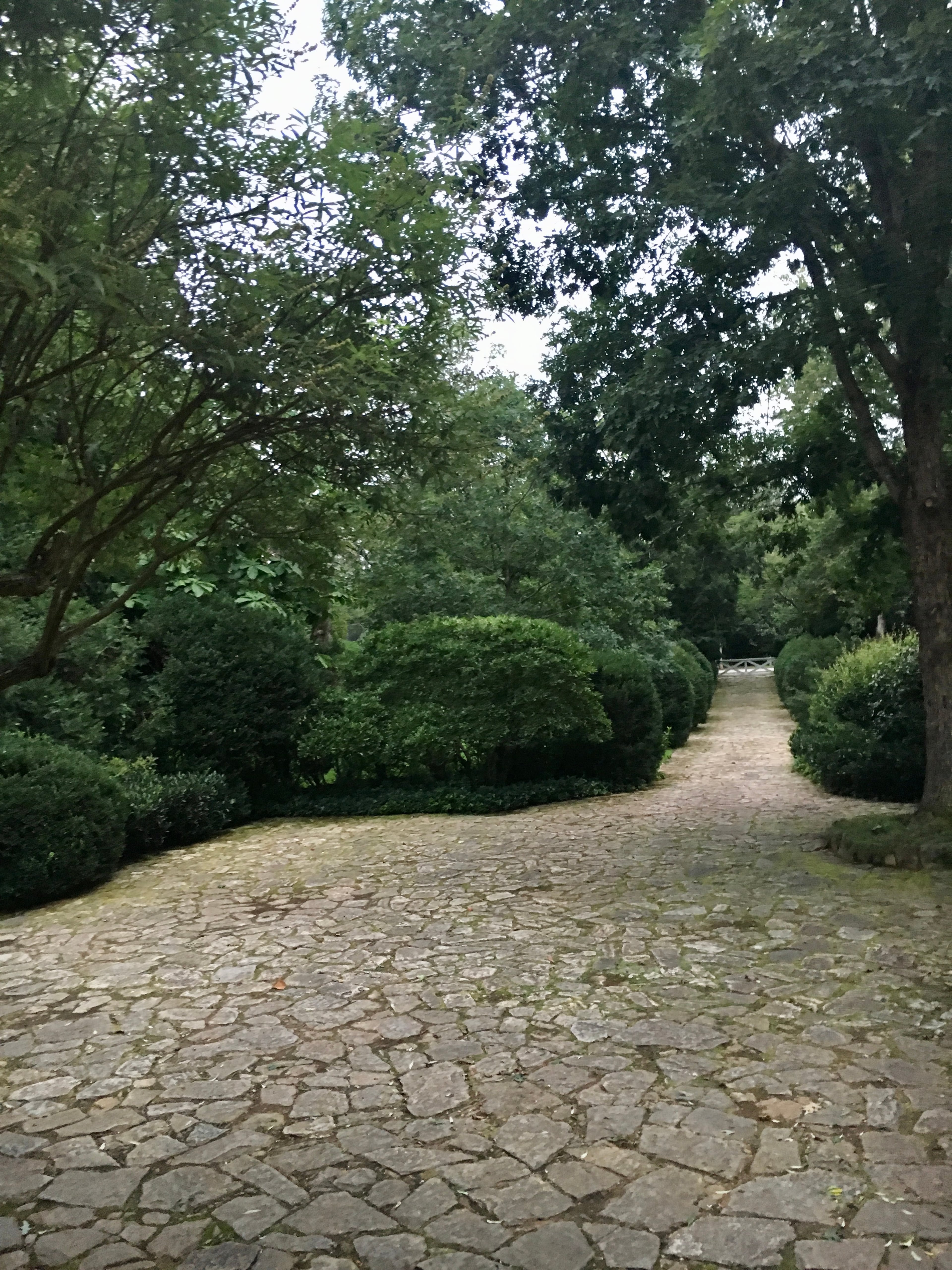
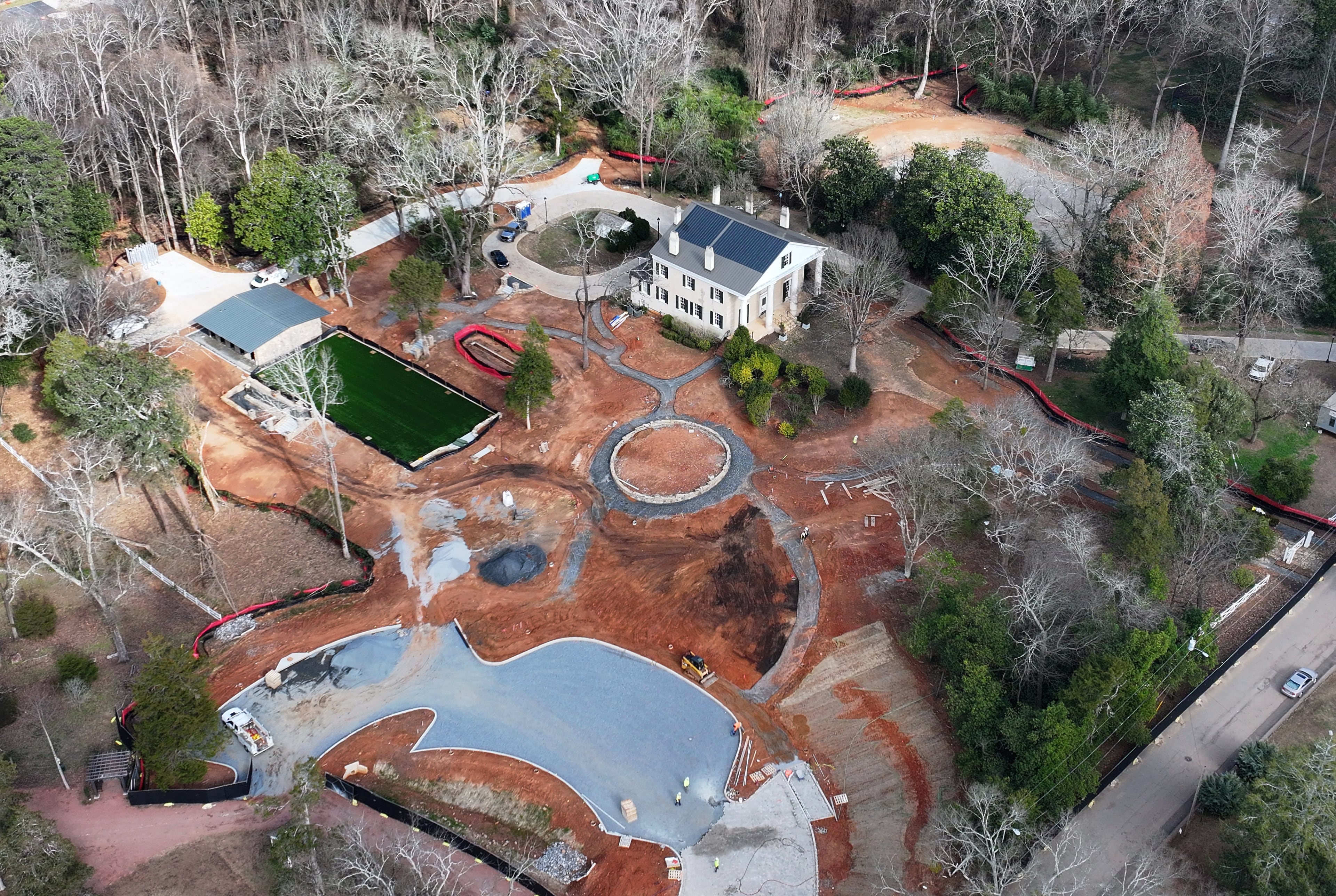
But at Mimosa Hall & Gardens, mounds of dirt blanket the plantation that once belonged to a Confederate general and enslaver, Hansell’s great-great-great-grandfather. Heaps of gravel have been placed where a parking lot and walkways are expected. Clusters of trees and gardens, once described as magical, no longer exist.
For nearly a year, the estate lauded for its historical relevance has been in a state of construction during its transformation by the city into an event space and wedding venue.
The plan is not without some skeptics. Plantation weddings have nationally caused a stir over the ethics of hosting celebrations on sites that don’t recognize the pain and legacy of the enslaved people who lived and worked there.
However, city of Roswell officials and partners say they’re dedicated to preserving the legacies of its historical locations.
In addition to weddings, Roswell officials say they are looking for opportunities to honor the multilayered past of Mimosa Hall, from the Indigenous American roots of the land to the enslaved Black laborers.
“The objective from the city’s perspective is to tell the complete story. We are not taking fragments of a period of time and telling only a partial piece of it,” explained Roswell Director of Recreation, Parks, Historic & Cultural Affairs Steven Malone. “Our goal and objective is to tell every element of that history.”
After having an archaeological survey of the grounds at Mimosa Hall & Gardens in 2021, officials say they’ve been careful with how they handle certain areas on the property. Though they’re not for sure where slave dwellings could have been, they say they have an idea and want to keep that area separate.
Mary Lucas, chairperson for the Black history-based Roswell Roots Festival that partners with the city, said it would be ideal to have some sort of sign at the front of Mimosa Hall to show the site is not being glorified for its antebellum past. That way, she said, visitors will immediately encounter the truth and full context of the site.
“If there was a welcoming sign at the door so that everybody as they enter knows from get-go...that says, ‘We know, we honor and, now, we respect,’” she explained.
The reconstruction is part of Roswell’s larger project, Founders Park, that will connect five of Roswell’s historic homes.
Roswell, known as a wedding destination, is home to multiple spaces for events, including parks and trails, squares, country clubs and — according to the city of Roswell website — “formal antebellum estates with open green space.”
The construction at Mimosa Hall & Gardens has become a contentious subject matter for local residents who fear history is being bulldozed away, especially the history of enslaved individuals and Black laborers who worked the property into the 20th century.

Former president of the nonprofit Friends of Mimosa Hall & Gardens Michael Harris says some of Roswell’s community, including Black residents, has become apathetic to acknowledging the city’s racial history.
Meanwhile, folks are keen on uplifting an idealized version of the Old South.
“They love the idea of these beautiful antebellum (houses) being preserved and maintained as they should be,” said Harris. “They really don’t care so much about the legacy of the enslaved in those places.”

He’d prefer Roswell have meaningful conversations about the city’s past in order to culturally move forward while honoring its history. He recalled the Indigenous tribes who inhabited the area before colonialists pushed them out and the enslaved Black people who were forced to work the land.
Harris said not all Roswellians have disregarded the history but reiterated that preserving the site as a sacred educational space was not a priority for the city.
“(Mimosa Hall) is a grand old house with a very complicated history,” Harris said.
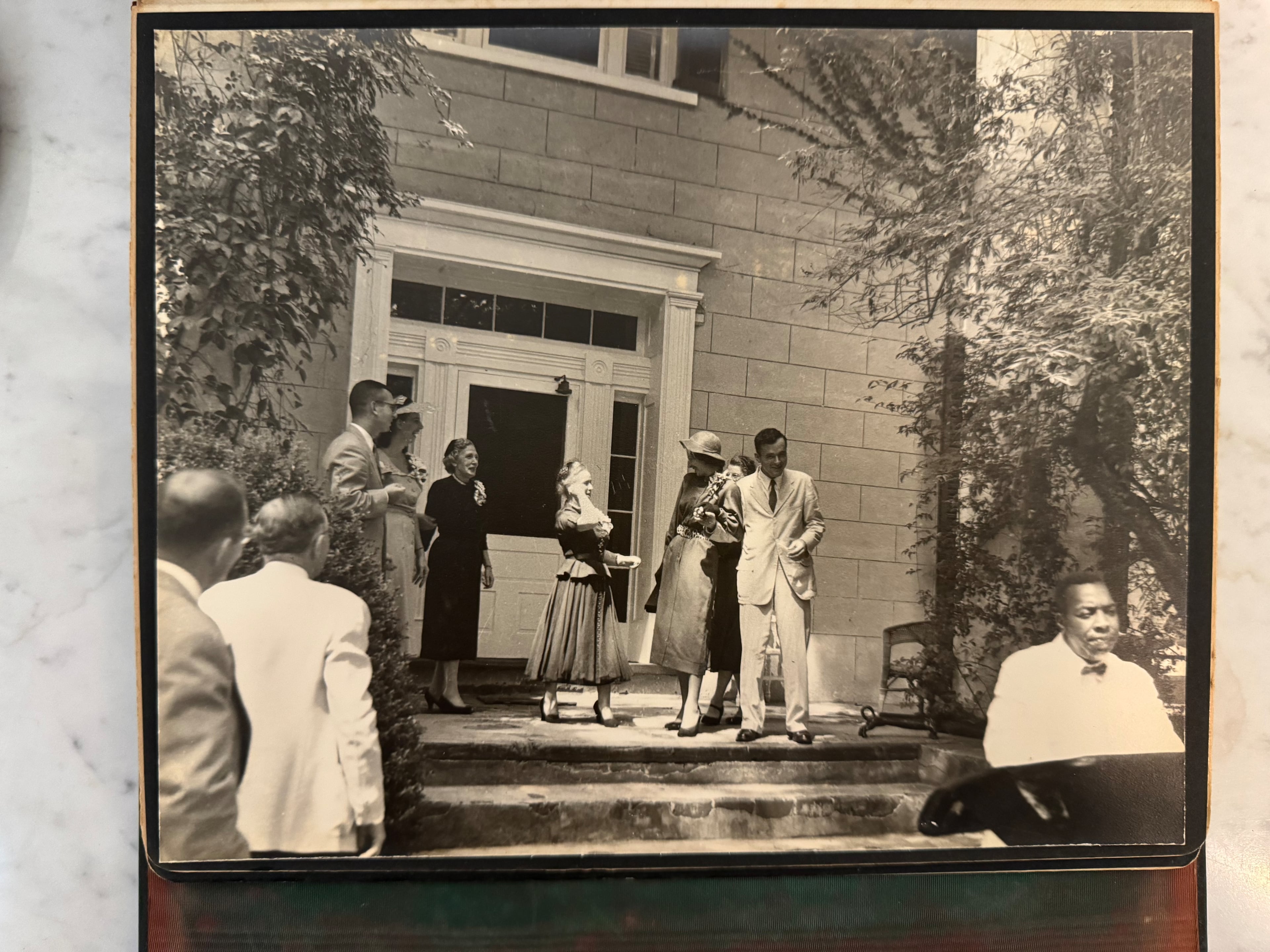
Mimosa Hall was designed for Roswell founder John Dunwoody and built by slave labor in 1841. Hansell’s great-great-great-grandfather, Andrew Jackson Hansell — named after President Andrew Jackson — bought the property in 1867. The property cycled through a series of owners over the years but went back under Hansell ownership in 1947 when Hansell’s grandfather, Granger Hansell, purchased the home.
Hansell, who is 70, spent much of her childhood at Mimosa Hall & Gardens. She remembers magazine photographers capturing parties and weddings on the property.
“This house was represented as an idyll of Southern hospitality,” Hansell recalled.

She didn’t hesitate to note the symbolism of Mimosa Hall & Gardens as a wedding venue.
“That is the imagery that will draw people to have a big wedding there,” Hansell said. “So people can live out the complete fantasy (of) white supremacy.”
Despite the racial attitudes of her older ancestors and the “separate but equal” doctrine of her childhood, Hansell considered her grandparents to be progressive for their time. She noted they made generous donations to Black organizations, supported the Civil Rights Movement of the 1960s, shared Black newspapers from Atlanta, and her grandfather hired Black employees at his law firm.
Hansell inherited the property and sold it to the city of Roswell in 2017 for $2.95 million but said she regrets not having done more to memorialize the history of the Black laborers.
“It would be great to see a material narrative memorializing the presence, contribution and labor of the enslaved in the making of Mimosa Hall,” Hansell said. “While my ancestors and others who inhabited the house for over two centuries have been recognized, those whose labor created this beautiful building remain invisible.”

Dora Stafford escaped racial terror as a Black child in 1912 by hiding in a wagon out of Forsyth County. Coming of age in Roswell, she eventually landed a job as a cook and built a career working for the Hansell family at Mimosa Hall. Later, her granddaughter, Yvonne Hearn Grogan, was hired as a playmate for Hansell when they were kids.
“I used to have a good time,” Hearn Grogan said, recalling pony rides and being on the grounds at Mimosa Hall & Gardens. “I really liked playing with (Hansell) because she was like a friend.”
Hearn Grogan remembered multiple racial incidents in Roswell throughout her childhood: not being allowed to sit at the drugstore counter, hearing racial slurs, witnessing police brutality and hiding from the Ku Klux Klan at her home.
“The Ku Klux Klan used to come, drive through the neighborhood. When we heard the horns blowing and we were outside, my grandmother would make my sister and I come in the house, then turn off the lights, and she’d tell us to lay down on the floor,” Hearn Grogan said.
“All the kids would disappear into the house and didn’t come out until the next day.”
But she never felt any racial intimidation at Mimosa Hall.
“With the Hansells, we never had a problem. I never felt anything different,” she said.
Charles Grogan, Hearn Grogan’s ex-husband and a member of the Roswell Historical Society, said Roswell didn’t have a large Black population, so local Black history tends to overlap.
“History is, to me, memories,” he said, comparing historical erasure to a form of death.
“I understand progress. I understand some people just don’t care about the past,” Grogan continued. “When you tear down a building and replace it, it’s a death. Soon, nobody will remember that we were there.”
Considering the Black people who grew up around Mimosa Hall have gotten older and descendants have moved away, Grogan is concerned the legacy will be forgotten.
In 2023, Mimosa Hall was designated a historical landmark, which protects the building’s structural integrity from future construction. Site redevelopment began at the end of 2024, with plans for a 250-guest outdoor event space, a new building and a redesigned parking area.
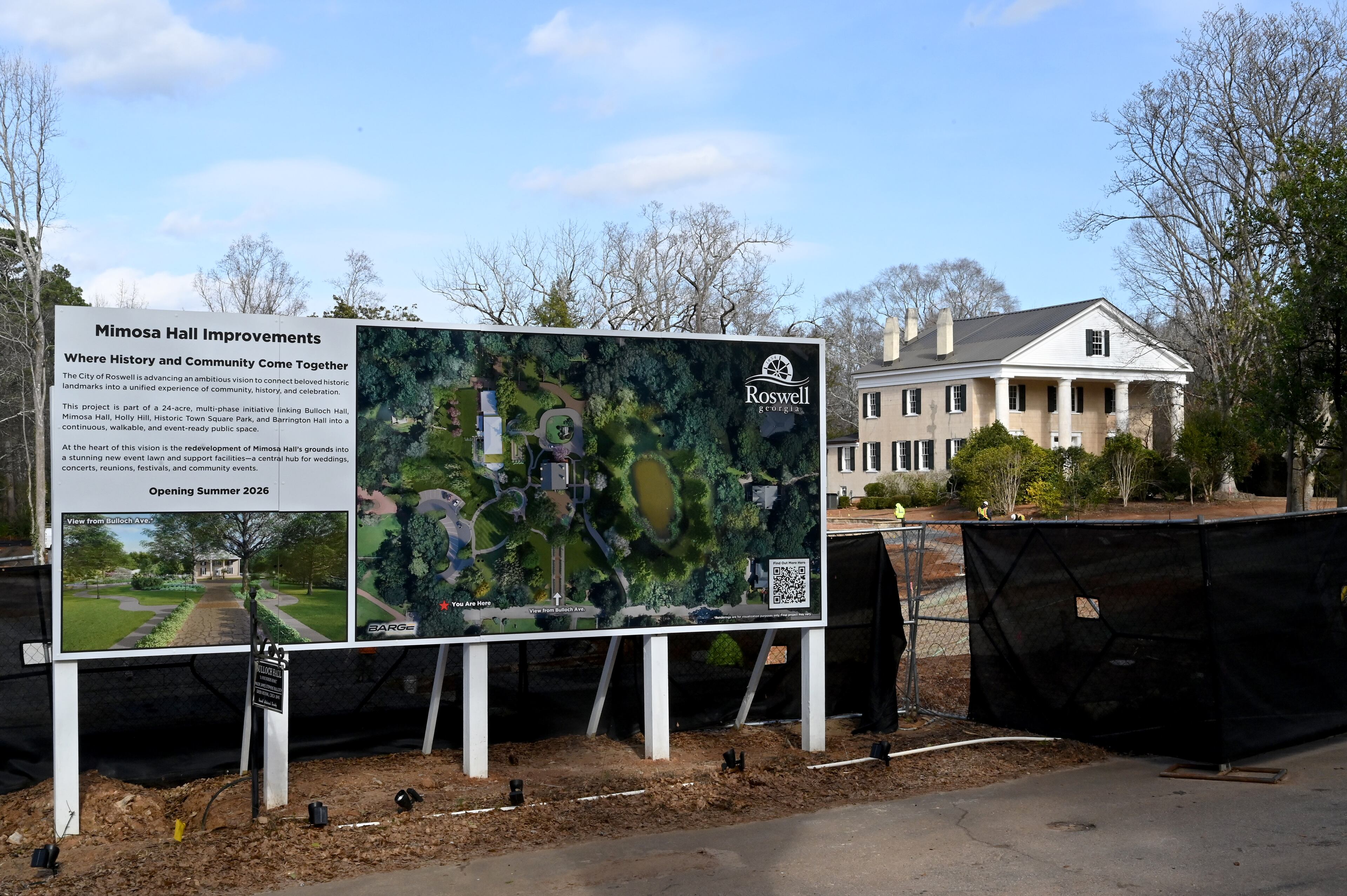
The redevelopment of Mimosa Hall is expected to be complete in 2026.
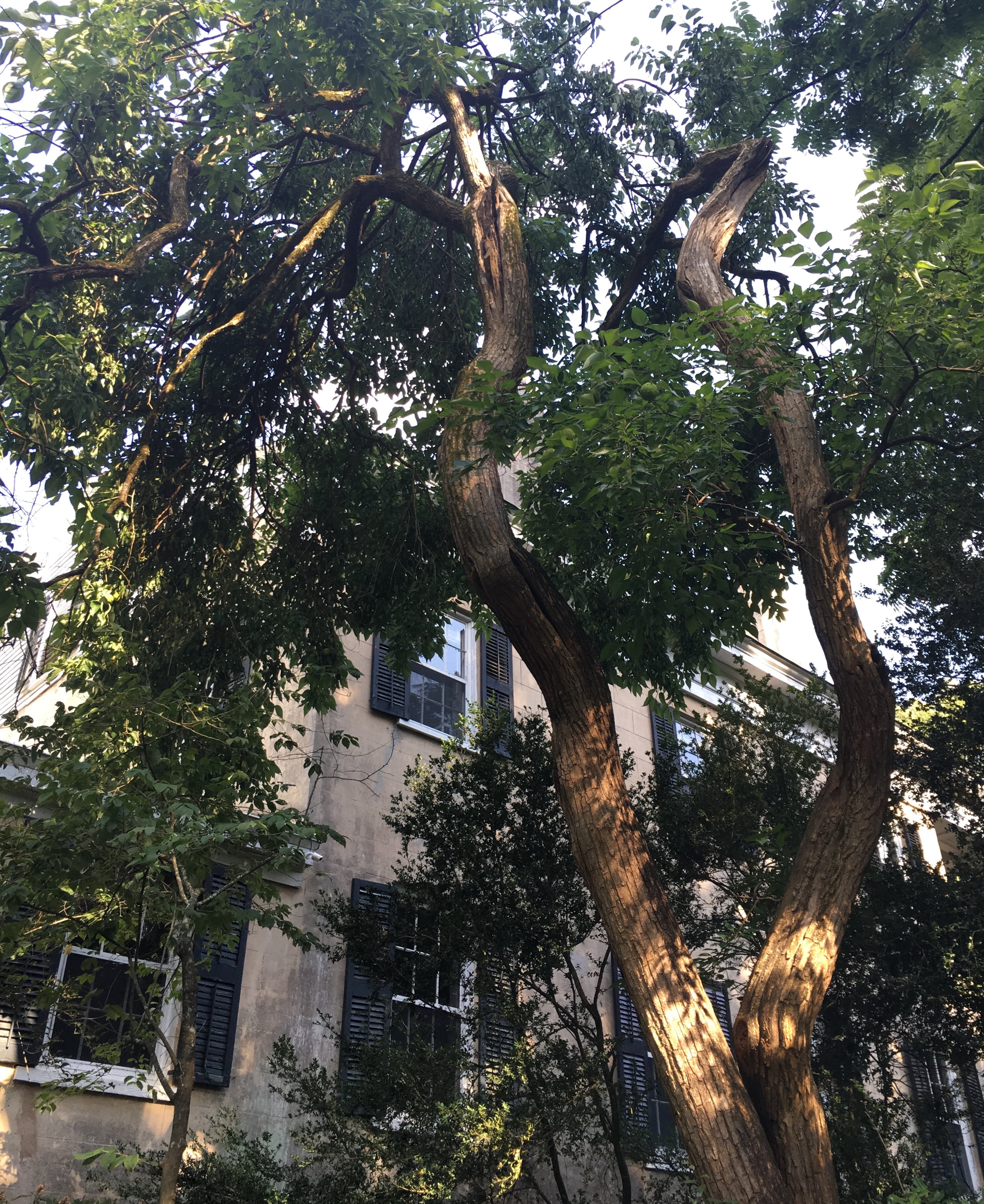
During the summer of 2025, some Roswell residents were outraged when government-sanctioned redevelopment at Mimosa Hall led to a loss of trees and gardens designed by former owner and Atlanta architect Neel Reid.
Harris thinks preservationists can’t see the forest for the trees. Rather than focusing on the enslaved people who helped build and maintain the estate, activists have been “stuck” on less important issues, he said.
“What I want is for there to be some conversation or some understanding of who really built this,” Harris said.
“I want the truth to be told. That’s all I care about.”
Correction
This story was updated to correctly describe Sally Hansell’s grandparents sharing of Black newspapers in the 1960s.
About the Author

Brooke Leigh Howard is a reporter for The Atlanta Journal-Constitution's Black culture team, UATL.