
Is Atlanta still America’s Black mecca? Here’s what we found.
It felt like the reality check Atlanta needed.
Less than a year before the 1996 Summer Olympics brought a world full of folks to our door, Goodie Mob released their debut album, “Soul Food.”
Clocking in at just over an hour long, the Dungeon Family foursome’s southern rap opus challenged everything we thought we knew about Black Atlanta. “Soul Food” questioned the notion of Atlanta being the Black mecca, a city impervious to common ills that befall Black residents in other American metropolises.
On the album’s first single, “Cell Therapy,” CeeLo Green ponders whether his family’s new gated community was designed to promote safety or box Black folks out from his hometown — literally and figuratively.
“My mind won’t allow me to not be curious,” he raps.
I’ve thought about this quote a lot over the course of leading our Black mecca series. I love my hometown. I also love to question my hometown.
My mind has always wondered about where Atlanta has been, where it is and where it’s going — especially as it pertains to Black life.
I wasn’t alone.
Thirty years after “Soul Food,” with the 2026 FIFA World Cup nigh, my colleagues and I knew it was time for another reality check.
UATL’s original series, “Atlanta: America’s Black mecca?” featured some storytelling from local reporters searching for answers to this question. What did we do? What did we find? What does it mean? What does it tell us about the future?
Here’s the skinny.
Reporting: What we did
Over the course of 10 months, we did a lot. Since launching the series in March 2025, we published 12 stories, seven original videos, engaged in podcast conversations, hosted an event and sat down with Mayor Andre Dickens.
Each month, we examined different topics, speaking to locals and transplants about what they were experiencing IRL.
Our reporting covered health care, education, music, arts, food and opinion. The Atlanta Journal-Constitution, UATL, emails and social channels were inundated with comments from you.
There was love. There was hate. We responded. We wrote a story about that, too.
Reflections: What we found
So, is Atlanta still America’s Black mecca? We looked at the numbers.
In short: yes and no.
Let’s just say answers may vary depending on who, what and where you’re asking the question.
Reporting from Ernie Suggs found that Atlanta remains a mecca of higher education for Black college students. However, the legacy tenants at the AUC — Morehouse, Clark-Atlanta and Spelman — are looking over their shoulders at Georgia State, which has awarded more bachelor’s degrees to Black students than any other nonprofit institution in the country.

Najja Parker found Black musicians are still traveling here to realize their dreams. Despite a lack of built-in infrastructure and some folks moving out, opportunities like New Music Mondays showcase at Stankonia Studios are providing opportunities for up-and-comers.

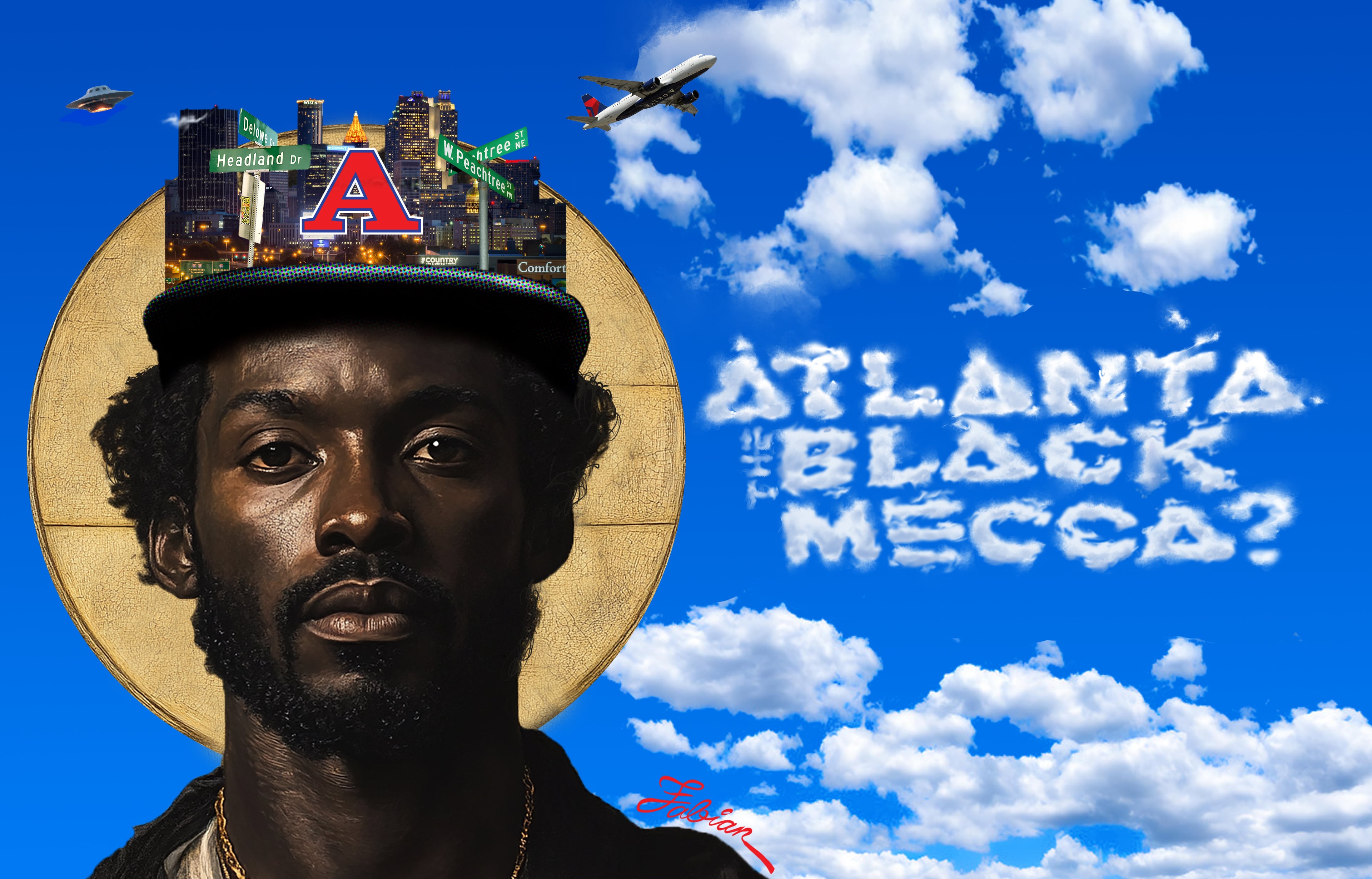
Creatives told UATL’s Brooke Howard about their successes — and worries — for Atlanta’s Black arts scene. Bonus: artist Fabian Williams even blessed us with an original piece inspired by the series.
Yet, like any major city, not everyone has found their Black version of Oz here.
Business reporter Mirtha Donastorg found that despite a seeming abundance of Black millionaires and businesses, researchers say Atlanta is a city that’s deeply unequal.
GLAAD award-winning culture scribe DeAsia Paige spoke with Black LGBTQ+ residents who find Atlanta welcoming, but lacking safe spaces to build community.

Gaps in mental health care coverage, and the vanishing of historic Black neighborhoods still persists.
One could go as far as saying that despite its current status, Atlanta’s place as the Black mecca has never been more dubious. Then again, what’s encouraging is how our reporting shed light on the people and organizations working toward solutions.
Future musings: What’s next
This year marks 30 years since the ’96 Games. The first World Cup match in Atlanta between Spain and Cabo Verde will kick off at noon on June 15. In November, Georgians will vote for a new governor. At City Hall, Dickens is starting another four-year term.
What does this mean for the Black mecca?
When I spoke to our mayor for this series, we talked about the “tale of two cities” in our hometown. The Black haves and the Black have nots. The idea that Atlanta is a Black mecca for one, not the other. What needs to change.
I asked if he’s worried about losing Atlanta’s place as a Black mecca, whether it was losing its grip to to the likes of Charlotte, North Carolina, Chicago or D.C.
Dickens shared his vision, using his common quip that Atlanta is “a group project” where everyone — whether you flew here or grew here — needs to take responsibility for future success.
“I’m hopeful that as we grow, we don’t ever lose the Black mecca, that we don’t lose our Black excellence. The nation needs us,” he said.
In his second inaugural address earlier this month, Dickens likened Atlanta to David, its Goliaths being poverty and inequality. He noted he has and plans to continue addressing both.
“And together, as one indivisible community, we will close the book on a tale of two cities,” he said.
What I can say is that we’re not closing the book on this conversation.
We’ve reached the conclusion of this series, but there are more stories to be told about America’s Black mecca. Expect continued reporting from the AJC and UATL on this topic.
Keep the dialogue going. Keep sharing your thoughts, experiences and stories with us.
Atlanta’s future as the Black mecca hinges on me and you, your momma and your cousin, too.
ABOUT THIS SERIES
“Atlanta: America’s Black mecca?” is an original content series from UATL that explores that question with data-driven, thoughtful reporting that prioritizes the voices of locals and transplants who call this city home.
About the Author

Gavin Godfrey is an editor and Team Lead for UATL, the AJC's Black culture franchise. He's an award-winning writer and editor from Atlanta who's covered everything from OutKast to the water boys. Before joining the AJC, Gavin worked for Capital B Atlanta, CNN, and Creative Loafing.