
Atlanta in Black and white: A century of becoming

Thousands of images are stored in the photo archives of The Atlanta Journal-Constitution, long faded from memory or, in some cases, never seen.
As we mark the 100th anniversary of Black History Month, we returned to the archives to see what they might reveal.
For this project, “Atlanta in Black and white,” longtime AJC archivist Sandi West combed through thousands of photographs — from the earliest days of The Atlanta Journal and The Atlanta Constitution to the present — searching for rare and overlooked images.
She narrowed the collection to roughly 1,200 photographs and shared them with the AJC’s director of archives and rights management, Allison Schein, who then passed them along to reporters Nedra Rhone and Ernie Suggs.
From there, with the help of the photo team, we selected 33 images that best reflect the evolution of Black life in Atlanta across the 20th century.
From a lone tobacco farmer during harvest season in the 1940s to Stacey Abrams in 1994 as a junior at Spelman College, we challenged ourselves to find the story behind the images, and with the benefit of hindsight, explore history in a way that could not be understood in the moment.
Student sit-in at Union Station, 1960
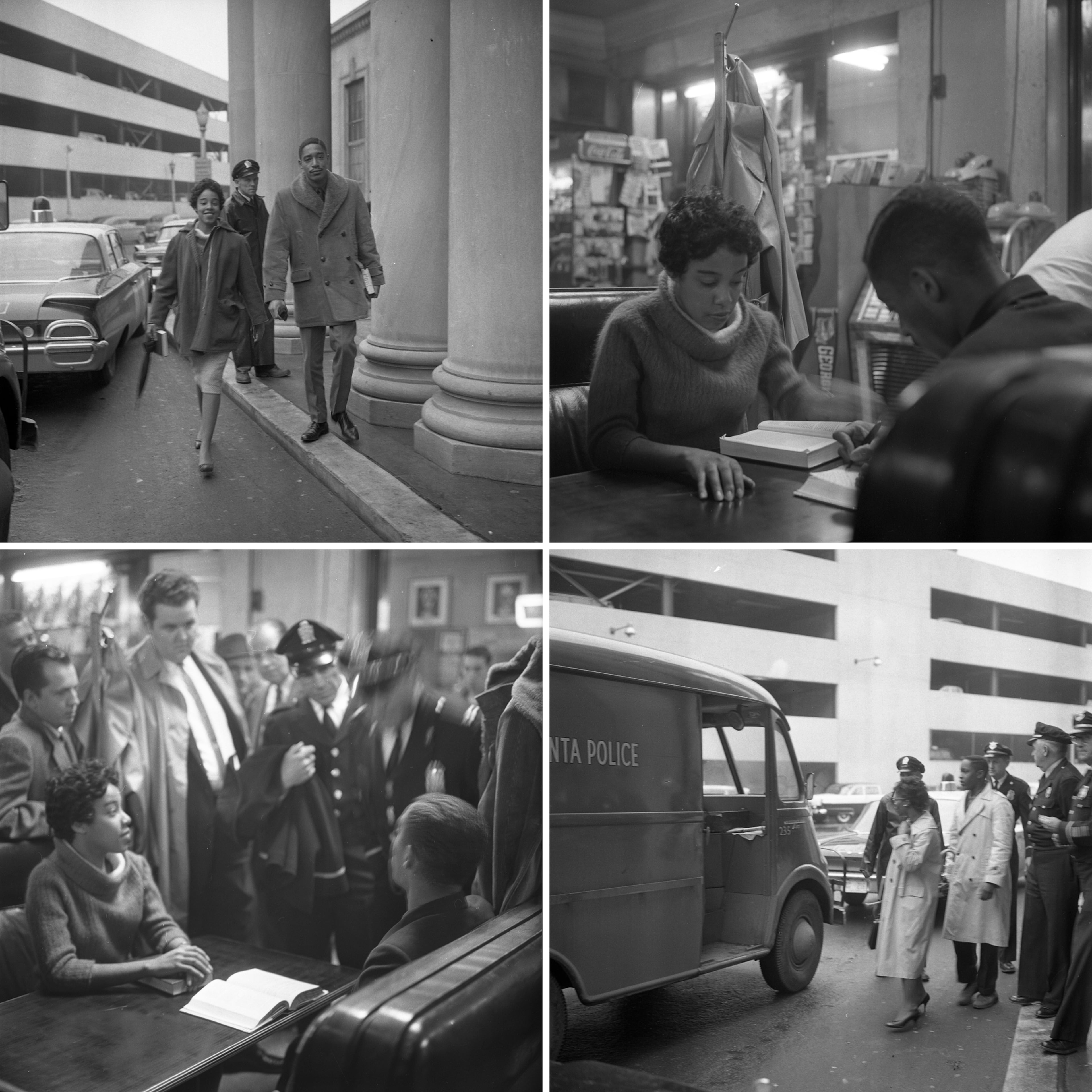
On March 9, 1960, local newspapers published an article submitted by students from Atlanta’s historically Black colleges and universities. In “An Appeal for Human Rights” the students explained their opposition to segregation and their plan to “use every legal and nonviolent means at our disposal to secure full citizenship rights as members of this great Democracy of ours.” Six days later, on March 15, about 200 students visited eateries in downtown Atlanta for sit-ins organized by Morehouse students Lonnie King and Julian Bond. The unnamed students in this image went to Union Station where a series of photos documented their arrival, sit-in and subsequent detainment by police. The sit-ins would continue for about a year. In September 1961, Atlanta, lagging more than 100 cities in the South, desegregated lunch counters and restaurants in the city.
Tobacco farmer in South Georgia, 1946

In July and August 1946, the Atlanta newspapers documented tobacco workers during the harvest. Although the farmer in this photo was unidentified in the caption, he likely worked in South Georgia, where there was robust tobacco production. Tobacco gave birth to the plantation system that rose in 19th century American agriculture, and Black people were relegated to the most arduous labor. Newspapers covered agriculture at the time, and the harvest may have been big news, but 1946 was also the year the Congress of Industrial Organizations made efforts to unionize tobacco workers in the South in a movement called Operation Dixie. Their efforts in larger industries faded, but CIO had strong influence on tobacco farming and perhaps this image of a lone worker is intended to reflect some of the changes that were sought for those workers.
Lillian B. Head models her ‘Polaris’ hat, 1968

Lillian B. Head, a native of Buford, was a noted milliner in Atlanta whose bold designs were worn by prominent Atlantans and sold in high-end retail shops. Head, a graduate of Louis Miller School of Millinery in Chicago, was initially denied a job as a designer and hired instead as a maid. Once her employer, Loretta Bonta, acknowledged her talent, Head was promoted to milliner. Her career got a boost when educator and philanthropist Mary McLeod Bethune invited her to participate in a fashion displays at department stores in New York City. One of Head’s most recognized designs was inspired by the 1967 opening of The Polaris restaurant and lounge at the Hyatt Regency Atlanta. The hat matched the blue dome of the rotating restaurant. She also made a white coat that resembled the hotel design, and a handbag modeled after its elevators. Head died in 2010, and today her designs are part of the collection of the National Museum of African American History and Culture in Washington, D.C.
Moore’s Ford Lynching, 1946


As they rode home on July 25, 1946, World War II veteran, George W. Dorsey, his wife, Mae Murray Dorsey, his sister, Dorothy Malcom, and Roger Malcom, Dorothy’s husband, were killed in Monroe by a mob of white men in what became known as the Moore’s Ford Lynching. Roger Malcom had been arrested after allegedly stabbing Barnette Hester, the owner of the farm where he and Dorothy lived. Hester was suspected of having a relationship with Dorothy, who at the time was seven months pregnant. Roger was jailed, but the others begged Loy Harrison, the farmer who employed them as sharecroppers, to get him out. It took 11 days for Harrison to agree, but after posting bond, he led the young couples into an ambush. As Harrison’s Pontiac sedan approached Moore’s Bridge, about 25 men with guns surrounded the group, pulled the men from the car and dragged them to the riverbank. When the women begged for mercy, they were pulled from the car, as well. The mob fired at least 60 bullets at the men and women. A protest arose nationwide with songs, speeches and caravans demanding action, but three weeks, 100 witnesses and two Black jurors could not deliver justice. The trial ended with a single indictment for perjury, not murder. The FBI left town and for more than a half-century, the Moore’s Ford Lynching was shrouded in silence. The act of terror would later spawn numerous books, documentaries and news articles, but the deaths remained unsolved. In 2018, the Georgia Bureau of Investigation closed the case.
Integration of Lake Clara Meer at Piedmont Park, 1963

Atlanta’s public pools were integrated on June 12, 1963, when Black residents went swimming in all nine of the city’s previously white-only pools. On that Wednesday morning at Lake Clara Meer in Piedmont Park, three Black high school students entered the pool to swim, as a crowd of mostly white onlookers watched. It wasn’t until the next day that a disturbance occurred, when two white men were arrested after approaching the pool with a crowd of about 70 people, ignoring commands from police officers to disperse. Around the same time, city leaders drained another swimming area, the 6-acre Lake Abana in Grant Park, to avoid integration, instead turning the area into a parking lot for Zoo Atlanta. In subsequent years, city pools lost tax dollars as white residents fled to the suburbs. Some swimming areas closed. Others declined from neglect. In the 1970s, swimming was banned in Lake Clara Meer. A pool was constructed and today operates as a fee-based public pool in a partnership between Piedmont Park Conservancy and the city of Atlanta.
Buford Prison Rock Quarry Protest, 1956

In 1956, 36 prisoners at Buford Prison Rock Quarry in Gwinnett County broke their legs with 10-pound sledgehammers in protest of the dangerous work conditions being forced on them. The men, seven of whom were Black, complained of back breaking labor in Georgia’s 90-degree heat. Images from the Atlanta newspapers included two Black men with broken legs set in casts. Although the names of the two men were not in the photo caption, they were listed with a story that ran in The Atlanta Constitution. The Black men involved were James Avery, William Bell, Johnny Davis, Jimmie Lee Starks, Oliver Traylor, Frederick White and Willie H. Zachery. After the incident, the quarry was left temporarily vacant, but the closure wasn’t permanent. Hard labor for inmates did not stop until 1965 when the prison was renamed as the Georgia Training and Development Center. Georgia is still noted for its exploitive prison labor, and the issue is a continued source of controversy in the state.
Black Girl Scouts in Atlanta, 1988

A year after Juliette Gordon Low founded Girl Scouts in Savannah, the first Black Girl Scouts joined the third troop established in the country, in Bedford, Massachusetts. Low did not hold particularly evolved views on race — she feared that taking an official position on Black girls becoming Girl Scouts would prevent Southern states from joining the ranks — so she left those decisions to local and state councils. By 1917, there were all-Black Girl Scout troops forming across the country. When Josephine Holloway became the first Black Girl Scout troop leader in 1924, she helped promote the inclusion of Black girls in scouting. Bird Troop 34 from Richmond, Virginia, was the first all-Black troop in the South, formed in 1932. Integration came more slowly to Atlanta, when in 1943 the city’s first Black Girl Scout troop was established by educator Bazoline Usher and activist Sadie Mays. More than 700 girls would join District V, a hub for Black Girl Scouts at the Atlanta Daily World building on Sweet Auburn Avenue. Forty-five years later, Black Girl Scouts took the stage to perform at the Carter Center’s Conference on Women and the Constitution, a symposium to address the exclusion of women from the 1787 U.S. Constitution and persistent gender inequality.
Mary McCloud Bethune and Eleanor Roosevelt, 1930s

Mary McCloud Bethune and first lady Eleanor Roosevelt met in 1927 when Roosevelt invited Bethune to a meeting with leaders of the country’s most prominent women’s groups. The all-white attendees refused to sit with Bethune, and Roosevelt was appalled. The two quickly developed a friendship built on their belief in the transformative power of education. Bethune, a former teacher in Augusta and Sumpter, South Carolina, founded a college prep school for girls in 1904 in Daytona Beach, Florida. Her friendship with Roosevelt gave her access to President Franklin D. Roosevelt and, in 1935, Bethune was appointed as director of the Negro Affairs Division of the National Youth Administration, which connected thousands of Black girls and women with educational programs and vocational training to prepare them for better job opportunities. At the time, Bethune held the highest-ranking federal position ever by a Black woman. It is unclear why this image of Bethune and Eleanor Roosevelt was taken in Georgia, but they took many trips together throughout the South, including to Atlanta. Although controversial, they were often seen walking arm in arm. When Bethune died in 1955, Eleanor Roosevelt dedicated one of her syndicated columns to her friend.
Sonja Scott, Little Miss Dogwood (1975) and Billie Jo Rucker, Miss Dogwood (1977)
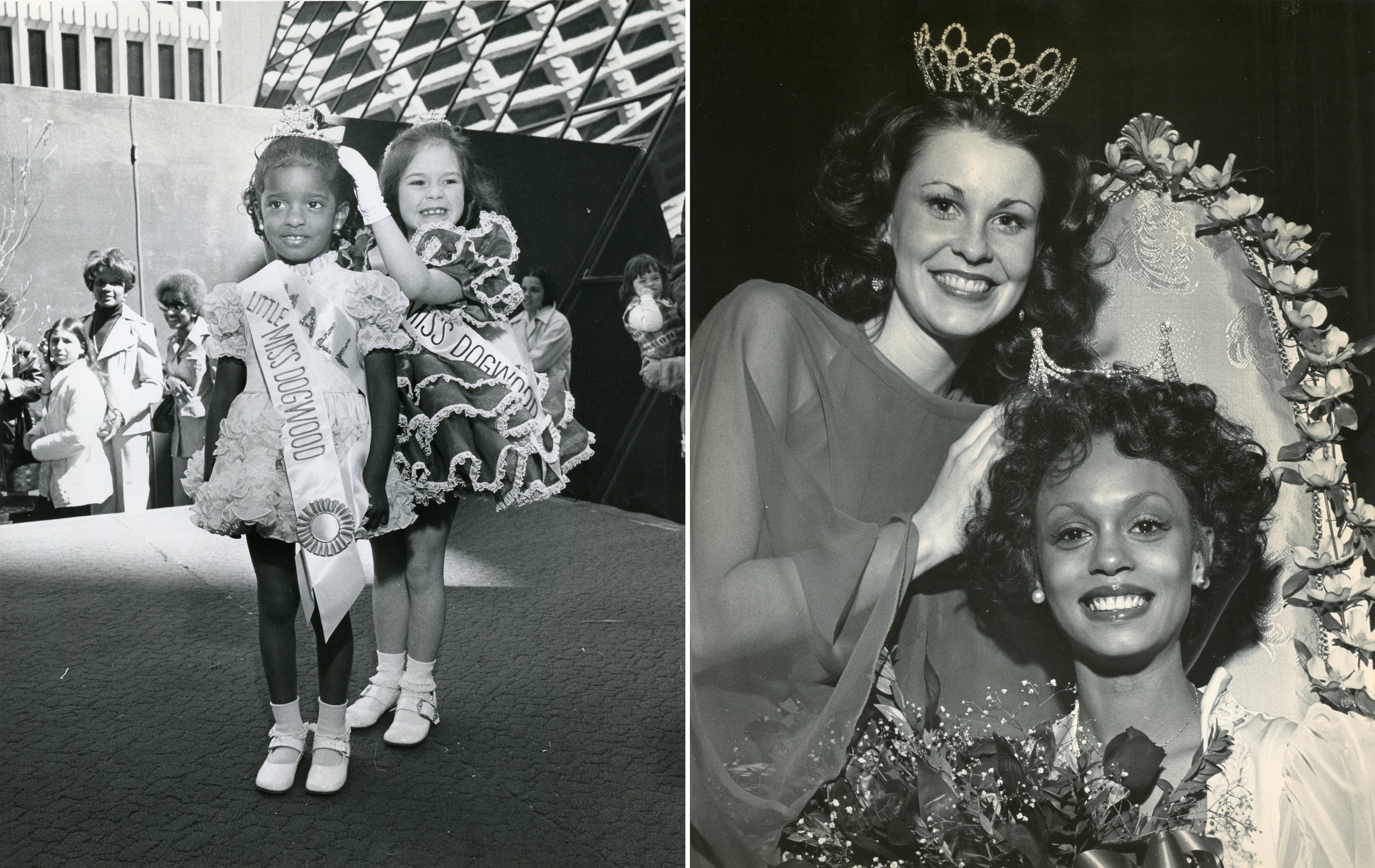
In 1975, Sonja Scott became a pint-sized trailblazer when she was crowned the first Black “Little Miss Dogwood” at Atlanta’s historic Dogwood Festival. Two years later in 1977, Billie Jo Rucker became the first Black woman to be crowned “Miss Dogwood.” Now known as B.J. Arnett, a Christian filmmaker and professor at Clark Atlanta University, Arnett said the experience was extraordinarily exciting. “It was an amazing time of discovery,” she said. “We got to see the city grow.” The Louisville, Kentucky, native moved to the city to attend Atlanta School of Fashion and Design, but she spent her first semester having fun and doing modeling gigs with her friend Vanna White, of “Wheel of Fortune” fame, rather than hitting the books. Winning Miss Dogwood was her way out of trouble. “I was not the best student the first term,” Arnett said. “The pageants were the way I redeemed myself to my parents.” A reporter referred to her as a “bruised Georgia peach” after her win, but Arnett got the last laugh, earning a $10,000 wardrobe, $10,000 in cash, and a new car — a red Mustang with white interior. Her reign as Miss Dogwood was filled with visits to community events and parades, although not everyone was welcoming. “I went to cities in Georgia where they closed their doors, pulled the shades down and said, ‘She’s not riding in our parade’,” Arnett said. She was still Billie Jo to her family back home, said her sister, Perri Dallas-Simpson, but Atlanta took notice. Arnett would continue modeling, working in television and living her dreams guided by an unshakeable faith in herself. “I allowed myself to believe I could do anything,” she said. “My whole career has been about saying yes. If you fall down, dust yourself off and do it again.”
The next generation
They are fixtures now, names that carry weight in Atlanta and beyond. In these photographs, they were still becoming.

In 1978, Shirley Franklin was director of Atlanta’s Bureau of Cultural Affairs. Years before she became the city’s first female mayor, the photo places her inside local government, already shaping civic life. It’s a working portrait: serious, focused, unflashy.

In 1979, Herschel Walker was a beaming high school football player in Wrightsville. Before the Heisman and the mythology, he was a gifted teenager from Johnson County, caught midascension. The photo captures raw promise, before the expectations.

In 1986, Spike Lee, fresh out of Morehouse, talks about cinema as a lifelong commitment. On the day “She’s Gotta Have It” opened in Atlanta, he spoke with certainty about his purpose: to tell Black stories that felt real and unvarnished. He wasn’t an Oscar-winning icon yet, just a young filmmaker.

In 1994, Stacey Abrams was 20, a Spelman College junior with a community-service record that already hinted at her ambition. Photographed after a Hearts for Youth nomination, she’s shown not as the future political force she would become, but as a student engaged with her community. The image shows preparation.
Together, these images show famous before the headlines. They are young people moving through Atlanta and Georgia, doing the right thing.
Couple who fled from drug-infested apartment in Techwood Homes, 1989

In the photograph, Sam and Desiree Tillis look like a typical young couple. They stand close, composed, almost tender. Nothing in their posture suggests gunfire or nights pressed together in a closet, waiting for the sounds outside their door to stop.
That is what the picture hides.
When the Tillises left the South Side of Chicago in 1988, they thought they were moving toward safety. Atlanta’s Clark Howell Homes looked clean and orderly. They thanked God for it. For a while, the promise held. Then dealers began lingering on the porch and gathering outside their one-bedroom apartment, harassing Sam because he refused to buy drugs. Twice, a gun was put in his face. Shots were fired through their windows.
By August 1989, it was a choice between shelter and survival. One night, huddled in a closet, they decided they would rather be homeless than dead. They fled the next day.
The photograph freezes them after the escape but before anything is resolved. In another setting, they might look like newlyweds starting out, hopeful and unburdened. Here, they stand in front of a place that failed to protect them.
Pledges of Lampados Club of Omega Psi Phi Fraternity, Georgia State University, 1988

Conrad Norman stands slightly forward, eyes fixed on the camera, while the young men of Georgia State’s 1988 Omega Psi Phi line cluster behind him. The posture is deliberate. Norman remembers it as instinct.
As dean of pledgees, he saw his role less as an enforcer than as a shield. Protection meant watching everything. The men behind him were still forming. His job was to guide them, not expose them.
An honor student at Georgia State, Norman took the role seriously. He saw the pledge process as preparation for life beyond the fraternity: mentoring, coaching, and stepping in when family crises or personal struggles surfaced. Brotherhood, he said, went well past ritual.
The group did not hesitate to be photographed. Norman said he believed visibility mattered. Too often, Black Greek life was flattened into violent caricature. This image showed something else: care, discipline, quiet vigilance.
Norman said he remembers the moment with pride and the weight of the role. The protection is subtle but clear: He stands between the camera and the men behind him, watching closely.
Hip-hop trio The Fat Boys, 1987

The Fat Boys were once one of the biggest rap groups in America — figuratively and literally.
In the photograph, they look less like rap stars than artists on assignment. It’s late July in Atlanta, and the moment is about purpose, not glamour.
By July 30, 1987, the New York group was promoting “Disorderlies,” their first movie, with two more films lined up. Their album “Crushin’” was climbing the Billboard pop chart, and concerts filled their calendar. Atlanta was one stop on a packed itinerary.
They were not there to perform.
Instead, they donated their time at Georgia Public Television studios, recording TV and radio spots promoting voter registration ahead of the Super Tuesday primary. Mark “Prince Markie Dee” Morales, Damon “Kool Rock-Ski” Wimbley and Darren “The Human Beat Box” Robinson delivered rhymes with a direct message: If you don’t vote, you give up your say.
The image captures them using their platform for something beyond promotion.
Jacksons’ “Victory Tour,” 1984

The sword is what fixes the eye first. Raised, gleaming, theatrical.
In the photograph, Michael Jackson and his brothers stand just behind it, framed inside a story built for the crowd.
It was the opening image of the 1984 Victory Tour in Atlanta. Michael is cast as the only man who can pull a sword from a stone and restore order to a kingdom overtaken by evil.
The brothers are present, armored and synchronized, but the staging makes clear whose story it is. Once the music begins, it is mostly Michael’s show.
Steel lifted. Michael poised. A pop star presenting himself not just as an entertainer, but as the hero of his own creation.
Walt Frazier in Sweet Auburn, where he grew up, 1983

In 1983, three years after his NBA playing days ended, Walt Frazier returned to Sweet Auburn with an ice cream cone in his hand.
The former New York Knicks star, known for tailored suits and a cool public persona, stood on the sidewalks that shaped him, eating vanilla ice cream on a cold December afternoon. The epitome of cool.
Atlanta and Auburn Avenue taught him how to carry himself. That ease shows here. The ice cream underscores it.
New York amplified what Atlanta planted. In Manhattan, Frazier won two championships and became an icon for his defense and style. He embraced the Knicks and the city embraced him back. But beneath it all was the same kid from Sweet Auburn.
The image centers on him not as basketball god, but as local. Ice cream in hand, walking the neighborhood. It’s the kind of cool that reads the same in Sweet Auburn as it does in Madison Square Garden.
The through line is clear: Atlanta roots, New York shine, and a man comfortable enough in both to savor the moment.
Coretta Scott King

In May 1970, at a March for Liberation that began at her husband’s tomb, Coretta Scott King stands before a crowd that stretches beyond the frame. Two years after his death, the grief is still close, but she is upright and composed.

By 1977, she appears alongside Cicely Tyson, who was portraying her in the television miniseries “King.” The image pairs the actress and the real figure, side by side.
The pairing underscores something essential. After the assassination of Martin Luther King Jr., she traveled, organized, spoke and built. She founded the King Center. She pressed for the holiday. She carried the movement into new battles, from voting rights to peace and economic justice.
Crowds gather and cameras click. Coretta stands at the center as proof the movement did not end April 4, 1968. It shifted, and she helped carry it forward.
Atlanta Child Murders – 1980

By December 1980, the fear in Atlanta had hardened into exhaustion. Between 1979 and 1981, at least 28 African American children, adolescents and adults were killed. The headlines became a drumbeat, and the images repeated: caskets, news conferences, grieving parents. When Wayne Williams was arrested and later convicted in two of the adult murders, it did not restore what was lost. It only shifted the conversation.
What remained were the families.
On Christmas 1980, reporters and photographers went to living rooms strung with tinsel and blinking lights, not courtrooms or graveside. The question was simple: Could there still be joy, or at least a version of it?

The images show trees trimmed in tinsel and presents under branches. Siblings sit close. Mothers glance. Fathers hold steady for the camera. The rituals persist because routine can be a way to stay upright.
But the absence is visible.
A space on the couch. A gift that won’t be opened. A stocking that may or may not be hung. Some smiles are genuine. Children still laugh and cousins still play, but parents’ eyes often show vigilance and fatigue. Grief does not take holidays.

Christmas that year was a form of defiance. Decorating and gathering were ways of insisting life would not be permanently suspended. The camera, used to mourning, captured something quieter: resilience through routine.
The season asked them to celebrate, and they did what they could. In the photographs, amid ornaments and careful smiles, joy is present, but fragile.
Hank Aaron in spring training, 1966

In March 1966, Hank Aaron stood next to the batting cage and glanced over his shoulder at the camera.
It was a fleeting look. Not a smile nor a glare. It is cautious, hopeful and a bit wary.
Aaron arrived from Milwaukee already established: an MVP and perennial All-Star. The Braves had just relocated, and Atlanta was about to meet its first true major sports star.
That season, Aaron led the league with 44 home runs and 127 RBIs, yet finished eighth in MVP voting.
He spent nine seasons in Atlanta and, in 1974, passed Babe Ruth to become baseball’s all-time home run king.
But in that 1966 spring training photograph, none of that has happened yet. He is simply Hank Aaron, waiting his turn.
Muhammad Ali vs. Mayor Maynard Jackson, 1975

On Jan. 21, 1975, Muhammad Ali lifted his fists and leaned toward a flailing but smiling Maynard Jackson wearing an Atlanta Falcons T-shirt and flowered shorts.
The scene is playful. But the symbolism was unmistakable.
Ali’s Atlanta history ran deep. In 1970, the city hosted his first official bout after his suspension for refusing induction into the U.S. Army. Fighting Jerry Quarry marked his return to the ring.
By 1975, Ali was world champion again. He returned to Atlanta and stood across from Jackson, the city’s first Black mayor, as the city’s power structure was changing.
The photo captures two kinds of influence: Ali’s celebrity and Jackson’s political power.
Both understood stagecraft. Ali’s stance is loose, eyes bright, a grin hovering at the edge. Jackson looks game, aware of the cameras, aware of the moment. Around them, photographers document what would have been unimaginable not long before: Black leadership and Black celebrity meeting openly, confidently, in the capital of the New South.
It reads as play, and as progress. Jackson would go on to knock out Ali.
Paschal’s Motor Hotel and Restaurant, 1978

In 1947, brothers James and Robert Paschal opened Paschal Brothers Soda at 837 West Hunter St. with cold sandwiches and soft drinks. There was no stove. Hot food was cooked at Robert’s house and delivered by taxi. The counter grew into something far larger than a restaurant.
By the 1950s and ’60s, Paschal’s was a major destination on what is now Martin Luther King Jr. Drive. Robert’s fried chicken recipe — still secret — drew loyal customers; so did gumbo, catfish etouffee and peach cobbler. But the food was only part of it.
Paschal’s became Atlanta’s Black City Hall — a safe, Black-owned space for that nourishment, as well as shelter, strategy and solidarity.
Civil rights leaders came through regularly. Martin Luther King Jr. loved the vegetable soup. John Lewis ordered peas. Andrew Young swore by the fried chicken.
The Paschals ran La Carrousel, a jazz lounge next door, and later built the Paschal Motor Hotel, Atlanta’s first Black-owned hotel. King kept a suite there. Campaigns launched there. People mourned there.
The old Paschal’s is gone, replaced by a new spot on Northside Drive SW. But the legacy of two brothers who knew that feeding a movement could be as powerful as leading one remains.
Martin Luther King Jr. and Roy Wilkins, 1959

In 1959, Roy Wilkins and Martin Luther King Jr. sit side by side at a table marked not just by microphones and papers, but by a poster placed deliberately in front of them.
Two African American children stare out from the sign. Beneath them, the question cuts clean: “We’re too young to register. What’s your excuse?”
The image is simple, but the message is sharp. The struggle was about the future, and it was about responsibility now.
Wilkins represented the NAACP’s legal approach; King carried the urgency of mass protest. Here, they are aligned, pressing for voting rights in a South still committed to blocking Black voters.
The children on the poster cannot vote yet. Adults can. The photo makes the point without softening it.
The photograph captures a moment when the movement is building an infrastructure. Before the 1960 sit-ins, before Birmingham, before the March on Washington, before the Nobel Peace Prize.
King and Wilkins lean into that responsibility.
Register. Show up. No excuses.
About the Authors
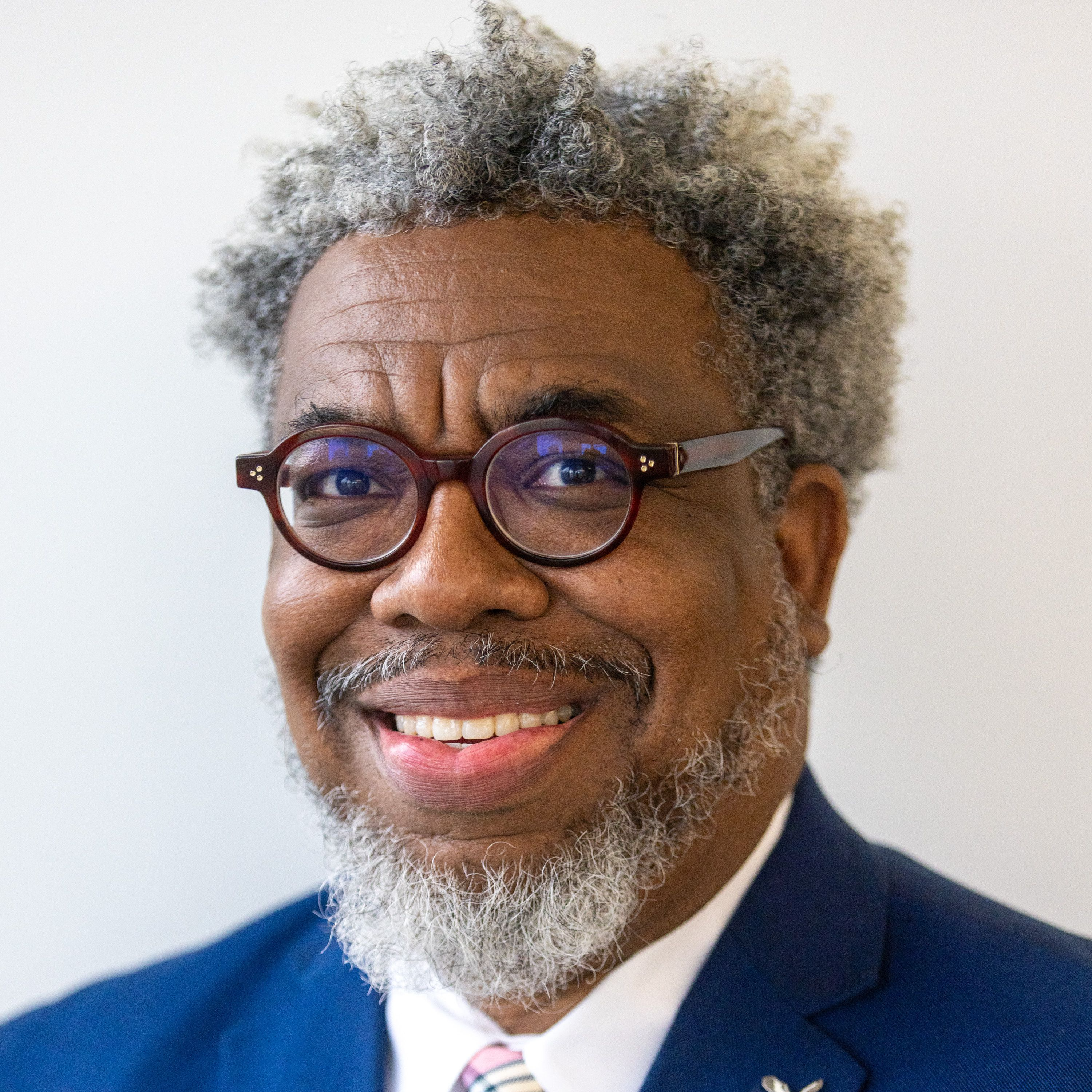
Ernie Suggs is an enterprise reporter covering race and culture for the AJC since 1997. A 1990 graduate of N.C. Central University and a 2009 Harvard University Nieman Fellow, he is also the former vice president of the National Association of Black Journalists. His obsession with Prince, Spike Lee movies, Hamilton and the New York Yankees is odd.
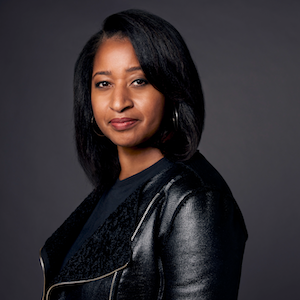
Nedra Rhone is a lifestyle columnist for the Atlanta Journal-Constitution where she has been a reporter since 2006. A graduate of Columbia University School of Journalism, she enjoys writing about the people, places and events that define metro Atlanta. Sign up to have her column sent to your inbox: ajc.com/newsletters/nedra-rhone-columnist.