
Ebenezer Baptist Church awarded $100,000 preservation grant
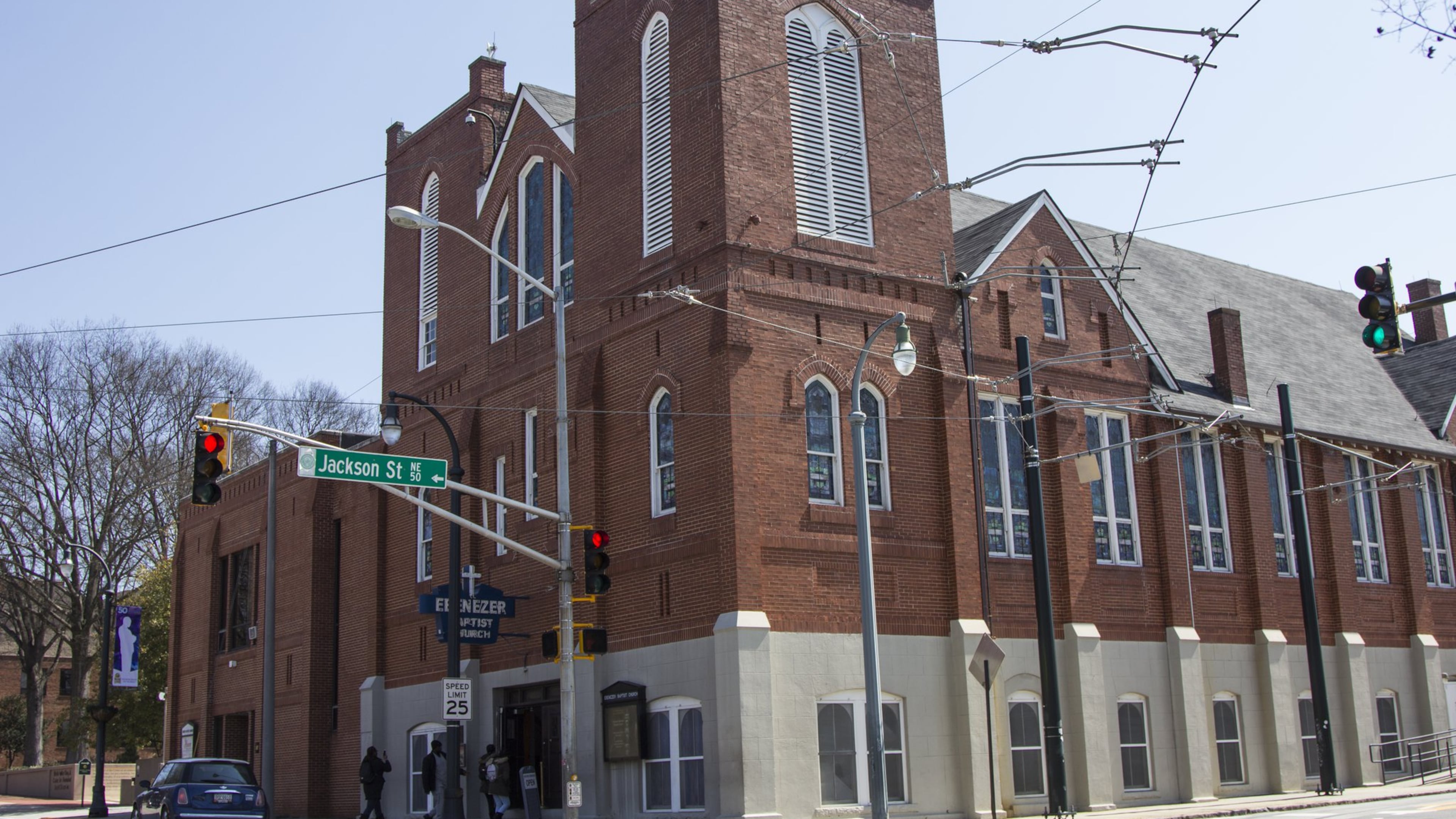
Atlanta’s Ebenezer Baptist Church, the spiritual home of the Rev. Martin Luther King Jr., will receive a $100,000 preservation grant as part of a new $13.5 million national effort to sustain historic Black churches.
The grant, announced Tuesday by the National Trust for Historic Preservation’s African American Cultural Heritage Action Fund, will support programming and interpretation at the Auburn Avenue church, which was founded in 1886 and has long been regarded as one of the nation’s most significant congregations.
The funding is part of the Action Fund’s fourth annual Preserving Black Churches grant round, which this year has invested more that $13.5 million to dozens of Black churches nationwide.
Ebenezer was one of three Georgia churched selected to receive grants.
Organizers said Ebenezer was selected for both its national historical significance and the urgency of preserving its living history.
“As witnesses to key moments in the church’s legacy age, there is a real and imminent risk of losing firsthand accounts tied to Ebenezer’s role in the Civil Rights Movement and the leadership of figures such as Rev. Dr. Martin Luther King Jr.,” the awarding documents state.
This $100,000 grant will fund a programming and interpretation initiative centered on the church’s historic sanctuary, not new construction.
Ebenezer will recruit a graduate fellow from a local Black college to lead “Preserving the Oral Historic Tour of Ebenezer Church,” a technology-driven effort to capture and share its living history.
The project includes the development of a formal audio tour, the creation of a Google Arts & Culture page, the collection of firsthand witness accounts and a community open house designed to engage at least 100 residents.
The brick Late Gothic Revival sanctuary on Auburn Avenue opened in 1922, during the pastorate of King’s maternal grandfather, the Rev. Adam D. Williams, who had taken the helm in 1894 and guided the congregation through its early growth.
King’s father, Martin Luther King Sr., became pastor in 1931 and quickly immersed the church in voting rights campaigns in Atlanta.
King was baptized there at 5. He preached his first sermon there at 17.
By the time King Jr. returned as co-pastor in 1960, Ebenezer was not only a house of worship but also an organizing center in a city that would come to call itself “the cradle of the civil rights movement.”
Meetings that helped shape the Southern Christian Leadership Conference were hosted there in 1957. From its pulpit, King denounced segregation and in April 1967, he urged America to repent of its “tragic, reckless adventure in Vietnam.”
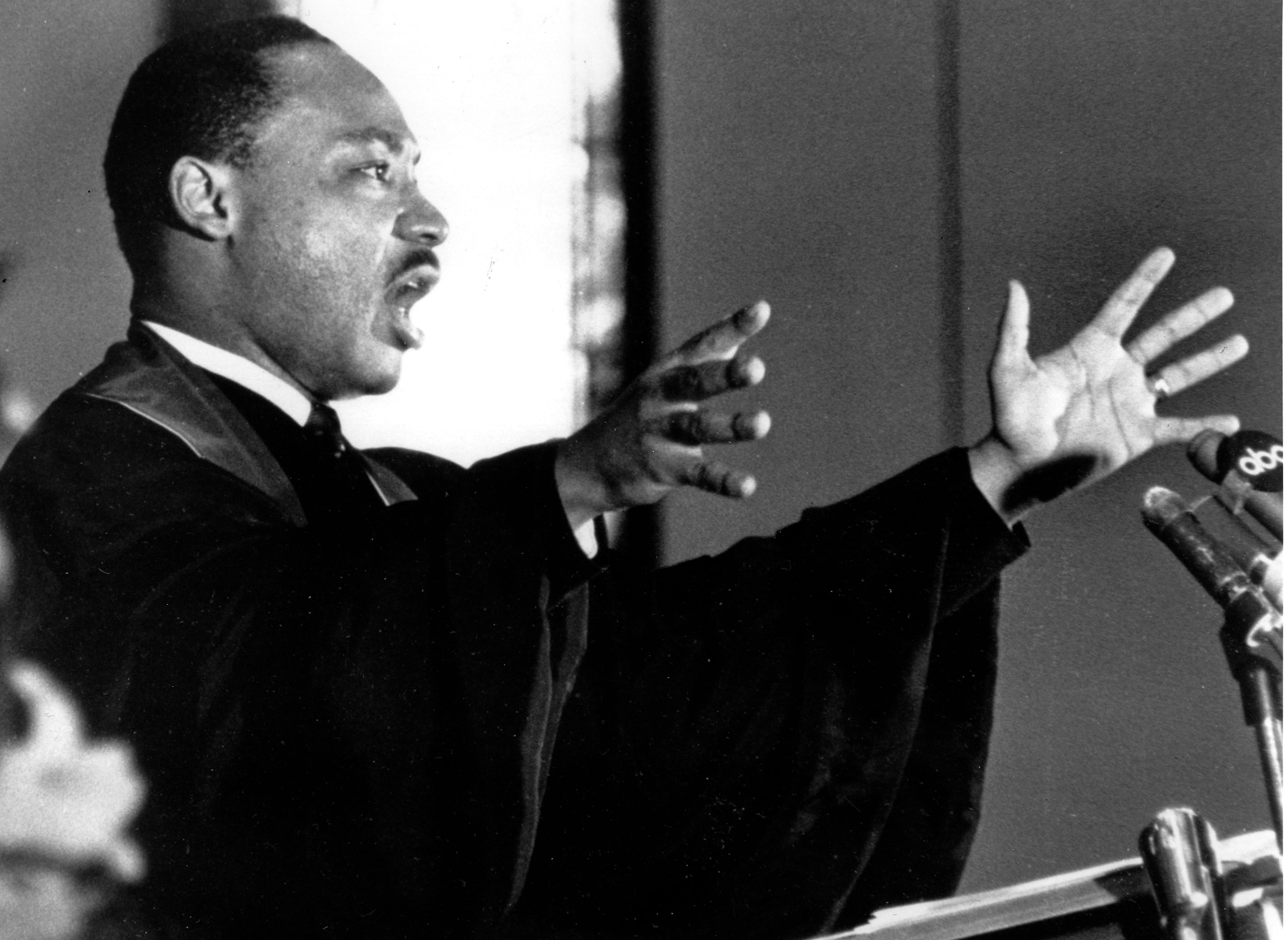
On Feb. 4, 1968, exactly two months before his assassination, King delivered what would be his final sermon, “Drum Major Instinct,” from its pulpit.
His family later played that sermon at his funeral and in a tragic coda, in 1974, his mother, Alberta King, was assassinated in the church.
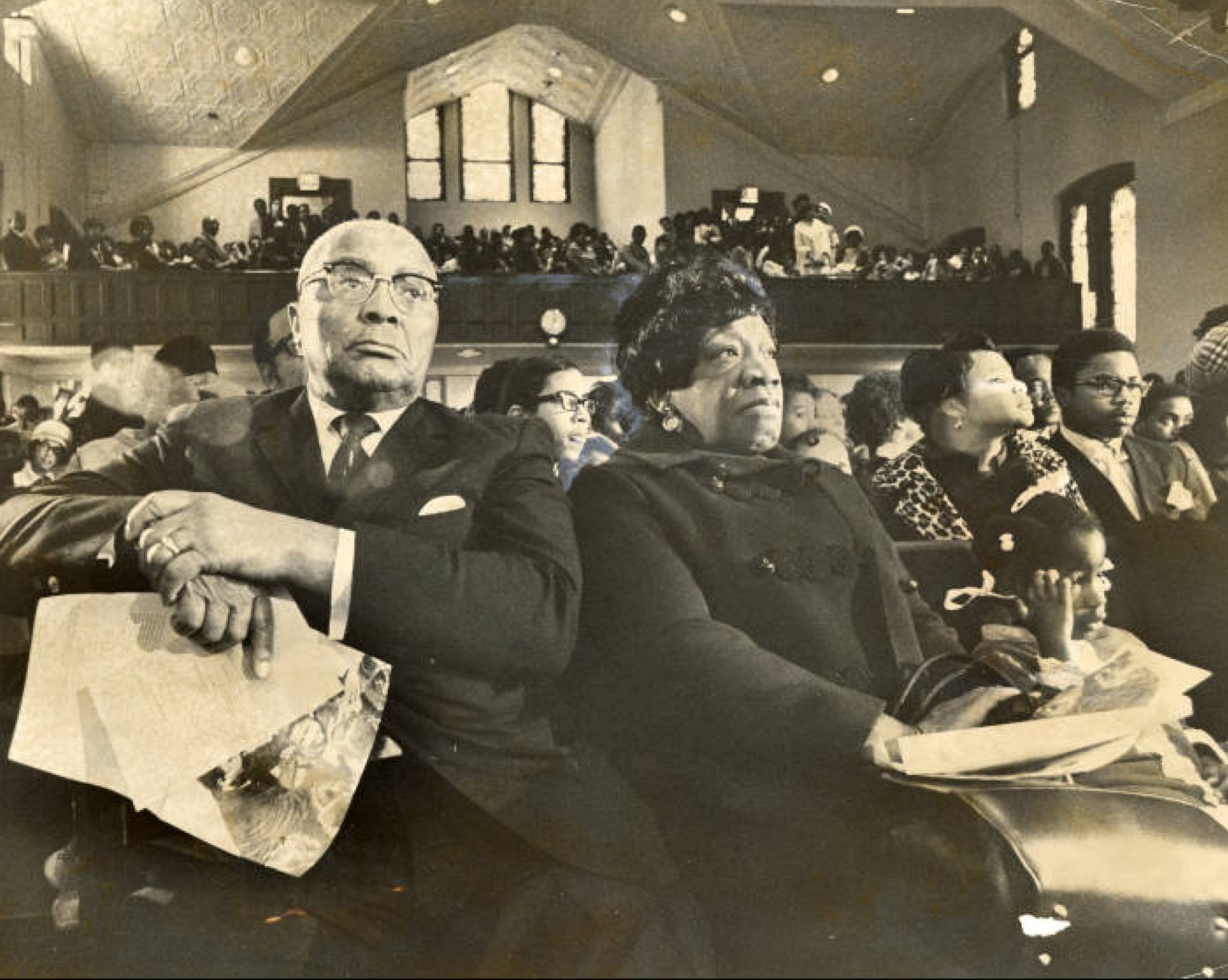
For 81 consecutive years, from Williams’ leadership through King Sr.’s retirement in 1975, a member of the King family led the church.
In 1999, the congregation moved across the street to a larger sanctuary, leaving the original church to be incorporated into the Martin Luther King Jr. National Historical Park, where it is operated by the National Park Service. The church congregation is now led by U.S. Sen. Raphael Warnock.
In 2011, the building completed a four-year, $8 million restoration designed to return it to its 1960s appearance.
The work was painstaking. Beneath the balcony, workers replaced support beams but carefully numbered and reinstalled each piece of tile and plaster that had been removed. The white walls were returned to their earlier coral hue. Plexiglas window covers were removed to reveal painted glass that once again bathes the sanctuary in warm light. Original pews were refinished but not scrubbed of their nicks and marks.
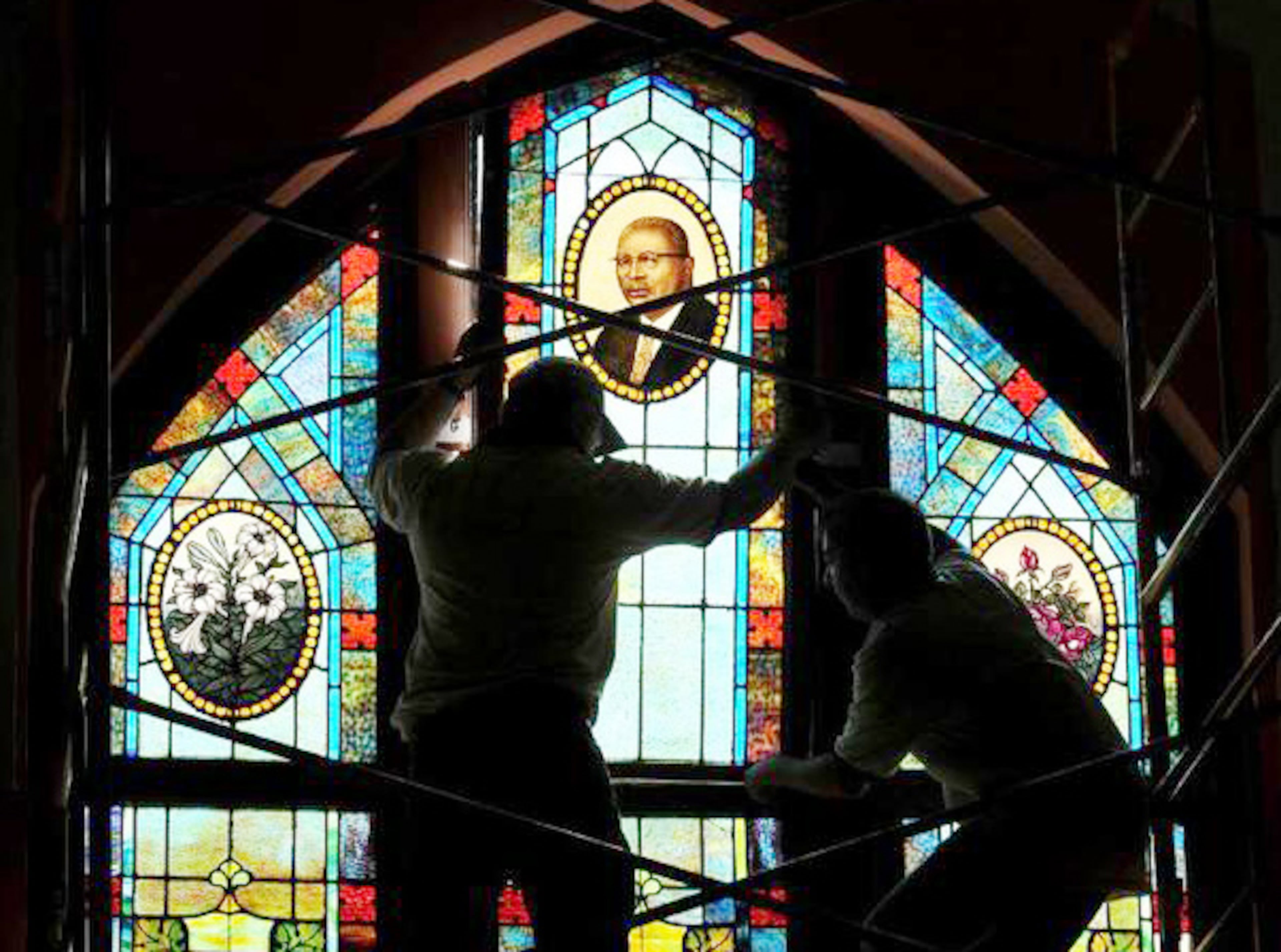
The old green-and-white tiled fellowship hall floor was restored. Even the octagonal sidewalk pavers at the entrance were re-created.
Ebenezer is not the only Georgia congregation recognized in this round.
First African Baptist Church in Savannah, founded in 1773, is among the oldest Black congregations in North America. For more than two centuries, it has served as a spiritual anchor and organizing hub in coastal Georgia.
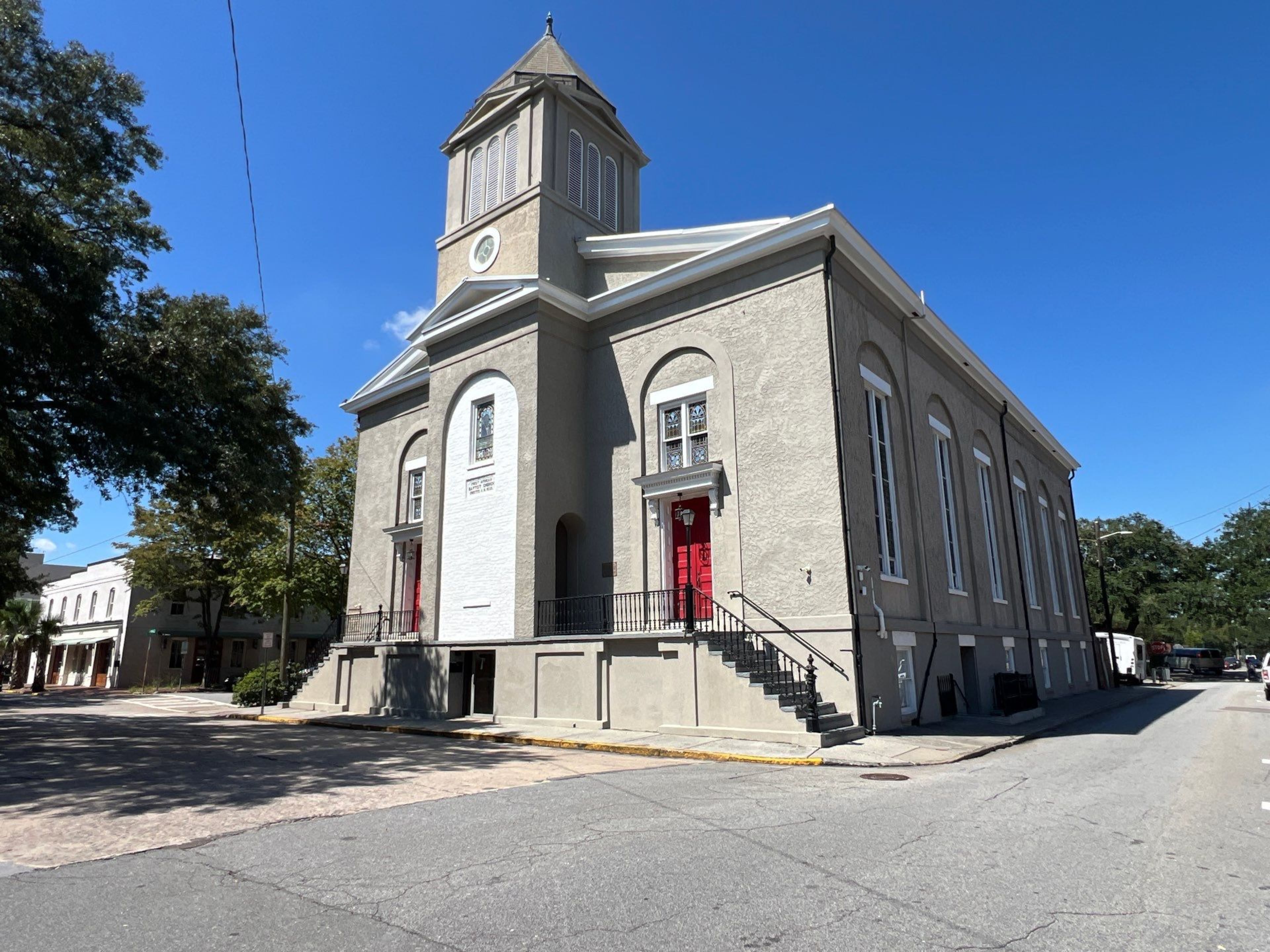
Its grant will support preservation work and long-term stewardship, helping safeguard a site where faith and civic life have long intertwined.
Good Shepherd Episcopal Church in Brunswick, associated with the teacher and Deaconess Anna Alexander — the first Black ordained deaconess in the Episcopal Church — was also recognized.
A planning grant will fund a preservation plan and construction drawings for the rehabilitation of the Good Shepherd Episcopal School.

Other significant churches set to receive grants include 16th St. Baptist Church in Birmingham, where four little girls were killed on Sept. 15, 1963, by a bomb planted by members of the KKK.
Across the country, historically Black churches have functioned as more than religious institutions. They have been voter education centers, meeting halls, staging grounds and places of refuge. As the nation approaches its 250th anniversary, preservationists say, protecting these buildings is inseparable from protecting the democratic story they helped shape.
The Preserving Black Churches program, a $60 million initiative supported by Lilly Endowment Inc., has awarded nearly $34 million to 170 churches since its inception. The African American Cultural Heritage Action Fund, founded in 2017, has raised $200 million to support more than 400 preservation projects tied to Black history.
“(Churches) are essential civic institutions that have anchored democracy, community leadership and collective care for generations,” said Brent Leggs, executive director of the African American Cultural Heritage Action Fund and strategic adviser to the chief executive of the National Trust for Historic Preservation. “By investing in their preservation today, we are safeguarding not just historic buildings and architecture, but a living legacy of resilience and social progress for the future.”

In Atlanta, that legacy is written into brick-and-mortar along Auburn Avenue, where a blue sign reading EBENEZER BAPTIST CHURCH still catches the light.
About the Author

Ernie Suggs is an enterprise reporter covering race and culture for the AJC since 1997. A 1990 graduate of N.C. Central University and a 2009 Harvard University Nieman Fellow, he is also the former vice president of the National Association of Black Journalists. His obsession with Prince, Spike Lee movies, Hamilton and the New York Yankees is odd.