
For Walter White, the 1906 Atlanta Race Massacre sparked a reckoning within

“My skin is white, my eyes are blue, my hair is blond,” writes Walter White in the opening lines of his 1948 autobiography.
These facts are preceded by White’s most important declaration, “I am a Negro.”
For White, who would later gain fame as the executive secretary of the NAACP, Blackness was a choice.
At the time, an estimated 12,000 white-skinned Black people each year disappeared across the color line in search of a better life.
Passing allowed white-appearing Black people to avail themselves of all the privileges that society afforded to white skin.
Though Americans at the time believed race was determined by the one-drop rule (a system of racial classification that defined any person with a single Black ancestor as Black), it hadn’t always been that way.
“Early on, different colonies and states had different ways of defining who was Black,” said George Hutchinson, professor of American Culture at Cornell University. Passing took many different forms, he said.
Some white-appearing Black people held on to family ties while taking advantage of jobs or other perks of whiteness.
Others married white spouses and moved to white neighborhoods but still maintained family contact.
And still others, whose stories have been dramatically depicted in popular culture, were Black people whose move into whiteness meant severing connections to birth families, friends and neighborhoods.
“Black literature is full of stories about how the choice to pass as white is morally indefensible and the people who end up doing it are always sorry,” Hutchinson said. “There was always somewhat of a moral judgment against it, particularly when people were cutting off their families. That was considered an ethical problem.”
In White’s case, he often found himself explaining to white people why he would choose to be Black when he could easily pass for white. “They think it must be some mistake,” White said.
But one experience in September 1906 erased any inclination he may have had to pass himself off as a white man.
White was only 13 years old when he witnessed the 1906 Atlanta Race Massacre, when thousands of white Atlantans roamed the streets terrorizing Black people. More than 25 Black people died.
“The Atlanta riot naturally stands out in my memory as a shocking awakening to the cruelty of which men driven by prejudice, ignorance and hatred can be guilty,” he said.
After the four days of terror ended, White was sure of one thing: He desired only to identify as a Black man.
“I was glad my mind and spirit were part of the races that had not fully awakened,” he said, “and who therefore had still before them the opportunity to write a record of virtue as a memorandum to Armageddon.”
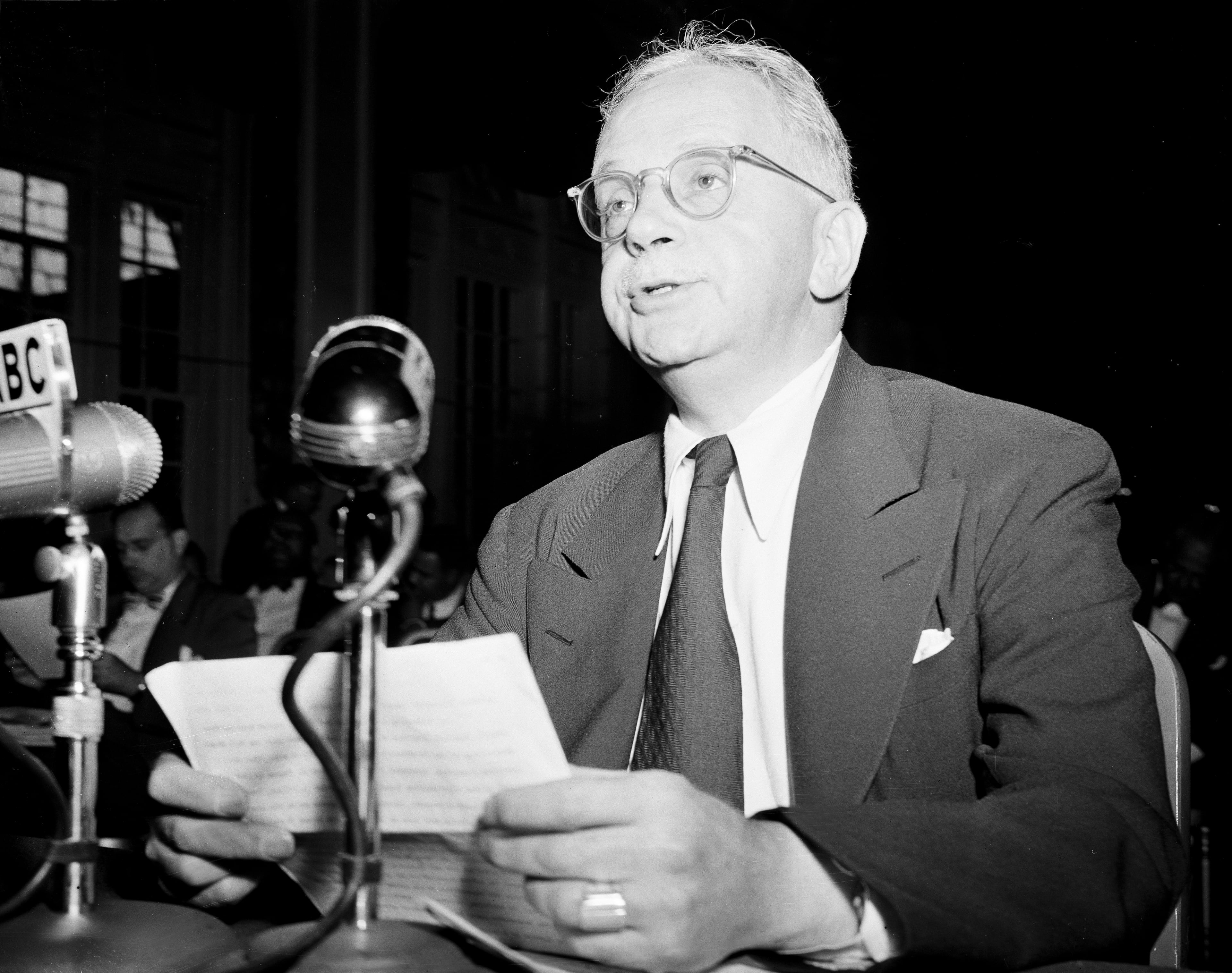
White was born in Atlanta in 1893. He lived in an eight-room, two-story house on Houston Street (now John Wesley Dobbs Avenue) just three blocks from the Candler Building, one of the city’s first skyscrapers.
He recalled the Saturday in September 1906, when an unseasonable warmth settled over an eerily quiet Atlanta.
Headlines in the daily newspapers, including The Atlanta Constitution, reported alleged rapes and crimes committed by Black people, but the stories made little impression on White. What he didn’t know was the effect those stories were having on white residents.
His father, a mail carrier, was preparing for his usual 3 — 11 p.m. route. White usually accompanied him until 7 p.m., driving the cart as his father made stops, but on this Saturday, his father told him to stay home.
White appealed to his mother, who allowed him to go if he promised to return before dark. He was too young to grasp that the city, fueled by a bitter political campaign, had become a tinderbox of racial animus.
As they approached the corner of Peachtree and Houston streets, White heard a roar and watched as the local bootblack from a nearby barbershop was beaten to death by a white mob.
They raced down Pryor Street in the mail cart, his father slowing only to grab an elderly Black hotel cook from the clutches of the white men pursuing her.
The only thing that kept White and his father from being targeted was their skin color and the government vehicle in which they rode.
By Sunday, Black residents in defense mode prepared for a sleepless night. Some of them took up arms to fend off the mob that was planning a midnight rampage in their neighborhood.
White said he and his father secured guns, and father told son, “Don’t shoot until the first man puts his foot on the lawn and then — don’t you miss.”
As men carrying torches approached the home, 13-year-old White gripped his firearm and swallowed his fear.
“How it would feel to kill a man?” he wondered.
At that moment, he said, he knew he could never identify as a person so filled with hate, even if it meant being one of the hated.
A volley of shots from down the street stopped the advancing mob, and White and his family were safe, but the moment changed the trajectory of his life.
Just a few years earlier, White had crossed the color line, when he was employed by Atlanta’s luxurious Piedmont Hotel. Working as a page boy, he realized he was the only Black employee assigned to those duties. The interviewer had never asked his race.
The pay was the best he had received, but when his boss offered him more pay and a higher rank the following summer, White confessed his secret and was out of a job.
These are the moments that shaped White into the man who was later dubbed “Mr. NAACP” for leading the civil rights organization from the 1930s to the 1950s.
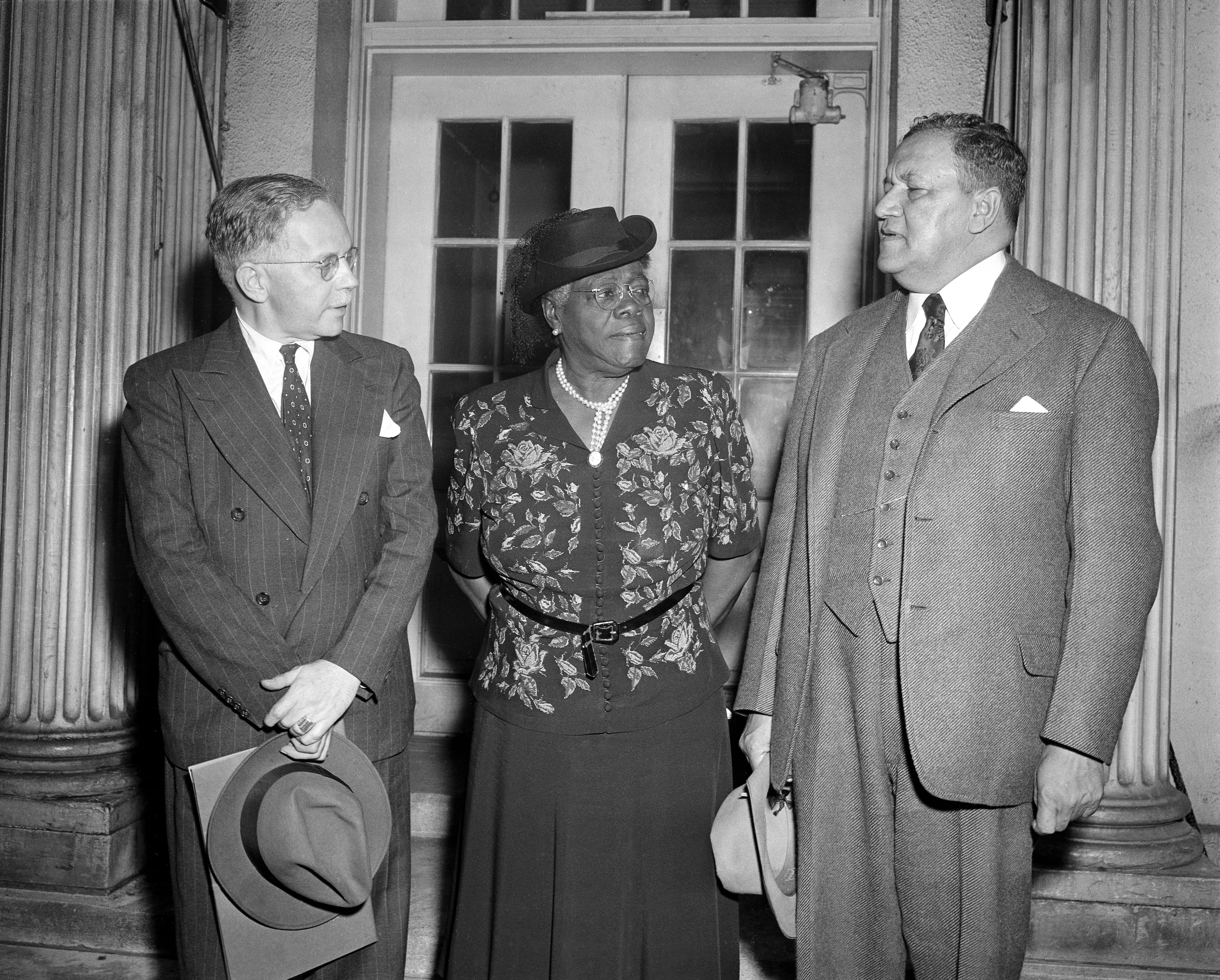
In 1916, White and Harry Proctor, both parishioners at First Congregational Church, secured a charter to establish the Atlanta Chapter of the NAACP.
Though White prided himself on his racial identity, early members of the Atlanta NAACP were almost exclusively from the Black middle class or Black elite.
The first battle of the Atlanta NAACP was to prevent the Atlanta School Board from eliminating seventh grade at Black schools in order to fund a new junior high school for white students.
Their efforts were a success. A year later, White left Atlanta to join the national chapter of the organization.
His profile grew for his daring undertakings, using his appearance as a white man to infiltrate white spaces and file reports on lynching and racial terror groups.
White also wrote often about his decision to identify as Black instead of choosing to pass as white, and he received both praise and revulsion from fellow Americans.
In the years before his death in 1955, he came to settle the discord within with the recognition that people are mostly the same: white is black and black is white.
“Each casts a shadow,” he said, “And all shadows are dark.”
This year’s AJC Black History Month series marks the 100th anniversary of the national observance of Black history and the 11th year the AJC has examined the role African Americans played in building Atlanta and shaping American culture. New installments will appear daily throughout February on ajc.com and uatl.com, as well as at ajc.com/news/atlanta-black-history.
About the Author

Nedra Rhone is a lifestyle columnist for the Atlanta Journal-Constitution where she has been a reporter since 2006. A graduate of Columbia University School of Journalism, she enjoys writing about the people, places and events that define metro Atlanta. Sign up to have her column sent to your inbox: ajc.com/newsletters/nedra-rhone-columnist.