
Black History Month

From Auburn Avenue to the world: 100 moments in Black Atlanta history
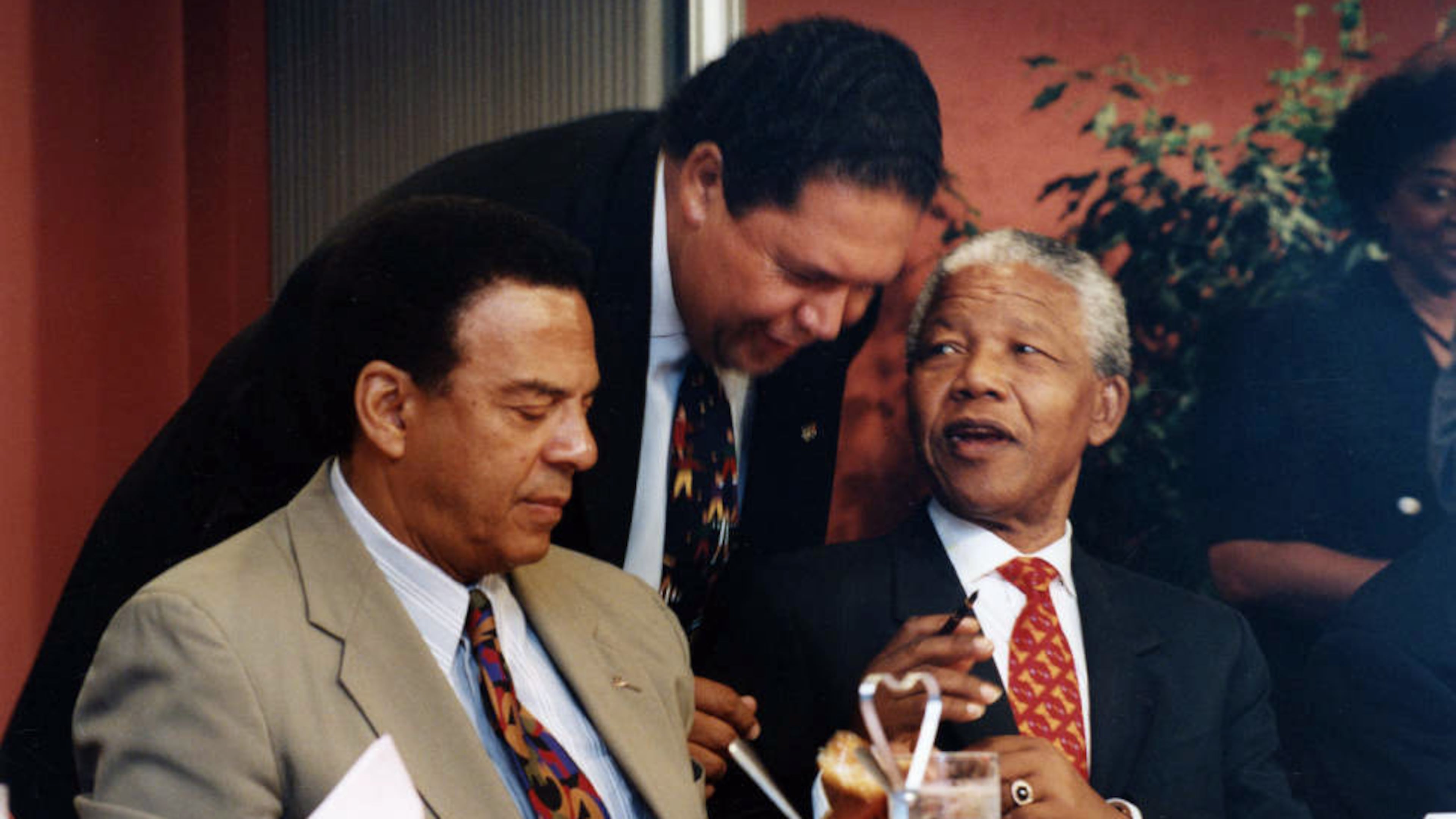
As Black History Month turns a century, a look at the moments that defined Atlanta’s Black past and present.
Andrew Young, Maynard Jackson and Nelson Mandela talking together, Atlanta, Georgia, July 12, 1993. (W.A. Bridges/AJC file photo)
2 hours ago

In 1926, Carter G. Woodson launched Negro History Week to preserve a record too often erased, ignored or distorted. What began inside Black schools and churches as a corrective effort has grown into Black History Month, now marking its 100th anniversary.

That century-long arc reflects a larger truth: Black history has never been static or confined to a single month. It is living, shaped continuously by the places where Black people have built power, culture and community.

Few cities embody that truth more clearly than Atlanta. From Auburn Avenue to the state Capitol, from college campuses to the airport, Black Atlantans have shaped movements that reached far beyond the city’s borders. Atlanta has been a laboratory for Black political power, a cradle of civil rights leadership, a hub of Black media and business and a proving ground for modern Black self-determination in the South.

This timeline is not exhaustive. It is a working record of moments when Black Atlanta and Georgia bent history. Some entries mark expansion and triumph; others reflect violence, displacement and unfinished struggle. Some events and people are notable, while others have been lost in time.

Together, they show that progress has rarely moved in a straight line, even in a city long celebrated as exceptional.

As Black History Month turns 100, The Atlanta Journal-Constitution offers both reflection and reckoning. It traces how Atlanta helped shape national Black history while revealing the tensions, contradictions and costs beneath the city’s mythology. What emerges is a map — of where we have been, how we arrived here and how much remains unwritten.

The 1920s: Foundations

1926: Early observances of Negro History Week appear in Atlanta schools and churches; Hosea Williams is born in Attapulgus, Georgia.

1927: Tiger Flowers, a Savannah native and world heavyweight boxing champion, dies.
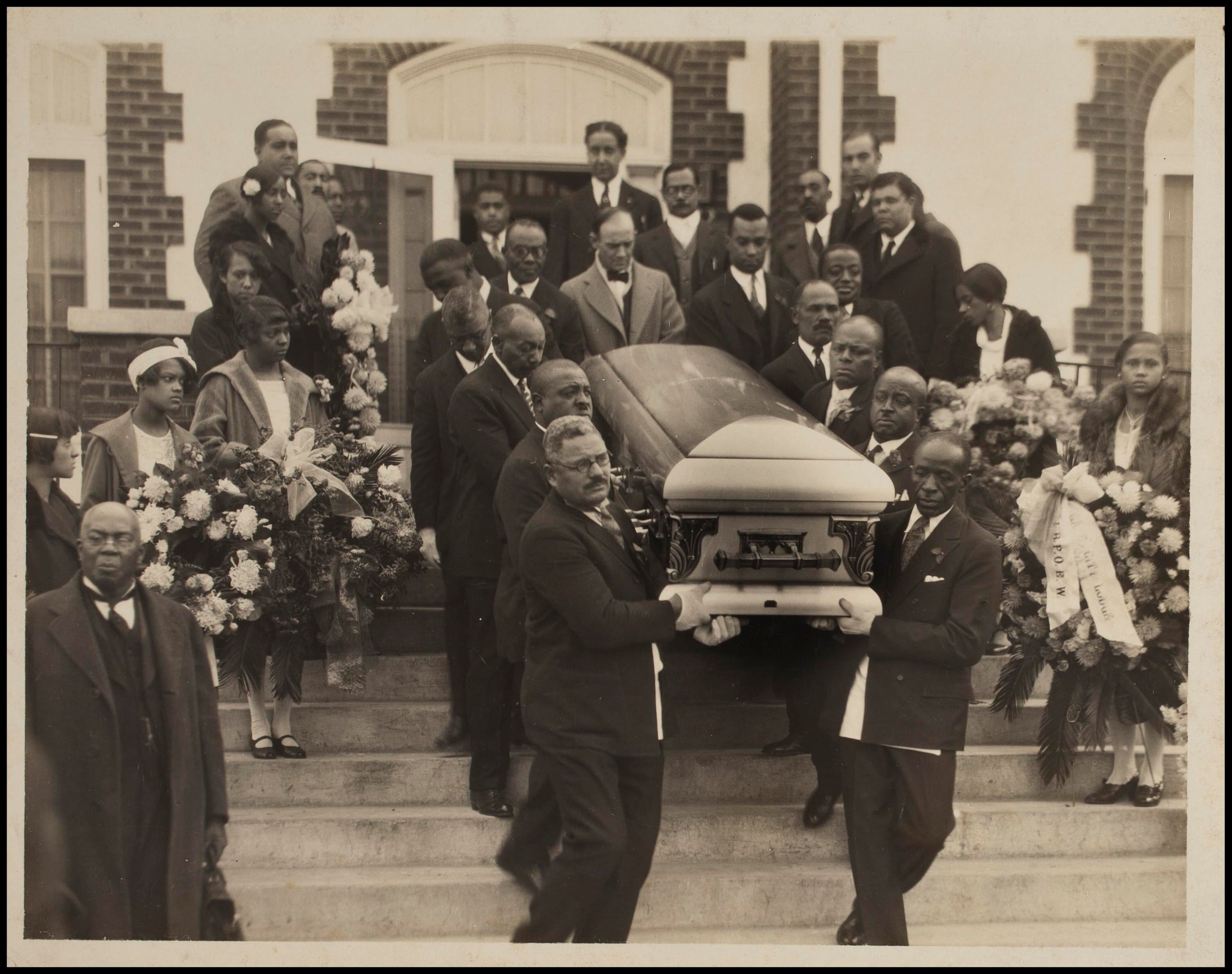
When boxing great Tiger Flowers died in the fall of 1927, 75,000 viewed his casket to pay their final respects. (Courtesy of Atlanta History Center)

1928: The “Atlanta Daily World” is founded on Auburn Avenue.

1929: Martin Luther King Jr. is born in Atlanta.

THE 1930s: Building Institutions

1930: Ray Charles is born in Albany.

1931: Juliette Derricotte, a dean of women at Fisk University, and one of her students, Nina Johnson, died after being denied treatment at a segregated Georgia hospital after a traffic accident. The Derricotte—Johnson tragedy galvanizes Black student activism and protest in Atlanta.

1932: Angelo Herndon is arrested in Atlanta for labor organizing; Little Richard is born in Macon.
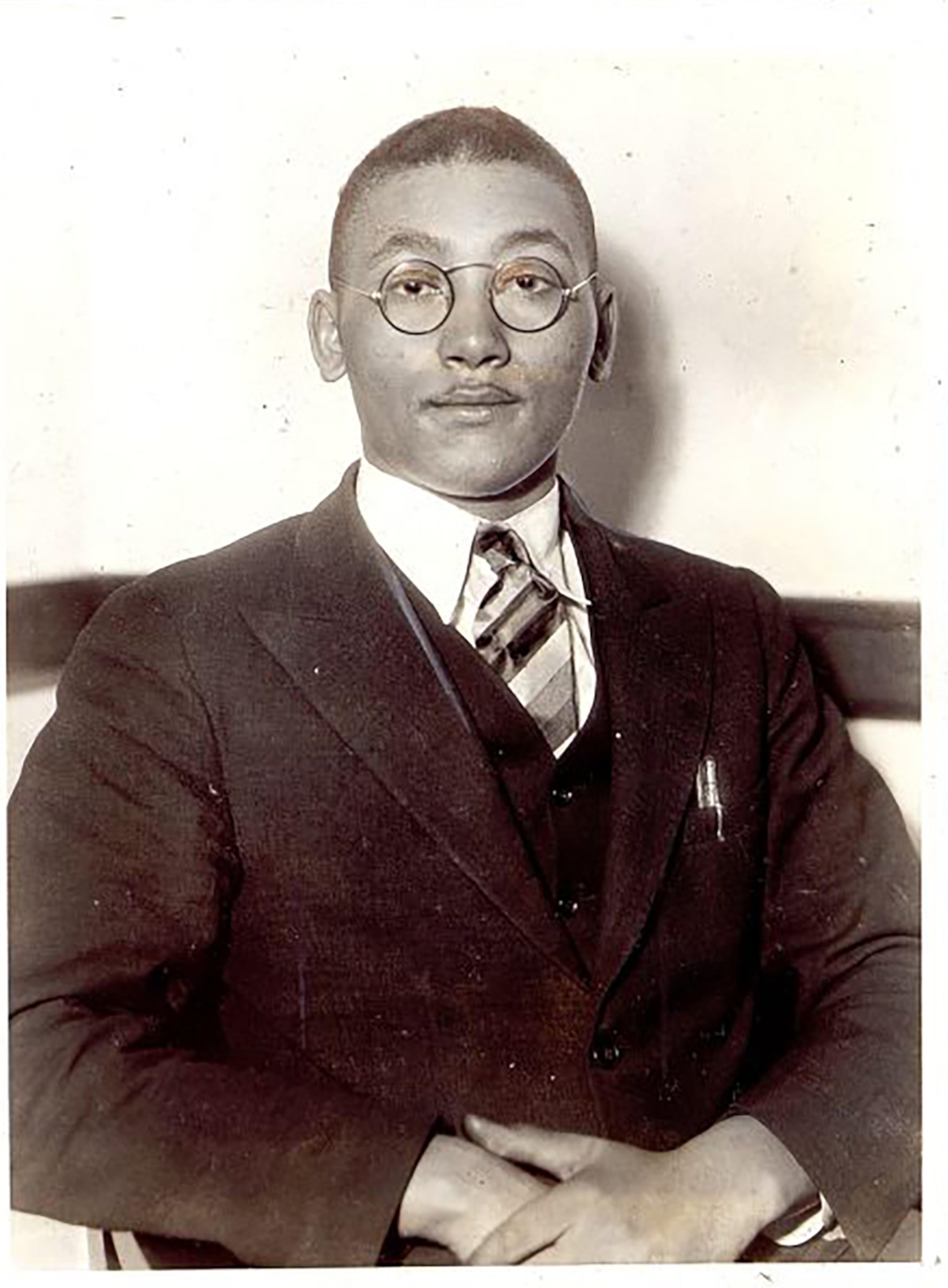
Angelo Herndon, 19, is shown in court in 1933, just before he was sentenced. He had come South with a message of Communism, but was convicted in Atlanta under a statute passed 60 years ago. He was sentenced to 18 to 20 years in prison. The jury found Herndon guilty after deliberating for more than two hours and recommended mercy. (The Associated Press)

1933: Sweet Auburn continues as the “center of Black opportunity” in the South, anchored by Citizens Trust Bank, Atlanta’s Black-owned bank.

1934: Scholar W.E.B. Du Bois returns to Atlanta University and begins writing “Black Reconstruction.”

1935: The Cascade Theatre opens, expanding Black entertainment during the Great Depression.

1936: University Homes, the nation’s first federally funded public housing project for African Americans, opens in Atlanta.

1937: The Top Hat Club (later the Royal Peacock) and Hotel Royal open on Auburn Avenue.

1938: Maynard Jackson is born.

1939: Hattie McDaniel is barred from the Atlanta premiere of “Gone With the Wind” because of Jim Crow laws. She later made history by becoming the first Black actor to win an Academy Award, earning an Oscar for her role as Mammy.
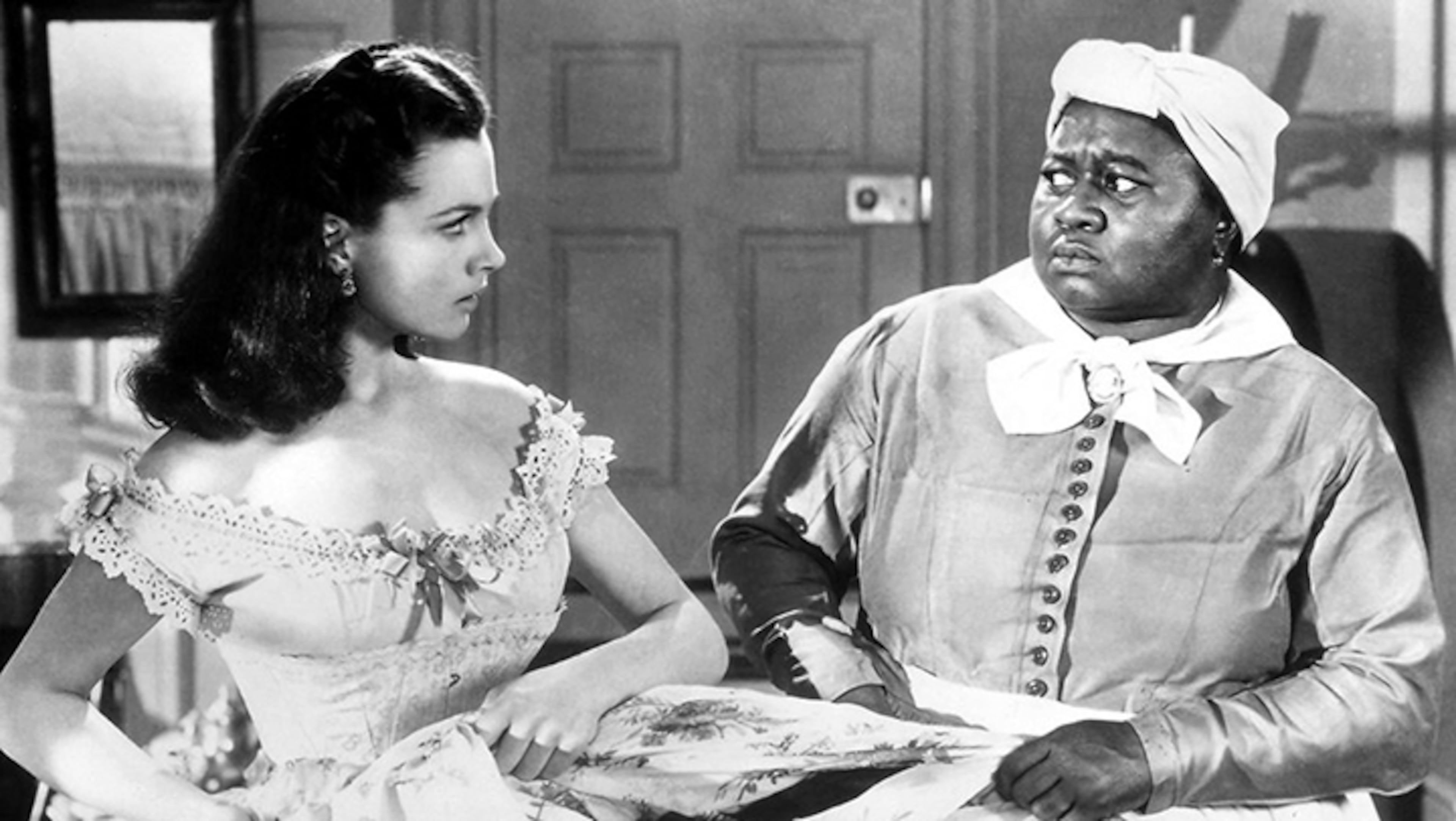
Hattie McDaniel was a major Hollywood star by the time she won the Oscar in 1940 for her role in the film Gone with the Wind. But Many African Americans at the time felt that she had been typecast in roles that perpetrated many difficult-to-accept racial stereotypes.

1940s: Systemic violence

1940: Benjamin E. Mays becomes president of Morehouse College.

1941: Otis Redding is born in Dawson, Georgia.

1942: Atlanta enacts a slum-clearance ordinance, displacing the Rose Hill Black community to create Candler Park ball fields.

1943: Grace Towns Hamilton becomes executive director of the Atlanta Urban League.

1944: Gladys Knight is born in Atlanta.
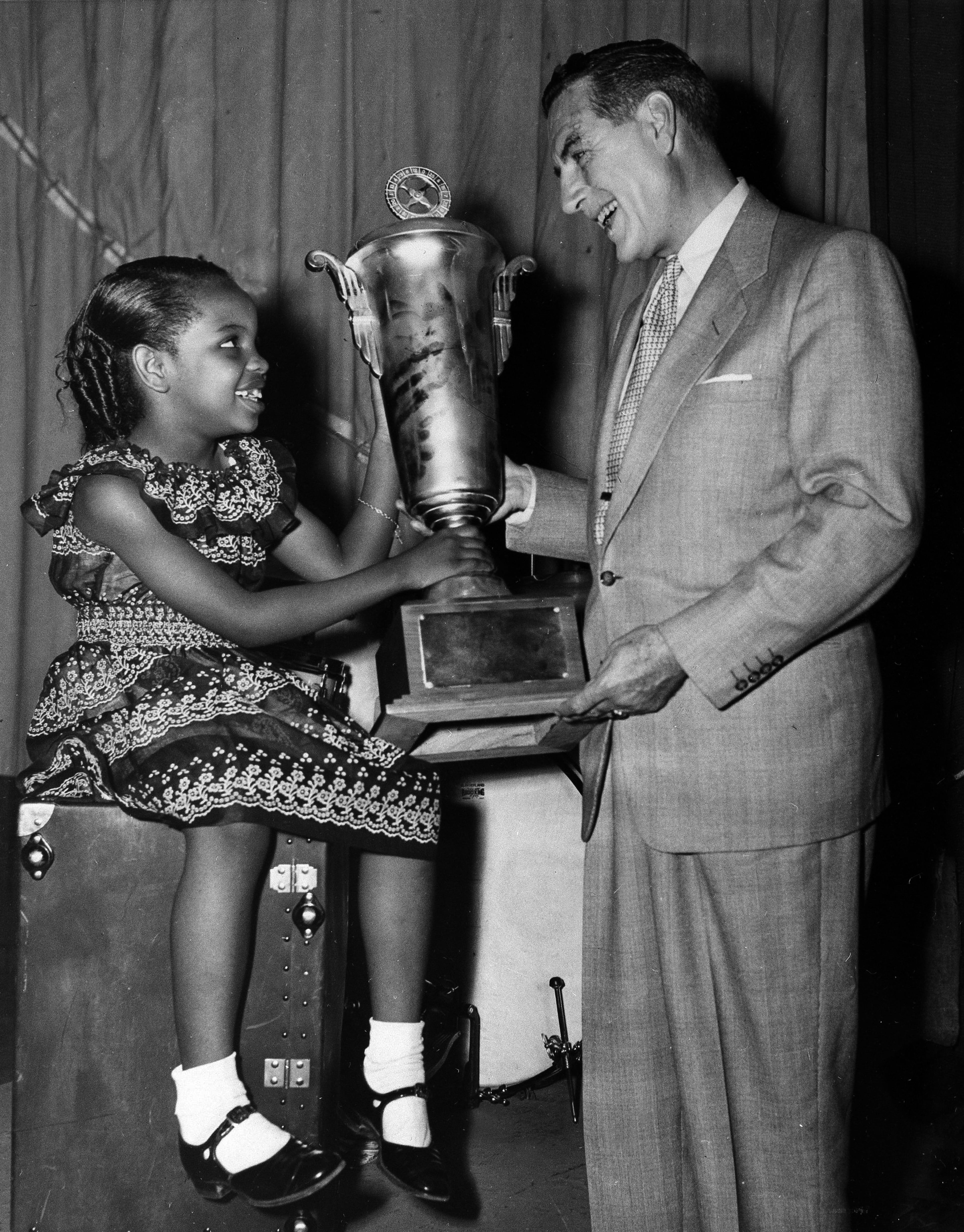
Ted Mack, right, master of ceremonies for "The Original Amateur Hour," hands a gold trophy to 8-year-old Gladys Knight in New York, July 1, 1952, after Knight was voted winner of three nationwide broadcasts of the TV talent show. Kultur Video released a two-DVD set in 2005, titled "The Original Amateur Hour," featuring clips of now-famous entertainers like Knight who got their starts on the show. (The Associated Press)

1945: Lena Baker is executed by the state of Georgia, becoming the first woman executed in the state.

1946: Two Black couples in Walton County — Dorothy Dorsey Malcom and Roger Malcom and George Dorsey and Mae Murray Dorsey — are lynched in a secluded area known as Moore’s Ford after one of them was accused of stabbing a white man.

1947: Busy Bee Cafe and Paschal’s Restaurant open, becoming enduring Black institutions.

1948: Atlanta hires its first Black police officers; Clarence Thomas is born.
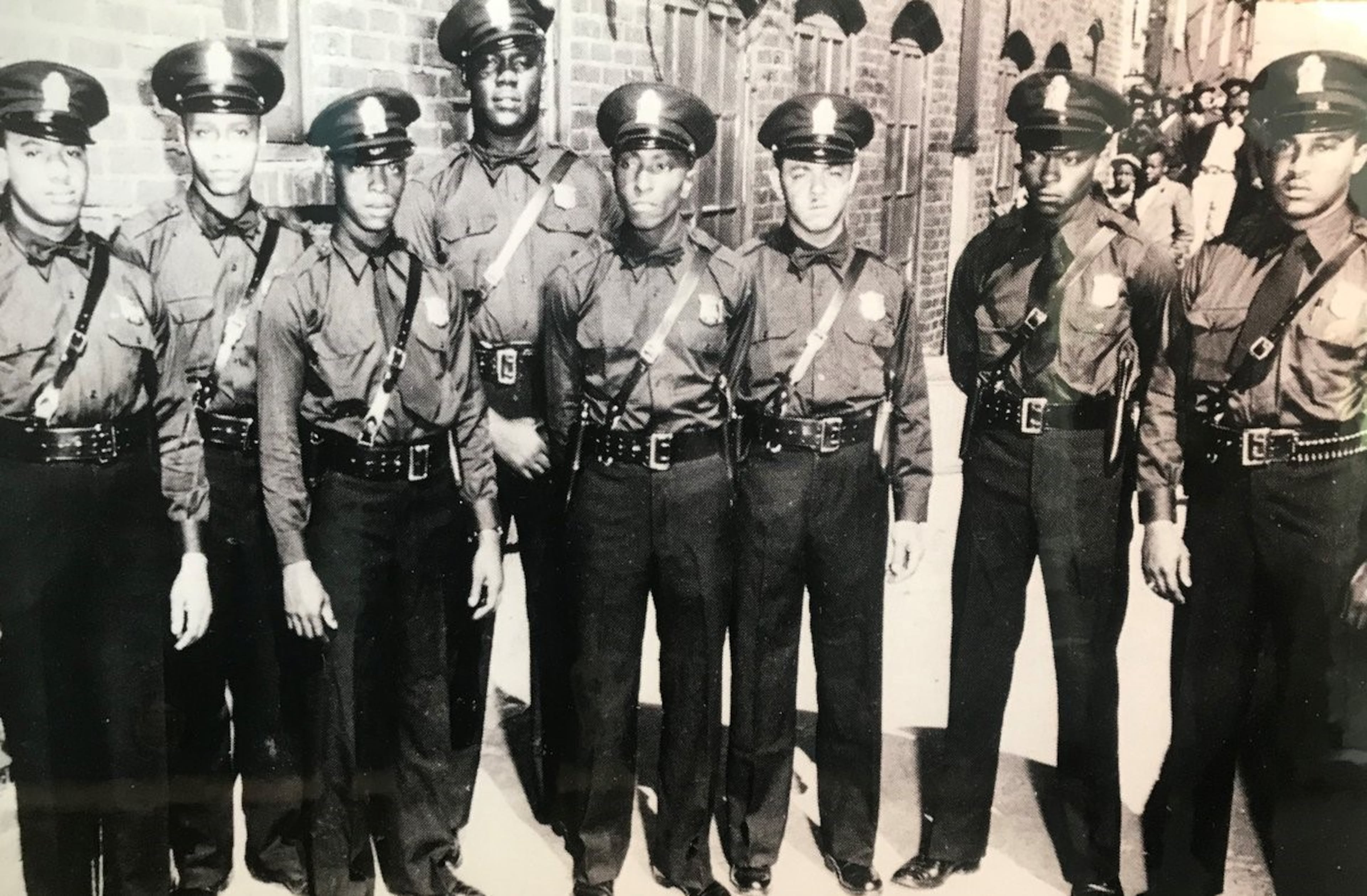
When Atlanta's first Black police officers were hired in 1948, they could only work nights and weren't allowed to arrest white people. (Courtesy of city of Atlanta)

1949: WERD-AM begins broadcasting in Atlanta, becoming the first Black-owned radio station in the United States.

The 1950s: Legal challenges and breakthroughs

1950: The NAACP files a federal lawsuit against the Atlanta Board of Education over school inequities.

1951: More than 400 people in Atlanta were poisoned by tainted moonshine, which killed 38 African American men and women and left dozens blind and paralyzed.

1952: Norris Herndon establishes the Herndon Foundation, funding civil rights organizing and bail efforts.

1953: Rufus Clement is elected to the Atlanta Board of Education, becoming the city’s first Black elected official since Reconstruction.
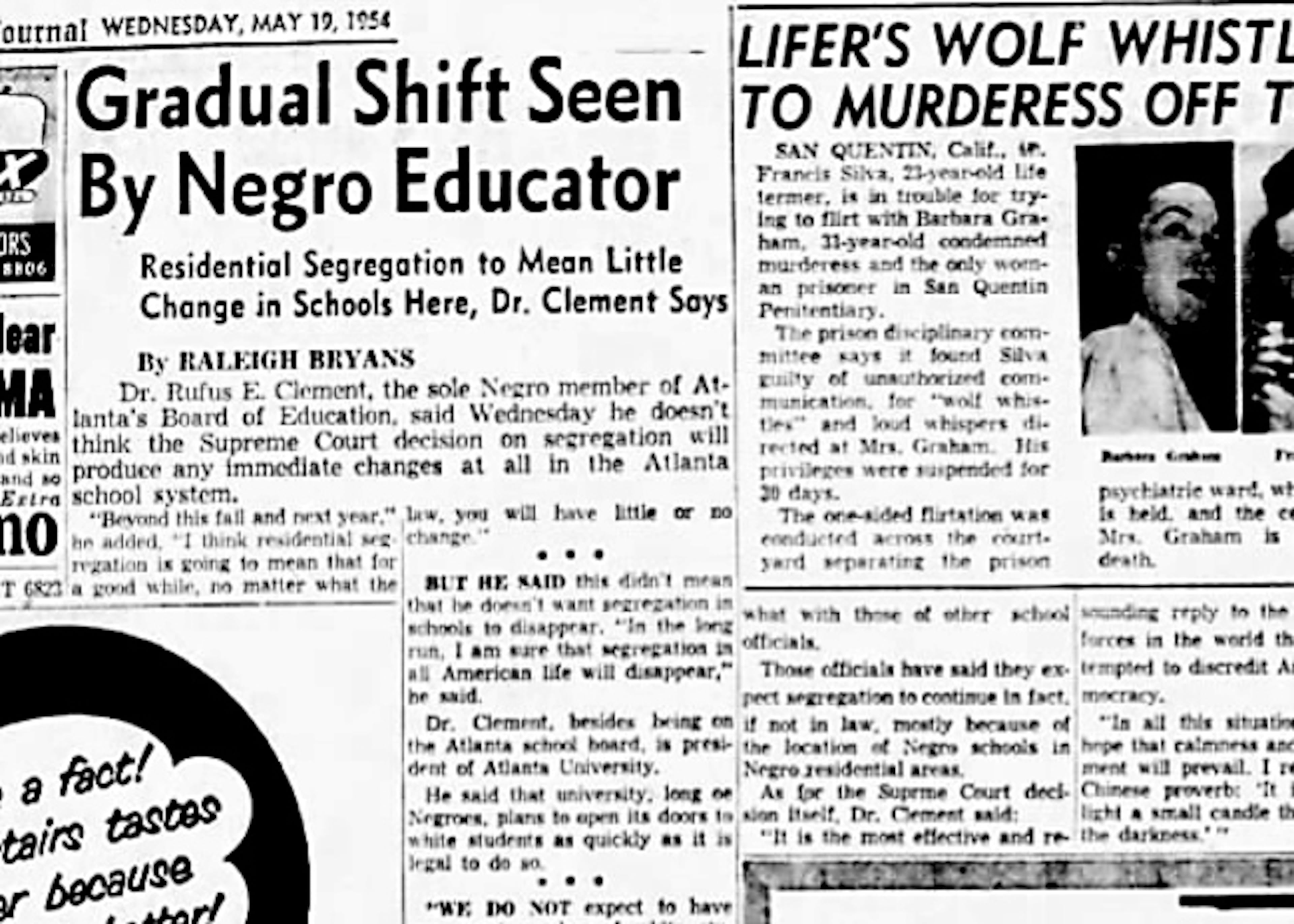
May 19, 1954 (Journal): Black educator Dr. Rufus Clement said that change would come slowly but that, "In the long run, I am sure that segregation in all American life will disappear." (AJC archives)

1954: Brown v. Board of Education overturns school segregation.

1955: Holmes v. City of Atlanta desegregates the city’s public golf courses.

1956: Bobby Grier becomes the first Black athlete to play in the Sugar Bowl, held in Atlanta.

1957: The Southern Christian Leadership Conference is founded in Atlanta by Martin Luther King Jr.
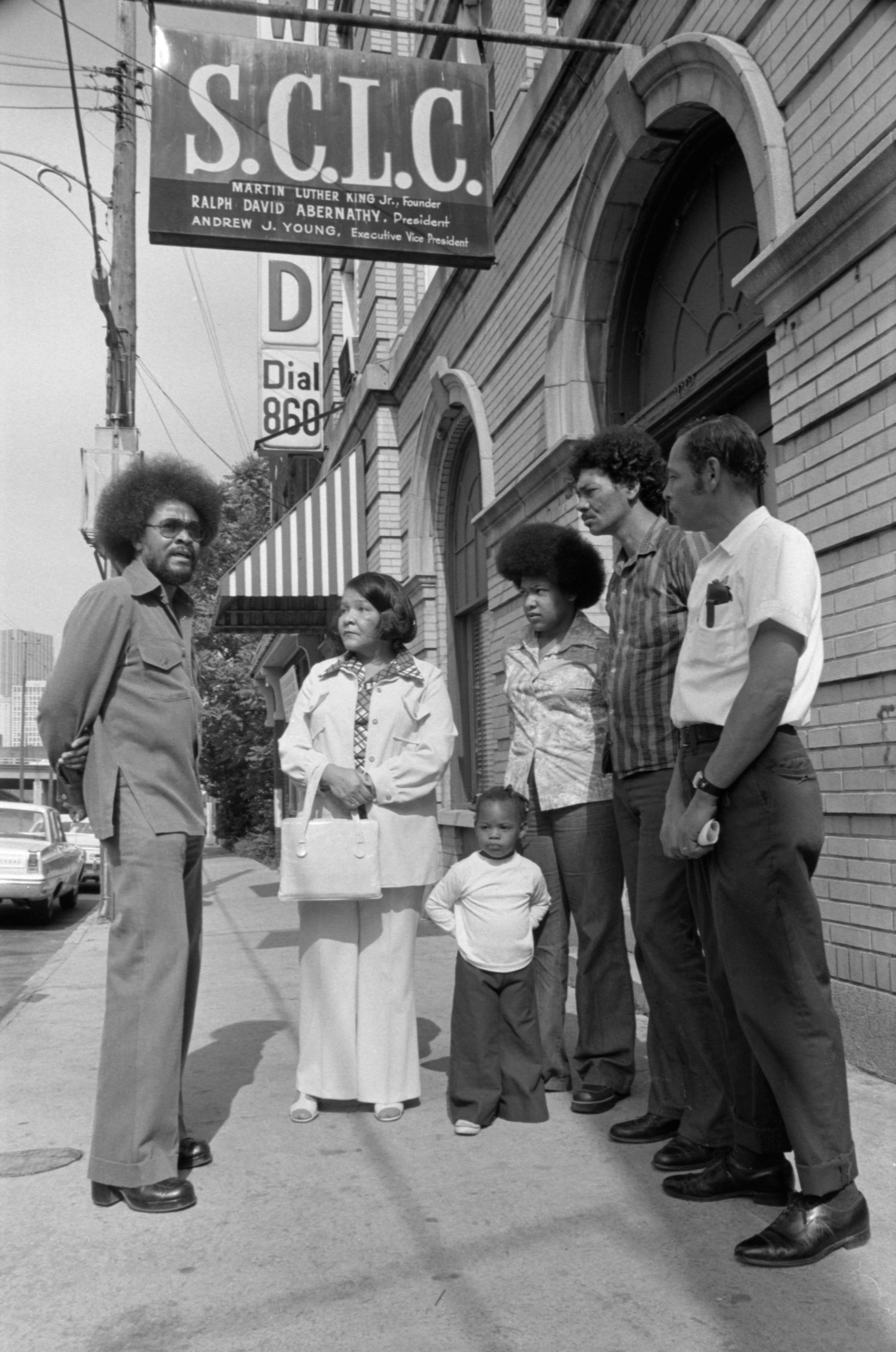
Tyrone Brooks (far left), then a Southern Christian Leadership Conference staffer, talks with an unidentified family outside the SCLC office on Auburn Avenue in this undated photo. The SCLC has roots dating back to the late '50s, when a group of civil rights leaders founded the organization to promote nonviolent action against segregation. The Rev. Martin Luther King Jr. was its first president. (Boyd Lewis/Courtesy of Kenan Research Center at the Atlanta History Center)

1958: The Hebrew Benevolent Congregation (The Temple) is bombed, strengthening Black—Jewish alliances.

1959: Atlanta’s buses and trolleybuses are officially desegregated.

The 1960s: Protest and power

1960: Martin Luther King Jr. and several students were arrested in downtown Atlanta after mass sit-ins at Rich’s Department Store and other lunch counters. King was sentenced to six months of hard labor, but a call from presidential candidate John F. Kennedy to the King family helped secure his release — and won crucial Black support that aided Kennedy’s narrow victory weeks later.
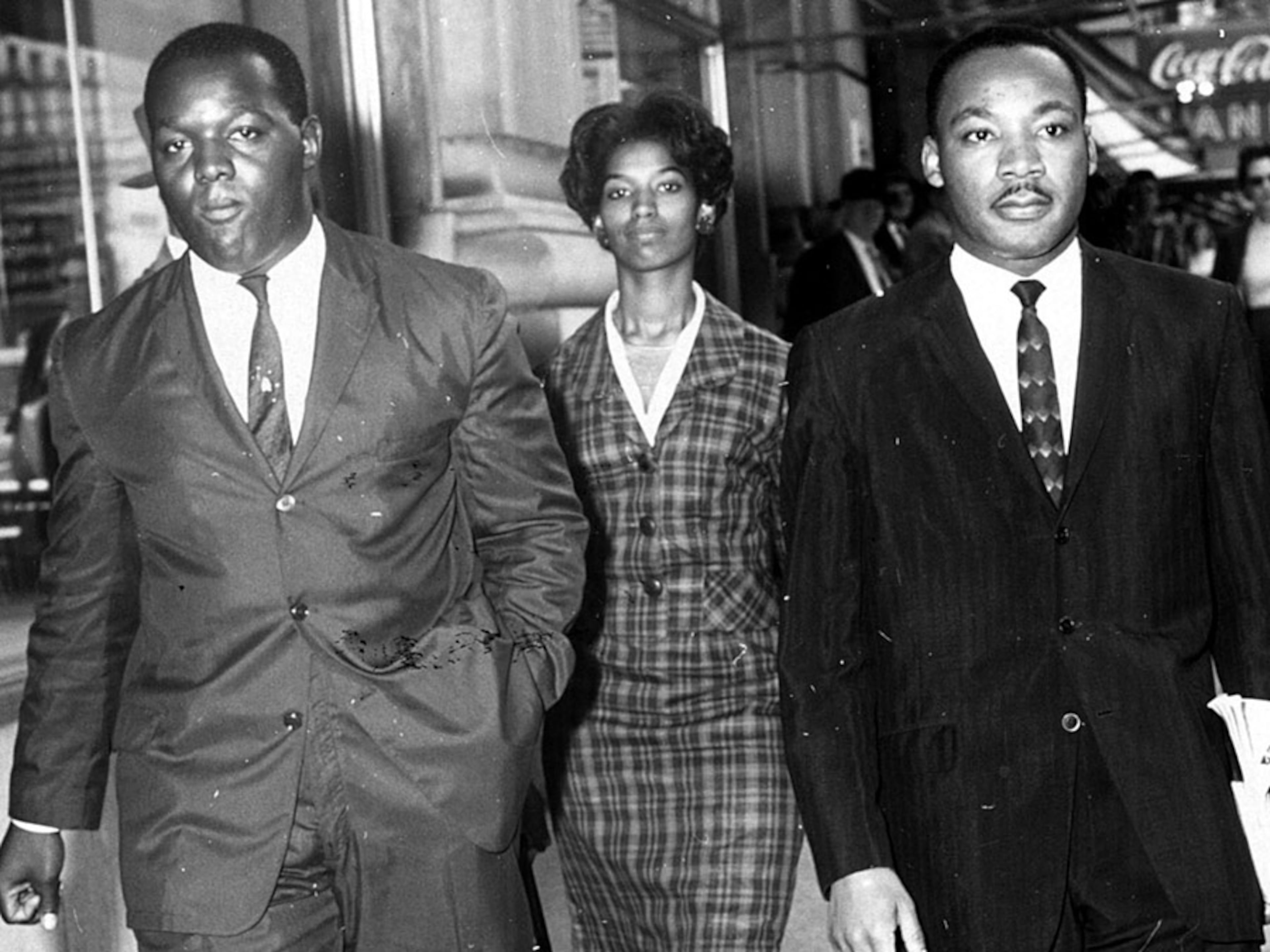
That Lonnie King and a handful of young activists chose March 15, 1960, to launch the Atlanta Student Movement — demonstrations to force area businesses to desegregate —was no accident. Just days before, the group had issued advertisements in newspapers across the city with an essay called an “Appeal for Human Rights.” That and ensuing protests were a pivotal moment in the Civil Rights Movement, with Lonnie King and others joining the Rev. Dr. Martin Luther King, Jr. in a national campaign. | PHOTOS: History of Civil Rights Movement

1961: Hamilton Holmes and Charlayne Hunter integrate the University of Georgia, followed eight months later by Georgia Tech; Later, nine Black students desegregate the Atlanta Public Schools.

1962: Construction of “Atlanta’s Berlin Wall” (Peyton Road barrier) deepens residential segregation.

1963: Leroy Johnson is sworn in as the first Black Georgia state senator since 1907.
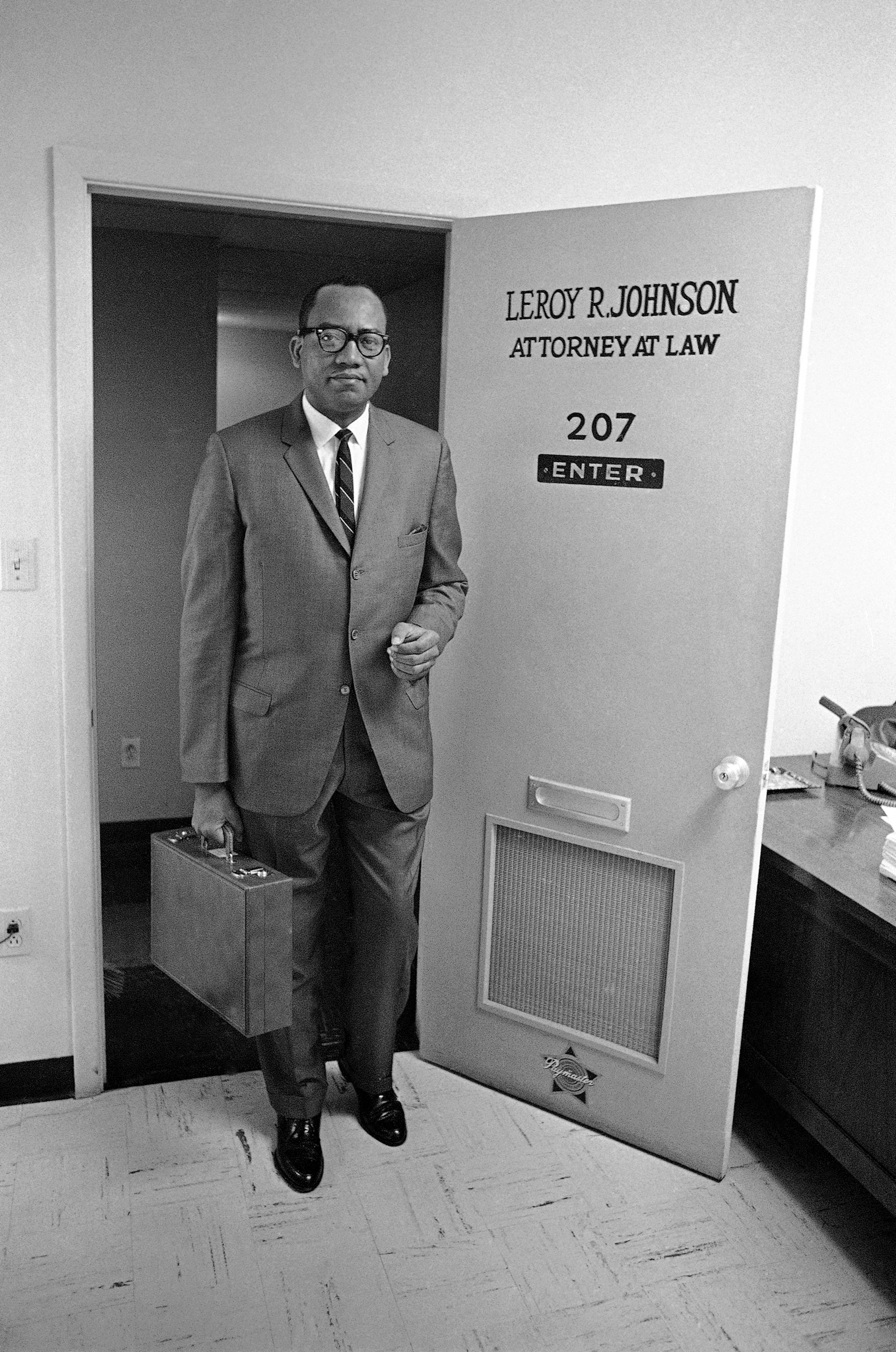
Leroy R. Johnson, Georgia's first African-American in the state Senate in 92 years, poses on March 26, 1963, at the door of his office in Atlanta. The 34-year-old attorney predicted that the racial fence around the state Democratic Party would fall under the weight of African-American ballots. (The Associated Press)

1964: Martin Luther King Jr. is awarded the Nobel Peace Prize.
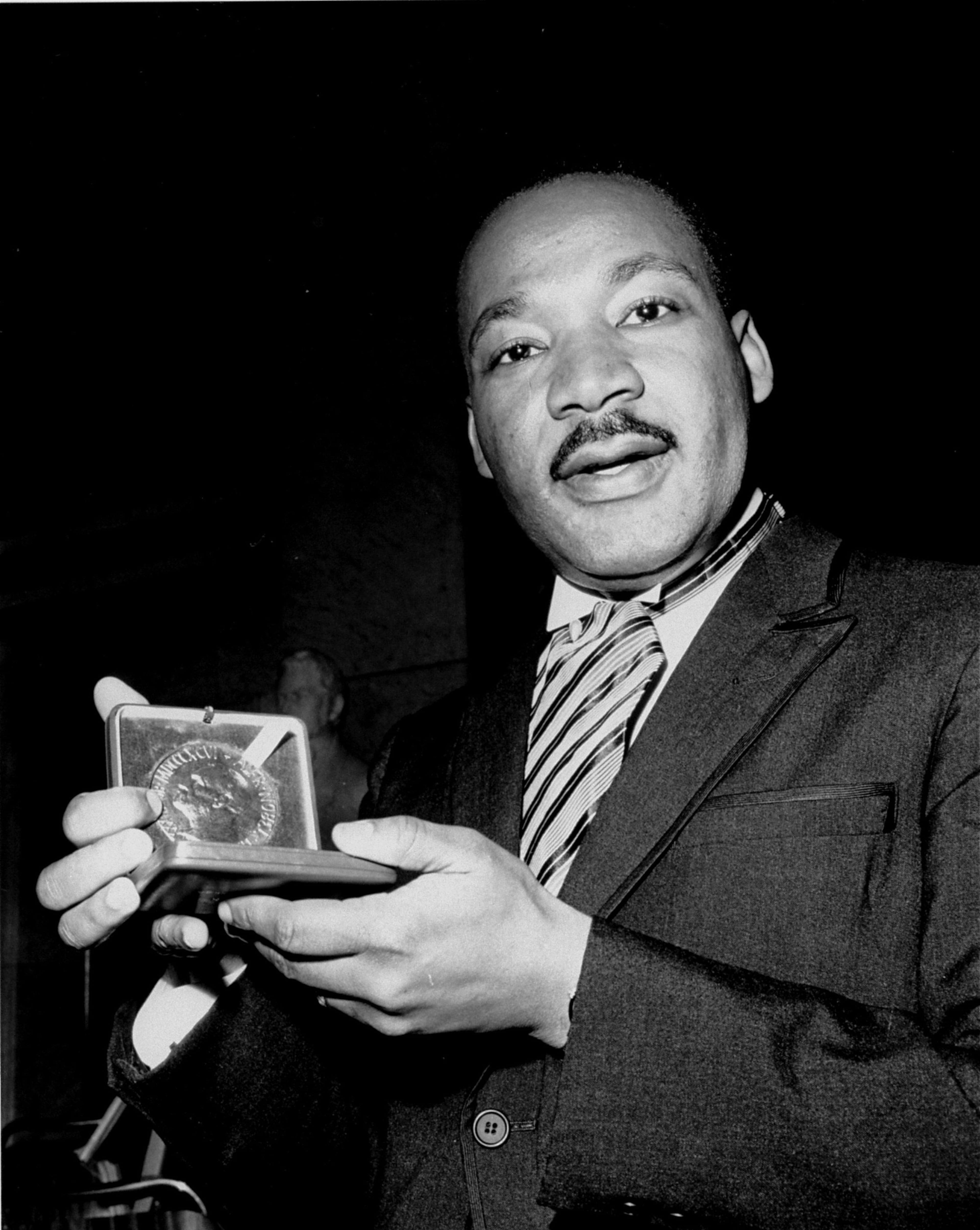
Dr. Martin Luther King, Jr. displays his 1964 Nobel Peace Prize medal in Oslo, Norway, December 10, 1964. The 35-year-old Dr. King was honored for promoting the principle of non-violence in the civil rights movement. (The Associated Press)

1965: Grace Towns Hamilton and Julian Bond help usher in the largest Black legislative class in Georgia history.

1966: Georgia lawmakers vote 184—12 not to seat Julian Bond because of his opposition to the Vietnam War.

1967: Lorenzo “Lo” Jelks becomes Atlanta’s first Black television reporter.
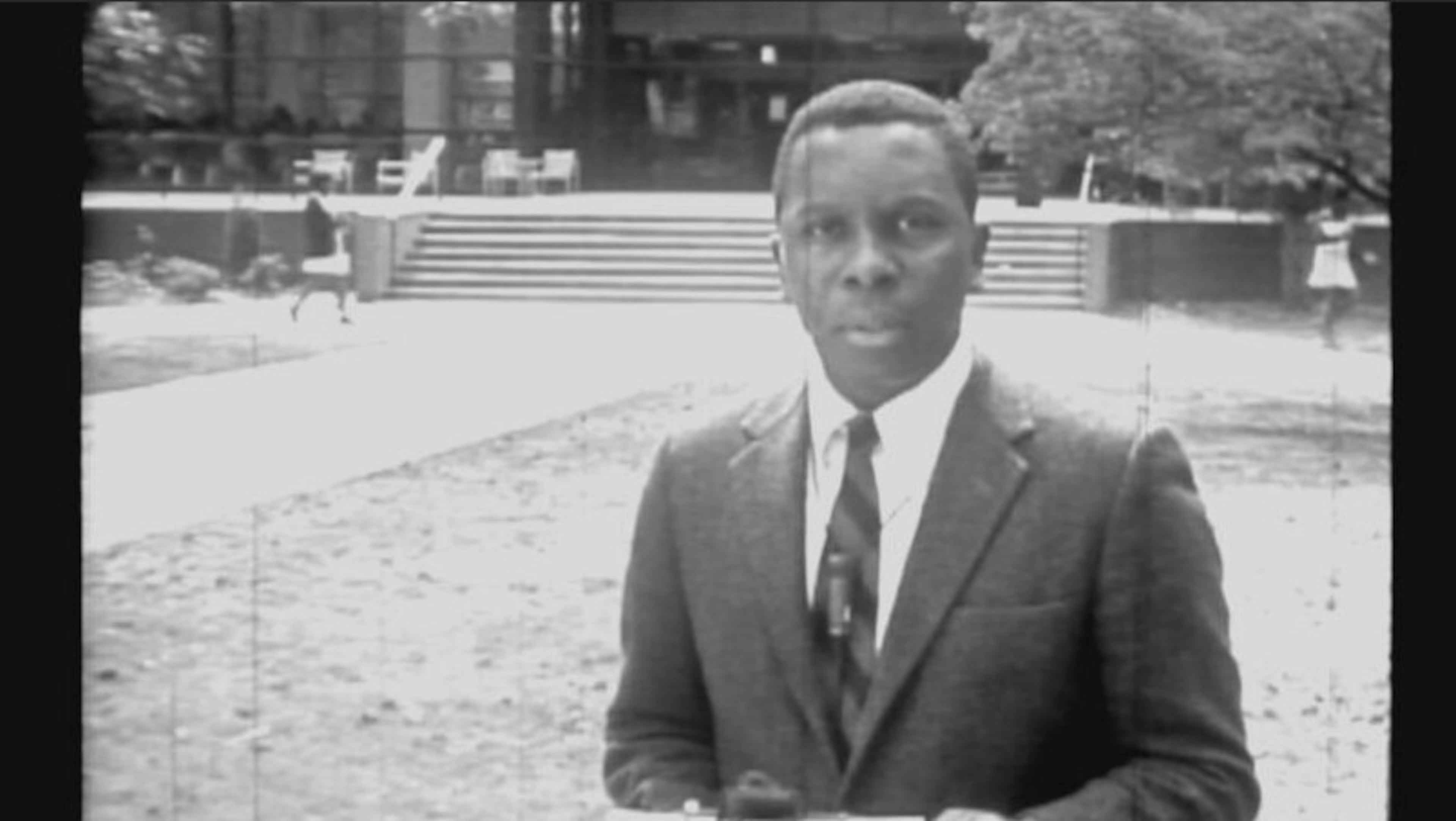
WSB-TV 75th Anniversary: Celebrating Lo Jelks

1968: Martin Luther King Jr. is assassinated.

1969: Emory University Black Student Alliance protests lead to Black studies programs and faculty hires.

1970s: Politics and punches

1970: Muhammad Ali returns to boxing in Atlanta, defeating Jerry Quarry.
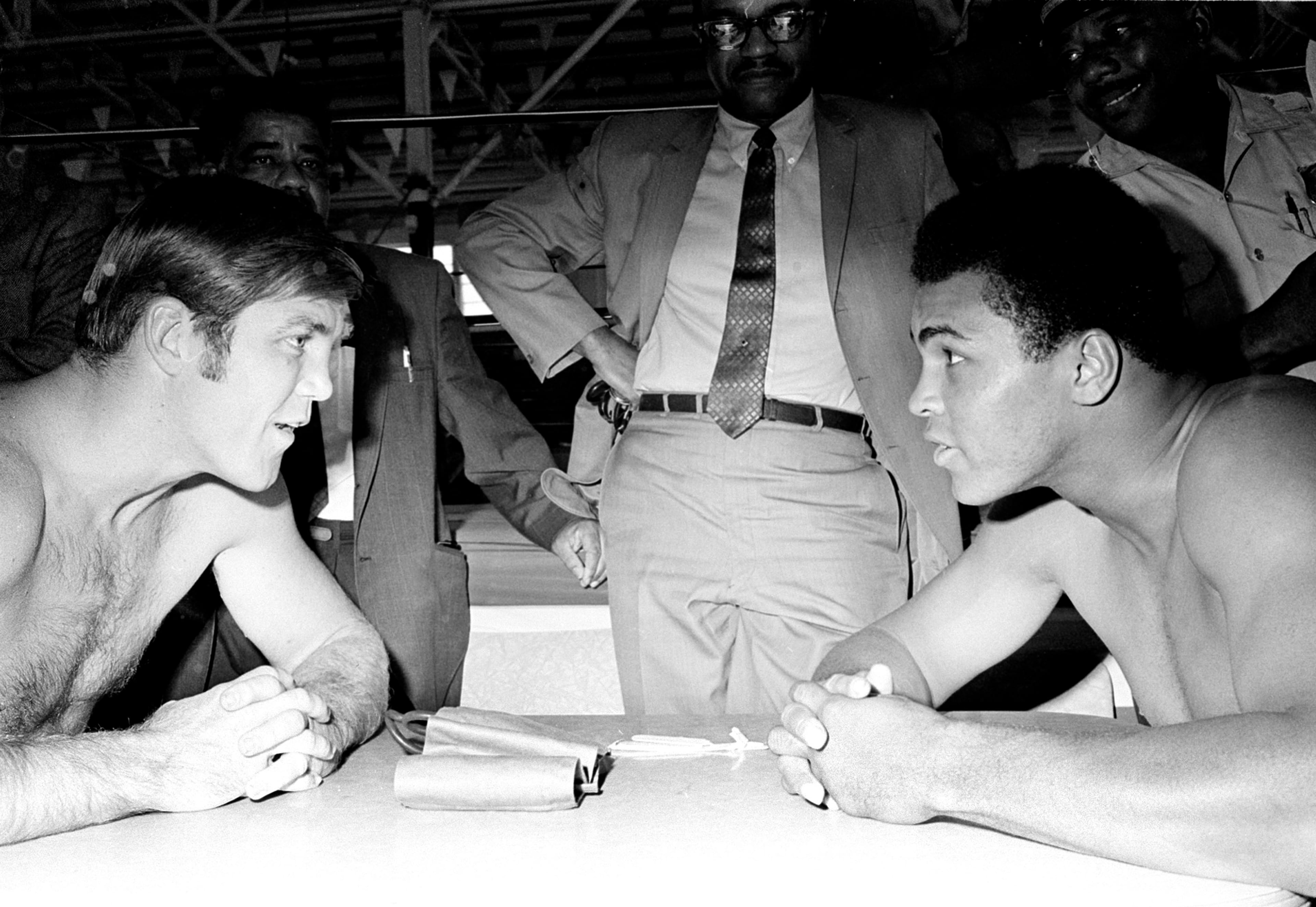
Heavyweight boxers Jerry Quarry (left) and Muhammad Ali face each other at a ringside table following their physical examinations Oct. 21, 1970, in Atlanta. The two were poised to meet in a 15-round, non-title fight Oct. 26. Quarry was the No. 1 heavyweight contender at the time.

1971: Ebony magazine officially dubs Atlanta the “Black Mecca of the South.”

1972: Andrew Young is elected to Congress.

1973: Maynard Jackson is elected Atlanta’s first Black mayor.

1974: Hank Aaron hits home run No. 715 in Atlanta, breaking Babe Ruth’s record.

1975: Minority contracting expands citywide, including at the airport.

1976: Andrew Young is nominated U.S. Ambassador to the United Nations.

1977: The Atlanta Sanitation Strike tests Black political power.

1978: The APEX Museum, now the oldest Black museum in the city, is founded on Auburn Avenue.

1979: The Atlanta child murders begin.
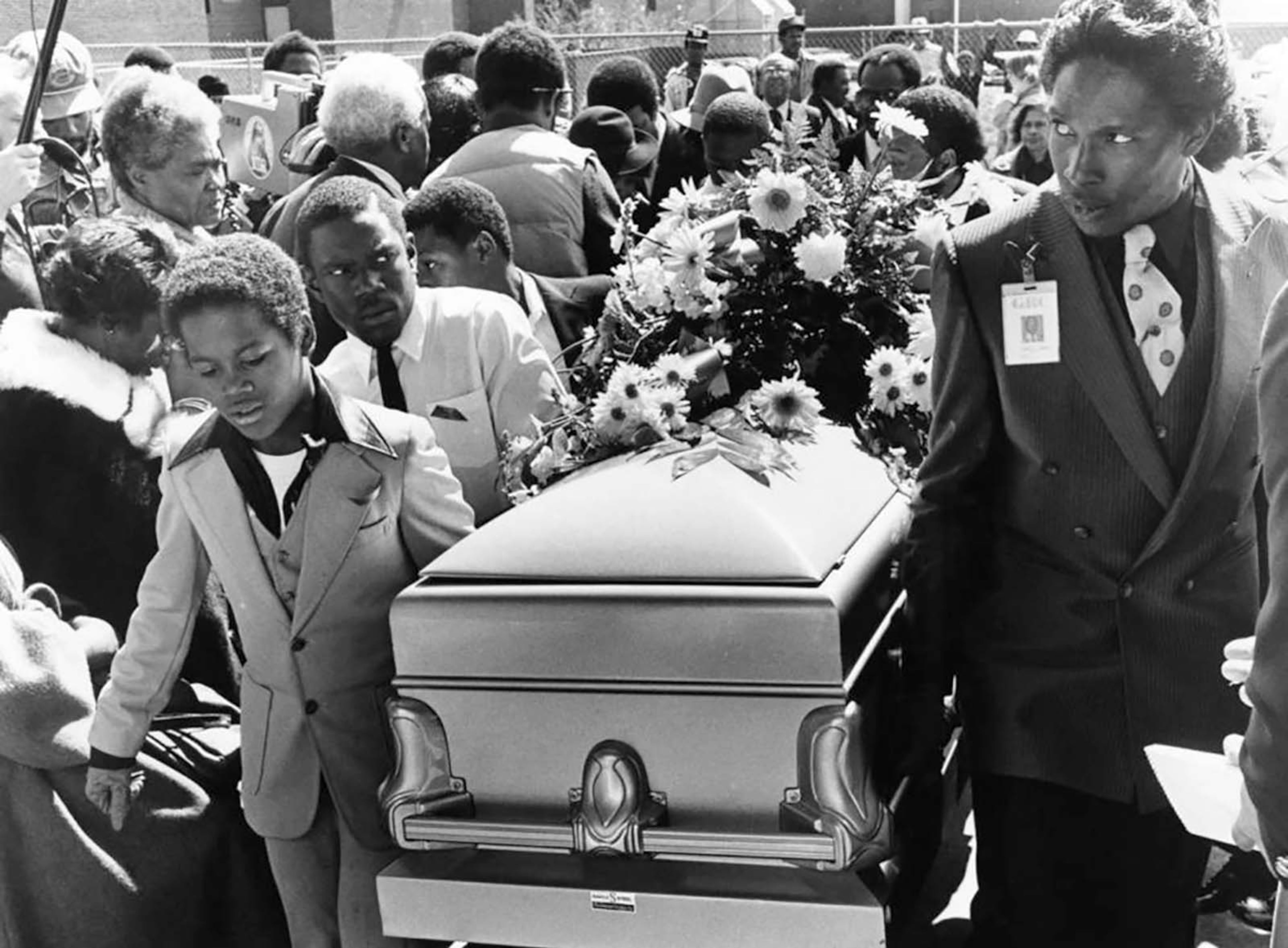
Young pallbearers carry the body of Curtis Walker in the New St. John Baptist Church. (Bill Mahan/AJC file photo)

The 1980s: Cultural Expansion

1980: Martin Luther King Jr. National Historical Park is established.

1981: Andrew Young is elected mayor of Atlanta.
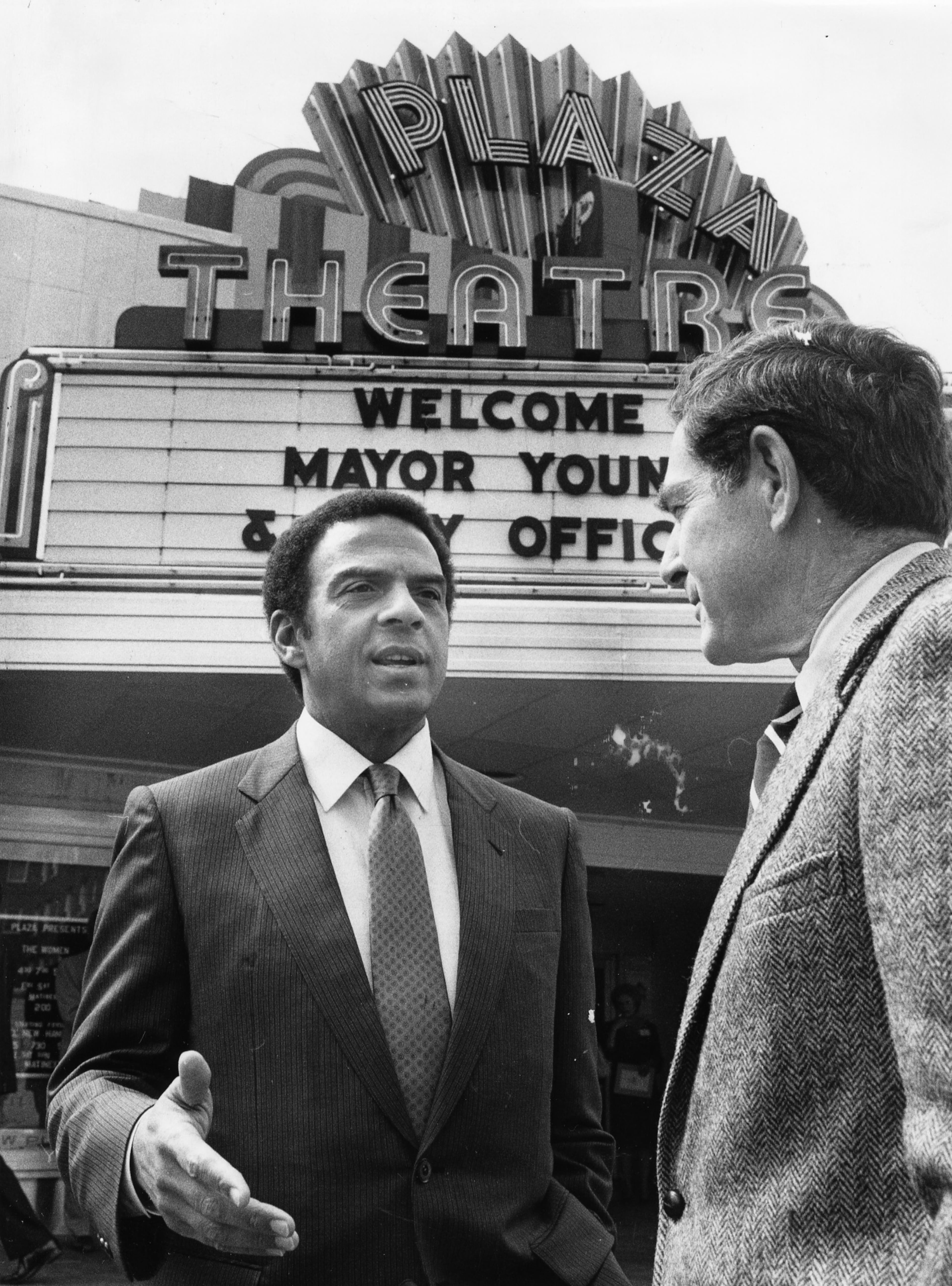
A March 1984 photo of Atlanta Mayor Andrew Young talking to the owner of the Briarcliff Plaza shopping center, Robert S. Griffith Jr., about restoration of the shopping center. They are standing in front of the marquee of the Plaza Theatre. (Steve Deal/AJC file photo)

1982: Herschel Walker wins the Heisman Trophy.

1983: Martin Luther King Jr. Day is signed into law.

1984: Air Atlanta, a Black-owned airline, launches.

1985: Magic City, one of the nation’s premier strip clubs, opens in Atlanta.

1986: First national observance of Martin Luther King Jr. Day.

1987: Johnnetta Cole becomes the first Black woman president of Spelman College.
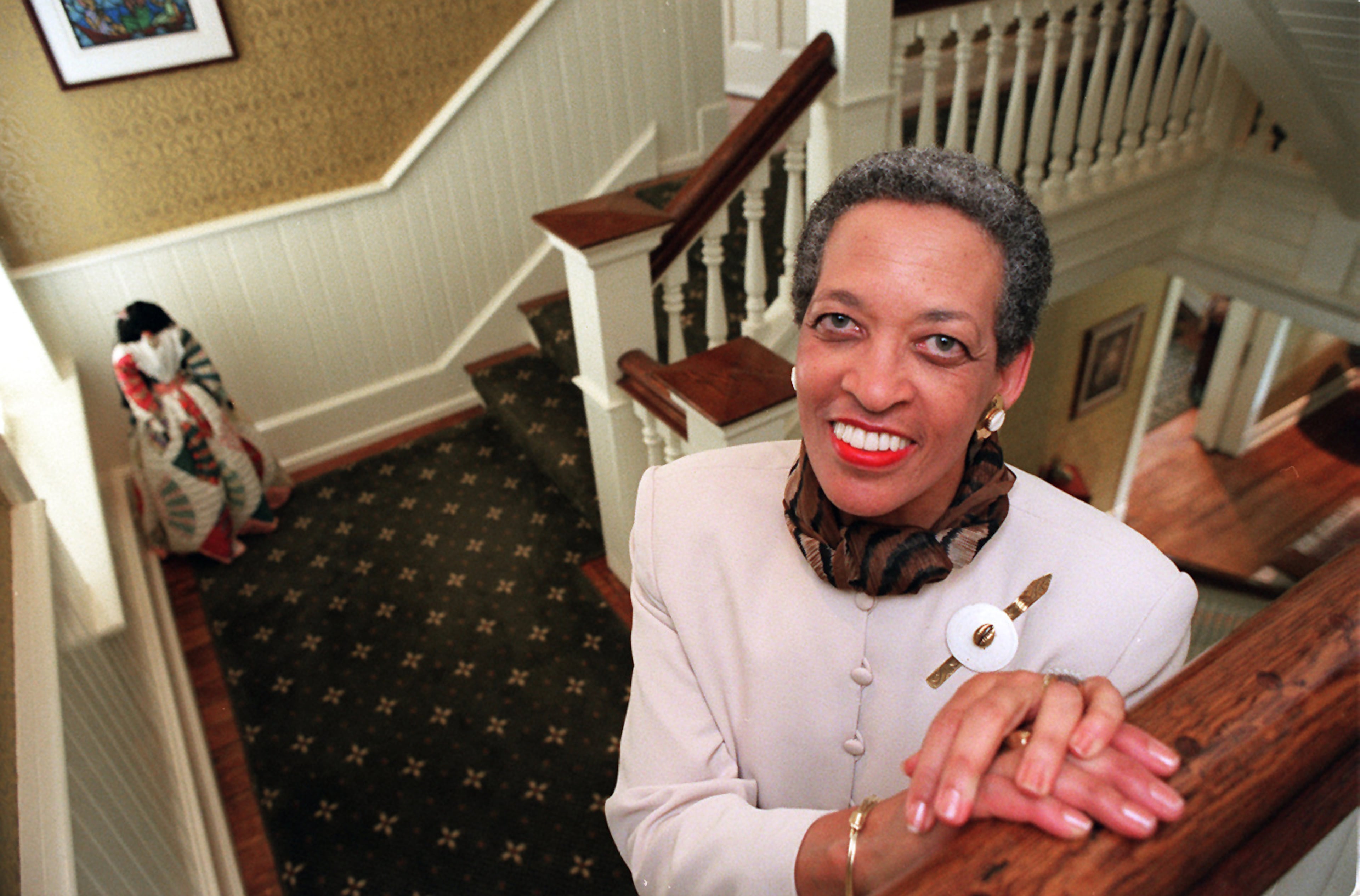
It took more than a century for the college founded specifically for the education of black women to hire one as president. But in 1987, Johnnetta Betsch Cole became the first black woman to serve as president of Spelman College. (Courtesy of David Tulis)

1988: Spike Lee releases “School Daze,” filmed in Atlanta.

1989: Maynard Jackson returns as mayor for a third term.

The 1990s: A global spotlight

1990: Nelson Mandela visits Atlanta during his eight-city U.S. tour shortly after his release from prison, honoring the city as a center of the American Civil Rights Movement.

1991: Airport expansion fuels Black wealth-building.

1992: Atlanta sees unrest following the Rodney King verdict.
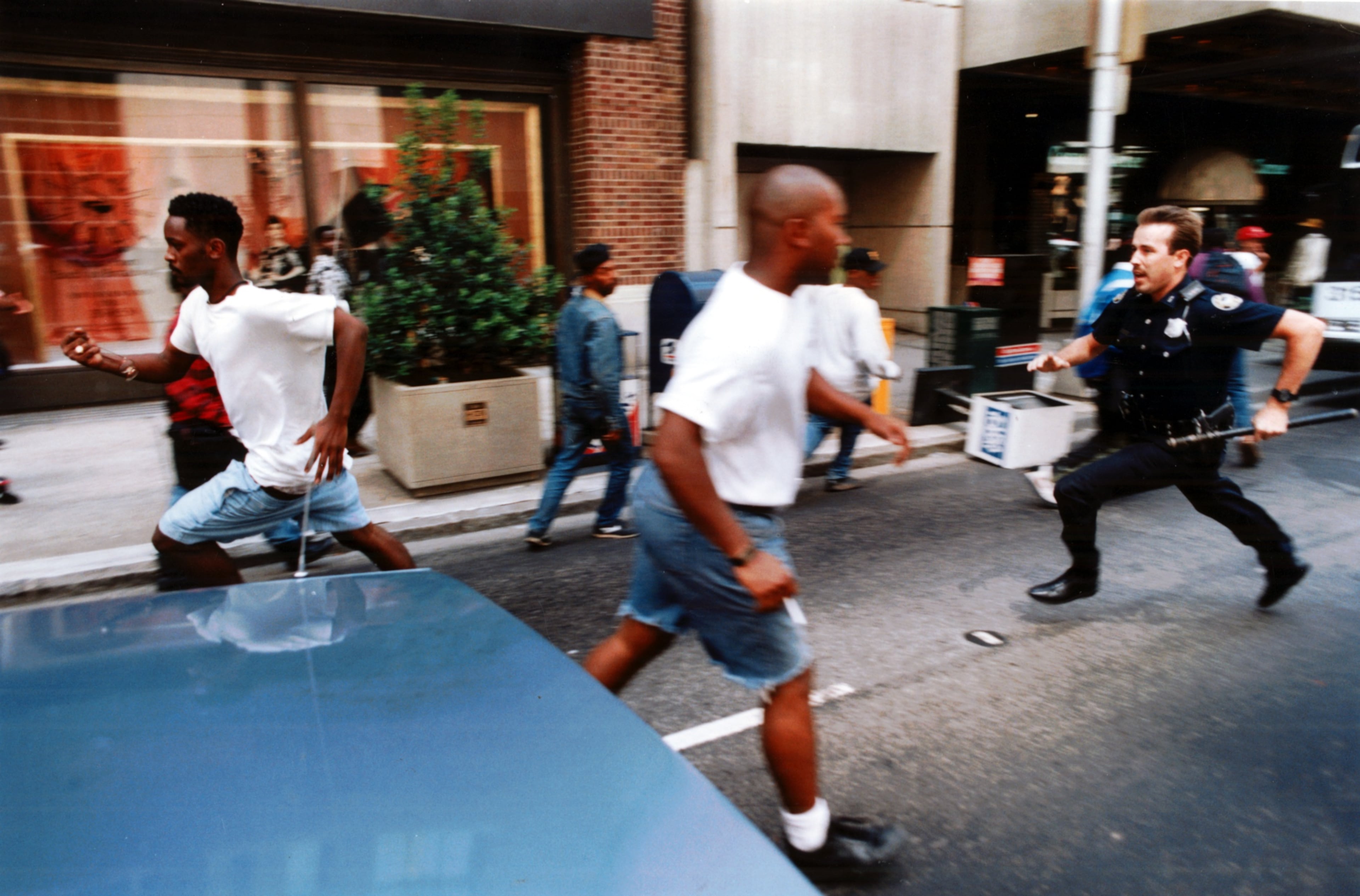
Atlanta saw a violent reaction to the Rodney King verdict, which was announced on April 29, 1992, in Los Angeles. Demonstrators in Atlanta began to assemble that evening, with police first calling in reports at 2 a.m. on April 30. Clashes with police officers heated up later throughout the day in the heart of Atlanta's downtown. Here, a policeman chases a student down Peachtree Street in front of Macy's Department store during the unrest. (Jonathan Newton/AJC file photo)

1993: Freaknik explodes into a national cultural phenomenon.

1994: Outkast releases “Southernplayalisticadillacmuzik.”

1995: André 3000 declares “The South got something to say” at the Source Awards.

1996: Atlanta hosts the Olympic Games.

1997: Bill Campbell wins reelection as mayor.

1998: Bankhead Highway is renamed Donald Lee Hollowell Parkway.

1999: The final official Freaknik.

A woman runs back to her car after posing quickly for another Freaknik participant near Phipps Plaza and Lenox Mall after the traffic came to a standstill on Peachtree and Lenox Roads. (Jean Shifrin/AJC file photo)

The 2000s: New fault lines

2000: Census confirms metro Atlanta’s rapid Black population growth.

2001: Shirley Franklin is elected Atlanta’s first female mayor.
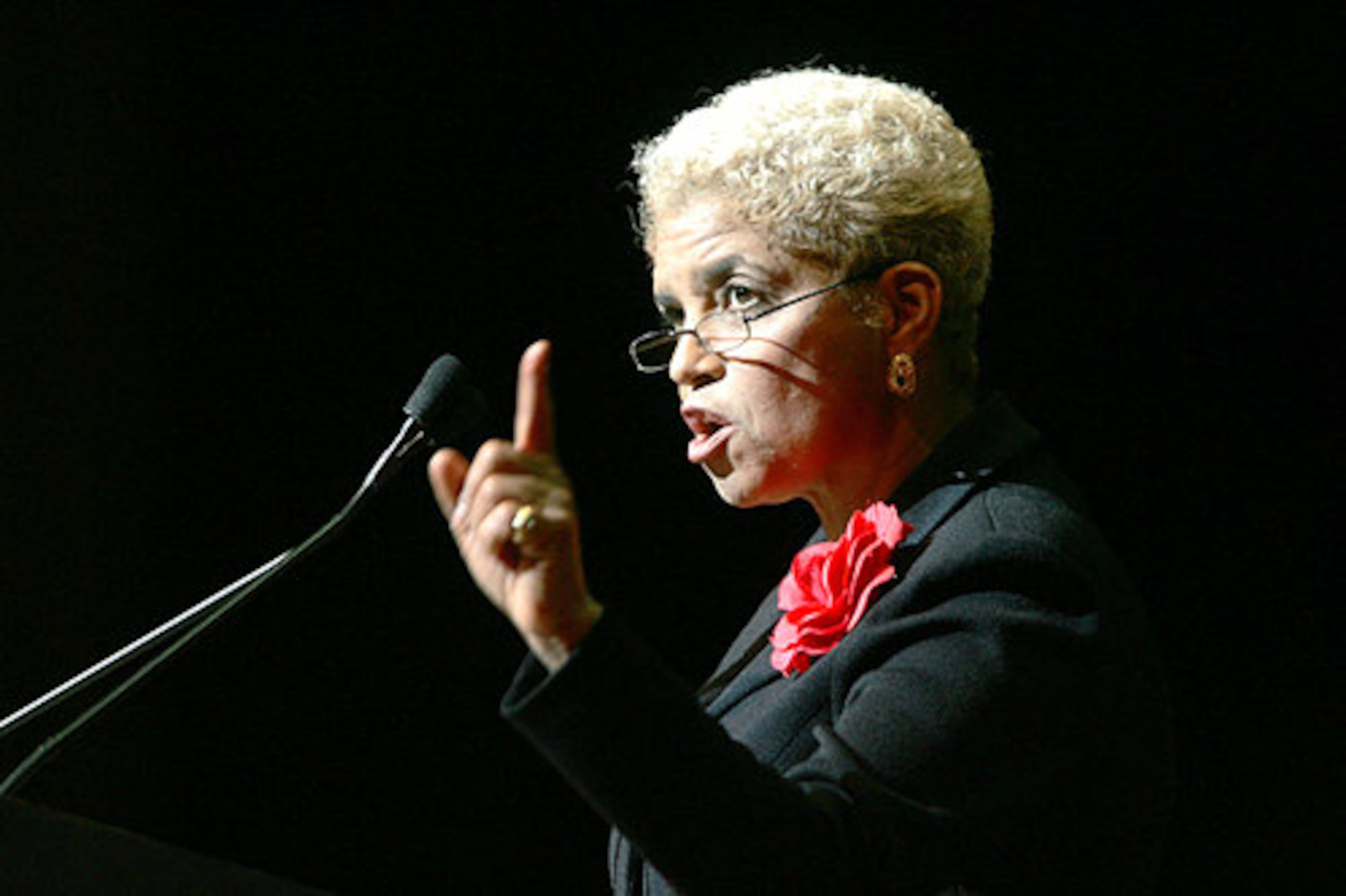
Shirley Clarke Franklin, Atlanta's first female mayor and the first black woman elected mayor of a major Southern city. (John Spink/AJC file photo)

2002: Morris Brown College, founded in 1881, loses accreditation.

2003: Maynard Jackson dies.

2004: Black-led youth baseball and mentorship organizations expand in Atlanta.

2005: Atlanta’s first House Music Festival launches.

2006: Coretta Scott King dies; Atlanta purchases the King papers.

2007: Cynthia Tucker becomes the first Black Pulitzer Prize winner at The Atlanta Journal-Constitution.

2008: The Real Housewives of Atlanta debuts.

2009: Joseph Lowery delivers the benediction at the inauguration of Barack Obama, the nation’s first Black president.
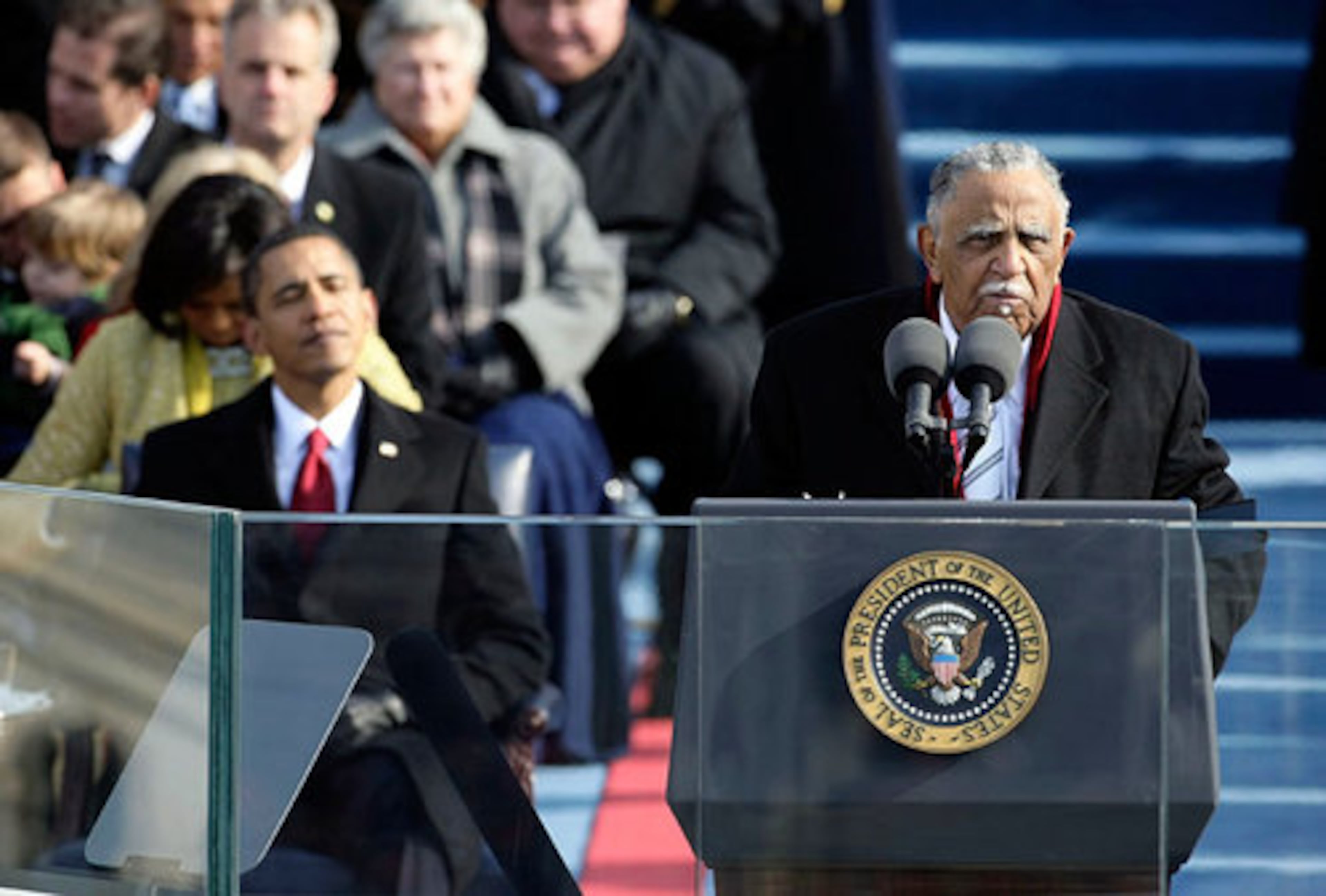
The Rev. Joseph Lowery, of Atlanta, gives the benediction during the inauguration. (Courtesy of Alex Wong)

The 2010s: A changing South

2010: The Atlanta Public Schools cheating scandal intensifies.

2011: Digital Black genealogical archives expand.

2012: The Maynard H. Jackson Jr. International Terminal opens at Hartsfield-Jackson Atlanta International Airport.
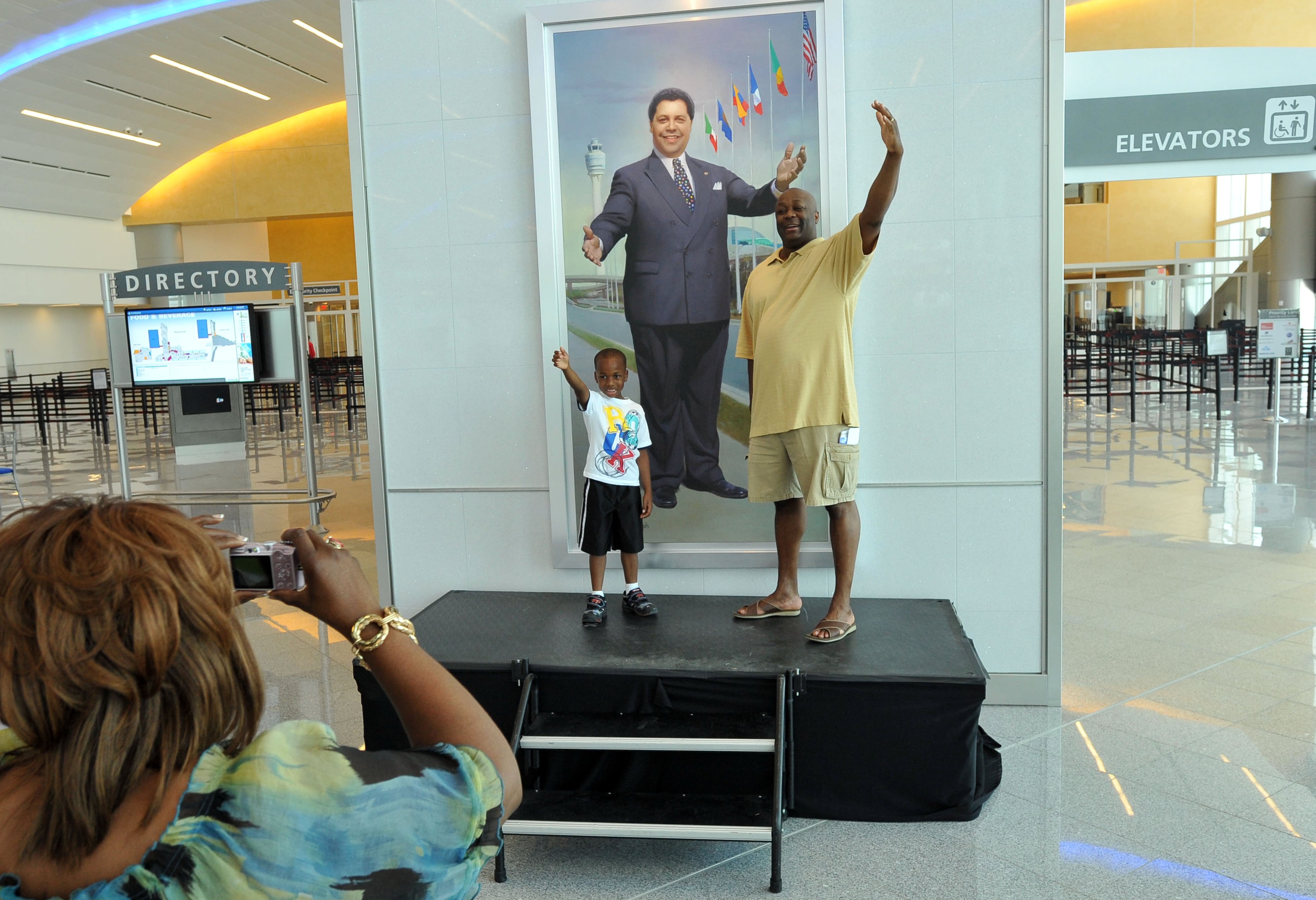
Glenn Thomas (right), of Lithonia, and his 6-year-old son Myles pose in front of Maynard H. Jackson Jr.'s portrait as Hartsfield-Jackson Atlanta International Airport staffer Myrna White takes a picture during an open house at Maynard H. Jackson Jr. International Terminal in Atlanta on Saturday, May 5, 2012. The new terminal honors the late mayor, who was instrumental in turning Atlanta into a major international air hub. (AJC file photo)

2013: The Black Lives Matter movement emerges nationally.

2014: The National Center for Civil and Human Rights opens in downtown Atlanta.

2015: Confederate symbol removal accelerates.

2016: Atlanta solidifies its role as a Black film and television hub.

2017: A statue of Martin Luther King Jr. is unveiled at the Georgia State Capitol.

2018: Stacey Abrams’ gubernatorial run reshapes Georgia politics.

2019: Tyler Perry Studios officially opens at Fort McPherson.
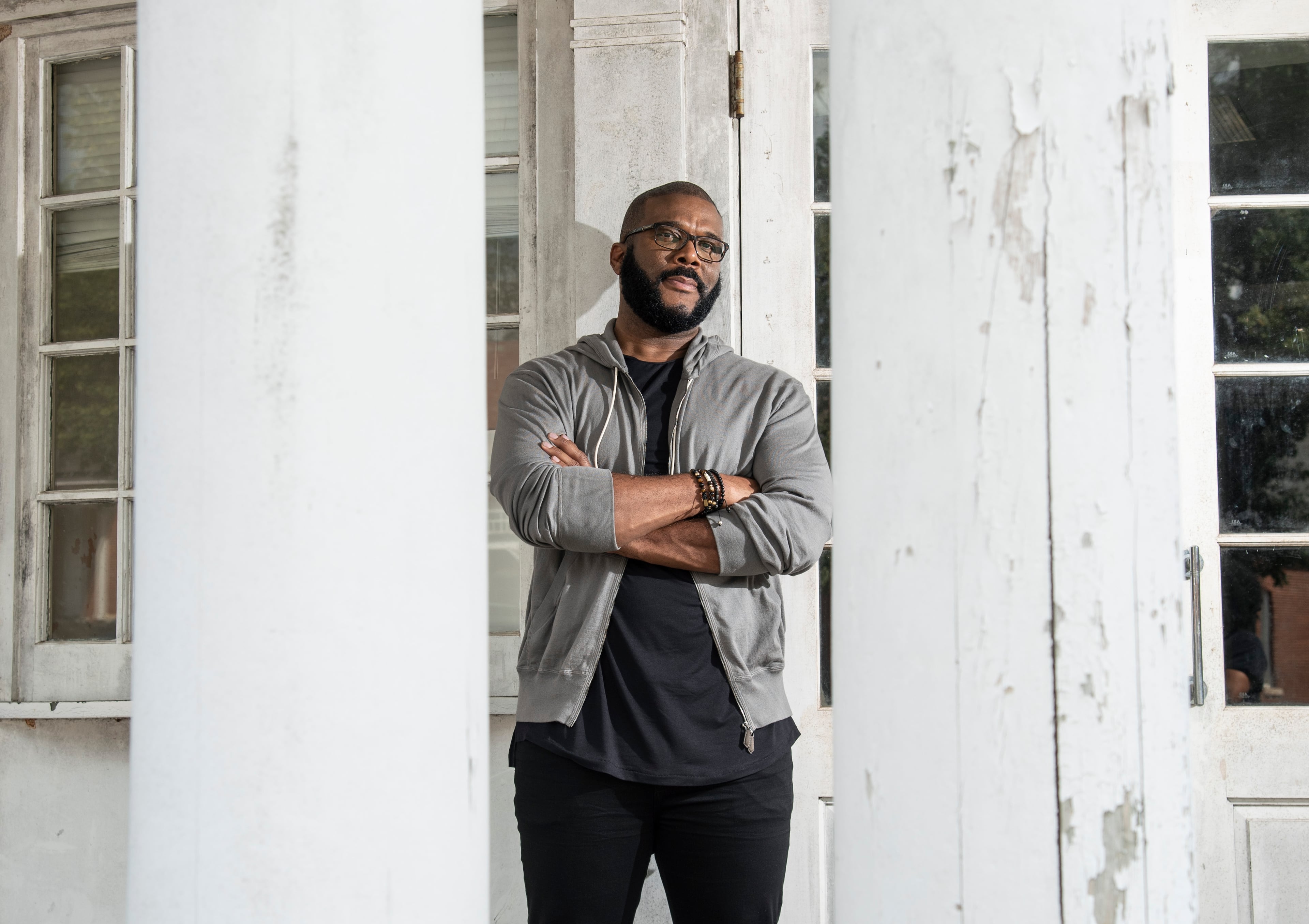
Portrait of Tyler Perry in Tyler Perry Studios on Sept. 26, 2019. On Oct. 5, Tyler Perry held the ceremonial grand opening for his movie studio at Fort McPherson. He bought the land in 2015. (Hyosub Shin/AJC)

The 2020s: The next chapter

2020: COVID-19 devastates Black Atlanta; uprisings follow the murder of George Floyd; John Lewis, C.T. Vivian and Joseph Lowery die.

2021: Raphael Warnock is elected U.S. senator from Georgia.

U.S. Sen. Raphael Warnock addresses supporters at his election night watch party at the Atlanta Marriott Marquis in Atlanta on Wednesday, Nov. 9, 2022. (Arvin Temkar/AJC)

2022: The federal anti-lynching law is enacted.

2023: Leroy Chapman Jr. becomes the first Black editor-in-chief of The Atlanta Journal-Constitution.

2024: A John Lewis statue is unveiled in metro Atlanta.

2025: Outkast, the innovative Atlanta rap duo of André 3000 and Big Boi, is inducted into the Rock & Roll Hall of Fame, proving that the Dirty South, and Atlanta in particular, still had something to say.

2026: ???


This year’s AJC Black History Month series marks the 100th anniversary of the national observance of Black history and the 11th year the AJC has examined the role African Americans played in building Atlanta and shaping American culture. New installments will appear daily throughout February on ajc.com and uatl.com, as well as at ajc.com/news/atlanta-black-history.

About the Author
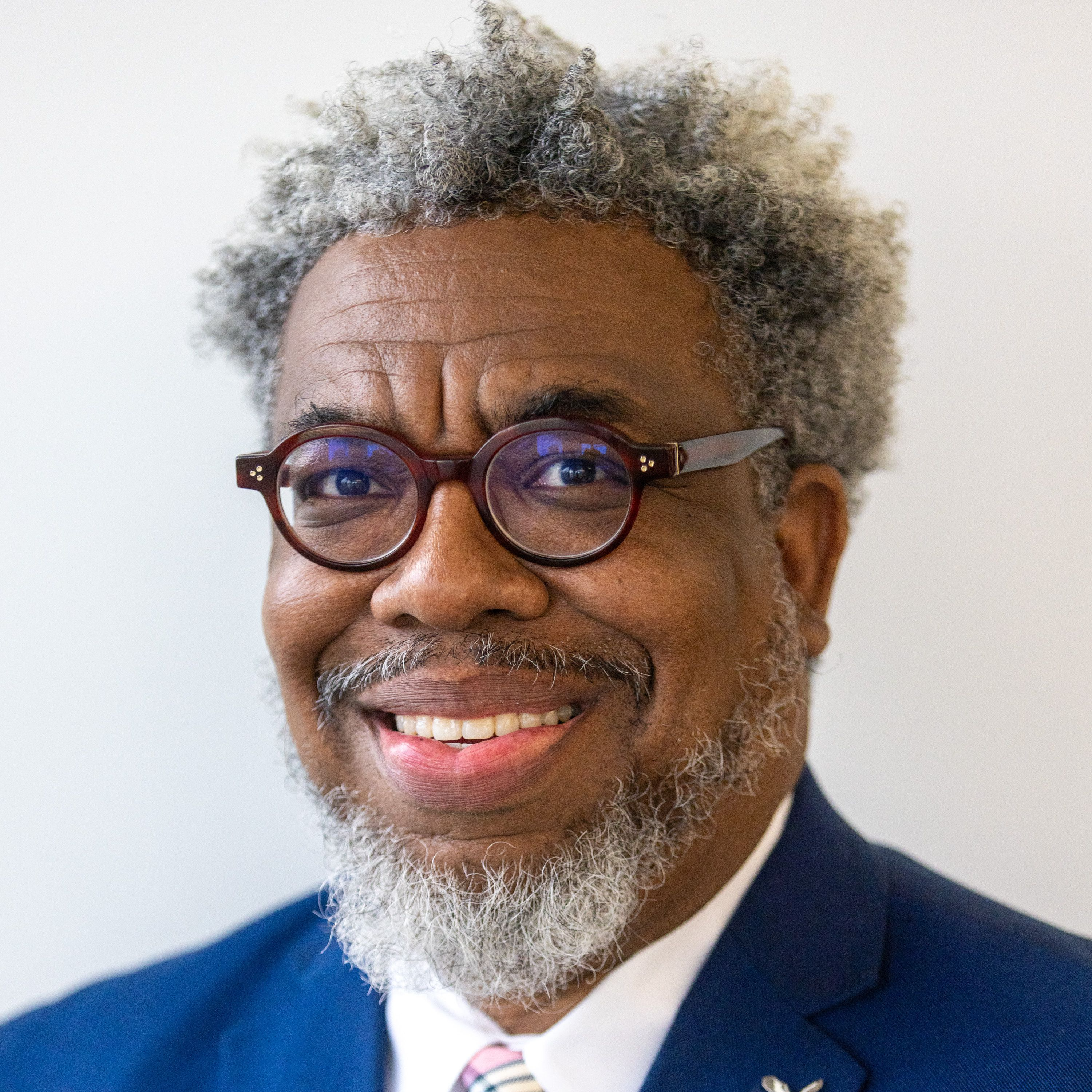
Ernie Suggs is an enterprise reporter covering race and culture for the AJC since 1997. A 1990 graduate of N.C. Central University and a 2009 Harvard University Nieman Fellow, he is also the former vice president of the National Association of Black Journalists. His obsession with Prince, Spike Lee movies, Hamilton and the New York Yankees is odd.