
King’s refurbished SCLC headquarters joins National Park System
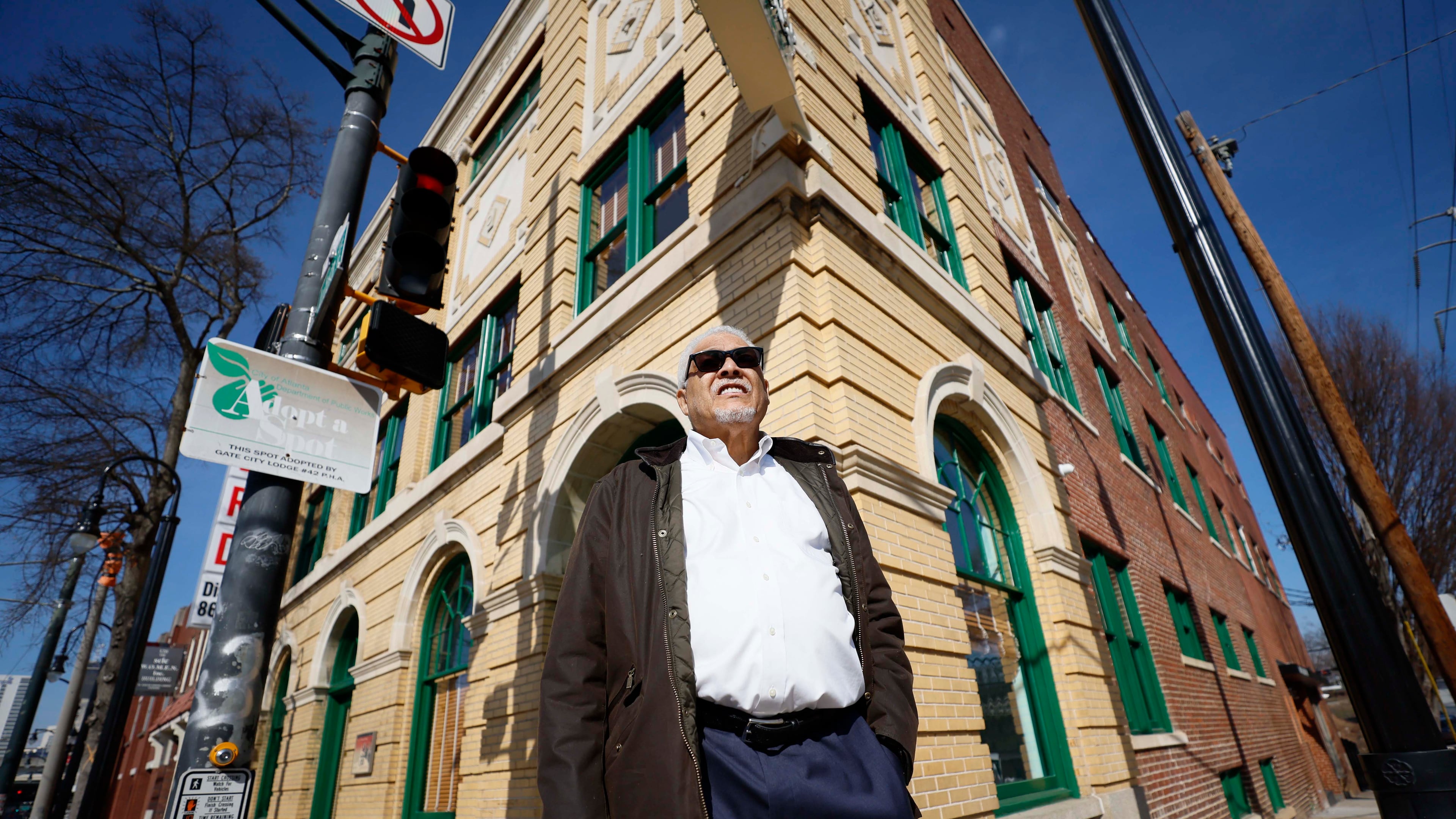
The smell of fresh paint is almost as intoxicating as it is inviting.
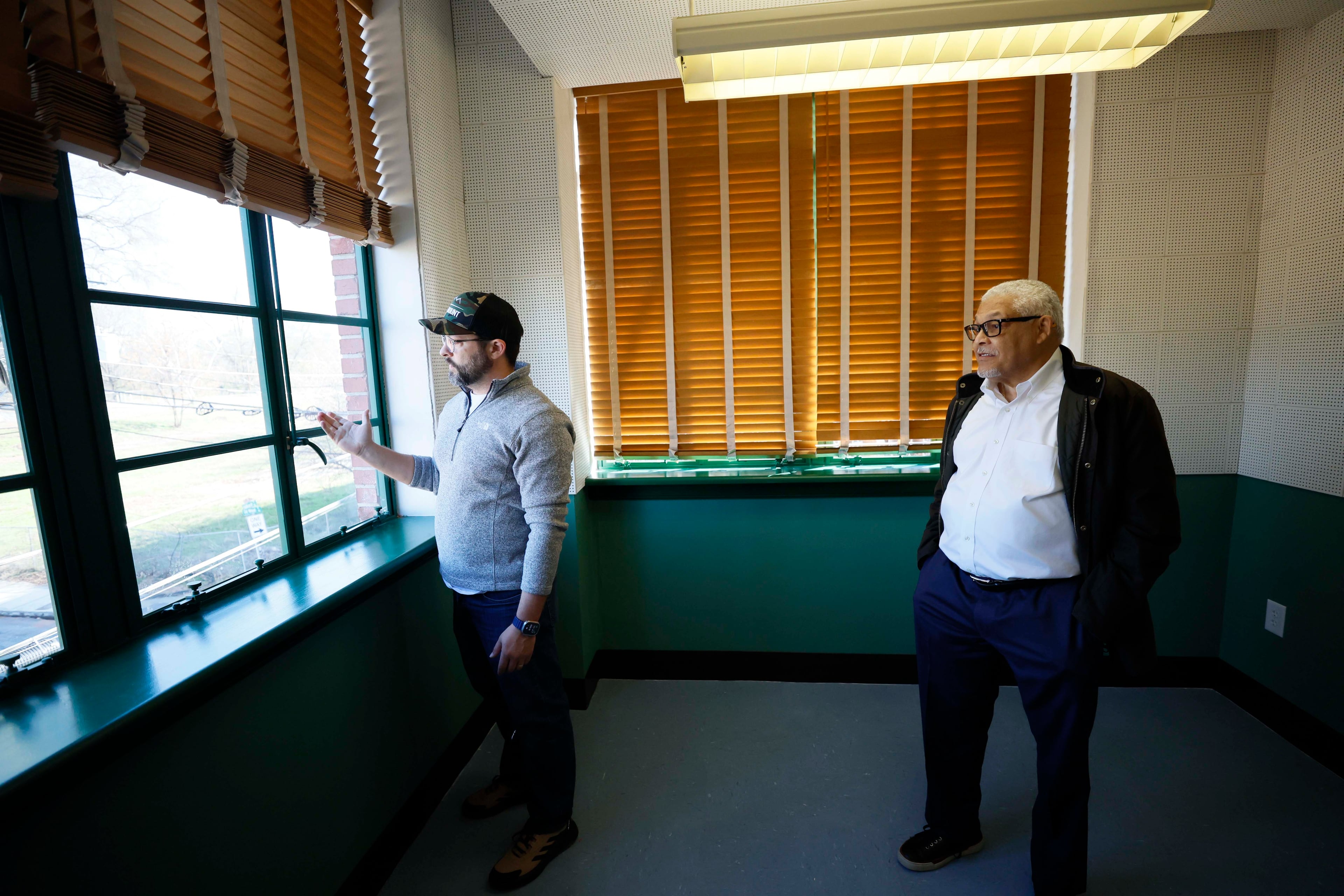
Inside the Prince Hall Masonic Temple and Lodge, construction supervisor Matthew Buzzetta leads member Edward W. Bowen through a maze of offices and more than 50 doors, overseeing the final stages of a full refurbishment of the three-story building that once served as the operational hub for the Rev. Martin Luther King Jr.
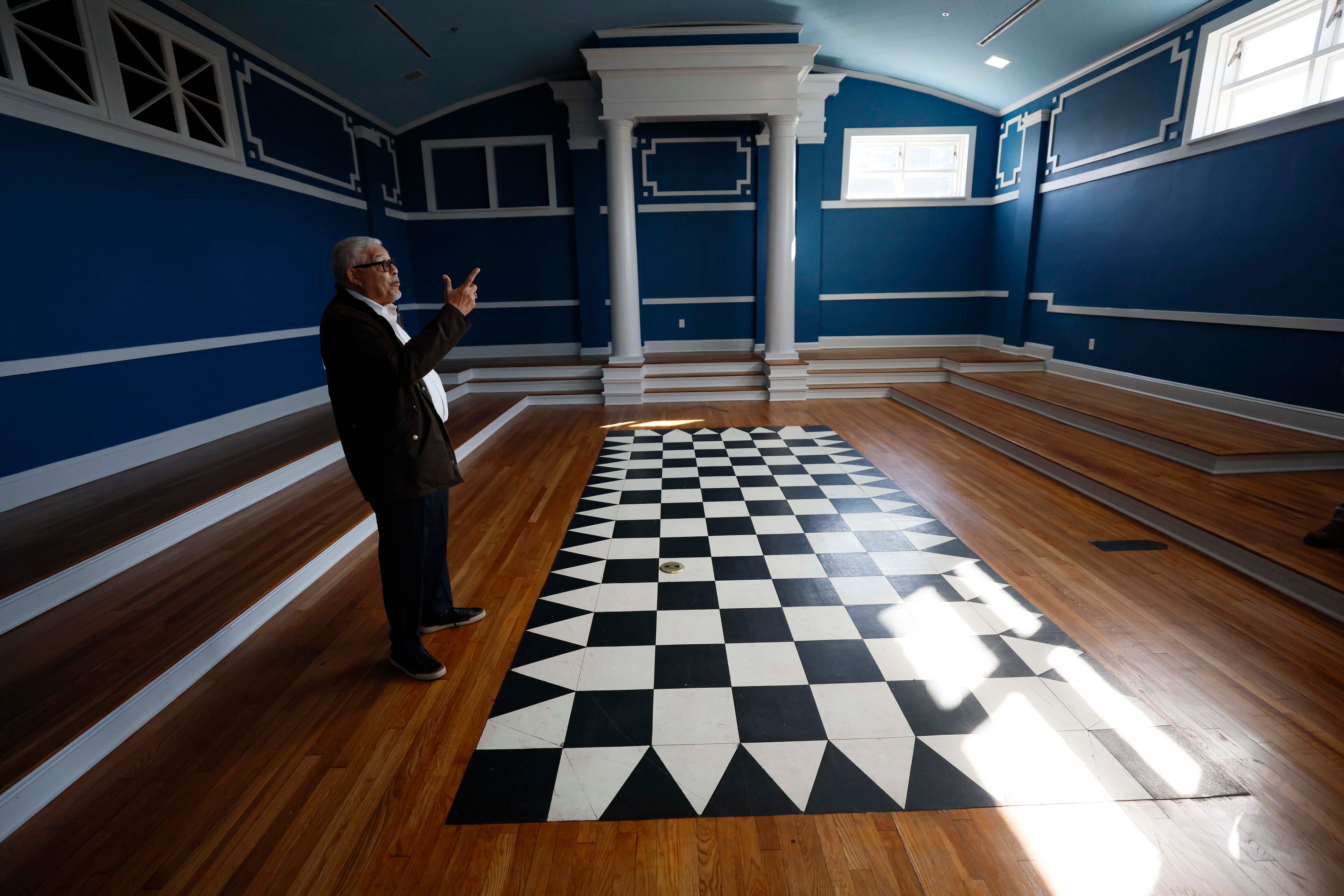
On the third floor, Buzzetta unlocks a grand, heavily secured door and steps aside, revealing the restored Masonic meeting room. Bowen pauses, then walks in.
“I just can’t believe this,” said Bowen, a longtime member of the lodge. “When we were in this building, it was beautiful — but not like it is now. It’s stunning.”
On Wednesday, with a symbolic ribbon-cutting, the nerve center of the modern civil rights movement will enter the nation’s permanent historical record as the Auburn Avenue building is added to the Martin Luther King Jr. National Historical Park.
For decades, the brick building stood as one of Atlanta’s most important yet unprotected landmarks.
The designation, announced by the Trust for Public Land, secures federal protection for the nearly century-old structure that housed King’s Southern Christian Leadership Conference during some of the most consequential years of the Civil Rights Movement.
George Dusenbury, vice president for the Southeast at the Trust for Public Land, said the restoration adds “an additional amenity” to the park and “opens a new window into the life of Dr. King,” particularly by grounding the public in King’s working life and the movement’s day-to-day infrastructure.
The Prince Hall Masonic Temple and Lodge is scheduled to officially reopen to the public in the spring, with programming and interpretation led by the National Park Service.
Calling it “an important component of Dr. King’s story,” Reginald Chapple, superintendent of the park, said the building helps the park more fully deliver on its mission to interpret where King “was born, lived, worked, worshipped, and is buried.”
The building joins a network already in place that includes King’s birth home, Ebenezer Baptist Church, his crypt and the National Park Service’s visitors center.
Walking through the building’s first floor, Buzzetta and Bowen stop in what was once King’s windowless SCLC office. There is no furniture yet, as the NPS plans to spend the next three months furnishing the first floor, which was the home of the SCLC, to match what it would have looked like in 1968.
Its restoration marks the conclusion of a decade-long campaign to stabilize, rehabilitate and permanently safeguard one of the most endangered physical sites tied to King’s life and work.
The building’s inclusion in the park system also reflects a broader effort to deepen public understanding of how civil rights leadership operated through Black-controlled institutions.
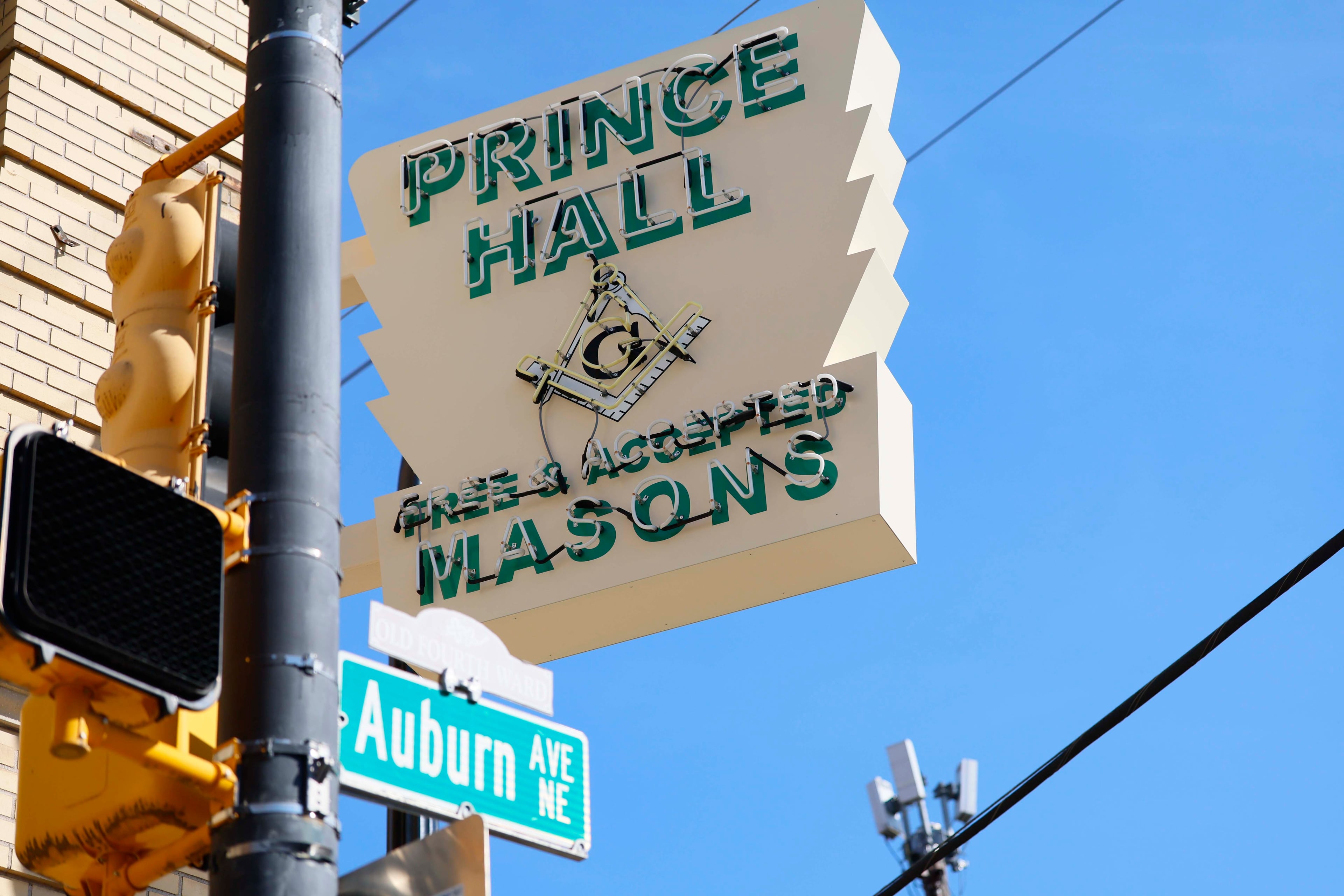
Founded in 1937 during the Great Depression, the lodge has long occupied a central place in Black civic life in Atlanta. Built with Black dollars under the leadership of the Prince Hall Masons, the structure emerged as an assertion of permanence and self-determination. Beyond its role as a Masonic gathering space, it functioned as a hub for labor organizing, cultural expression and media.
Bowen, who also served as a strategic adviser for the restoration, said the lodge offered a rare measure of safety for Black organizations at a time when meeting openly could carry real risk, allowing groups to gather, share ideas and develop strategy without fear of interference.
Over the years, the building hosted the Atlanta Civic-Political League, the Brotherhood of Sleeping Car Porters and a Madam C.J. Walker Beauty Shoppe.
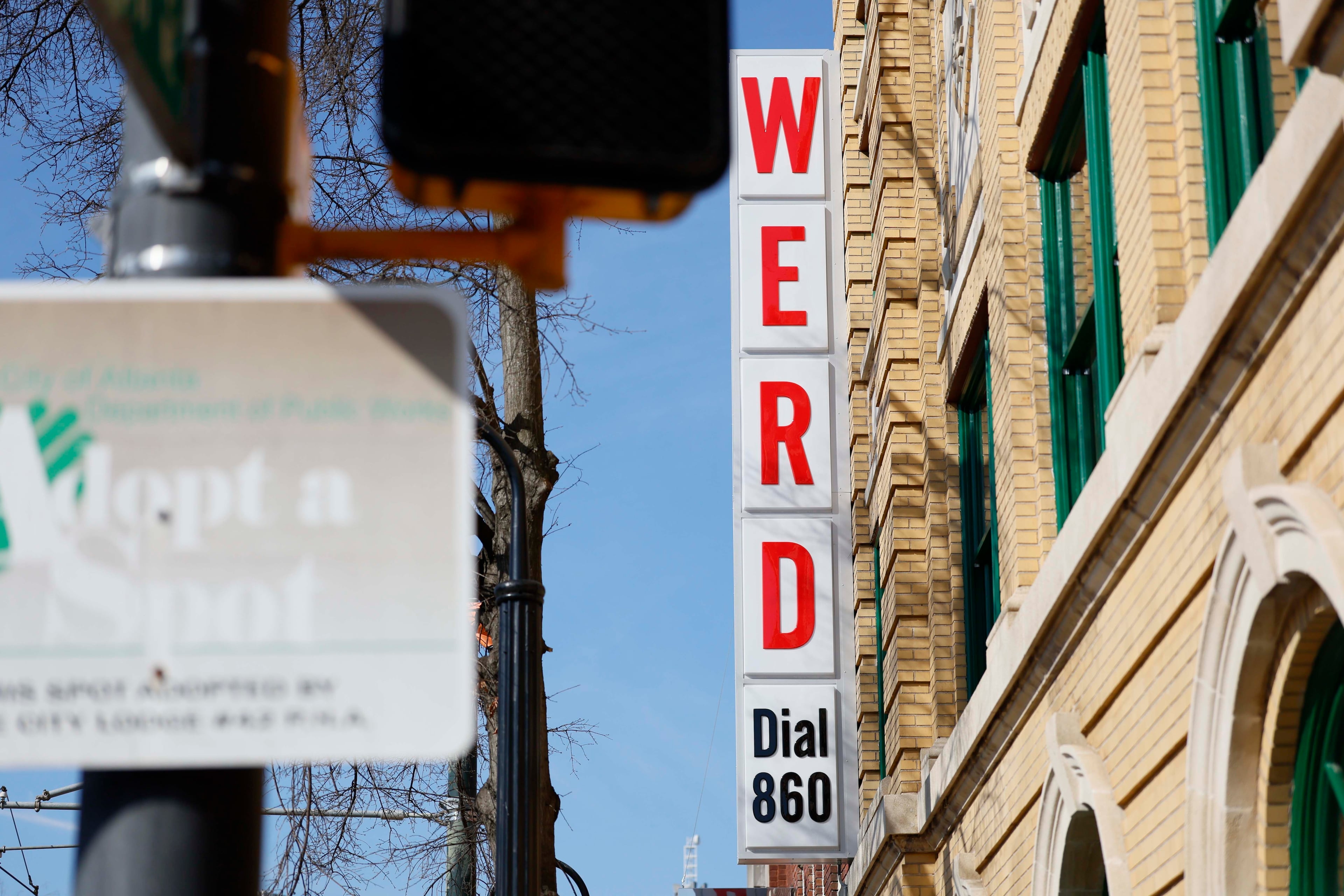
In 1948, WERD, the nation’s first Black-owned and Black-directed radio station, began broadcasting from the building, providing a rare platform for Black music and political discourse during the Jim Crow era.
But the lodge’s legacy extends most visibly through its connection to the Civil Rights Movement.
Beginning in 1957, the building housed the offices of the Southern Christian Leadership Conference, placing King and the organization at the heart of “Sweet Auburn.”
It was also walking distance from King’s birth home and Ebenezer, where he preached.
“My father once led the SCLC from a small office within these walls — a space that helped change the course of history,” said Martin Luther King III, the fourth president of the Southern Christian Leadership Conference. “This lodge, and the giants who walked its halls, formed the village that helped raise me and inspired my own commitment to justice and service.”
Because the lodge remained in near-continuous use until the pandemic, much of its original character survived, even as deferred maintenance left it increasingly vulnerable.
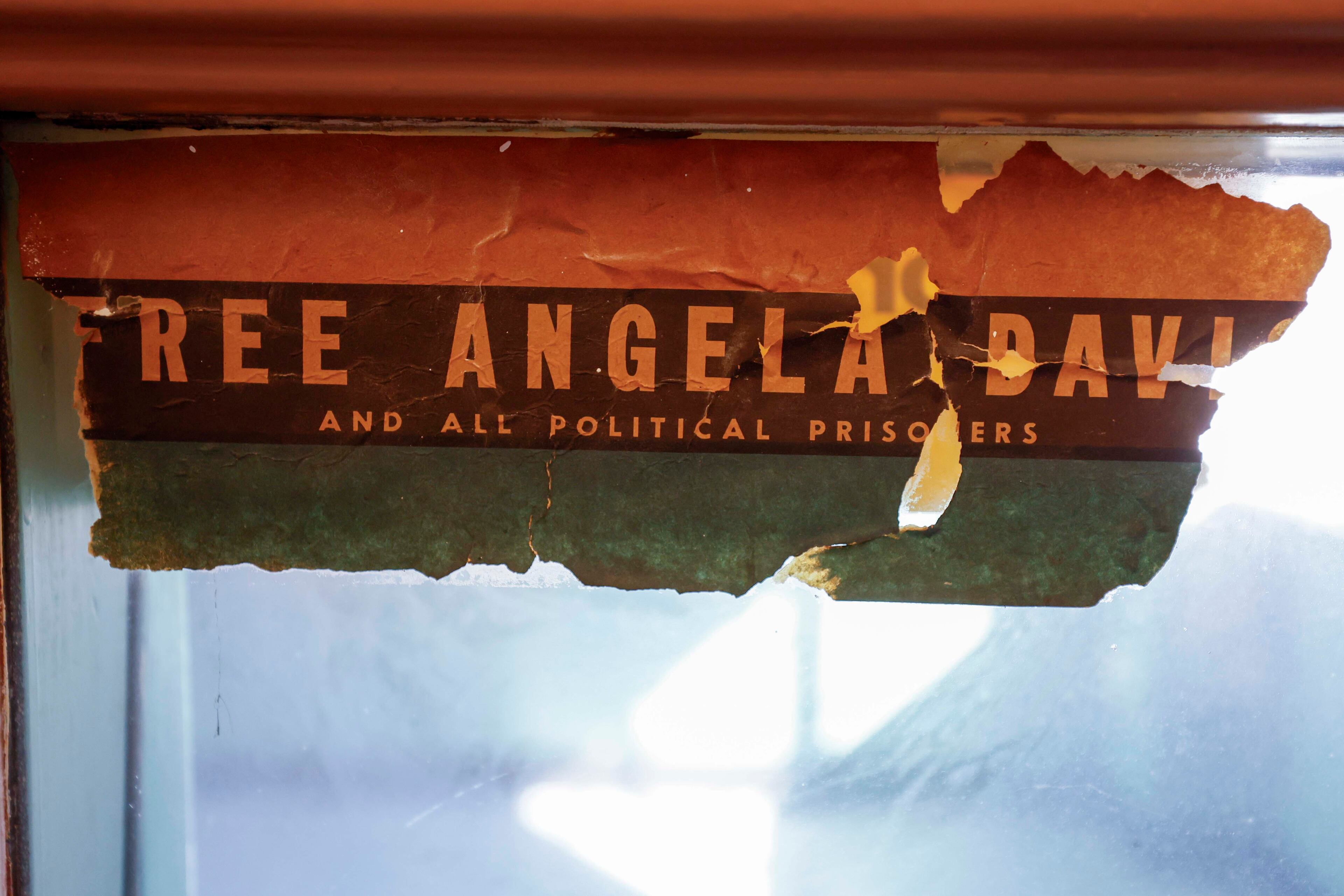
Before the preservation effort began, the Atlanta History Center identified the lodge as one of the most historically significant but unprotected buildings in metro Atlanta.
That assessment helped galvanize fundraising and partnerships aimed at preventing irreversible loss.
The Trust for Public Land worked alongside the Prince Hall Masons, the National Park Service and local officials to secure funding, complete the restoration and transfer the property into federal stewardship.
Dusenbury said the long-term plan calls for the Masons to continue owning and operating the building for another six-plus years, after which the Trust for Public Land will help transfer it into National Park Service ownership.
More than $14 million has been raised since 2018, supporting structural repairs, environmental remediation and restoration of original architectural features that had been concealed for decades. The finished project will host public tours and educational programming.
“This building still has another 100 years in it,” Buzzetta said.
Funding came from a combination of public and private sources, including an African American Civil Rights grant from the National Park Service and support from the Lettie Pate Evans Foundation, the Arthur M. Blank Family Foundation, and state and local funding.
As part of the restoration, the Atlanta History Center partnered with the Prince Hall Masons to catalog historical documents and artifacts found within the building. At the same time, the National Park Service is gathering oral histories tied to the lodge, the SCLC and WERD Radio, ensuring that lived memory accompanies the restored physical space.
“Few buildings hold such a remarkable concentration of leaders, movements and stories that have shaped our city,” said Sheffield Hale, president and chief executive of the Atlanta History Center. “To see it saved, restored and ready for the future makes me proud — not just as a preservationist, but as an Atlantan.”
About the Author
Ernie Suggs is an enterprise reporter covering race and culture for the AJC since 1997. A 1990 graduate of N.C. Central University and a 2009 Harvard University Nieman Fellow, he is also the former vice president of the National Association of Black Journalists. His obsession with Prince, Spike Lee movies, Hamilton and the New York Yankees is odd.