On Mother’s Day we celebrate the language of love (and discipline)
Here’s UATL’s glossary of phrases Black mothers used to raise us — short, sharp sayings that carry a lifetime of lessons.
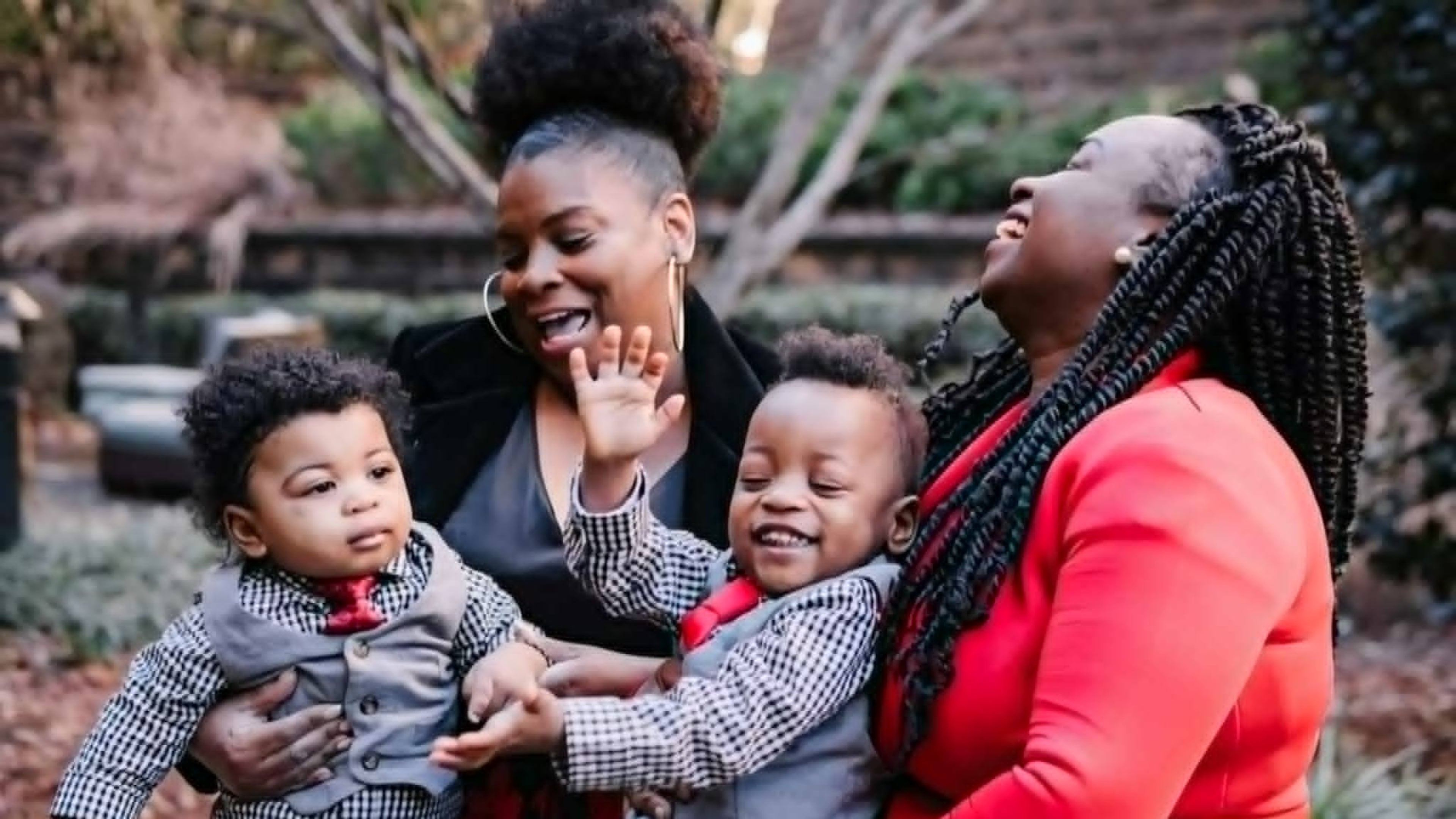
Dee Dee Crawford (right), with her mom, international vocalist Brenda Vaughn, and her sons Xavier and Isaiah Crawford. "My mom taught me to pursue my dreams with everything I have and to never let other people define me," Crawford says. (Courtesy of Dee Dee Crawford)
Mother’s Day has a way of bringing back the voices that raised us.
Not just the big moments — the crucial pep talks, the wrath after sneaking off and crashing the car or the tearful wedding toasts — but the everyday language that shaped how we move through the world.
For many of us, those lessons didn’t come as lectures. They came as phrases: short, sharp, unforgettable lines that carried humor, discipline, faith and a whole lot of love, sometimes all at once.
They were repeated in kitchens, from car seats, across store aisles and front porches, until they became instinct.
What follows is a kind of cultural glossary, curated by the UATL staff from hundreds of submissions from readers who also shared vivid memories of things their mom said or did that left a lasting impression.
Call it our light, affectionate attempt to define the sayings so many of us heard growing up — not just what they meant, but what they taught.
Because long after the words were said, the lessons stuck.
Quisa Foster (right) and her mother Lois Solomon Foster at her 95th birthday celebration on Feb. 8, 2026. "Through her sayings, my Mom taught me that through it all, at the end of the day, the day is gonna end," said Quisa Foster, chief development officer at the National Center for Civil and Human Rights. (Courtesy of Quisa Foster)
“Because I said so.”
The grandmother of them all. A definitive, non-negotiable directive that closes discussion without further explanation. It signals that authority itself is sufficient reason. Especially in moments where speed, safety or experience outweigh debate. Often deployed as the final word after questions have run their course.
Amisha Harding (left) with her mother, Juliette Harding.
"My mom's words have always served as a reminder of the importance of having the courage to apply the wisdom from life's lessons because I don't want to feel that pain, honey," Harding said. "Her words also serve as a reminder of my beautiful Caribbean (Antiguan and Trinidadian) heritage."
(Courtesy Amisha Harding)
You must think I’m Boo Boo the Fool.
An expression of disbelief used when someone attempts to lie, manipulate, or get away with something obvious. It signals that the speaker sees through the nonsense completely and refuses to be played. Curiously, it has never been entirely clear who “Boo Boo the Fool” actually is, but generations of children understood immediately that their mother was absolutely not him.
Joyce Cunningham (left) and her mother, Helen M. Barge. "My mom used to always scold my older sister and I about life, especially me. I would call my mom out for saying one thing and doing another. Her confusing way of raising us," Cunningham said. "Mom's reply most times would be, 'Just keep livin'.' In other words, 'You will learn!' Now, at (my age of) 61, Mom's scolding words remain abundantly correct!" (Courtesy of Joyce Cunningham)
“You better watch your mouth.”
A direct warning against reckless, disrespectful or unchecked speech. A reminder that words — and tone — carry consequences. Often delivered in moments when tone or content crosses the line.
Adrienne Wilson Barnes (left), her mother, Adrienne Wilson Barnes and daughters Brooke Barnes and Erin Barnes. "One of the things my mom always told me was, 'You made your bed, now you have to lie in it,' Adrienne Wilson Barnes said. "I learned recently that her mother said that to her." (Courtesy of Adrienne Wilson Barnes)
“You made your bed, now you gotta lie in it.”
A blunt lesson about personal responsibility and living with the consequences of one’s choices. It reminds the listener that decisions, good or bad, eventually require ownership. Often used when sympathy has run out and accountability has arrived.
Author and journalist Carmen Fields (standing) in 1997 with her daughter Karly Finison and late mother Bernice Copeland Fields, who died at age 103 in 2012. "Bernice Copeland Fields was a soft-spoken teacher who believed and preached 'If you can read, you can do anything,'" Fields said. "Education and hard work were her core tenets, drilled into my brother and me. Also, she did not believe in fretting for worry. 'Do your best, she would say, 'but don’t worry.''"
Bernice Copeland Fields died in 2012 at the age of 103. (Courtesy of Carmen Fields)
“Money don’t grow on trees.”
A foundational lesson in resource awareness and economic reality. It communicates that money is finite, earned and not to be treated casually. Commonly used to curb unnecessary requests or reinforce financial discipline.
Ronna Charles, communications director at Emory Goizueta Brain Health Institute, and her mother Meroy Charles-Hudson in 1978. "I'm my mother's only child," said Charles, the mother of two. "And, she always wants me to look my best. She would likely say, 'Where's your lipstick?' Or 'Fix your hair.'" (Courtesy of Ronna Charles)
“I’m not one of your little friends.”
A boundary-setting declaration distinguishing parental authority from peer relationships. It recalibrates tone and behavior when familiarity becomes disrespectful. A reminder that hierarchy and respect remain in place.
AJC and UATL reporter Brooke Howard and her mother Theresa Macon in 1988.
“My mom has always told me that the energy you put out into the world is the energy you'll get in return,” Howard said. “With that, I try to lead with compassion and empathy because you never know the life someone else is living.”
You smell like outside.
A declaration typically made the moment a child walks through the door after spending several hours of playing outdoors. It captures the unmistakable mix of sweat, sunshine, dirt, sneaker funk, and fresh air that somehow became its own scent. Often followed immediately by instructions to take a bath.
Malinda Ollison (front and center), and her daughters (from left) Annie Fulture, Mattie Bee Jones and Viola Hudson. This is “the village that kept me,” said Robin Victoria Ollison. “My grandmother’s words were powerful and she taught me integrity, love, kindness and respect," Robin Victoria Ollison said. “She kept me while my parents worked. Until she passed when I was 9 years old, I stayed with Grandma Malinda every day.” (Courtesy of Robin Victoria Ollison)
“If you lie down with dogs, you’ll get up with fleas.”
A warning about the company you keep and the consequences of surrounding yourself with the wrong people. It suggests that bad behavior, trouble and negativity have a way of following you home, whether you intended it or not. Often used to caution against toxic friendships, relationships or influences. —
Nicole Owens Thompson (middle), with her daughters Selah and Syraí on Mother's Day 2021, while her mother was in the midst of battling Alzheimer's disease. Corine T. Owens passed away in 2024. "The woman I am today is because of my mother," Thompson said. "Her example, her strength, her words and the way she loved and supported me through every season of my life. She believed in me when I didn’t believe in myself and. even now, two years after her passing, I still hear her voice encouraging me, guiding me and reminding me who I am." (Courtesy of Nicole Owens Thompson)
“Be home before the streetlights come on.”
A culturally specific curfew marked by environmental cues rather than a clock. It signaled the transition from freedom to responsibility as daylight faded. Widely understood across generations as a non-negotiable deadline.
Baltimore City Attorney Camille Shepherd (left) and her mother Essie K. Shepherd. "My mother's words shaped me into being a loving, caring, compassionate and considerate person who treats others like I want to be treated," Camille Shepherd said. "(She) taught me that I was always being watched, whether I knew it or not; therefore, it was incumbent upon me to be mindful of my behavior at all times." (Courtesy of Camille Shepherd)
“Be careful how you treat people because you never know when you’re going to need them.”
A lesson in humility, kindness and long memory. It reminds us that relationships matter, circumstances change and the people you overlook today may be the very ones you need tomorrow.
Andrea Carter and her mother, acclaimed journalist Patrice Gaines in 1978. "My mom was born on the same day as Grace Jones and Malcolm X and is the perfect mix of the two," Carter said. "Her words and action serve as a constant reminder to me to be authentic, revolutionary and unapologetic. I love her down on Mother’s Day and the other 364 days of the year." (Courtesy of Andrea Carter)
“Act like you got some sense.”
A call for awareness, maturity and situational appropriateness. It assumes the listener already knows the correct behavior and is choosing otherwise. Usually delivered in public, where your behavior reflected not just on you, but on who raised you.
Reece Woodson (right) with her twin brother Paul and her mother, Althia Woodson-Robinson in 1978. "My mom always said, 'You and your brother can do anything you want - as long as you're willing to deal with the consequences!' She also said, 'Nothing is free, it's either time, money or aggravation.' Now, I tell my kids, 'If you dont know what to do, pray.'" (Courtesy of Reece Woodson)
“Don’t talk about what goes on in this house.”
A rule emphasizing privacy, discretion and internal family boundaries. It reflects the importance of controlling one’s narrative and protecting household matters. Historically rooted in protection and self-preservation as much as keeping nosy people out of family business.
AJC video producer Najja Parker receives some hair styling from her mom, Eddie Mae Parker in 1995. "My mother is the most generous person I know," Parker said. "Her heart is so big, and I’m hoping that even an ounce of that has rubbed off on me." (Courtesy of Najja Parker)
“As long as you under my roof …”
A declaration of household authority linking shelter, rules and obedience. It reminds the listener that living in someone else’s home comes with expectations, boundaries and a clear chain of command. Usually delivered during disagreements about freedom, independence or “grown” behavior.
Cybersecurity manager Danisa Baker and her son, Julian King. "I always try to be kind and seek understanding to clarify miscommunications and misunderstandings that often lead to conflicts, which can escalate," said Baker of lessons gleaned from her mother, Geneva Baker. (Courtesy of Danisa Baker)
“Take off those school clothes.”
An instruction emphasizing care, preservation and the distinction between presentation and play. It reflects both economic awareness and pride in appearance. Typically issued immediately upon returning home.
Melanie Hudson and her son Clayton (CJ) Haile II. (Courtesy of Melanie Hudson)
“A hard head makes a soft behind.”
A cause-and-effect teaching linking stubbornness to inevitable consequence. It usually meant learning the lesson the hard way. A staple of oral tradition, often proven rather than explained.
Tracy Hester Reese with her mother Joyce Hester in 1971. "The biggest impact from my mother was from her actions aligning with her words," Reese said. "She always told me, 'Believe what you see. Trust your instincts not your emotions. Be kind (not a doormat), because you will reap what you have sown.'" (Courtesy of Tracy Hester Reese)
“Who is ‘they’?”
A challenge to vague, external justification for behavior. It dismisses peer influence as a valid excuse and redirects accountability to the individual. A quick dismantling of “everybody else” logic.
Vickie Suggs-Jones (left) with her daughter Max Grace and mother Mattie Suggs. "My Mom and her words of advice have taught me how to become a confident, friendly and loving person as well as an attentive mother just like her — or so I’d like to think," Suggs said. "Simply put, she taught me how to be a lady. I especially appreciate having her at home after school each day and during the summer months — teaching me to sew, cook and do my hair. I was fortunate to also be an educator with a similar schedule to spend time with my own daughter as she grew up." (Courtesy of Vickie Suggs)
“Close that door, you letting all the air out. / Stop running up my lights.”
A household directive that ties everyday behavior to the cost of comfort and shared resources. It’s a reminder that electricity, air and money are all connected — and none of them were free. Practical, immediate and repeated often enough to become second nature.
Juanita Payton (left) and her mother Joyce Payton. "Each day I look in the mirror and I see so much of my Mom," Juanita Payton said. "I can still hear her voice at times. Mom’s advice and things she has instilled in me, I actually have instilled in my daughter. My mom molded me into the woman I am today. How to be nurturing to my daughter and how to love and care for others, especially ones that can’t do for themselves. There was nothing she wouldn’t do for me, and there was nothing I wouldn’t do for her." (Courtesy of Juanita Payton)
“Try me.”
A concise challenge that tests boundaries without elaboration. Its brevity is what makes it serious, signaling that consequences will follow quickly if provoked. Often delivered calmly, which increases its effect.
Wanda Alston Trinidad (left), out shopping with her friends and their children. "My mother, Gloria Alston, worked outside the home. When she came home, the house better be clean, no running in and out the doors, no company while she was not there," Trinidad said. "The only thing my mom has to do to keep us straight was to give us that LOOK! We all knew what that look meant! I am a grandmother now. And my grands know I don’t play!" (Courtesy of Wanda Alston Trinidad)
“Don’t touch nothing in this store. Don’t ask for nothing. You not getting nothing.”
A preemptive behavioral code delivered before entering public space, particularly retail environments. It establishes limits on behavior, expectation and desire before temptation even has a chance. Both rule and ritual, it prepares the listener for restraint before temptation appears.
Michelle Johnson White, holding her daughter Bethany White, with her mother, Sarah Johnson, who died in 1999. "My mother was the more stern disciplinarian in our house and didn't have a problem spanking my brother and me when she felt it was warranted," White said. "Her words (and she wasn't a woman of many words) instilled resilience in me. "As a high school basketball and softball coach, my mother never raised her voice. She lived the mantra that 'It takes two people to fight' and 'I'd rather see a sermon than hear one any day.' "Because she lived those words that she spoke, it shaped how I show up in the world now as a 58 year-old woman. I try not to be the source of conflict and try to walk what I talk." (Courtesy of Michelle Johnson White)
“Go get me a switch.”
A disciplinary command requiring participation in selecting the instrument of punishment. It signals that consequences are imminent and unavoidable. Historically common, though increasingly viewed through a more critical lens.
Gerrelyn Tuan Chunn Patterson (second from right), with her (from left) daughter Avery, mother-in-law Kay and daughter Sydney at an Alpha Kappa Alpha Sorority Legacy Parade. "My mother in law is the happiest person I know. She finds joy in everything and, at 82, she reminds me and the girls to enjoy life," Patterson said. "Every time we see her, she says, one of these phrases: 'Isn’t this fun?' 'Aren’t we just so lucky?' 'Don’t we just have the best family?'
"She’s been a huge blessing in my life in raising my girls. Just a consistent reminder that life is good and we can all find joy." (Courtesy of Gerrelyn Tuan Chunn Patterson)
“God don’t like ugly.”
A moral warning framed through faith-based language, emphasizing that poor character and harmful behavior carry consequences. Just to clarify, “ugly” refers not to appearance but to behavior. A concise way of reinforcing ethical awareness.
Kenni York (middle) with her sons, Kenyon York, Kelvon York and Keylan York. "Everyone doesn't have great relationships with their mothers, that's reality," Kenni York said. "Because that was my reality, I've been influenced to be more open-minded and emotionally available to my sons. This, I believe, helps contribute to developing a closer bond." (Courtesy of Kenni York)
“Go sit down somewhere.”
A directive to disengage from unnecessary or excessive behavior. It signals that you are doing entirely too much. Often delivered with humor but rooted in correction.
Erica McRae (center) with her son Preston and daughter Parker. "My mother Lillian McRae’s words and example have shaped me in every way from the woman I have become to the friend and mother I am," McRae said. "She is my first best forever friend whose wisdom and guidance I am blessed to still be able to call on." (Courtesy of Erica McRae)
“Keep on and see what happens.”
A forward-looking warning suggesting that current behavior is leading toward an undesirable outcome. The consequences remain unspecified, which somehow made them even scarier. A final opportunity to course-correct.
Shaunya Chavis (back left) with her sister Candice (right), daughter Storm and mother Barbara Chavis. "My mom was born and raised in (the old) Harlem, New York. She was one of eight kids who had very little by most peoples standards," Chavis said. "However, as a preacher's kid, she was taught to be kind to everyone and to speak to everyone. To treat the janitor the same way you treat the mayor. I'm like that today. I speak to everyone in a personable way so that they know that they matter to me." (Courtesy of Shaunya Chavis)
“Grown folks are talking.”
A boundary-setting phrase that signals a conversation is for adults only. To mind your business. It means be quiet, don’t interrupt and understand that every conversation is not meant for children. Part lesson, part warning, it teaches that respect includes knowing when to step back.
Karen Mia Walters (right) and her mother Ruby Walters in 2011. "My mom always taught and encouraged me to be independent and self-sufficient," Karen said. "I’ve learned to rely on the Lord, of course; myself, take the initiative and handle challenges without waiting for someone else to step in. It has shaped my confidence and made me comfortable with standing on my own and has given me the ability to push through challenges and persevere.
"I can still hear her saying, 'If you wait on (a) man, you’ll be waiting a long time so you need to know how to handle things yourself so you won’t be dependent on anyone … not even me.'" (Courtesy of Karen Mia Walters)
“If I have to tell you one more time.”
A threshold warning indicating that patience has nearly expired. It functions as a final notice before consequences are enforced. Often understood as more serious than it sounds.
Nicole Y. Smith (right) and her mother, Enid Sutton Smith. "My parents were ever-present and set the standard," Nicole Y. Smith said. "I have literally followed (my mother's) footsteps and taken things a step further to obtain my doctor of pharmacy degree. We are also sorority sisters, Alpha Kappa Alpha and connected in Linkdom (The Links)" — the international women’s volunteer service organization focused on enriching the lives of people of African descent. (Courtesy of Nicole Y. Smith)
“I know you lyin’.”
A rather new entry into the lexicon. It is not directly accusing someone of lying, but an exasperated expression of disbelief used to challenge something that sounds unlikely, exaggerated or outright false. It signals immediate skepticism, often with a hint of humor or side-eye. Less an accusation than a reaction, it captures that moment when something just doesn’t add up.
Gwen Anderson Warren (left) with her mother Roberta Pettis, who is holding Warren's daughter, Trisha Warren. "I always called my mom the Great Philosopher," Warren said. "My success began when she gave a slight nod to my 'B' average in high school. I asked her why she wasn't excited about my grades. "She responded, 'If you can make a C then you can make a B. If you can make a B then you can make an A.'" Because of her, I learned to live to to my potential which is an A." (Courtesy of Gwen Anderson Warren)
“Stop crying before I give you something to cry about.”
An otherwise confusing warning aimed at regulating excessive or performative emotional expression. It suggests that continued behavior may invite consequences more serious than the initial grievance. Both corrective and preventive in tone.
Soncearee Harris and her son Jonathan Hudson. "My mom, Sonya Anderson, says, 'Pay attention to how people treat you. If they wanted to be with you or around you, you wouldn't have to beg or keep inquiring" Harris said. (Courtesy of Soncearee Harris)
“You got McDonald’s money?”
Often followed with, “We got food at home,” this is a rhetorical response to requests for fast food or extras, reframing desire as responsibility. It subtly introduced lessons about financial independence while shutting down the request entirely. Often delivered with equal parts humor and firmness.
Kari Muhammad (left) with her late mother Lena Manns at the Nation of Islam's 2007 Saviours' Day convention in Detroit. "She would always say, 'You have to keep on keeping on,'" Muhammad said. "She and my father encouraged us to not let anything stop us from reaching our goals. Despite growing up in the inner city, I was always a good student and athlete. I used that to earn a full track scholarship to the University of Michigan. My time in college helped me get started in the news business, which has allowed me to travel the world and live a good life." (Courtesy of Kari Muhammad)
“Fix your face.”
A directive addressing nonverbal communication, particularly facial expressions that signal attitude or disrespect. It reinforces the idea that demeanor is as important as words. Quick, efficient and widely understood.
Lisa George (in the rear), with her mother Magdalene Charles George and her son, Dez George. "My mom made me feel unstoppable," Lisa George said. "Before college exams, she'd tell me, 'You've already passed the test. Now, you just have to write the words down.' Another staple was, 'It's already yours. Go get it!' She said these things with such conviction, I could feel them in my soul. Today, I pass iterations of those same words down to my child." (Courtesy of Lisa George)
“Let me hold $20.”
A colloquial request for a small, informal loan, framed as temporary, regardless of whether repayment is to be discussed again. It reflects a relational economy where trust often outweighs documentation. As much about connection as currency.
Renee Nixon (red dress), with her father George Nixon, sister Carol and mother Barbara. This was their last family photo in 1975. Barbara died in 1982. "She was the kind of person who could give you the look and calm a raging lion down. I hardly ever got into trouble cause my mom could look at me and get me straight," Nixon said. "We follow how she treated people. Her kind nature and openness to help people. She believed that we should help each other and lift others up.
"I love talking about her." (Courtesy of Renee Nixon)
“I brought you into this world, and I’ll take you out.”
A hyperbolic assertion of parental authority rooted in sacrifice and origin. Rarely literal, it underscores the seriousness of respect and the depth of responsibility behind it. Delivered when boundaries are being pushed too far.
CNN writer and producer Lisa Cox (left) and her mother, Conchita Cox, who died in 2021. "She shaped me in ways I didn’t fully realize until I became a grown woman, and honestly, she is still shaping me as her words come even more into focus for me," Cox said. "Her words were a gift. They taught me self-reliance and independence. To be fearless and uncompromising. They taught me compassion and empathy and faith. And most of all, the ability and the grace to love.
"Mothers Day is still rough for me, and this weekend will be my first Mothers Day home in L.A. since she passed. I am going home to bury her baby sister." (Courtesy of Lisa Cox)
“Because I’m the mama.”
A concise declaration of maternal authority that requires no further explanation or approval. It reinforces the idea that experience, responsibility and position alone are enough to make the final decision. Often delivered calmly, confidently and with the understanding that the discussion was now officially completed.
International vocalist Brenda Vaughn (left) and her daughter Dee Dee Crawford play with Vaughn's grandsons Xavier and Isaiah Crawford. "My mom taught me to pursue my dreams with everything I have and to never let other people define me," Crawford said. "She showed me that it’s not where you start but where you finish and encouraged me to live with purpose, chase my dreams and see the world beyond my circumstances. Much of the confidence and resilience I carry today came from her example." (Courtesy of Dee Dee Crawford)
“I love you.”
A foundational expression of care, protection and connection, often felt as much as it is spoken. In this context, it can be explicit or implied through discipline, provision and presence. The quiet constant beneath the lessons, reminders, warnings and rules.