
AJC’s ‘Curiosities of the South’ examines the myths and history behind Southern identity
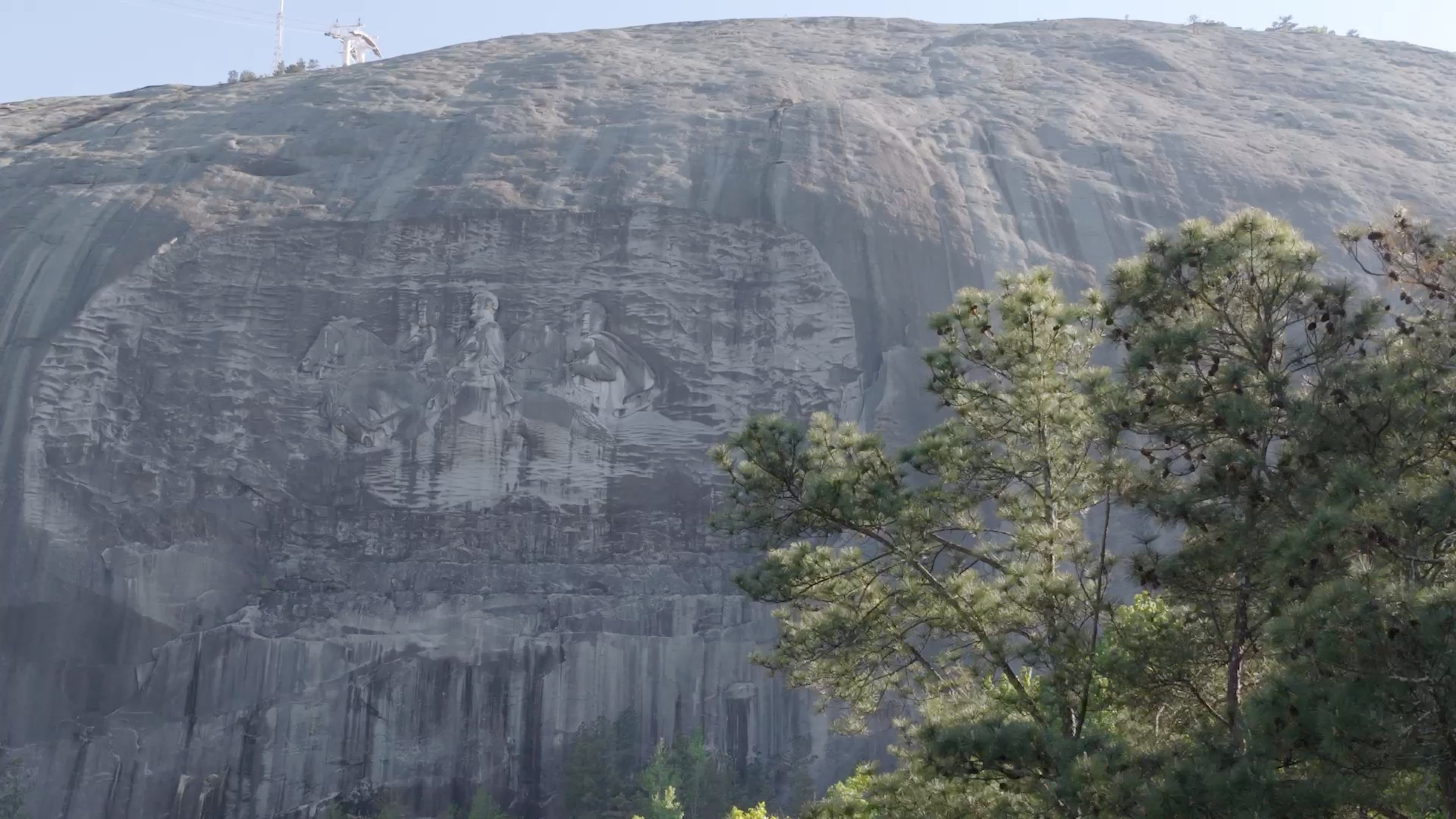
Millions of visitors come to Stone Mountain each year to hike, picnic and enjoy the scenery. It is Georgia’s most visited attraction and one of the world’s largest exposed granite formations.
Although it is a family-friendly attraction at first glance, it holds the largest Confederate monument in the United States, a reminder the South has its own conflicting history.
That conflict is the center of the latest episode of “Curiosities of the South,” The Atlanta Journal-Constitution’s YouTube series exploring the overlooked, unexplained and unexpected across the region through on-the-ground reporting and visual storytelling.
In the episode, “Does the South Have an Identity Issue?” AJC producer Koralie Barrau visits Stone Mountain and other sites across the South to explore how the region’s identity has been shaped by history, memory and myth.
“The South has a brand: front porches, good food, warmth, things like that,” Barrau said. “At the center of all this is Southern hospitality, and it literally shows up everywhere.”
Barrau, a Texas native, said a conversation with Anthony Szczesiul helped reshape her thinking about Southern identity. Szczesiul’s book, “The Southern Hospitality Myth: Ethics, Politics, Race, and American Memory,” examines how the idea of Southern hospitality became a powerful cultural myth.
The more she dug into the region’s history, the more she began questioning how the South came to be how it is today.
“The more I looked into it, the more it didn’t match the story I grew up with,” she said. “When I started tracing that idea back, I didn’t land on something so warm and fuzzy.”
The search for answers begins at Stone Mountain, where competing versions of Southern history are literally carved into the landscape.
Stone Mountain is home to one of the world’s largest Confederate monuments, featuring Jefferson Davis, Andrew “Stonewall” Jackson and Robert E. Lee.
“Stone Mountain is this great, beautiful place where people come out here to walk and enjoy nature,” said AJC senior reporter Ernie Suggs, who is featured in the episode. “But it also holds the largest Confederate memorial in the world.”
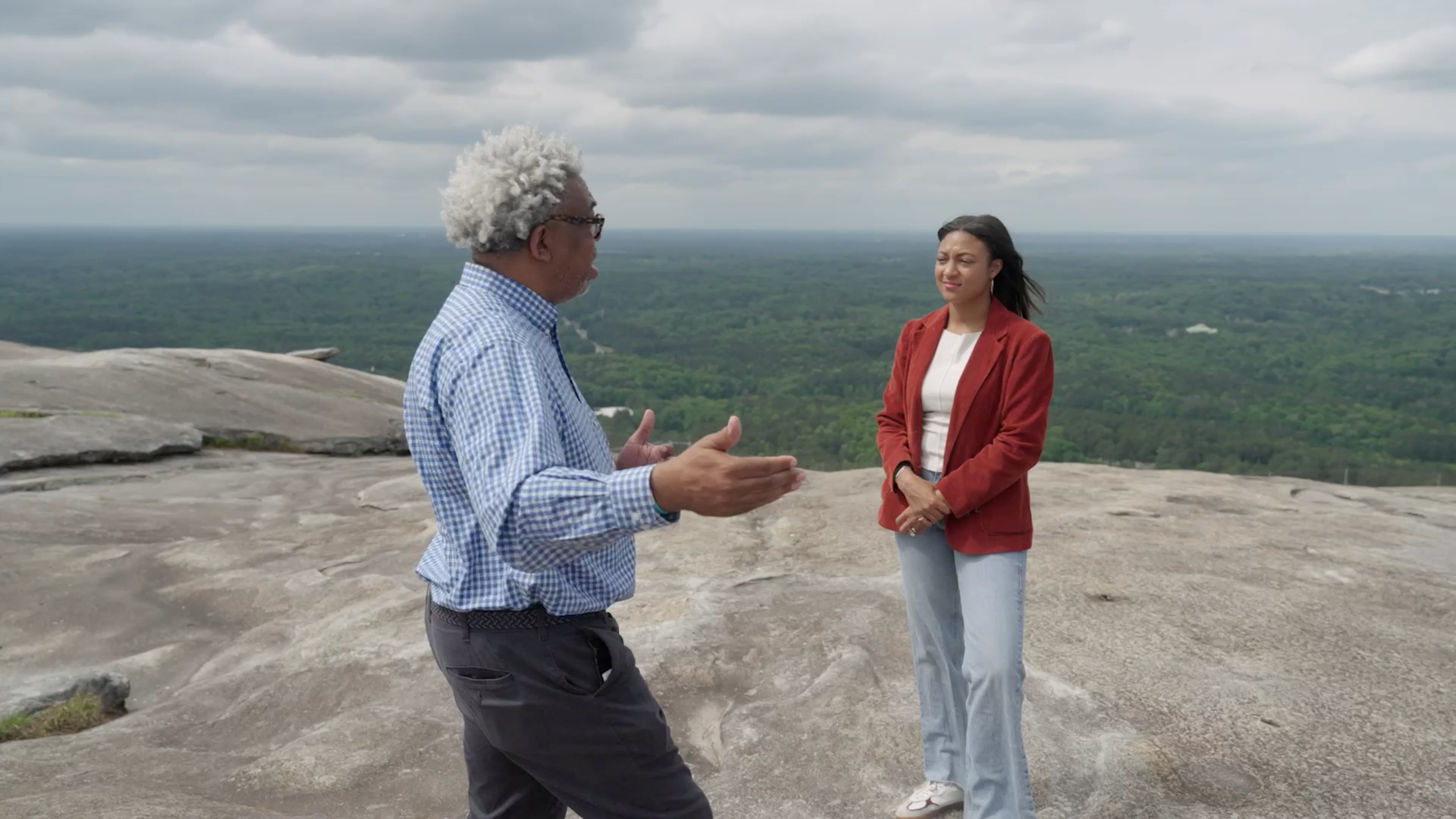
Suggs said the history is not hidden, but conflicted.
Part of this history includes the rebirth of the Ku Klux Klan, holding their official refounding ceremony atop Stone Mountain in 1915.
The newly reborn organization helped raise money for the Confederate carving on the mountain, and Gutzon Borglum, the original sculptor, had close ties to the group.
The debate over how that history should be presented continues today. In November 2025, a burst pipe near the top of Stone Mountain’s Memorial Hall halted a nearly $15 million renovation project intended to help the museum tell a more complete history of the site, including its ties to white supremacy and the Confederacy.
The project remains the subject of an ongoing lawsuit filed by the Georgia Division of the Sons of Confederate Veterans.
“Living in the South, we’re faced with a contrast every day. Think about it, as an African American who lives in the South, we’re faced with the contrast of where you go to school, how you’re educated, how you’re treated going to the mall and driving down the street,” Suggs said. “I love the South, but sometimes I’m mad at the South.”
The tension between pride and pain becomes one of the episode’s central themes.
Although “South” is a geographic term, discussions of the South often focus on the states that formed the Confederacy: Alabama, Arkansas, Florida, Georgia, Louisiana, Mississippi, North Carolina, South Carolina, Tennessee, Texas and Virginia.
To understand the roots of Southern identity, the episode examines the Civil War, a conflict that continues to shape debates over slavery, memory, race and identity more than 160 years later.
“The history of the South is dark,” Suggs said. “The Civil War is probably one of the most consequential periods in American history.”
The Civil War, fought from 1861 to 1865, helped determine the future of the United States and remains central to debates over slavery, race and Southern identity.
Juneteenth commemorates June 19, 1865, when enslaved people officially received news of emancipation in Texas.
In the episode, Barrau traveled to Sandersville to meet with Civil War reenactors to better understand how the war influences Southern identity today.
People lined the streets to watch the quinquennial “Occupation of Sandersville” battle come back to life with cannons, uniforms, rifles and drums.
Reenactor Stacy Williford said he had several ancestors who fought for both sides and wanted to “experience a little bit about what they (his ancestors who fought in the Civil War) were experiencing.”
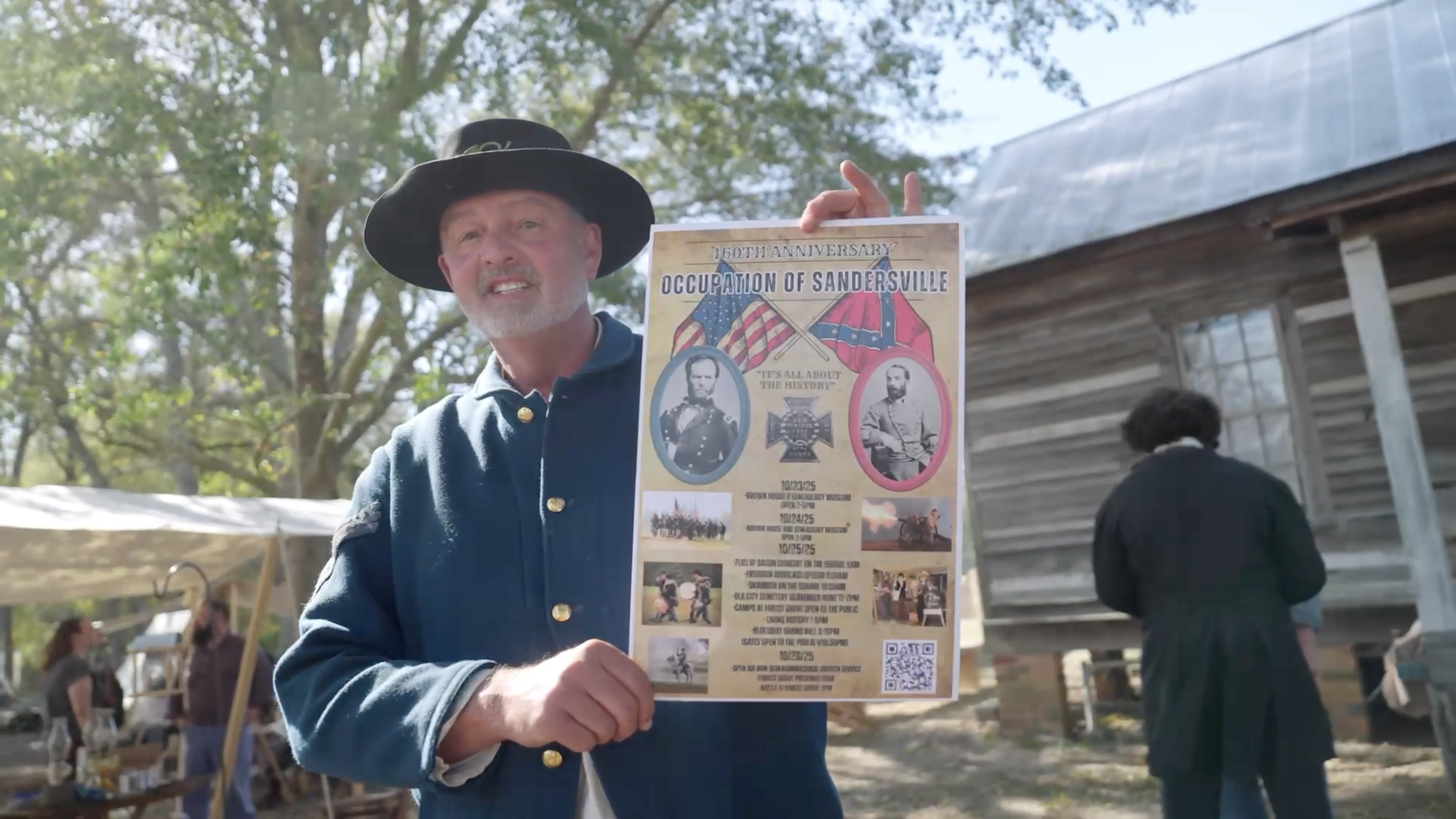
Williford said the reenactments are educational rather than celebratory.
“There’s no hidden agenda, no motive behind it. It’s just history,” he said.
Although some people associate the Confederate flag solely with racism and the Ku Klux Klan, Williford said he sees it differently.
“I’m not ashamed of it, but I also don’t associate it with racism. I don’t believe slavery was the main issue of the war, but it was definitely an issue.”
Other reenactors see the conflict differently.
John H. Anderson Jr., a Sandersville Frederick Douglass impersonator, said he believes slavery was the reason for the war.
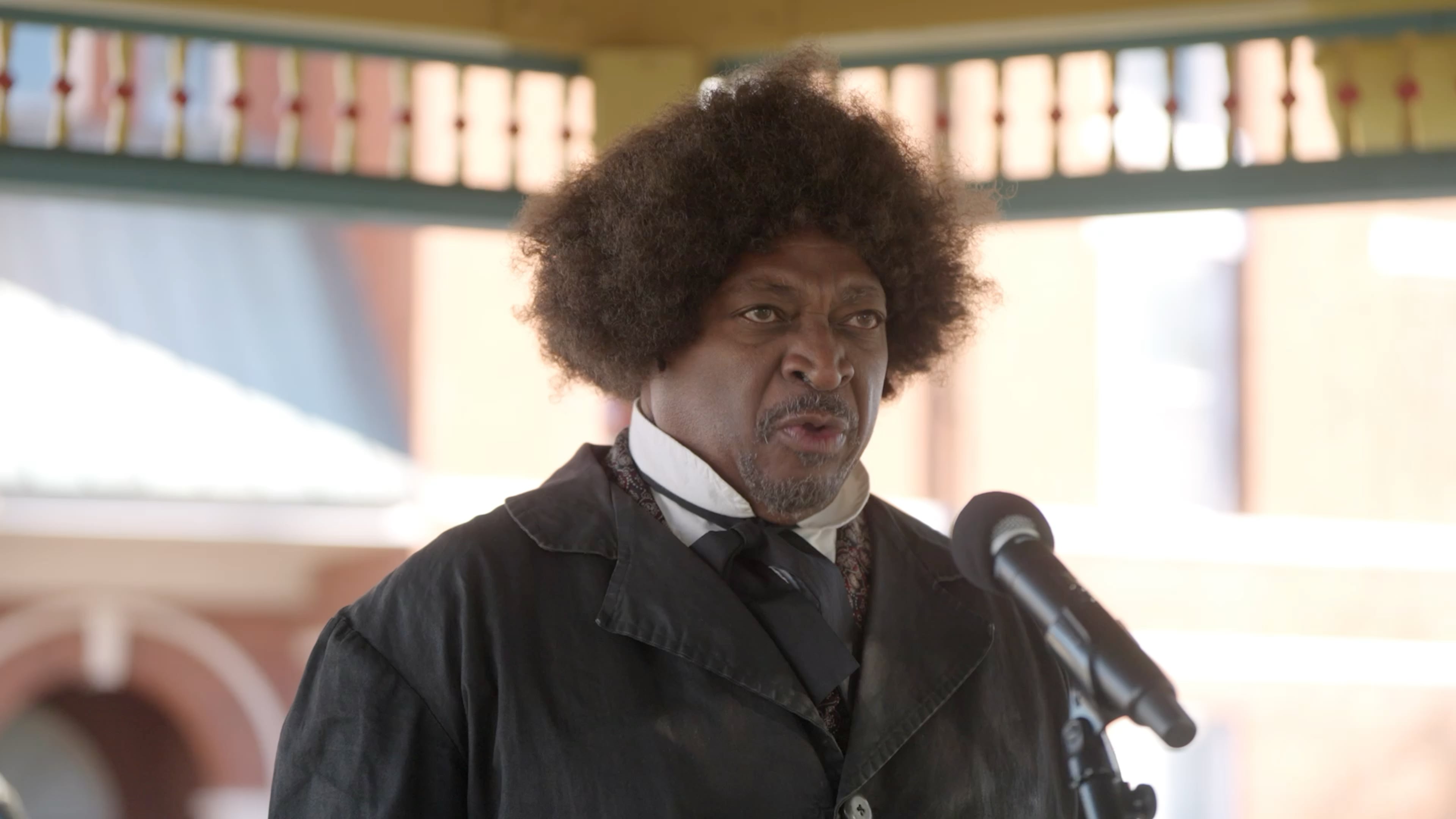
“Slavery was the reason, but not for the reason you want to think. Not for humanitarian reasons,” he said. “The way we think about slavery now, we emphasize the inhumanity and the barbarism, but that is not why Lincoln led the war. The Civil War actually broke out because of economics.”
Anderson said Southern states whose economies depended on enslaved labor sought to form a separate nation, creating the Confederacy.
Two actors, two perspectives, one war. Who’s right?
For historians, the answer is less ambiguous.
Atlanta History Center Director Sheffield Hale said that looking at what white people were saying before the war and their articles of secession, the answer is slavery.
“In the Confederate Constitution, slavery’s called out, which is in sharp contrast to the American Constitution, where it doesn’t appear,” he said. “So, what were they fighting for? They were fighting for that document (the Constitution) and that government who wouldn’t hold a slave-maintaining economy.”
If there is so much evidence and historians broadly agree on the cause of the war, why do so many Americans continue to view it differently? Hale says the answer lies in an idea known as the Lost Cause.
Barrau introduces the idea of “The Lost Cause,” an ideology that emerged after the war and was popularized by Confederate Virginia journalist Edward A. Pollard.
“They rationalize it to say, ‘We had all this death, all these terrible things happen to us. What happened? How can we say that we were not the bad people?’” Hale said. “So, they came up with this system that said that it was not about slavery, actually anything else in the world except slavery is the cause of the war.”
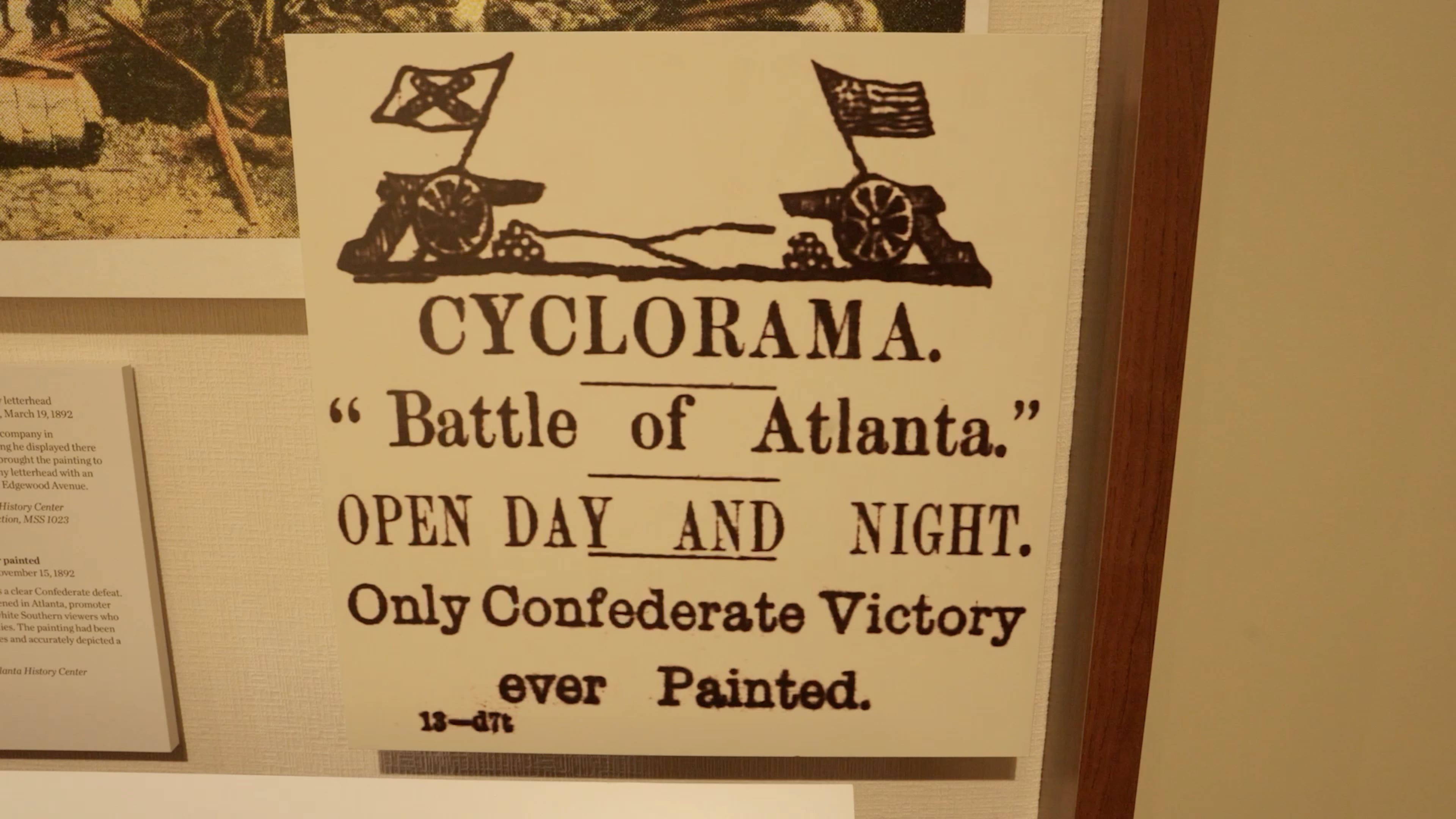
The episode illustrates that process through one of Atlanta’s most famous artifacts: the “Cyclorama.”
The Cyclorama was painted to celebrate a Northern victory and depict the city’s biggest battle, the defeat of Atlanta. However, once it reached the South, Southern businessman Paul M. Atkinson repainted some of the soldiers’ jackets to represent the Confederacy and then sold it as the “Only Confederate Victory ever Painted.”
“It’s not a Southern monument,” Hale said. “But we turned it into one because we’re so good at doing that. I think a lot of people love their heritage. History with all the bad stuff left out, and that’s what they see here. They’re proud of their ancestors that stood up to the federal government.”

For Barrau, the episode ultimately explores how history becomes identity and how identity is shaped by the stories people choose to tell, preserve and pass down.
From Stone Mountain to the Cyclorama, those competing narratives continue to shape how Southerners understand their past and themselves.
Watch the full episode on the “Curiosities of the South” YouTube channel.