
At 94, Andrew Young is still building the future

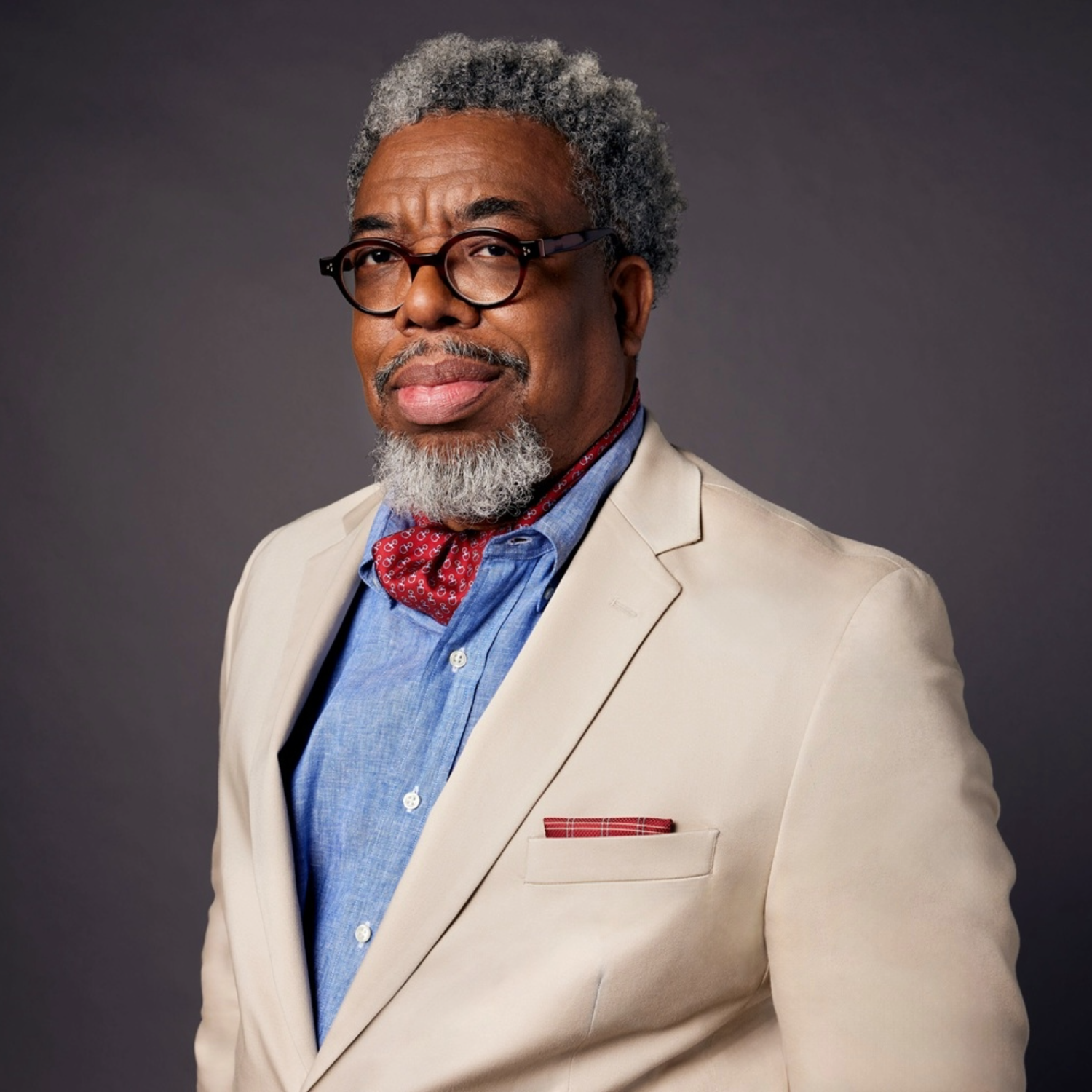
At 94, even with all that he has accomplished, Andrew Young still has a way of avoiding conversations about legacy.
That hasn’t stopped him from continuing to build.

On Tuesday, the Andrew J. Young Foundation and Forever Young Aquaponics will open a 60,000-square-foot farming system that will combine fish cultivation with hydroponic agriculture in a closed-loop ecosystem in a facility in Jonesboro.
At the same time, Young is helping advance what may be his most ambitious venture yet: the Andrew Young International Institute for Peace and Reconciliation, a proposed $100 million center in Vine City focused on preparing future leaders to confront some of the world’s most pressing challenges.
At first glance, the two projects seem unrelated.
One is a farm filled with baby lettuces, spinach, kale, chard, pak choi, fresh herbs and fish. The other is a proposed institute devoted to diplomacy, leadership and conflict resolution.
Both spring from the same question Young has wrestled with for years: How do you solve tomorrow’s problems before they become crises?
The question took shape as Young found himself thinking less about what he had accomplished and more about what remained undone.
“It was around the time I turned 75 that people started asking me what I was going to do in retirement,” Young said.
“I can’t retire.”
To his son, Bo Young, retirement has never really fit Andrew Young.
“He still jokes and says, ‘I’m still trying to figure out what God wants me to do with my life,’” Bo Young said. “And he’s 94 years old.”
After helping dismantle segregation, serving in Congress, representing the United States at the United Nations and helping transform Atlanta into a global city, Young found himself increasingly focused on challenges that stretched beyond his lifetime.
“Someone asked me if I had a bucket list,” Young said. “It got me thinking that I had done enough work on earth and I needed to figure out how to get to heaven.”
Food was one of the answers.

“I latched onto feeding the hungry as a way to really serve the Lord,” he said.
What began as a conversation about retirement soon became a new mission.
“We came to the conclusion that one of the most prominent messages in the Bible is to feed the hungry,” Young said. “We started asking what it would take to feed people in the future.”
As concerns mounted over climate change, water shortages and the future of agriculture, Young became fascinated by aquaponics.
Fish waste provides nutrients for plants, while the plants clean and recirculate water back to the fish tanks, creating a highly efficient system that produces large amounts of food using far less land and water than traditional farming.
Over the last decade, Young has visited aquaponics operations all around the world, including a facility in South Korea that demonstrated how food could be grown commercially inside dense urban environments.
“We saw a small one, just a half acre, right in the middle of Seoul,” he recalled. “It was growing food and fish together.”
Back in Atlanta, he helped launch a small demonstration project at the Andrew & Walter Young Family YMCA, where children learned to grow vegetables while being introduced to food science, sustainability and agriculture.
The Jonesboro facility is the culmination of that journey, transforming an idea born during Young’s travels abroad into a $14 million operation spread across 10 acres just south of Hartsfield-Jackson Atlanta International Airport, the world’s busiest airport.

Rawson Haverty, a managing partner of Forever Young Aquaponics, said the project grew directly out of Young’s vision.
“He wanted to answer a simple question: How do we feed more people? How do we feed the hungry more efficiently and more sustainably?” Haverty said.
The name itself, Forever Young Aquaponics, borrows from one of Young’s longtime political slogans and reflects the forward-looking philosophy that continues to drive him decades after leaving elected office.
One of the people Young eventually connected with was Arvind Venkat, whose company, Waterfarmers, has helped develop aquaponics projects across Asia, Australia, the Middle East and South America.
The Clayton County facility is Venkat‘s first ground-up commercial project in the United States.
Designed to bring food production closer to consumers and reduce reliance on long-distance supply chains, the operation is initially expected to produce between 12,000 and 15,000 pounds a week of leafy greens and herbs, along with striped bass, in a self-contained system that recycles water and eliminates agricultural runoff.

For Venkat, the Jonesboro facility could serve as a blueprint for how cities feed themselves in a future marked by rising demand and shrinking resources, a commercial model he believes can be replicated across the country.
According to Grand View Horizon, which provides access to thousands of industry reports and market forecasts, the U.S. aquaponics market generated more than $203 million in revenue in 2024 and is expected to reach nearly $400 by 2030.
Typically aquaponics farms produce between 150,000 and 200,000 pounds of produce per acre annually.
“Atlanta was the starting point,” said Venkat, the company’s chief technology officer. “Most lettuce consumed in Atlanta comes from New Mexico, California or Mexico. If you can replace a 60-day-old product with something harvested within 24 hours, the quality difference is enormous.”
Several businesses, universities and major institutions, including food-service providers serving airports, hospitals and sports venues, have already expressed interest in partnerships.
Delta Air Lines officials are scheduled to speak at Tuesday’s opening, underscoring the company’s interest as partnership discussions continue.
If the aquaponics farm is an answer to the question of how to feed the future, the proposed Andrew Young International Institute for Peace and Reconciliation is an answer to a different question: Who will lead it?
Like the King Center and the Carter Center — named after Georgia’s two Nobel Peace Prize winners Martin Luther King Jr. and President Jimmy Carter — Young envisions the institute as a place where history is put to work.

Young hopes students, scholars and policymakers will grapple with the same challenges that shaped much of his own life: political division, economic inequality, global conflict and the fragile work of democracy.
“Dr. King used to say we have an Army Academy, a Navy Academy, an Air Force Academy and a Coast Guard Academy, but we don’t really have a Peace Academy,” Young said.
Planned for a 2.7-acre site in Vine City, near the Atlanta University Center, Georgia State University and Georgia Tech, the institute would house roughly 3,000 artifacts across 80,000 square feet of space documenting Young’s life and career.
The project carries a $100 million price tag, but key pieces are already falling into place. The foundation has secured a 100-year lease from the city for $1 a year, a $5 million commitment from Delta Air Lines and a $2 million Invest Atlanta grant to relocate sewer infrastructure beneath the site. Young hopes to complete fundraising by 2027, begin construction in 2028 and open the institute by 2032 — when Young turns 100.
“If you’re 25 and saying the things I’m saying, people think you’re crazy,” Young said. “But when you’re 94 and still dreaming about the future, people can’t simply dismiss you. Then again, many of the greatest ideas sounded ridiculous at the beginning.”
One project asks how cities will feed people in a hotter, more crowded world. The other asks who will be prepared to lead it.
For his son, both projects reflect the trait that has defined Young for decades.
“My dad is a dreamer. But more than that, he’s a doer,” said Bo Young, who is also one of the managing partners of Forever Young Aquaponics. “He figures out how to bring ideas to fruition. One of the reasons he’s been so successful is that he’s never cared who gets the credit or about who profits from an idea. He comes up with these concepts and pushes them forward until they become successful projects.”
Together, they reveal something essential about Andrew Young. Even at 94, he rejects the idea that either project is about legacy.
“I don’t really think about it that way,” he said. “I’ll let the future decide that. If you stop having a vision, you stop living. That’s why I keep looking toward the future.”