
Atlanta’s World Cup will showcase the African and Caribbean Diaspora

For former Haitian Olympian Naomy Grand’Pierre, her country’s return to soccer’s biggest stage is about much more than goals and standings. It is a chance for Haiti to tell a different story.
“Qualifying for the World Cup, despite the real hardships we are facing as a nation, is an absolute testament to our resilience as a people,” said Grand’Pierre, who in 2016 became the first woman from Haiti to compete as a swimmer in the Olympics. “It brings Haitians tremendous pride and joy to be represented on the world stage so authentically.”
On Monday, that opportunity arrives in Atlanta.
When the FIFA World Cup comes to the city, it will bring more than some of the world’s best soccer players. It will bring nations with deep roots in metro Atlanta and give thousands of residents a chance to celebrate their heritage on a global stage.
Haiti is one of five African and Caribbean nations that will compete in World Cup matches here, joining the Democratic Republic of the Congo, Cape Verde, Morocco and South Africa.
Atlanta will also host Czechia, Saudi Arabia, Uzbekistan and World Cup favorite Spain.

Together, more than 22,000 residents born in those African and Caribbean nations live across metro Atlanta’s five core counties — that’s roughly equivalent to the population of Decatur.
Haiti’s community numbers more than 13,000 residents, making it a bit smaller than the population of College Park, while Cape Verde’s population in the region is estimated at just 54, according to U.S. Census data. At that size, the entire Atlanta Cape Verdean population could fit on one MARTA bus.
But whether the community numbers in the thousands or the dozens, the World Cup promises to be a celebration of culture, heritage and national pride as members of the Black diaspora welcome their countries to Atlanta.
The excitement is already building.
For Moroccan supporter Najlaa Moumaris, the World Cup offers a platform to challenge assumptions and showcase the diversity of a nation often viewed through a narrow lens.
“I would really like for people to see Morocco as the melting pot that it is,” Moumaris said. “Morocco is like the (Dominican Republic) of Africa. It comes in all shapes, sizes and colors.”
Members of Atlanta’s Cape Verdean community — which is also known as Cabo Verde — see a similar opportunity to introduce visitors to a culture whose influence often extends far beyond its small island population.
“There is a great deal of excitement within Atlanta’s Cabo Verdean community and among our broader African and diaspora partners as we prepare to welcome Cabo Verde’s national team and supporters to the city,” said Damani Z. Aaquil, senior adviser for diaspora engagement and strategic partnerships with the Atlanta FIFA Cabo Welcome Committee.
The arrival of South Africa’s national team, known as Bafana Bafana, also carries special significance in a city that has long celebrated its ties to Nelson Mandela, who visited Atlanta shortly after his release from prison in 1990.
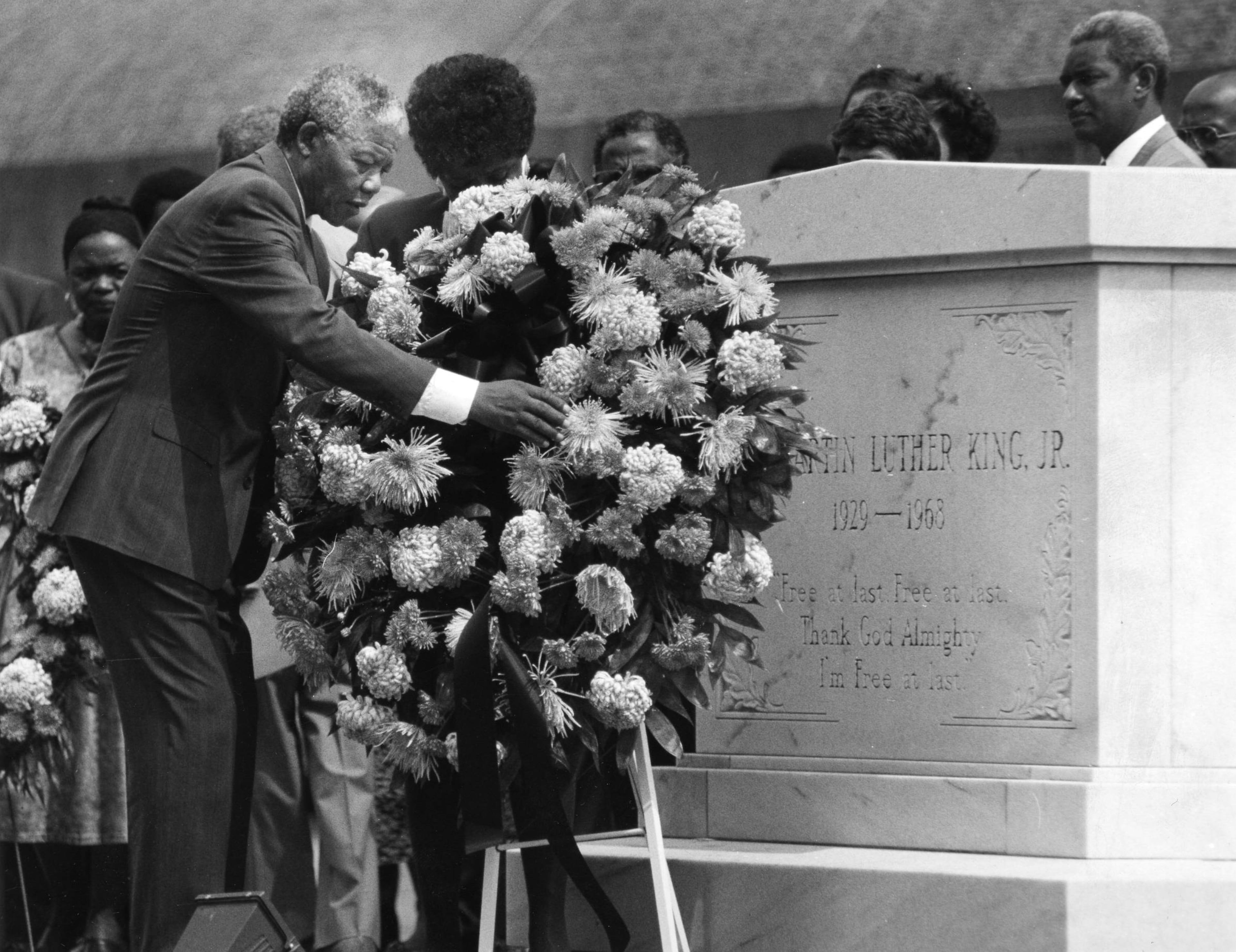
“Seeing South Africa play in Atlanta is a proud and emotional experience. It feels like a piece of home has arrived in the city where many of us have built new lives,” said Isabelle Ngcobo. “As a South African, it is inspiring to see our flag, our culture and our people represented on an international stage right here in Georgia.”
Meanwhile, Atlanta’s Congolese community is entering the World Cup with mixed emotions. While supporters are thrilled to see the Democratic Republic of the Congo return to soccer’s biggest stage for the first time in more than 50 years, concerns over U.S. travel restrictions tied to the recent Ebola outbreak have tempered some of the excitement.
The restrictions, which temporarily limit entry for some noncitizens traveling from several African nations, including the Democratic Republic of the Congo, could prevent some fans from attending the tournament.
Many supporters have already purchased tickets and made travel plans, only to face uncertainty about whether they will be able to make the trip, said Aimé-Stéphane Mukendi, senior adviser to the president of the Congolese Community of Atlanta.
“There is excitement, but there is also anxiety,” Mukendi said. “Many fans have purchased tickets and made travel arrangements, and now some are having to cancel their plans.”
Taken together, the five nations reflect the many threads that connect Atlanta to Africa and the Caribbean. Their supporters will arrive with different languages, foods, traditions and histories, but with a common goal: to see their countries represented on one of the world’s biggest stages.
For Grand’Pierre, that representation is what makes the moment so meaningful.
“This is why qualifying for the World Cup is so special,” she said. “Especially now. To have a moment we can celebrate together as a nation, is so impactful.”
Before the first whistle blows, here’s a closer look at the five nations whose histories, cultures and communities will help turn Atlanta into a crossroads of the global Black diaspora.
Democratic Republic of the Congo
Metro Atlanta Population: 3,038
What to know
- Africa’s second-largest country by land area, the Democratic Republic of the Congo is home to more than 116 million people. It contains one of the world’s largest rainforests and the massive Congo River Basin and is rich in cobalt, copper and other minerals critical to modern technology.
Languages you’ll hear
- French
- Lingala
- Swahili
- Kikongo
- Tshiluba
Soccer identity
- The Democratic Republic of Congo’s appearance ends a 52-year drought after its last appearance in 1974. The team plays Uzbekistan on June 27 at 7:30 p.m.
Music and culture
- Birthplace of Congolese rumba one of Africa’s most influential musical genres.
What city should you know?
- Kinshasa, the capital and largest city, is home to about 17 million people and sits along the Congo River across from Brazzaville, Republic of the Congo.

Famous people
- Patrice Lumumba: first democratically elected prime minister of the newly independent Democratic Republic of the Congo. After being removed from power and assassinated in 1961, he became a symbol of African independence, Black liberation and resistance to colonialism.
- Denis Mukwege: gynecologist and 2018 Nobel Peace Prize laureate recognized for his work treating survivors of sexual violence
Defining moment
- While the assassination of Patrice Lumumba remains one of the most consequential events in the nation’s history, Congo also captured the world’s attention in 1974 when, as Zaire, it hosted the “Rumble in the Jungle.” The legendary heavyweight championship bout between Muhammad Ali and George Foreman, held Oct. 30, 1974, in Kinshasa, became one of the most celebrated sporting events of the 20th century.
Food Atlantans should know
- Moambe chicken: chicken simmered in palm nut sauce, often considered a national dish
- Fufu: starchy dough made from cassava or plantains
- Makayabu: salted fish commonly served with vegetables and starches
Atlanta Connection
- Born in Kinshasa, the late Basketball Hall of Famer Dikembe Mutombo was a beloved member of the Atlanta Hawks from 1996 to 2001. The eight-time NBA All-Star later made the city his home and became known for his humanitarian work in both Atlanta and his native Democratic Republic of the Congo.
Cape Verde
Metro Atlanta Population: 54
What to know
- Cape Verde, also known as Cabo Verde, is an archipelago of 10 volcanic islands off the coast of West Africa with a population of about 530,000, or roughly the same size as the city of Atlanta.
Languages you’ll hear
- Portuguese (official language)
- Creole
Soccer identity
- Nicknamed the Blue Sharks (Tubarões Azuis), the nation will make its first FIFA World Cup appearance against Spain on June 15 in Atlanta’s opening World Cup match.
Music and culture
- Morna: Slow-tempo music performed with a variety of guitars and violin, featuring lyrics that yearn for home.
- Coladeira: Up-tempo, rhythmic dance music featuring violins, guitars, mandolins and upbeat lyrics.
- Funaná: A faster, more rhythmic version of coladeira featuring keyboards, drums and lyrics about hardships and social issues.

What city should you know?
- Praia, the capital and largest city known for its classic architecture, is on Santiago Island and serves as the country’s political and economic center.
Famous people
- Walter Tavares: Professional basketball player and former Atlanta Hawk
- Anika Noni Rose: Tony Award-winning actress and singer (while Rose was born in the U.S., her father is from Cape Verde)
Defining moment
- Cape Verde gained independence from Portugal on July 5, 1975, ending more than 500 years of Portuguese colonial rule.
Food Atlantans should know
- Cachupa: A hearty stew made with maize, beans, vegetables, seafood or meat and considered the national dish
Atlanta connection
- Cape Verdeans of Atlanta, a local organization that promotes and preserves Afro-Portuguese culture, was formed in 1993, three years prior to the country making its Olympic debut in Atlanta in 1996.
South Africa

Metro Atlanta Population: 4,428
What to know
- Home to more than 63 million people, South Africa has Africa’s most industrialized economy and is the world’s leading producer of platinum. The country has three capitals: Pretoria (executive), Cape Town (legislative) and Bloemfontein (judicial).
Languages You’ll Hear
- isiZulu
- isiXhosa
- Afrikaans
- English
- Sepedi
Soccer identity
- Known as Bafana Bafana, or “The Boys” in Zulu, South Africa opens World Cup play against Czechia on June 18 at noon.
Music and culture
- Amapiano, a genre that blends deep house, jazz and lounge music and is known for its signature piano melodies.
What key cities should you know?
- Cape Town, known as the “Mother City,” is one of South Africa’s most popular destinations and home to Table Mountain
- Johannesburg, founded after the discovery of gold in 1886, remains the country’s economic center

Famous people
- Nelson Mandela: Anti-apartheid leader and South Africa’s first Black president
- Tyla: Grammy-winning singer known for blending pop and amapiano into what she calls “popiano”
- Trevor Noah: Comedian, author and former host of “The Daily Show”
Defining moment
- Nelson Mandela’s election as president on May 10, 1994, marked the end of apartheid and the beginning of majority rule in South Africa.
Food Atlantans should know
- Biltong: air-dried, cured meat similar to beef jerky
- Bobotie: spiced minced meat, typically beef or lamb, baked with a savory egg custard topping
- Potjiekos: slow-cooked stew made with meat, vegetables and starches in a cast-iron pot
Atlanta connection
- Following his release from prison, Nelson Mandela visited Atlanta in June 1990 during his eight-city U.S. tour. Earlier this month, Atlanta Mayor Andre Dickens unveiled a statue of Mandela at Hartsfield-Jackson Atlanta International Airport.
Morocco

Metro Atlanta Population: 1,373
What to know
- Officially the Kingdom of Morocco, the North African nation is one of three remaining monarchies in Africa, alongside Lesotho and Eswatini (formerly Swaziland). It is also the continent’s most visited country, with roughly two-thirds of its residents speaking Arabic. It’s home to 38 million people.
Languages you’ll hear
- Arabic (Darija)
- Tamazight (Berber)
- French
- Spanish
Soccer identity
- Known as the Atlas Lions, Morocco is ranked No. 7 in FIFA world rankings. In 2022, Morocco became the first African or Arab nation to make it to a World Cup semifinal. The team faces Haiti on June 24 at 6 p.m.

Music and culture
- Gnawa: spiritual music rooted in West African traditions
- Amazigh/Berber music: traditional music that varies by region and community throughout Morocco
What cities should you know?
- Marrakech, known for its bustling markets and historic medina, is one of Morocco’s most visited destinations.
- Casablanca, the country’s largest city and economic capital, gained international fame as the setting of the classic 1942 film “Casablanca.”
Famous people
- Achraf Hakimi: arguably the world’s best defender in football and captain of Morocco’s national team
- French Montana: Moroccan-American rapper from New York with a slew of global hits
- Gad Elmaleh: Casablanca-born comedian known to folks stateside for his brilliant English-language Netflix special, “Gad Elmaleh: American Dream”
Defining moment
- Morocco’s independence from France in 1956 ended more than four decades of colonial rule and established the modern Moroccan state.
Food Atlantans should know
- Couscous: steamed semolina grains often served with vegetables and meat
- Tagine: slow-cooked stew named for the cone-shaped clay pot in which it is prepared
- Mint tea: sweet green tea that is a staple of Moroccan hospitality
Atlanta connection
- Last year, Delta announced the first nonstop flight between Atlanta and Marrakech, creating the first direct air connection between Morocco and the U.S. Southeast.
Haiti

Metro Atlanta Population: 13,600
What to know
- Known for its rich cultural traditions, Haiti, with a population of 12 million people, blends African, French and Caribbean influences through its music, art, cuisine and language. The country’s cultural impact extends throughout the Caribbean and the global Black diaspora. Today, Haiti continues to grapple with political instability, gang violence and economic challenges that have displaced thousands of residents and strained daily life.
Languages you’ll hear
- Haitian Creole (Kreyòl)
- French
Soccer identity
- Haiti returns to the World Cup for the first time since 1974. The team plays Morocco on June 24 at 6 p.m.
Music and culture
- Kanaval: Afro-Caribbean-French festival music associated with Carnival celebrations
- Rabòday: upbeat dance music driven by drums, horns and electronic beats
- Kompa: Haiti’s signature dance music performed by partnered dancers
What City should you know?
- Port-au-Prince, Haiti’s capital and largest city, serves as the nation’s political, economic and cultural center.
Famous people
- Toussaint L’Ouverture: revolutionary leader of the Haitian Revolution
- Wyclef Jean: Grammy-winning rapper, musician and producer
- Garcelle Beauvais: actress, author and television personality
Defining moment
- The Haitian Revolution began in 1791 when enslaved Africans rose up against French colonial rule. Led by figures such as Toussaint L’Ouverture, the uprising culminated in Haiti’s independence in 1804. The victory established the world’s first Black republic and remains the only successful large-scale slave revolt to create an independent nation, reshaping global conversations about slavery, freedom and self-determination.
Food Atlantans should know
- Griot: Fried pork and Haiti’s national dish
- Djon djon rice: Rice flavored with black mushrooms native to Haiti
- Haitian macaroni and cheese: A baked pasta dish seasoned with Haitian spices
Atlanta connection
- Atlanta is one of six official Haitian consulates in the United States.
The UATL staff of Gavin Godfrey, Brooke Leigh Howard, Christopher A. Daniel and K’mari Greene, along with AJC Data specialist Jennifer Peebles, contributed to this reporting.