
5 things to know about the death of Nolan Wells in Mississippi
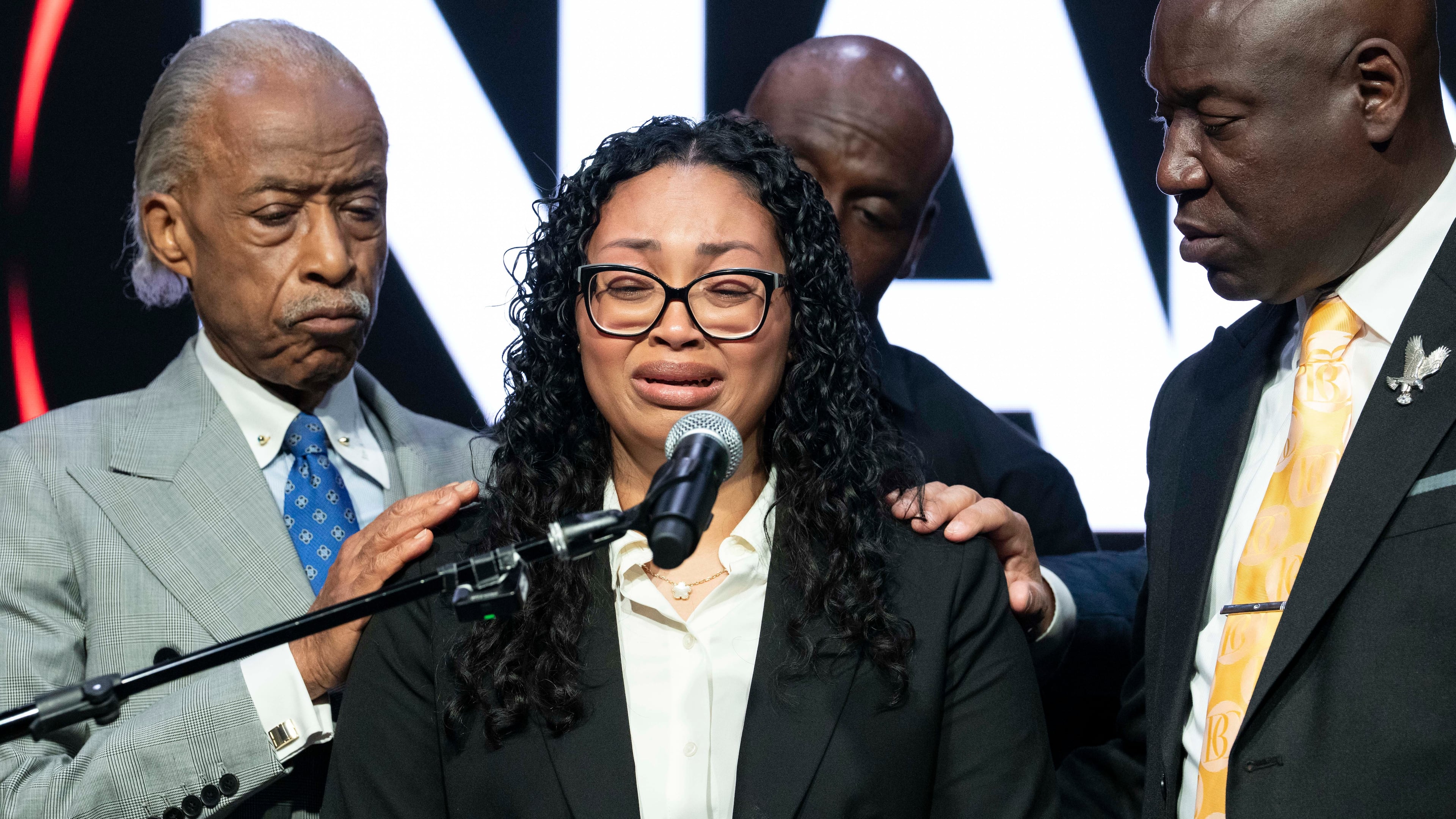

The disappearance and death of Mississippi teen Nolan Xavier Wells has drawn national attention as investigators work to determine what happened during a Fourth of July trip off the Gulf Coast.
Wells was last seen by his family on July 3 before traveling to Horn Island with friends the next day.
The 18-year-old’s body was recovered on July 6 along Horn Island’s shore about 7 miles off the Mississippi coast.
Some have questioned whether race played a role in Wells’ death, while others have pointed to Mississippi’s history of racial violence, including the 1955 lynching of Emmett Till.
“The history of Mississippi is something that they don’t just read about in books,” said civil rights attorney Ben Crump, who is representing Wells’ family, at a news conference Friday in Harlem. “It’s a lived experience for many Black Americans that oftentimes when our children are killed in highly questionable situations that there is this notion that ‘Oh, there was nothing wrong, no foul play, let’s just sweep it under the rug.’ Well, we refuse to sweep it under the rug.”
Authorities have not determined a cause of death or announced evidence of foul play. There were no immediate signs of physical injury, Jackson County Coroner Bruce Lynd told CNN.
The coroner’s office requested that the autopsy be conducted at the state medical examiner’s office because of the “condition” in which Wells’ body was found and to determine whether he suffered any trauma or whether foul play was involved.
“This is not how I wanted the world to meet my son,” Wells’ mother, Christine Wells Wonsley, said during Friday’s news conference. “But here we are.”
Here are five things to know about the case.
1. Who was Nolan Wells?
Wells was a rising sophomore at Southwest Mississippi Community College, where he was a wide receiver on the football team.
During Friday’s news conference, Wells’ parents remembered him as the family’s jokester who could lighten even the most difficult moments.
Wells’ father, Elmore Wonsley, said his son was “the jester in (his) court.”
His mother, Christine, said he made a salmon dinner for the family because she had been busy that week.
2. What do investigators know so far?
Wells traveled to Horn Island with friends on July 4 to celebrate the holiday. The island is accessible only by boat. Wells went missing later that day, and his mother filed a missing-person report.
His body was discovered two days later.
Results of the state autopsy are still pending.
The Jackson County Sheriff’s Office said it is continuing to investigate and is “working to establish the facts through eyewitness accounts, physical evidence, and other reliable information.”
Meanwhile, Wells’ family requested an independent autopsy in Washington, D.C.
The family said it chose Washington to ensure the examination was conducted by a medical examiner with no ties to Mississippi.
“We had his body flown from Mississippi to Washington, D.C., because his family wanted to make sure that they had a doctor who had no ties to Mississippi law enforcement to do an independent examination of their son’s body,” Crump said.
3. Why has the case drawn national attention?
The case has drawn national attention because Wells appeared to be the only Black member of the group he traveled with.
His disappearance and death have fueled intense discussion on social media, with some questioning whether race played a role because the other members of the group returned safely. Others have pointed to Mississippi’s long history of racial violence as they await more information about what happened.
As part of the investigation, Jackson County Sheriff John Ledbetter told The Associated Press that Wells may have chosen to remain on the island because he expected to return to the mainland with someone else.
But his family later said they “can’t fathom” why he would separate from his group of friends.
“We always taught him, ‘If you go with a group, you stay with the group,’” Elmore Wonsley said.
Bernice King, daughter of the Rev. Dr. Martin Luther King Jr., and CEO of The King Center, called the circumstances surrounding Wells’ death “very troubling.”
In an interview with “The Root,” King said the case reflects fears many Black Americans continue to carry about race in the United States.
“We still got some serious issues in this nation around — I’m just gonna say it — Blackness,” King said. “And we can’t sweep it under the rug.”
Crump said the family’s goal is to ensure a transparent investigation and to obtain all available evidence, including autopsy findings.
4. The case has a local parallel
While the two cases are unrelated, some social media users have compared Wells’ death with that of Tamla Horsford, a Black mother who died in Forsyth County in November 2018.
Horsford, a mother of five, was found in the backyard of a friend’s home during an overnight party. Investigators said she appeared to have fallen about 10 feet from the back deck.
Family members questioned whether Horsford could have died from a fall of that distance.
Horsford had multiple injuries, a high blood alcohol level. Marijuana and Xanax were also found in her system.
A medical examiner ruled her death an accident, and a yearlong investigation found no evidence of criminal activity.
5. Prominent Black leaders have rallied around the family
Atlanta-based filmmaker Tyler Perry will cover the cost of Wells’ funeral, which will be held Monday at Center Pointe Church in Ocean Springs with the Rev. Al Sharpton officiating.
In a post shared on Instagram, Perry said he was also a “son of the South” who has questioned the deaths of those around him.
“It is my hope that Nolan’s parents and all who knew and loved him get to the truth of what happened in Mississippi,” Perry posted.
Perry has previously paid funeral expenses for Rayshard Brooks, Secoriea Turner and Tynesha Evans.
Media mogul Byron Allen donated $100,000 to the family’s GoFundMe account, and former NFL quarterback Colin Kaepernick agreed to pay for Wells’ independent autopsy.
Crump has represented clients in several high-profile cases involving allegations of racial violence or police misconduct.
He represented the families of George Floyd and Breonna Taylor. He is also representing Rashaad Muhammad, who allegedly experienced neglect while incarcerated in the Fulton County Jail.
“This is foreign. We’ve never been through this. No parent should go through this,” said Christine.