
Is Atlanta the Black mecca, according to Mayor Andre Dickens?
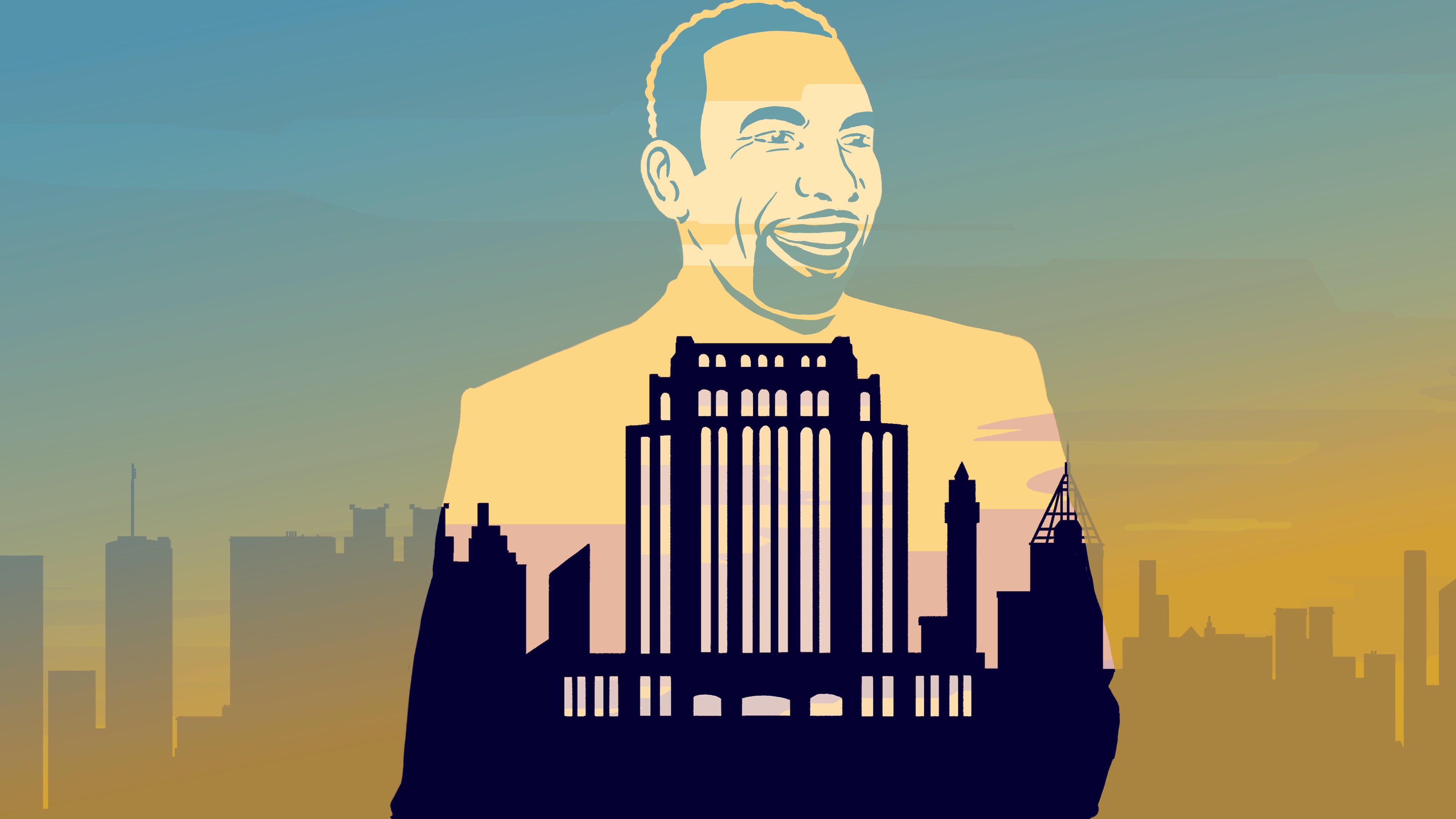
Just over three weeks before being inaugurated for a second term, Mayor Andre Dickens is sitting comfortably in City Hall’s Ceremonial Room, right outside his office. He’s relaxed, entertaining innocuous questions stemming from common debates in Atlanta Black culture.
Drums or flats?
“Flats.”
It’s hard to settle on one, so he reels off a few.
“Aquemini,” “Return of the G,” “Da Art of Storytellin’ (Pt. 1)” and “Two Dope Boyz (In a Cadillac).”
He talks about Atlanta Hawks legend Dominique Wilkins being his favorite local athlete growing up because ‘Nique never backed down from Michael Jordan.
If we’re talking movies inspired by the city, choosing between “Drumline” or “ATL” comes down to a simple, but telling, fact about the man answering the question: “Nick Cannon just ain’t from here. I’m really a purist with my ATL status,” Dickens says.
The 61st mayor of Atlanta can joke about pop culture preferences, but he’s serious about his love for home. He should be. To friends and family, he’s Dre from Adamsville who grew up here. To constituents, he’s Mayor Dickens, city chief executive officer, managing the largest budget in its history.
As a native and local politician, Dickens is well-versed in Atlanta’s nicknames and catchphrases. A-T-L. “Atlanta Influences Everything.” The Black mecca.
This year, UATL has dissected the latter moniker that has been called into question by locals, transplants, scholars, activists and musicians. Although Atlanta is often hailed as the epicenter of Black success, creativity and progress, dubious distinctions persist.
So, who better to question whether the A is truly living up to its status as America’s Black mecca than arguably its most politically influential native son?
The Black mecca then
‘Heroes and villains’
Dickens’ intro to the Black mecca came via growing up in the predominantly Black west side neighborhood of Adamsville. He was the youngest of two kids, raised by a single mother and later adopted by his stepfather.
“I don’t know that Andre Dickens in 1979, as a 5-year-old in Adamsville, cared if we had a good title or not. He just wanted to be able to grow and be safe and go to the next level of his life,” he said.
When he talks about his childhood as a Black kid on the city’s west side, Dickens quotes another Adamsville native, Killer Mike. The Grammy-winning rapper once told NPR, growing up in Atlanta, “all my heroes and villains were Black.”
The same was true for the mayor.
“When I grew up in Atlanta, I was tough. I could understand how to overcome challenges no matter what they were because I had seen it in my neighborhood,” Dickens said.
Preteen years were spent riding MARTA, making frequent stops at Lenox and Greenbriar malls. Dickens was a regular at Jelly Beans (the inspiration behind “ATL”) and Graffiti teen dance club inside Six Flags Over Georgia.
He notes that Martin Luther King Jr. Drive was at the center of his youth activities. He eventually went to Benjamin E. Mays High School, named after a civil rights leader. His rival school was named after Frederick Douglass.
‘Most important Black city’
As he got older, the city’s celebration of Black history and success started to click.
“What I did know growing up is that Atlanta was the most important Black city in America,” he said, noting that the Benjamin Mays, Maynard Jacksons and Andrew Youngs were just as accessible as the neighborhood hustler.
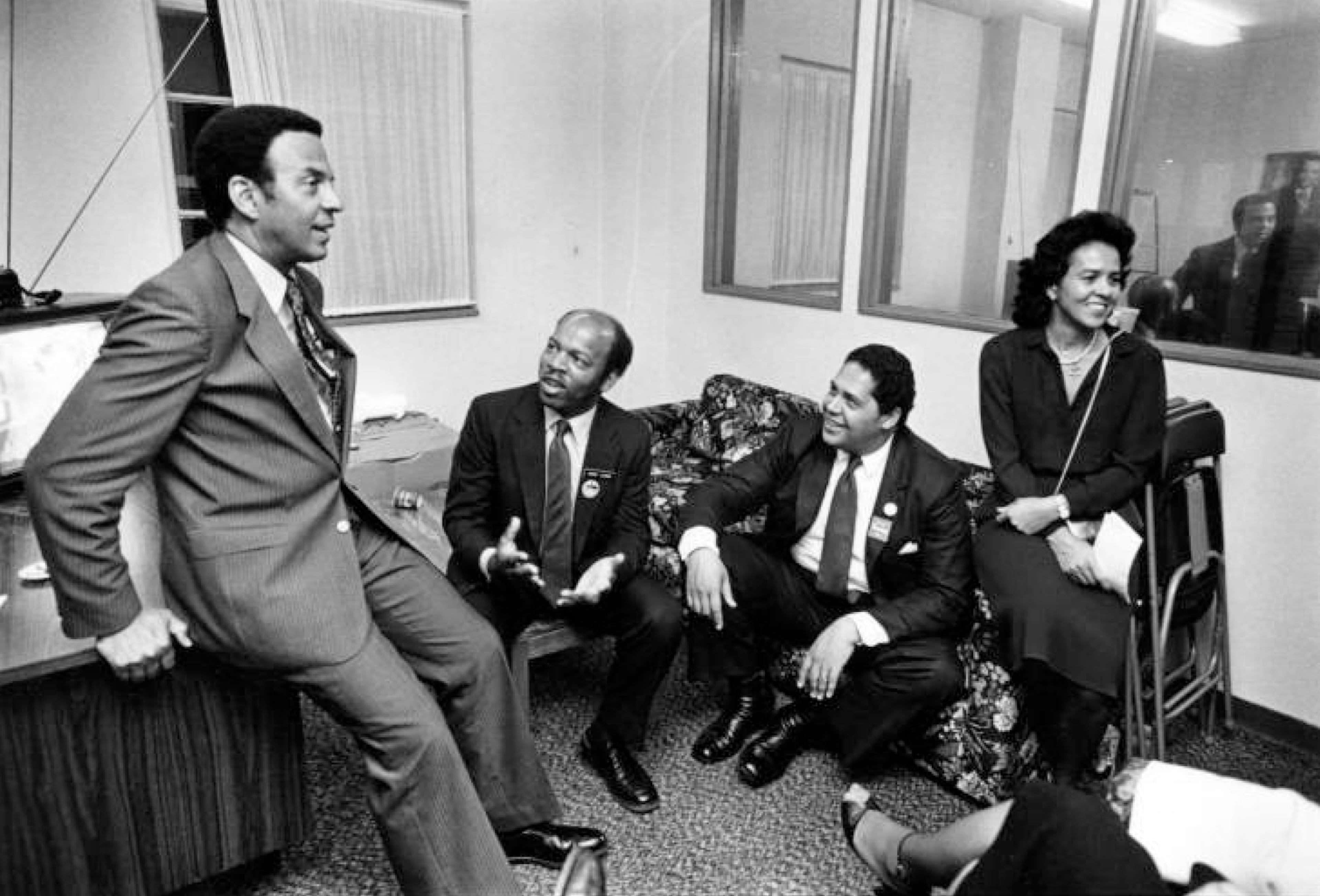
“I was always surrounded by names of people we were reading in the books that were in classrooms. And I was like, no other place but here honors those people in that way,” he recalls.
The first time Dickens remembers hearing the phrase “Black mecca” actually started with debates about historically Black colleges and universities. Then, Howard University was dubbed “the mecca” for Black college students and its home — Washington, D.C. — “Chocolate City.” Dickens and friends would challenge those assertions by bragging about friends and family from Atlanta who attended Morehouse and Spelman colleges.
When Dickens became the first person in his family to attend college at Georgia Tech, it was his experiences growing up in Atlanta that guided his path. From the streets to politics, he witnessed a range of success that instilled confidence. It was necessary for a kid from a predominantly Black community finding his path in a predominantly white institution.
“The Black mecca, the city, gave me the opportunity to show up in a place that was not necessarily designed for us,” he said.
The Black mecca now
‘Center of the metro Atlanta universe’
Now 51, Dickens is the latest in a five-decade-plus run of Black mayors for Atlanta. He won reelection by a landslide.
Hearing his hometown still referred to as an epicenter of Black excellence is nice, but not the whole story.
“A Black mecca in moniker and in name, it gives us a product, it gives us a brand, and it is very attractive, and it gives us some home field pride, but I want it to make sense for everybody,” he said.
The Black mecca itself has grown — pains along with it.
Residents living in the city limits who identify as Black or African American represent 46% of the population, according to the latest American Community Survey data.
When we’re talking about the larger 29-county metro Atlanta area, that’s 2.3 million Black residents, which means we rank second for the most Black people in any U.S. metro area. “We operate as a region now. City Hall is the center of the metro Atlanta universe,” he said.
A 2022 study from Brookings Institution found that metro Atlanta led the country in Black in-migration (folks moving to the area) for the past four decades up to that point.
It’s still considered a mecca for Black college students. The city’s ability to crank out music, film and TV stars has not wavered.
However, like any major city, examples of inequality are too prevalent in a city marketing and promoting its Black capital to the world for mass consumption.
In Atlanta, the median household income for Black residents is $38,854, compared to $114,195 for white residents, according to a report by the Annie E. Casey Foundation. This is one of the largest Black-white income gaps in the country.
A 2024 report from the Annie E. Casey Foundation shows that only 35% of Black residents in the city of Atlanta own their homes compared to 58% of white residents.
‘A tale of two cities’
Natives and transplants argue that data shows for some — folks with education, resources and support — it’s a Black mecca. For others — those born into poverty on the city’s south, southeast and west sides living in rapidly gentrifying neighborhoods — it’s not.
As a public servant and resident of Collier Heights, a historically Black neighborhood on the city’s west side, Dickens said he agrees with the idea that two-word phrase doesn’t encompass the reality of life for everyone.
“There’s a tale of two cities,” he said, noting that for his administration, a challenge is balancing the needs of folks moving to the city with those born and raised here.
“People are right, that there are folks that are just stuck in poverty, and a lot of that is place-based. There are pockets of this city that haven’t seen momentum, haven’t seen opportunity,” he said.
Another concern: keeping Black creative talent in Atlanta. There is no more La Face Records to foster the next Outkast. Fashion designers don’t have a garment district. Local artists call out the lack of funding and systems to keep Black creatives from making a living here.
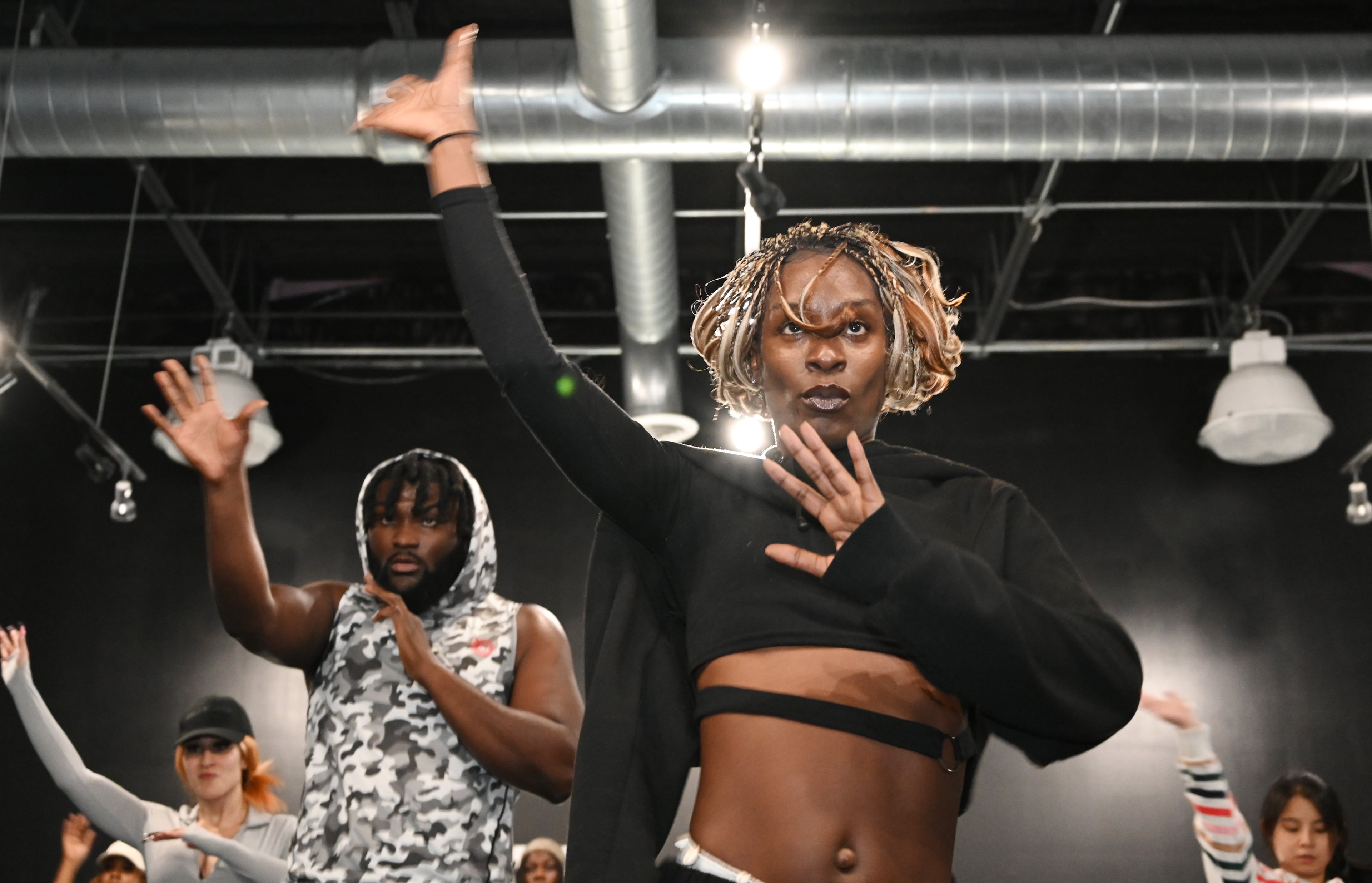
In 2023, Dickens launched the Arts Advisory Committee to address the lack of creative equity and resources at home.
“We have to actually make it a part of that infrastructure, something that has identifiable frameworks to it,” he said. “We have it in pockets, but we haven’t created a cultural economy. We haven’t created artistic tourism.”
From 2002 to 2011, Dickens owned a business with his sister called City Living Home Furnishings. The business went under during the housing crisis, leaving the future mayor with $1 million in debt. It’s why when he reads reporting that Black small businesses in Atlanta earn just 17 cents to every dollar of other small businesses, he takes it personally.
It’s also why he’s pushed to place more minority vendors inside Hartsfield-Jackson Atlanta International Airport. It’s all a work in progress to ensure residents — particularly Black folks — benefit from current and future opportunities.
“This is not a snap of the finger thing,” he said. “I’m three years and 11 and a half months in, and I still got a lot more work to do to repair the wrongs that have been done from redlining to segregation, to things that have held people back.”
The Black mecca of tomorrow
‘Why not you?’
So, what do the next four years of life in the Black mecca look like?
Earlier this month, Dickens stood at the center of a reporter scrum outside Fado’s Irish Pub in Buckhead. He was taking part in a 2026 FIFA World Cup watch party for the group draw. It was an event packed with fans repping their countries, DJ EU mixing beats from Istanbul to East Point. The mayor spoke about this moment being “big bragging rights” for Atlanta, his time as a student at Georgia Tech during the 1996 Olympics and The Games’ lasting impact.


The World Cup is slated to be a $500 million to $1.5 billion boon to the city’s economy. Atlanta will host eight matches, starting in June. Residents have expressed concern we’re “not World Cuppy enough,” that, like the Olympics 30 years prior, Black folks will be left out of chances to cash in on economic opportunities. The bad taste of what some called efforts to displace Black communities during The Games still lingers on local tongues decades later.
“I also remember the business opportunity that people thought it was: ‘I’m going to print out a bunch of T-shirts and sit on the side of the road trying to sell the same T-shirt that 15 other Black folks got printed trying to make it,’” he said. “That’s a one-dimensional business opportunity. That’s not going to make us economically strong.”
Dickens insists that, unlike the ’96 Games, no new stadiums, buildings or structures are being built. Current infrastructure is just being enhanced. That means entire communities or neighborhoods won’t be displaced to spruce ATL’s house up for company.
To address concerns from Black businesses and entrepreneurs, Dickens’ administration launched Showcase Atlanta, a directory of local offerings across metro Atlanta, in an effort to loop them in on how they can show up and benefit from major events.
Before, during and after the World Cup, Dickens plans to push for his Neighborhood Reinvestment Initiative. He even wrote an op-ed for The Atlanta Journal-Constitution about his $5 billion plan to reinvest in underserved areas, particularly in Black communities.
In response to a question about the biggest threat to the Black mecca’s progress that took him from Adamsville to City Hall, Dickens says it’s division among ourselves and lines drawn promoting that separation.
“What has happened is elite Blacks desire not to be in certain parts of the city because the housing infrastructure is old, but then someone else moves in there and it’s ‘gentrification,’” he said, challenging Black locals to work together on preserving Atlanta’s Black past, present and future. “Somebody’s going to come in there and fix it up, and they’re going to move in it. Why not you?”
The onus doesn’t rest solely on the shoulders of Black natives. Dickens and his administration want folks moving here to show more investment in its Black communities across the city. He references rapper Big Gipp’s line from Goodie Mob’s “Cell Therapy” about “coming in my home and not wiping your feet on the rug.”
“Atlanta’s such a welcoming city, but the price of admission is respect,” he said.
‘The nation needs us’
Like Detroit, Washington, D.C., Chicago of the past and folks dubbing Charlotte as a future Black mecca, which U.S. city truly lives up to said name can change. All that Atlanta has built itself on can be taken away.
To keep building on its legacy of being America’s Black cultural HQ, it will take a collective effort, Dickens said. He added that, at home, we’re equal parts biased to celebrate us but also quick to criticize what ain’t working.
Leaning back in his chair, Dickens contemplates a question about the country without Atlanta’s Black influence. As a local kid, his work is personal. As mayor, his work is to focus less on branding and more on reality.
“I’m hopeful that as we grow, we don’t ever lose the Black mecca, that we don’t lose our Black excellence,” he said. “The nation needs us. The nation cries out for Atlanta all the time.”
ABOUT THIS SERIES
“Atlanta: America’s Black mecca?” is an original content series from UATL that explores that question with data-driven, thoughtful reporting that prioritizes the voices of locals and transplants who call this city home. These stories will appear in the paper, UATL.com and AJC.com each month through January 2026.
Got a Black mecca story to tell? We want to hear about your experiences. Hit us up at uatl@ajc.com.
Become a member of UATL for more stories like this in our free newsletter and other membership benefits.
Follow UATL on Facebook, on X, TikTok and Instagram.
About the Author

Gavin Godfrey is an editor and Team Lead for UATL, the AJC's Black culture franchise. He's an award-winning writer and editor from Atlanta who's covered everything from OutKast to the water boys. Before joining the AJC, Gavin worked for Capital B Atlanta, CNN, and Creative Loafing.