
Anthony Edwards is Atlanta. Just ask him.

Anthony Edwards returned to Atlanta on a sweltering Sunday afternoon in September, but it was almost as if he had never left.
One of the NBA’s most charismatic superstars embraced his homecoming on a basketball court in Oakland City, the southwest Atlanta neighborhood where “Ant Man’s” origin story began.
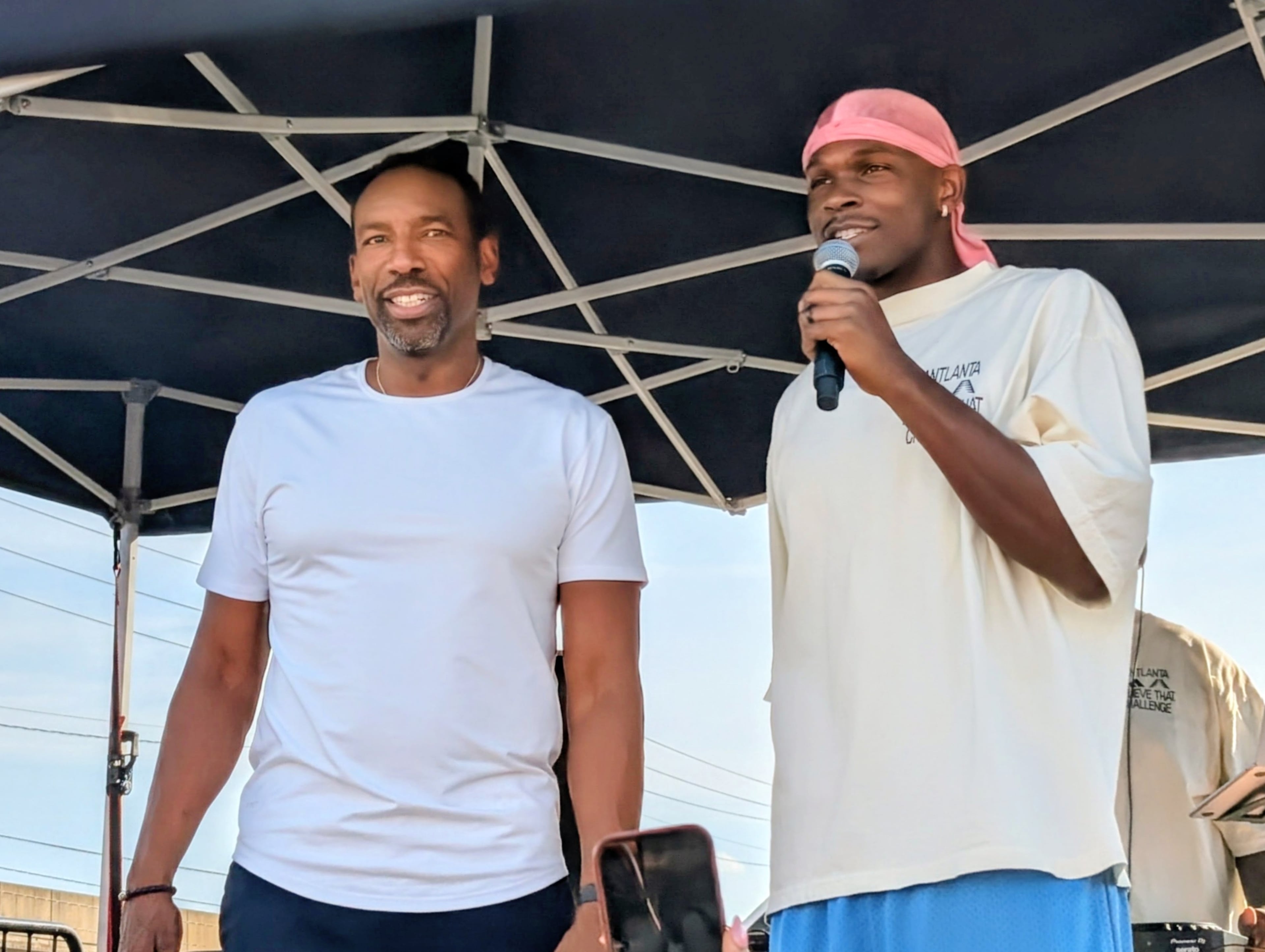
Surrounded by family, childhood friends and dozens of young fans, Edwards, 25, stood next to Mayor Andre Dickens for a photo, the two flashing an upside-down peace sign in a familiar salute to Atlanta.
Edwards’ day job takes him more than 1,200 miles from Atlanta to Minnesota, where he stars for the Timberwolves.
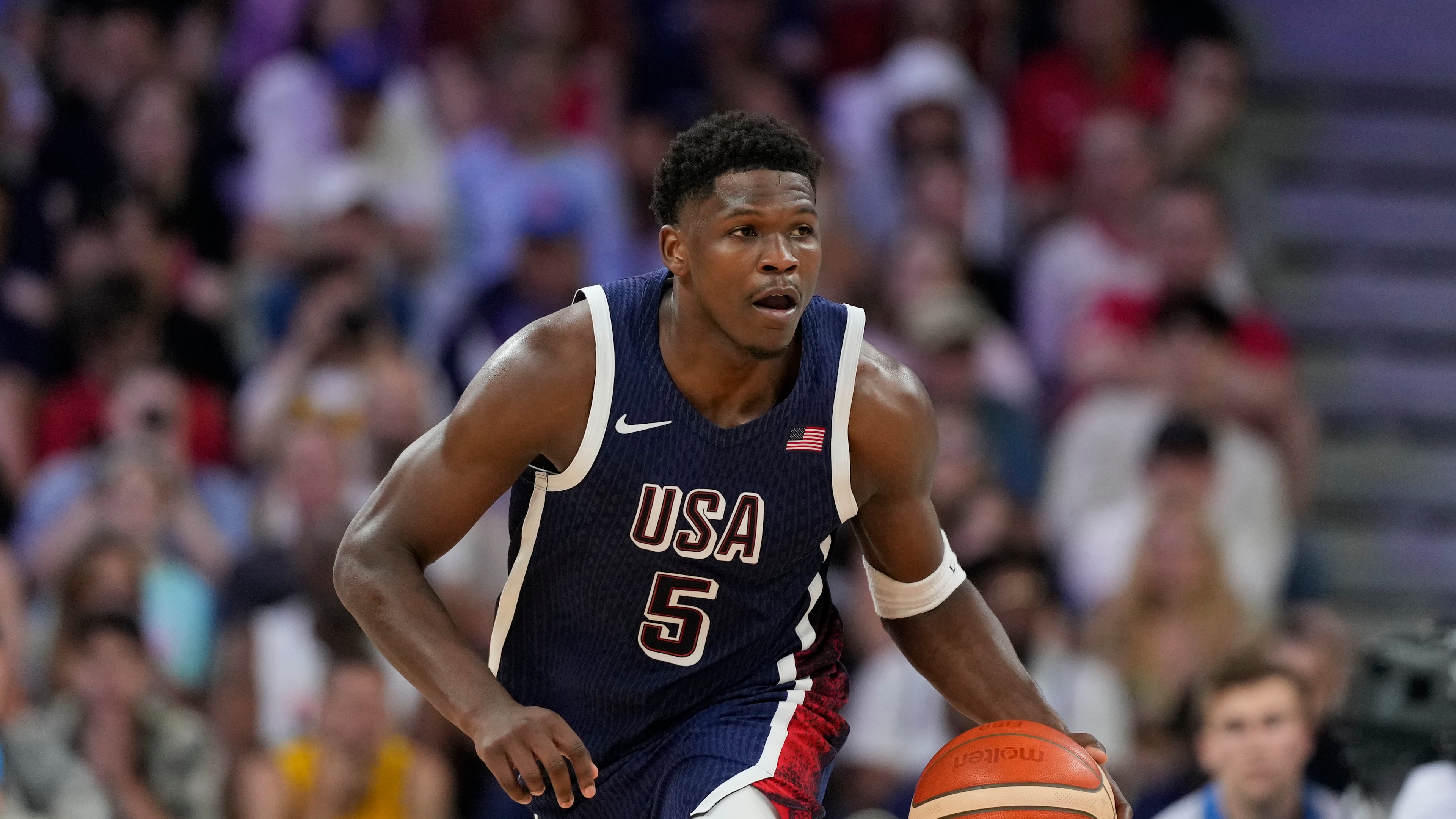
He’s traveled the world representing the United States as a member of Team USA in the 2023 FIBA Men’s World Cup in the Philippines and the 2024 Summer Olympics in Paris.
But no matter where he lays his beloved Atlanta Braves hat, the ATL stays with Edwards wherever he goes.
“Ant Man never forgot where he came from,” Mayor Dickens shared with me after congratulating Edwards on his success. “This dude plays for Minnesota, but he represents the ‘A’ almost every day, even at news conferences where he wears the Atlanta gear. He knows that Oakland City ATL made him, and he’s proud of that, and I’m proud of him for that.”
‘When you see that ‘A,’ you know exactly what time it is.’
Edwards embodies Atlanta. You hear it in his matter-of-fact speech and see it in his mannerisms and the clothes he wears.
As Mayor Dickens noted, Edwards makes no apology for wearing an Atlanta Braves hat during news conferences in Minnesota or when he travels around the world as a member of Team USA.
For Edwards, the Braves hat represents something bigger than baseball.
“It’s not even just about the team; it’s about taking the city with me everywhere I go,” Edwards explained. “When you see that ‘A,’ you know exactly what time it is.”
Atlanta isn’t just a city. It’s a movement, an emotion, a character in its own story.
Growing up here gives you a certain self-assurance, an instinctive sense that you can hold your own wherever you go. Even if you find yourself in an exchange with a former U.S. President.
At the Paris Olympics, Edwards wore his Braves hat with a tilt to the side à la the early 2000s. T.I.
When former President Barack Obama playfully questioned his credentials on the court, Edwards responded, “I’m the truth,” without hesitation or change in tone. His unflinching retort went viral and was featured in the docuseries “Court of Gold.”
The Obama Foundation later revisited the exchange in a playful video featuring the two, titled “Beef Squashed.”
His bravado in that moment was unfiltered and familiar.
As an Atlanta native who spent part of my childhood in Oakland City, I recognized that undeniable sense of self that you gain when you come from a place where greatness is embedded within the landscape.
That same belief that barriers could be broken became the foundation for a phrase that Edwards carries with him: “Believe That.”
“You look around and see people from your exact same neighborhood making it big in music, business, sports; it puts this crazy confidence in you,” Edwards shared with me. “It makes you feel like, if they did it, why can’t I? Then you put in the work to make it happen. That’s (the meaning of) ‘Believe That.’”
‘Atlanta Built Me’
Incorporated in 1894, Oakland City is a neighborhood rich in history. Its landmarks include the former practice field of the Negro leagues’ Atlanta Black Crackers and Fort McPherson, a former U.S. Army installation whose grounds now include Tyler Perry Studios.
But Oakland City also endured decades of disinvestment and urban neglect, creating challenges for families raising children in the neighborhood.
“Oakland City was not such a good area,” Edwards’ aunt, Yolanda Harris, said. “But my mom and my sister kept them busy with sports. They didn’t have time to get in trouble. (Anthony) has never been in trouble.”
Edwards, who first excelled in football with the Adamsville Vikings youth team, sharpened his competitive instincts playing basketball against neighborhood kids and his older brother, rapper bdifferent, in their grandmother’s backyard.
“We always had a basketball goal in our backyard,” bdifferent said. “And being older, I was in middle school and high school before him, so he got a chance to see me play. He (saw) me put the work in, and he just took it and ran with it.”
Oakland City helped shape the toughness and resilience Edwards brings to the court today, whether he’s dunking over taller defenders or attacking the basket without hesitation.
Edwards came out scorching hot to open the 2026–27 NBA season, averaging 33.3 points per game. However, an arthroscopic procedure this week on his ailing right knee will sideline him for two months. Still, if his past is any indication, Edwards has never been one to stay down for long, and a comeback is in his nature.
“Nobody hands you anything; you gotta put in the work and then go take it,” Edwards said, describing the mindset he developed as a youth in Oakland City. “Those are lessons I learned that will always stay with me on and off the court.”
But even the fiercest battles Edwards faced on the court pale in comparison to some of the hardships he endured off the court.
At age 14, Edwards lost his mother, Yvette Edwards, and grandmother, Shirley Edwards, to cancer in a span of seven months.
The losses brought Edwards and his older siblings (Antonie, Antoinette, bdifferent) even closer. For Edwards, sports offered a place of refuge and a reason to keep moving forward.
“After his mom died, he really locked in,” said Messiah Thompson, a childhood teammate who watched Edwards become increasingly focused and driven.
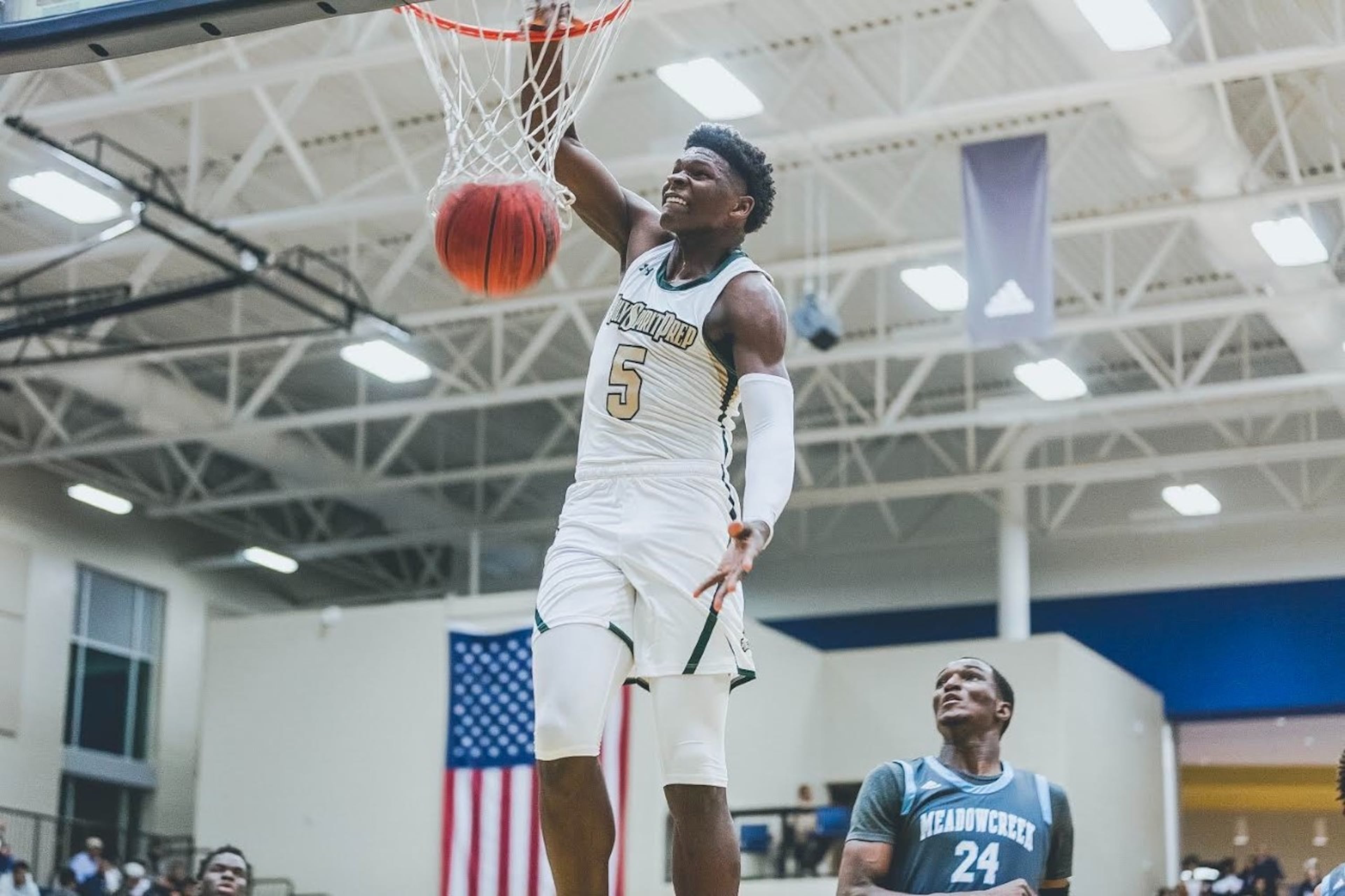
Edwards emerged as one of the nation’s top basketball prospects, playing at Therrell High School before finishing his prep career at Holy Spirit Preparatory School.
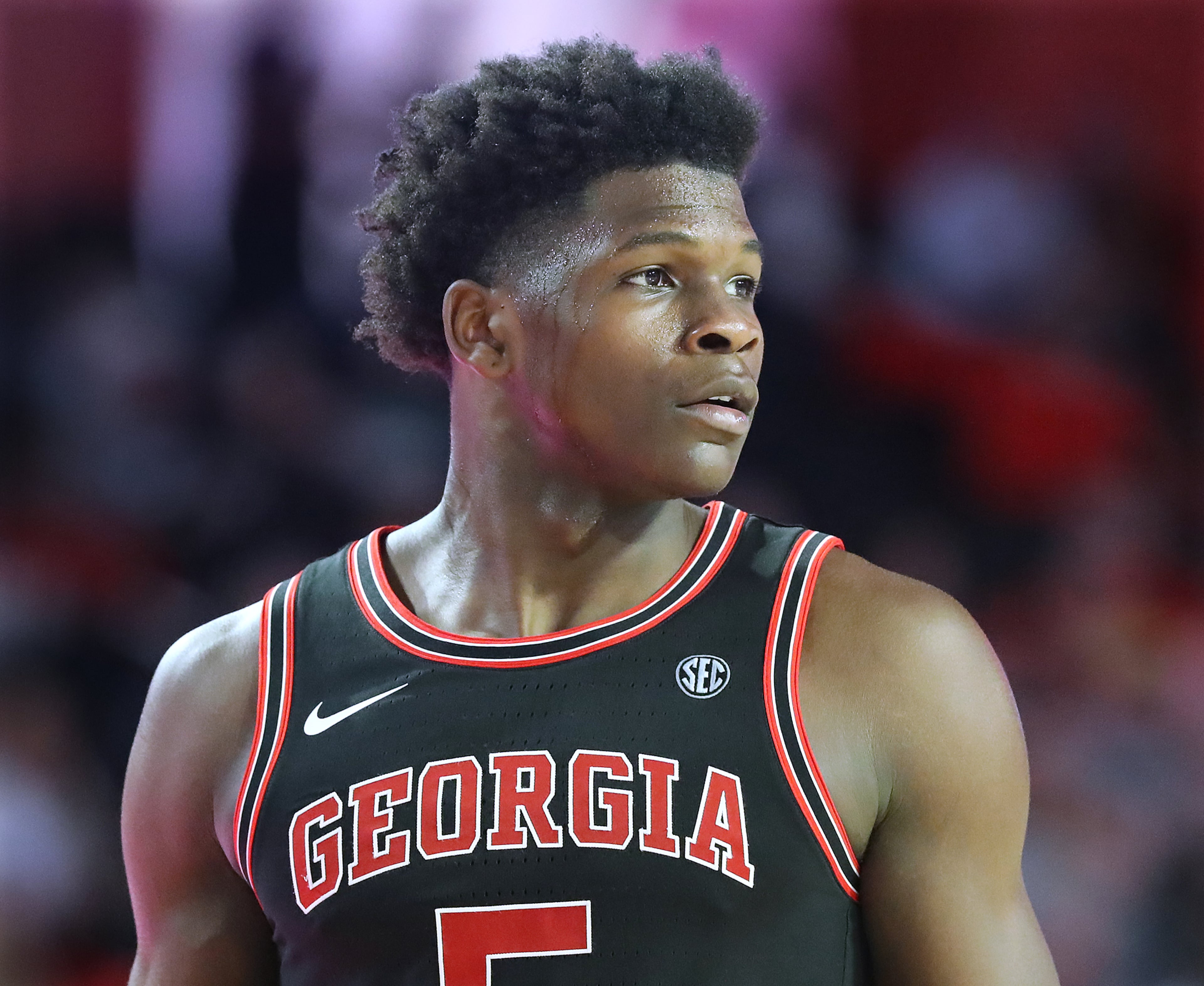
Following one season at the University of Georgia, the Minnesota Timberwolves selected Edwards No. 1 overall in the 2020 NBA Draft.
Edwards quickly established himself as one of the NBA’s rising stars, helping transform the once-struggling Timberwolves into Western Conference contenders.
Before the age of 25, he has already led the team to five playoff appearances and two Western Conference finals.
His star power also extends beyond the court.
He co-starred in the Adam Sandler film “Hustle,” and his production company, Three-Fifths Media, produced the Amazon docuseries “Serious Business with Anthony Edwards.”
More recently, Edwards launched “Minnatlantasota,” a series of sketch comedy commercials promoting his AE3 signature sneaker, with Edwards playing a late-night talk show host.
In the trailer, he delivers a monologue that pokes fun at LeBron James, fellow Atlanta native Jaylen Brown, New York Knicks’ star Jalen Brunson, and his new teammate, LaMelo Ball.
But the title is more than a punchline.
“Minnatlantasota” reflects Edwards’ ongoing bond to the hometown he will never leave behind.
“Atlanta built me, and Minnesota has embraced me,” Edwards said in response to the show’s title. “It’s two totally different worlds, but they both got my heart now.”
From admiring Atlanta legends to becoming one
Along Lee Street in Oakland City, a mural depicts Edwards alongside his mother and grandmother, the two women who helped raise him.
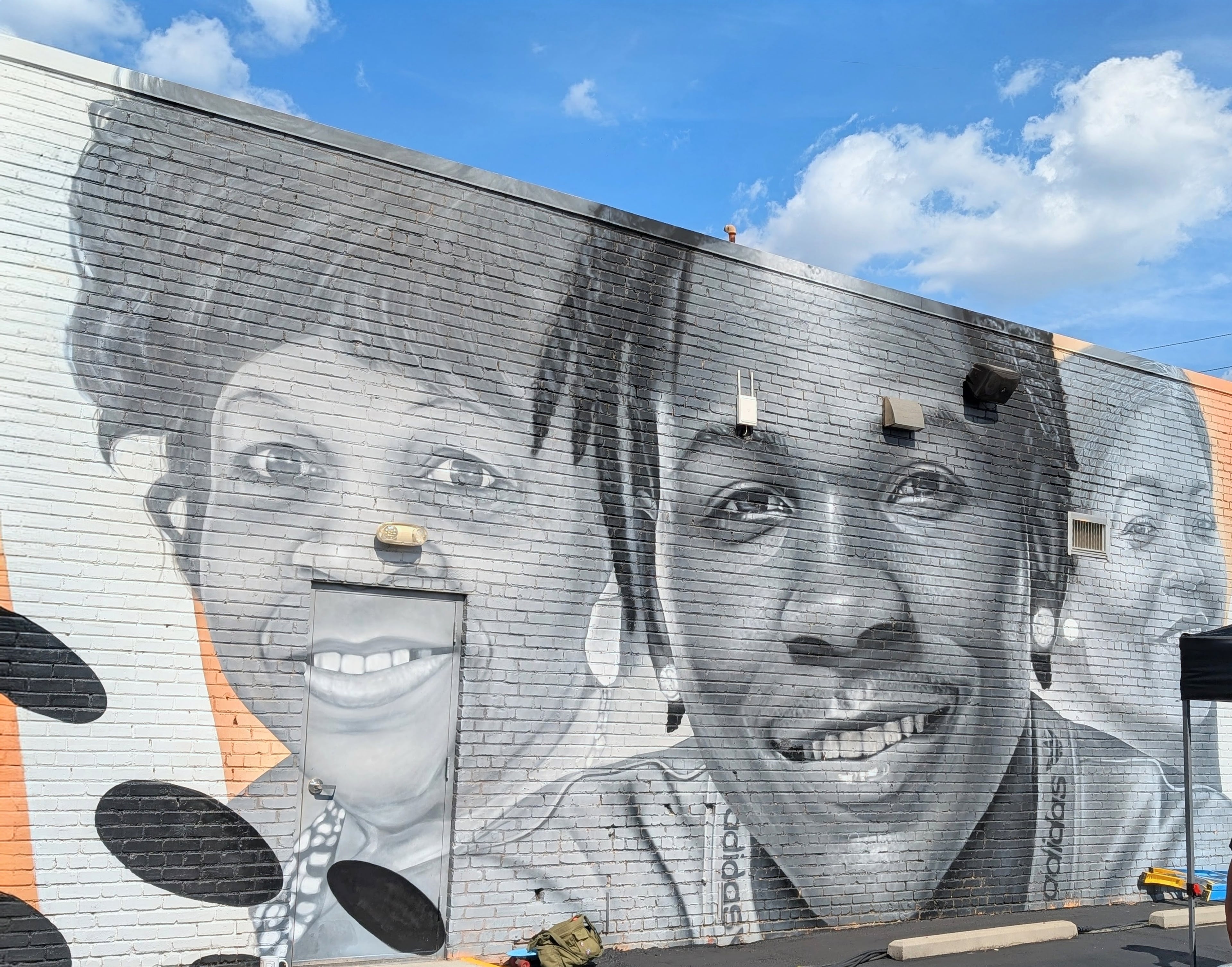
During Edwards’ homecoming, the mural served as the inspirational backdrop for a one-on-one basketball tournament featuring teenage girls and boys from the neighborhood.
Edwards, sitting next to Dickens on a stage, watched the games and later offered words of advice to the young athletes.
“I want them to look at me and know that they can make it too,” Edwards said. “I walked the exact same streets, played on the exact same concrete. Hard work and belief can take you far.”
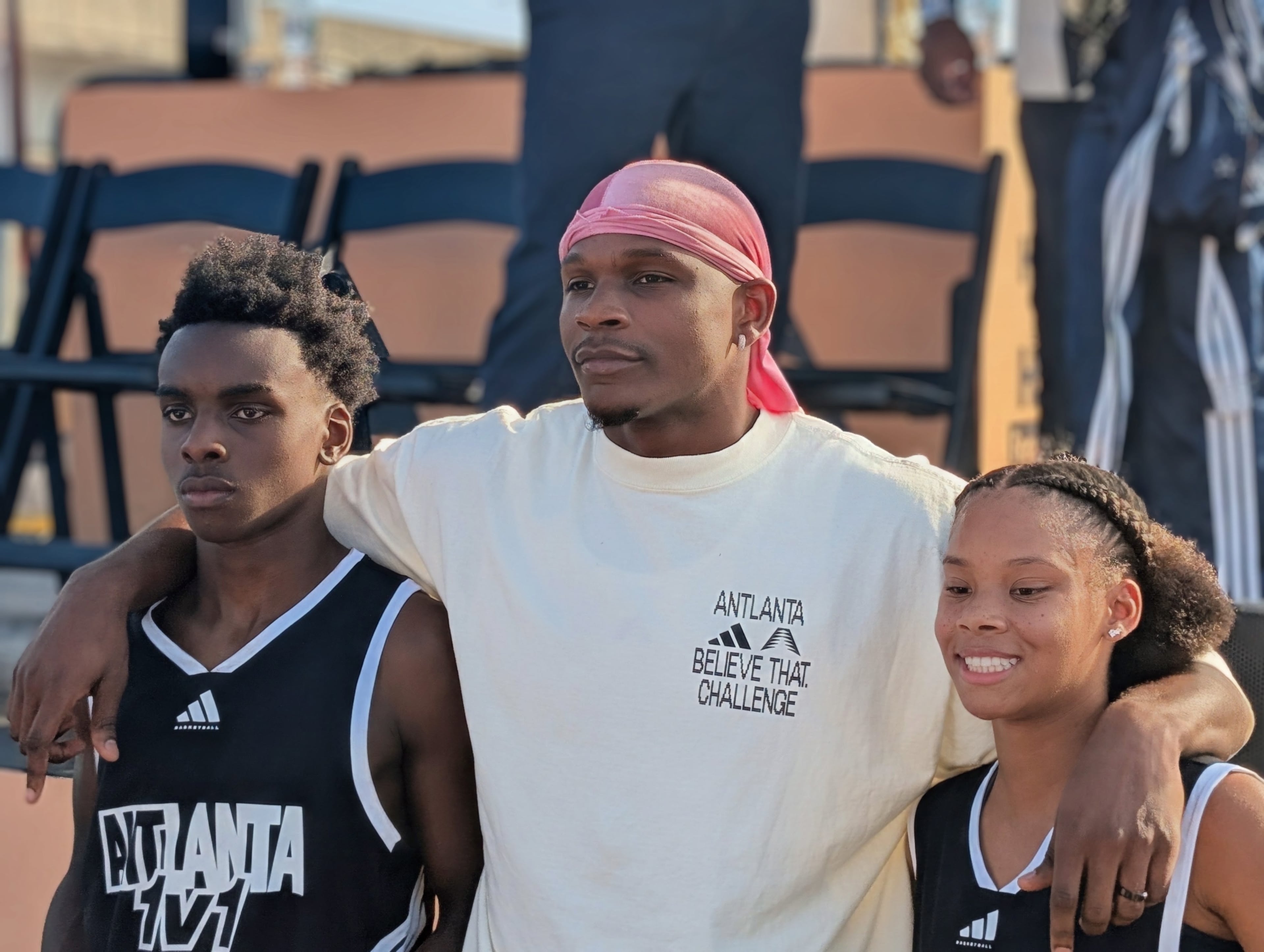
Growing up, Edwards admired Atlanta legends who had taken their talents from the city’s neighborhoods to the world stage.
Now, his own story is part of that legacy.
“There’s no place like the ‘A’; we set the trends,” Edwards said. “To be in that same conversation with the legends of this city — musicians, athletes, whoever — that’s crazy.”
A.R. Shaw is an Atlanta-based journalist and author of “Trap History: Atlanta Culture and the Global Impact of Trap Music”; his work has appeared in The Guardian, ABC News, NPR, and BBC.
Become a member of UATL for more stories like this in our free newsletter and other membership benefits.
Follow UATL on Facebook, on X, TikTok and Instagram.