
Atlanta artist Fabian Williams imagines the future in ‘Mothership Sirius B’
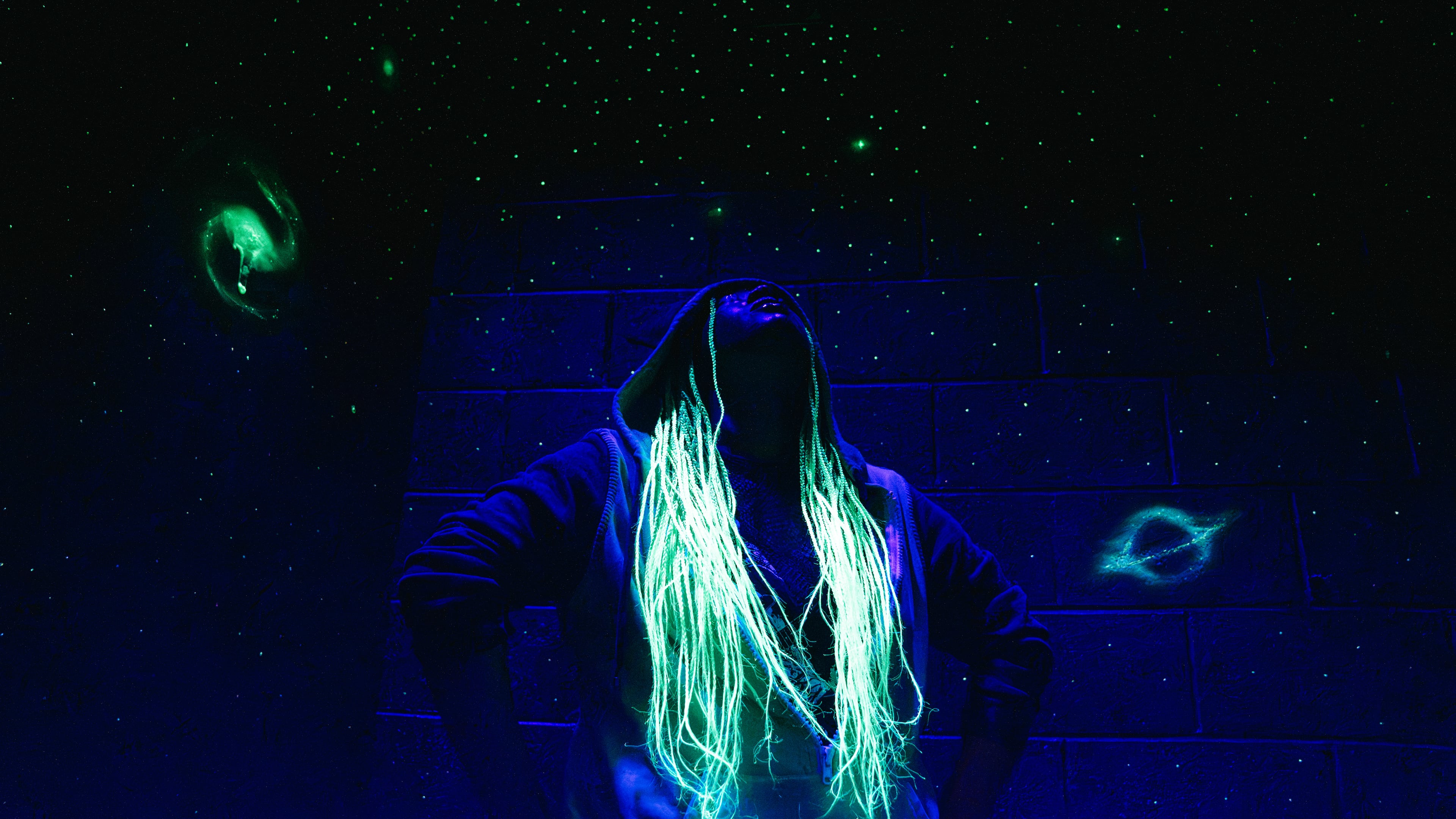
Fabian Williams has spent years painting Atlanta’s history across the city’s walls. Now, he wants Atlantans to think about what comes next.
The North Carolina-born artist, who also goes by “Occasional Superstar,” is best known for murals that explore Black history, culture and politics. His work includes a larger-than-life mural of civil rights activist Hosea Williams in Old Fourth Ward and a South Atlanta portrayal of the 1906 Atlanta Race Massacre.
But inside his latest project, “Mothership Sirius B,” Williams turns his attention toward the future and the choices being made today that could shape it.
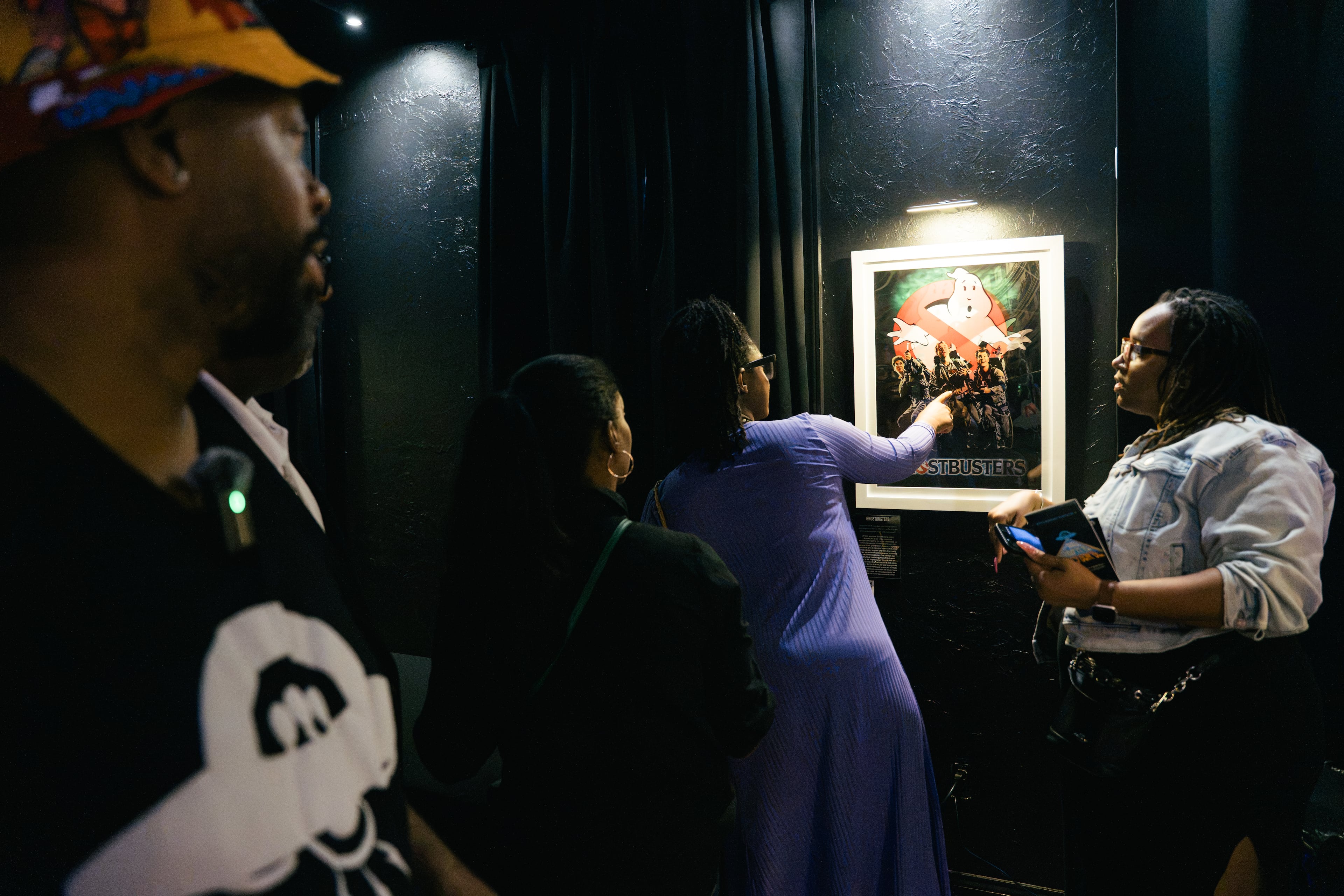
The interactive, three-floor exhibition at 12 Jackson St. in Edgewood features 51 original works and takes visitors on a journey through three eras: the 1950s through the 1970s, or “what it was”; the 1980s through the 2000s, “what it is”; and an imagined future, “what it’s gon’ be.”
Through reworked science-fiction imagery, artificial intelligence, lenticular art and his own invented system of hieroglyphics, Williams explores race, immigration, gender, surveillance, corporate power and technology while asking visitors to consider what kind of future they want to create.
For Williams, a self-proclaimed history and Afrocentric studies nerd and lifelong science-fiction fan, the idea grew from his uneasiness about how quickly technologies he once encountered only in movies were becoming part of everyday life.
“I was 10 years old when I saw “The Terminator” for the first time,” Williams said. “AI and robots were a foreign concept to me, and the only thing that allowed me to sleep that night was that none of it was real.”
Years later, Williams found himself increasingly discussing those concerns with his wife, Sindy Guerrero-Williams, who eventually challenged him to do something with them.
“I’ve been a sci-fi fan since I was a kid, and a lot of the themes that I saw as a child ended up coming real close to where we are right now,” Williams said. “She convinced me to stop complaining, and turn it into art. That’s how the show came about.”
How the mothership came to be
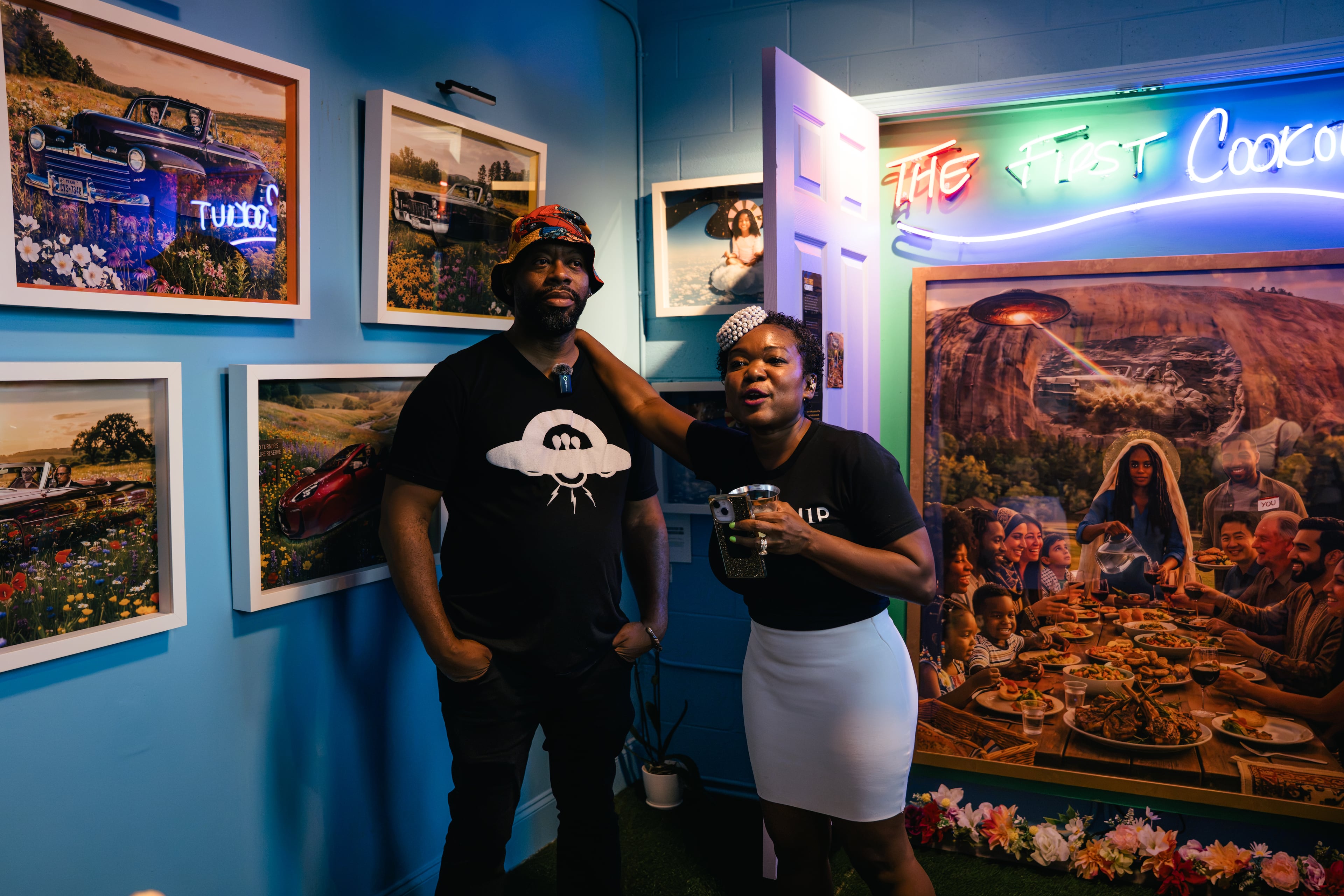
While Williams is the lead artist behind the project, the exhibition became a family collaboration with his wife, Guerrero-Williams, serving as co-producer and creative director.
Guerrero-Williams, an entrepreneur and founder of Dance 411 Studios, said creating together has long been a natural part of their relationship.
“We create together, but for us it’s not a job, for us it’s not planned,” Guerrero-Williams said. “It is really just our everyday life.”
Williams said his wife often pushes him to see possibilities he might otherwise overlook.
“She balances me in a way and just introduces me to things that I’m just not thinking about and not considering,” Williams said. “And that always sparks new ideas and new avenues of creativity.”
The exhibition’s name draws from the Dogon people of Mali and traditions surrounding their knowledge of the Sirius star system. The exhibition describes “Mothership Sirius B” as a celebration of the idea that marginalized communities have long possessed knowledge and ways of imagining the future that have often been overlooked.
Williams and Guerrero-Williams also brought other Atlanta-area artists into the project, including University of Georgia freshman Lakin Beck, neon artist and business owner Vyvyan Hughes, and visual artist and educator Lori Smith.
Together, they helped Williams build a world that uses the past and present as a starting point for imagining what might come next.
What it was, what it is, what it’s gon’ be
Williams uses lenticular technology in many of the works, allowing viewers to see two different images in the same frame depending on where they stand.
Completing so many pieces in only a few months was no small feat. While Williams enjoys drawing and painting, he incorporated artificial intelligence in producing many of the images.
“Technology is constantly borrowing from everybody and not paying out dividends. So I wanted to take the technology and use it in a way to benefit me, versus it benefiting some very small minority that seems to run the world and taking us to a dark place,” Williams said.
He also covers walls and the bases of paintings with “Fabioglyphs,” his own language inspired by hieroglyphics.
The characters spell out several phrases throughout the exhibit, including “think while it’s still legal” and “plan the future, or the future will be planned for you.”
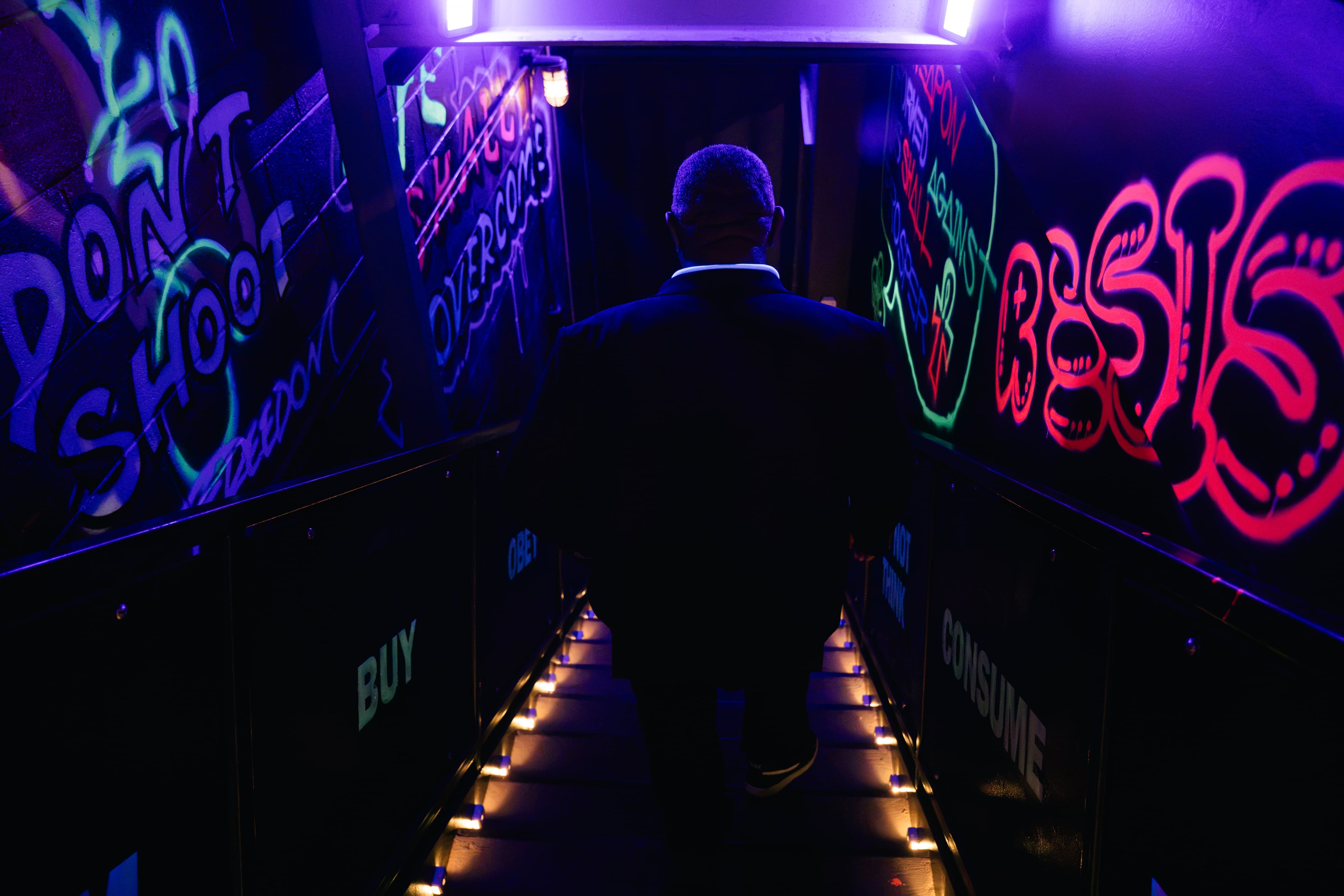
For Williams, science fiction provides a way to connect those warnings to the present.
“(Sci-fi movies) would always frame it as this warning on how things would be if you don’t do anything about it,” Williams said. “Well, nobody’s done anything about it. And here we are.”
Visitors begin on the ground floor with the 1950s through the 1970s, or “what it was.”
Williams reimagines movies and popular culture from the period to explore race, migration and alienation.
“If you notice, in a lot of these movies, it’s all about fear,” Williams said.
He points to a “The Twilight Zone” poster that he reworked as “The Inclusion Zone.”
“‘The Twilight Zone’ was all about using stories to educate people on moral issues that they may be missing. The biggest fear of white America in the ’50s was inclusion. So I made it ‘The Inclusion Zone.’”
Nearby is Williams’ reimagining of the 1953 science-fiction film, “It Came from Outer Space,” which explored fear of the unknown. His version reads “It Came from Outside the Border,” replacing an extraterrestrial with a Mexican man.
Williams connects the piece to the Trump Administration’s frequent use of the term “alien” for immigrants.
“Art doesn’t imitate reality, reality imitates art,” Fabian Williams says.
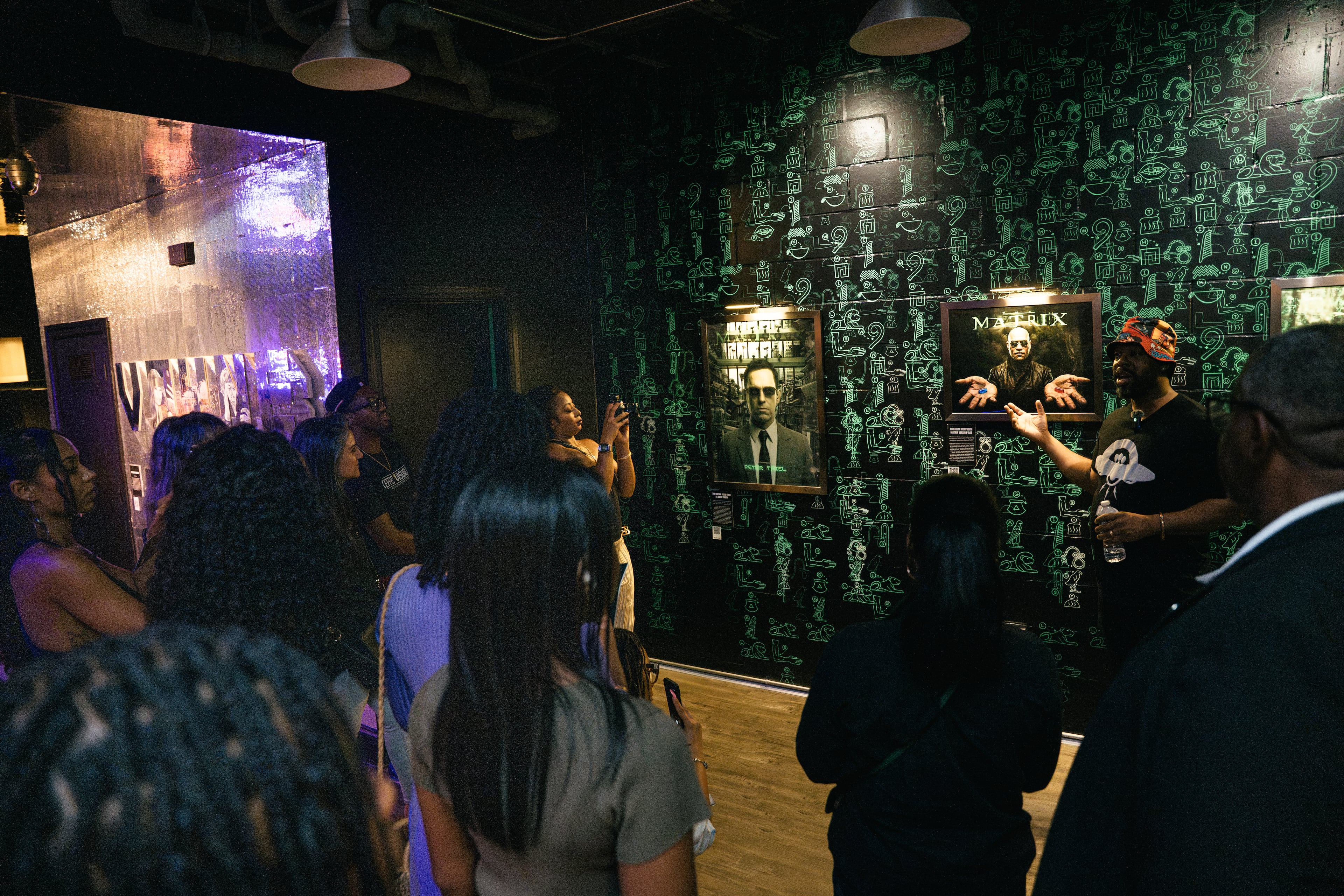
The second floor moves into the 1980s through the 2000s, or “what it is.”
There, Williams transforms the 1985 film “Back to the Future” into “Back to the Past,” replacing Marty McFly with Offred, the protagonist of “The Handmaid’s Tale,” as commentary on women’s rights.
Another work recasts Peter Thiel, co-founder of the technology company Palantir, as Agent Smith from “The Matrix.” Palantir’s technology is used by U.S. defense, intelligence and law enforcement agencies for data analysis and surveillance.
The final floor asks visitors to leave the present behind and enter “what it’s gon’ be,” an imagined future that Williams says is still ours to determine.
“We don’t know what it’s going to be,” Williams said. “But it’s the future that collaboratively we can create, right?”
The project even incorporated the dreams of local elementary school students from the Morgan Oliver School, who envisioned a utopia called “Freedom City.” Williams had previously observed a lack of imagined utopias in the media he consumed, another frustration of his that inspired the exhibit.
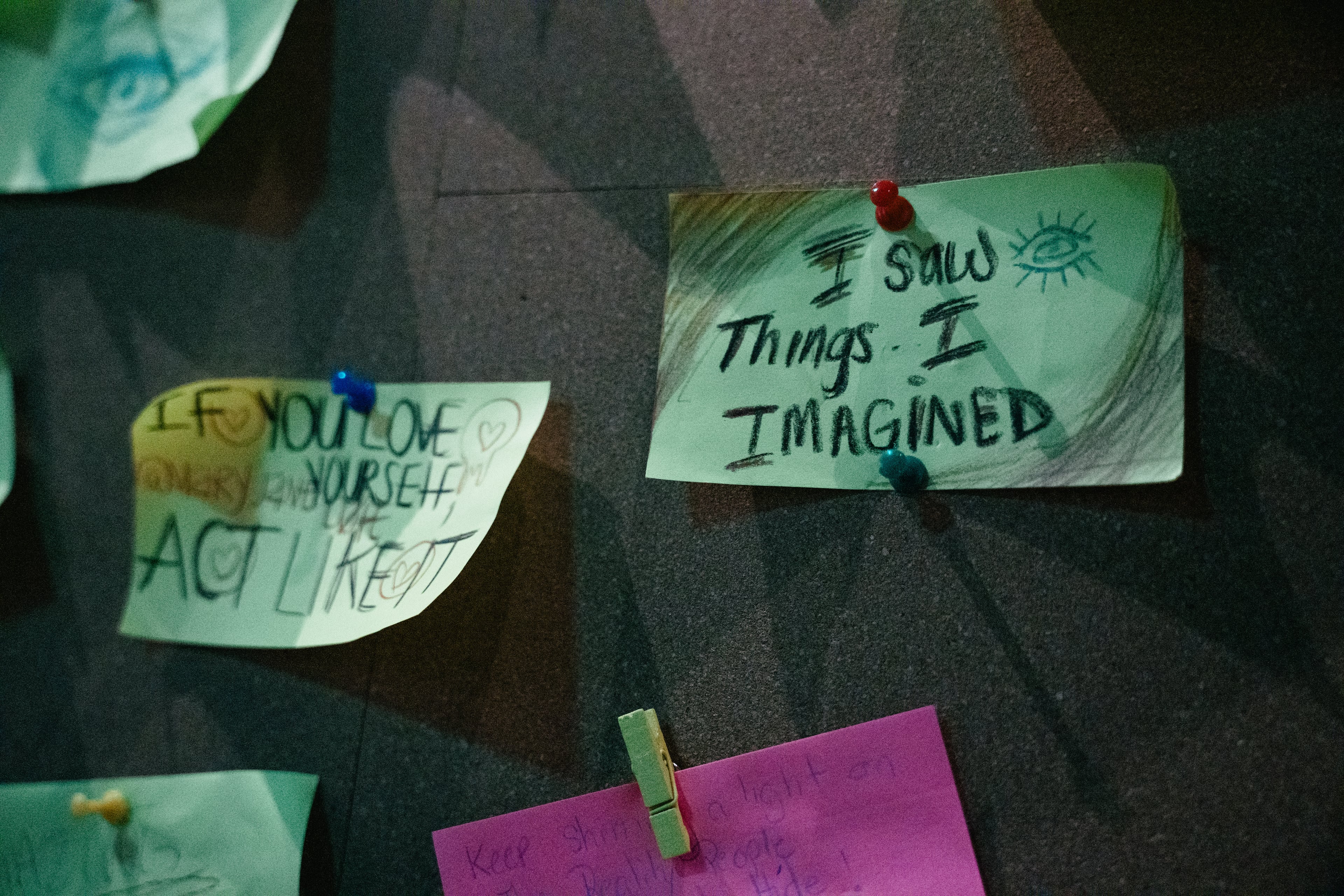
The top floor also gives visitors space to participate in that exercise. An interactive room with beanbag chairs, index cards and pencils prompts them to describe what they want the future to look like.
Williams offers his own vision in his favorite piece, “The First Cookout.” In it, a UFO replaces Stone Mountain’s carvings of Confederate leaders with images of civil rights heroes as a diverse group of people gathers to eat below.
“I think to look at those types of men, the things they represented, and to claim that as part of your heritage is troublesome,” Williams said. “A lot of things that are taking place and leading us into a really bad place, we don’t really confront or think of. And as an artist, I like to just put it in your face. Make it look good, but put it in your face.”
The exhibition extends beyond the paintings through a collaboration with ARTrail. Visitors can scan QR codes to learn more about selected works. With “The First Cookout,” they can upload a selfie and become part of the artwork.
‘It’s just the future’
Williams said he has always had one foot “firmly put in the future,” and he hopes visitors leave “Mothership Sirius B” thinking about what that future should look like and who gets to shape it.
But there is one term he is reluctant to use to describe his work: Afrofuturism.
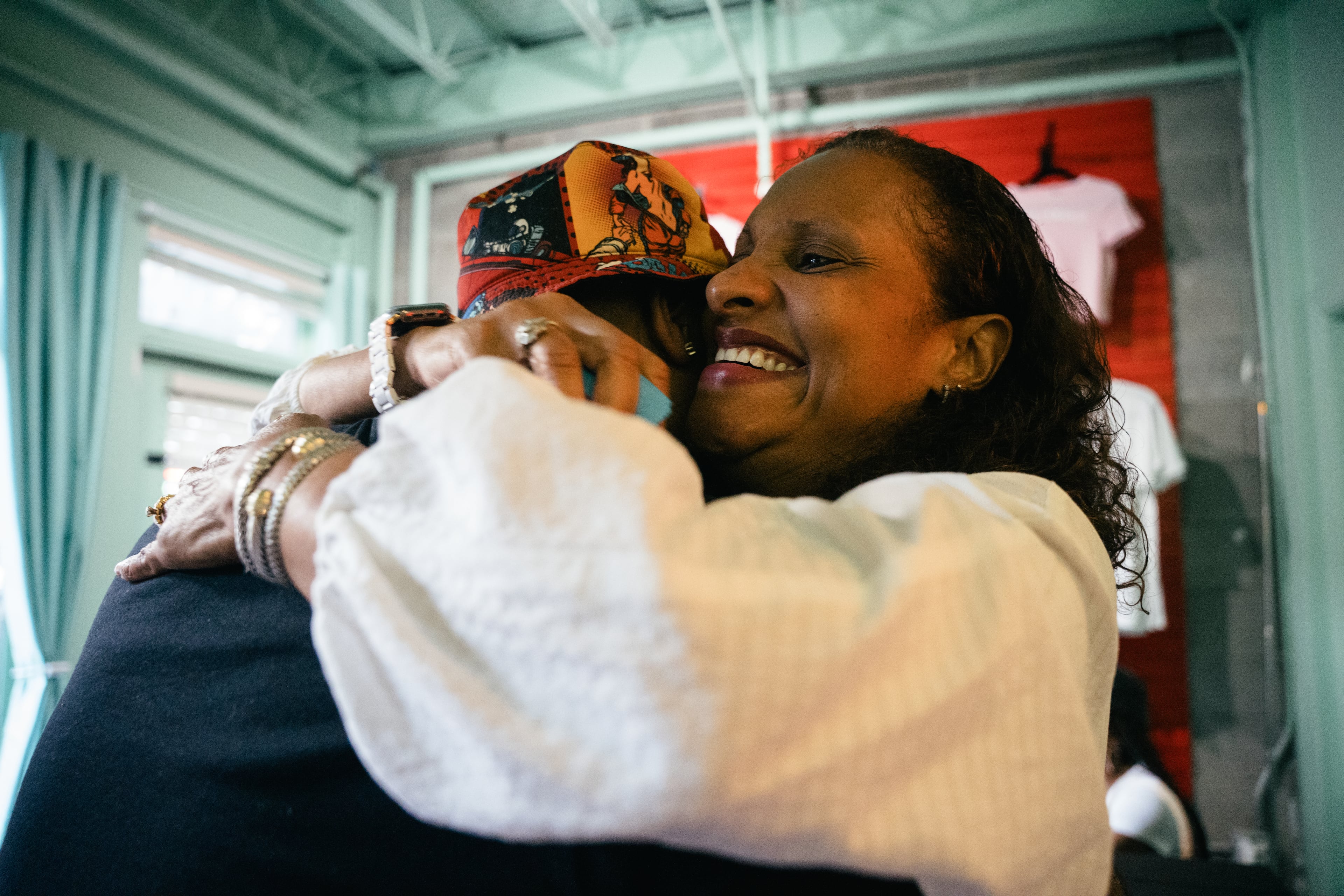
Williams said Afrofuturistic ideas are sometimes treated as something fanciful or separate from reality, rather than simply another way of imagining what the world might become. He also questions why the race of the people imagining the future requires a separate label at all.
“Afrofuturism is a word that keeps coming up,” Williams said. “My thing is, it’s just the future. And the future is amazing with Black people in it.”
If You Go
12 Jackson St. SE, Atlanta, GA 30312.
Thursdays-Fridays, 6 p.m. — 10 p.m.;
Saturdays 11 a.m.— 4 p.m. and 6 p.m. — 10 p.m.;
Sundays 11 a.m. — 3 p.m.
$19-$25. Children, $15.