
Atlanta artist Steve Allen explores Olympics, ancestry at Hammonds House
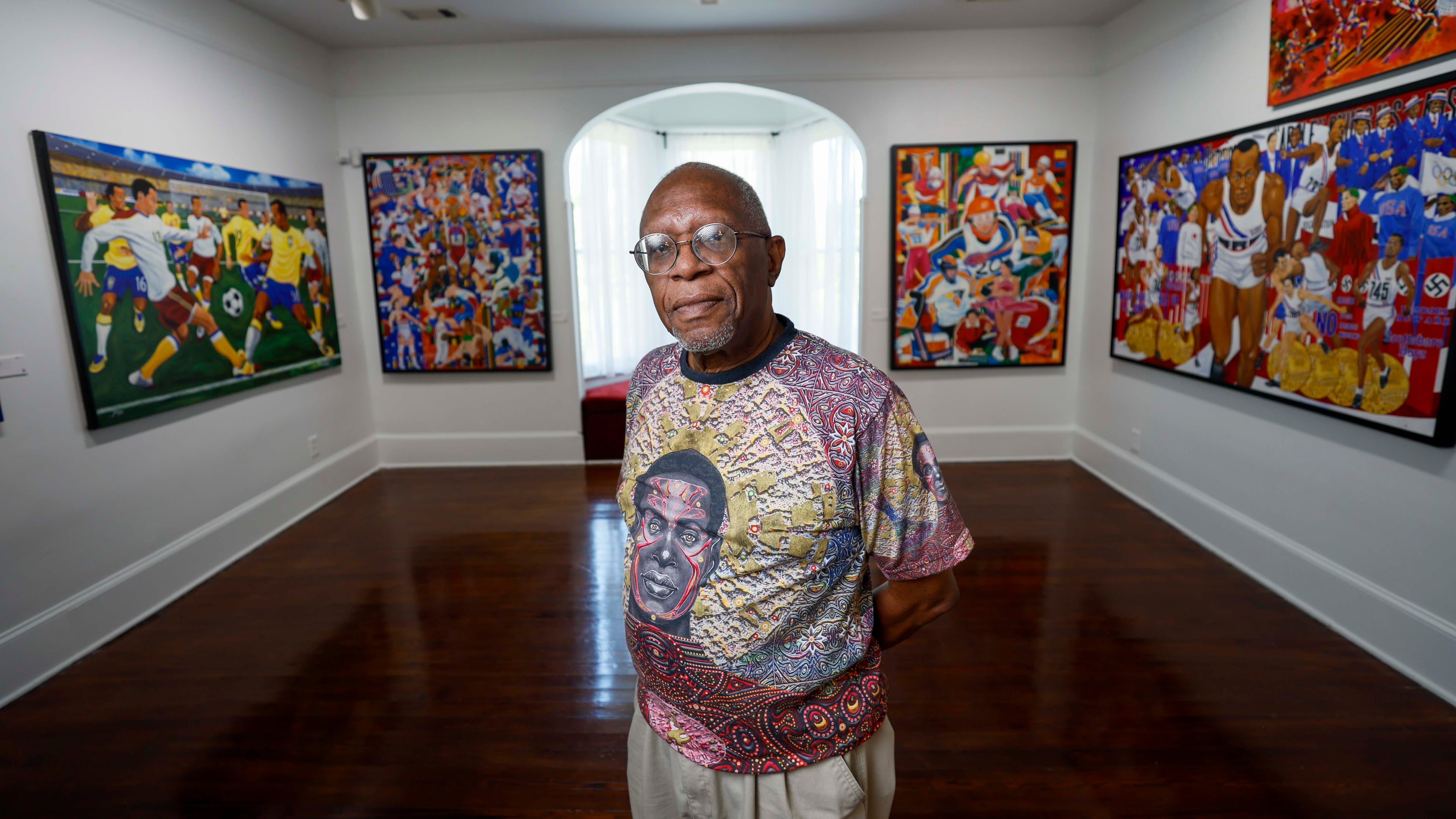

Atlanta artist Steve Allen has painted some of the world’s greatest athletes and biggest sporting events for the last 30 years.
His canvases have captured Olympic champions, the pageantry of the Games and moments of Black athletic triumph, taking his work from Atlanta to Sydney, Athens, Rio de Janeiro and beyond.
But inside the Hammonds House Museum in the West End, the paintings that perhaps say the most about Allen’s evolution as an artist aren’t about sports at all.
Upstairs in the historic Queen Anne home, “O Jogo Bonito (The Beautiful Game)” traces the earlier chapters of Allen’s career. In one painting, a track and field athlete carrying an Olympic torch is surrounded by fellow American athletes. Another painting depicts Jesse Owens at the 1936 Berlin Olympics, with Nazi banners and symbols of America’s Jim Crow segregation sharing the background.
Featuring work Allen created around the Olympic Games and other international sporting events, the exhibition arrived as the FIFA World Cup brought matches and thousands of soccer fans to Atlanta this summer.
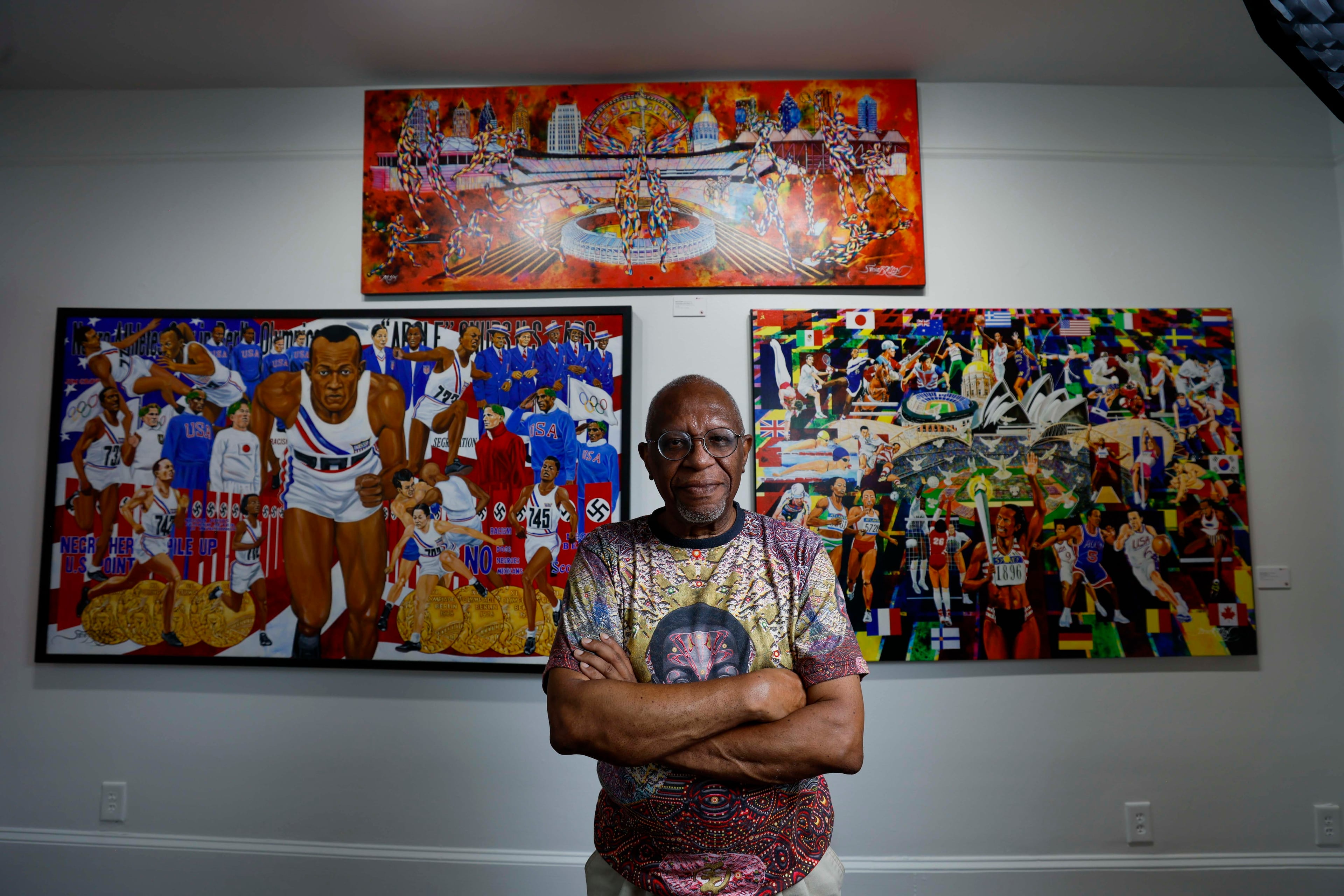
Downstairs, Allen’s work leaves the sporting arena and enters a more personal and spiritual realm.
“Infinite Inheritance” is filled with acrylic paintings layered with gold, silver and copper leaf, geometric patterns and imagery drawn from West African spirituality. Here, Allen explores ancestry, the African diaspora and what he describes as an effort to reconnect Black Americans with histories that existed long before the trans-Atlantic slave trade.
Together, the two exhibitions trace Allen’s artistic evolution, rooted in a life that began in rural North Carolina, continued through the segregated South and eventually brought him to Atlanta, where he created his first painting at 38.
Now, at 72, Allen is using the art form he discovered relatively late in life to look further back, toward the ancestors, traditions and history he says shaped him long before he ever became an artist.
That search for what came before is deeply personal for Allen, whose own story began far from museums, galleries and Olympic stages.
From a sharecropper’s shack in North Carolina
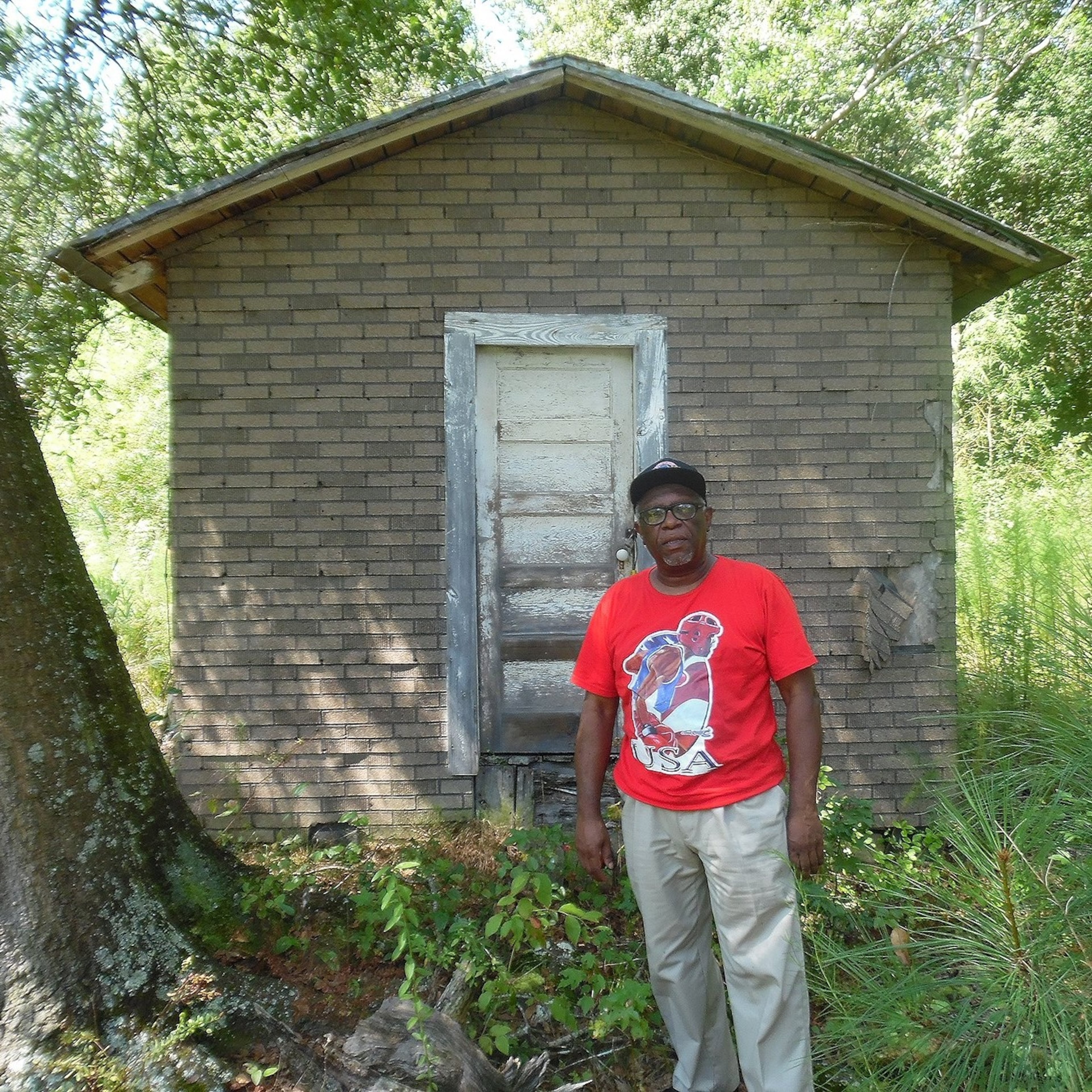
Allen was born in 1954 in a one-room sharecropper’s shack in Norrington Crossroads, near cotton and tobacco fields. The building, he said, was a repurposed World War II barrack.
Calling his first home a “hut,” Allen said he keeps a photograph of it as a reminder of where he came from.
He grew up amid segregation and later moved with his family into public housing in Raleigh.
Although he grew up near the North Carolina Museum of Art, Allen said he rarely saw Black people or his own experience reflected there.
Enlisting in the U.S. Air Force at 16 years old was Allen’s ticket out.
“I knew something was bigger than Raleigh, and I just had that in me from early on,” Allen said.
From his first painting at 38 to the Olympics
Allen didn’t discover visual art as a professional path until he was nearly 40.
While living in Los Angeles, Allen received his first set of paintbrushes from a friend who had found them in a street gutter. But he didn’t create his first painting until relocating to Georgia in 1992, following the riots sparked by the Rodney King verdict.
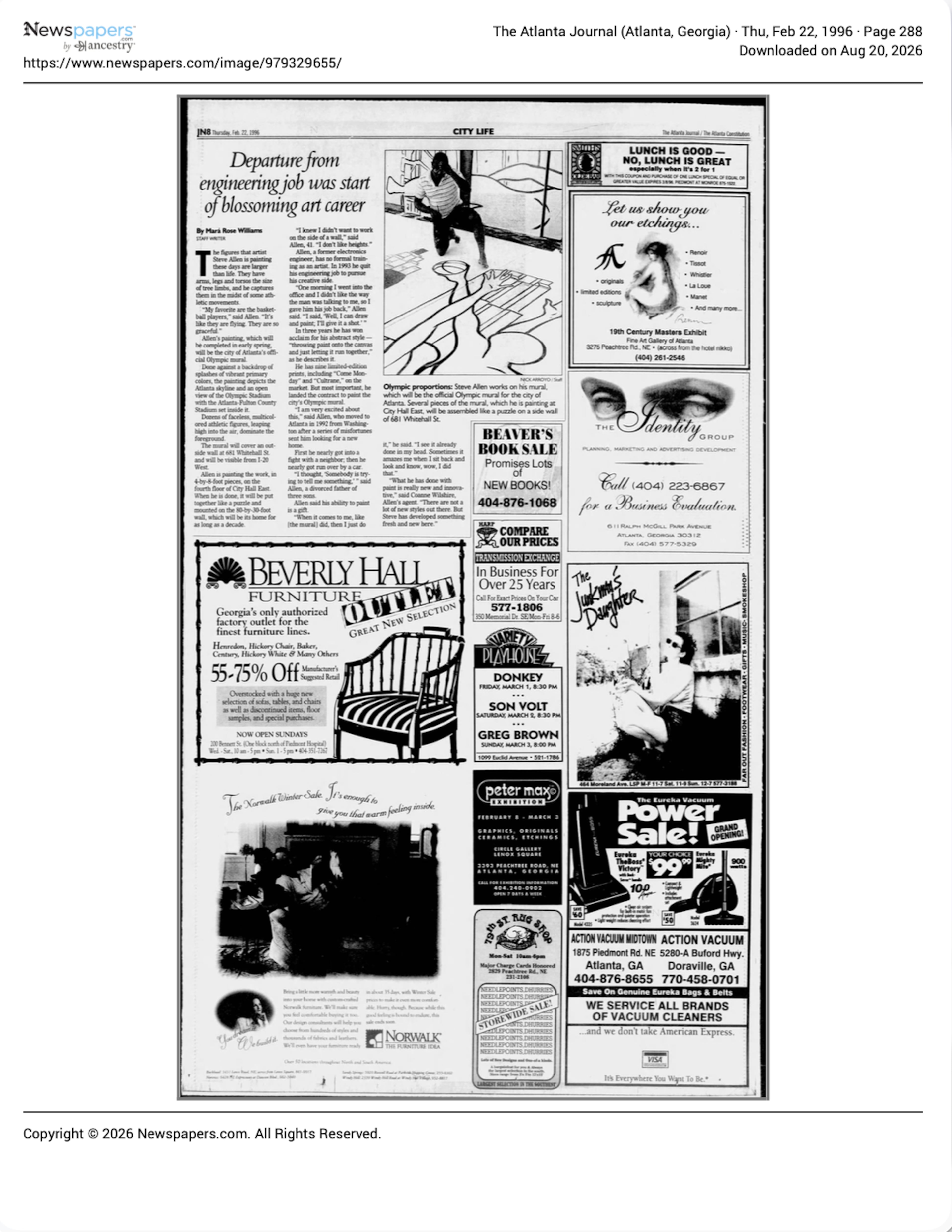
Allen was working as a copy technician when, at 38, he quit his job and painted his first piece, “Come Monday,” inspired by laundry days during his childhood in North Carolina.
In 1993, Allen volunteered for the mayoral campaign of Bill Campbell, a former classmate from Raleigh. That connection led to work for Campbell’s 1994 inauguration and, eventually, murals tied to Atlanta’s 1996 Olympic Games.
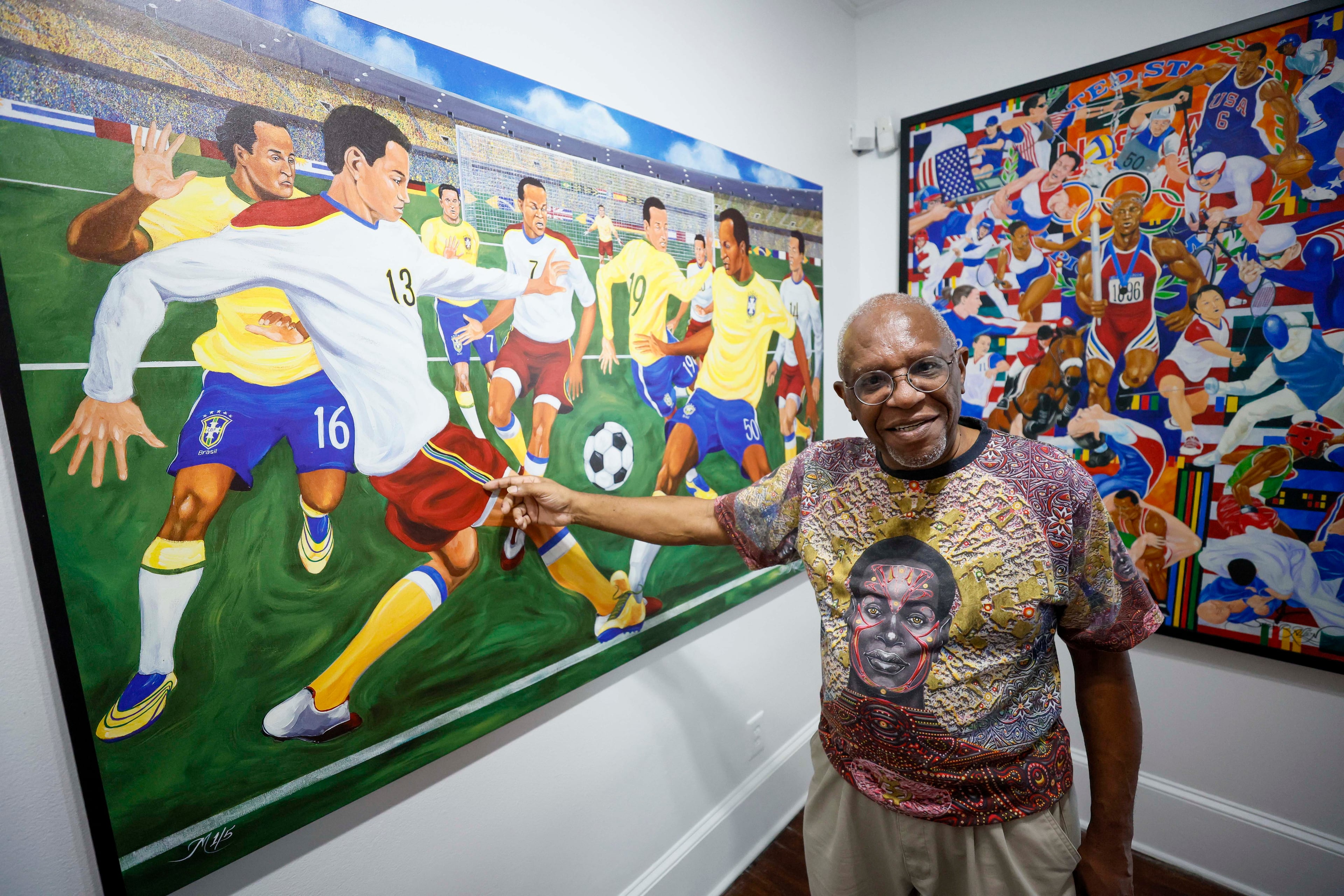
“One thing led to another,” Allen said. “I’ve been blessed that stuff comes my way.”
With no formal art training, Allen became an official artist for the 1996 Olympics. This year marks the 30th anniversary of that first commissioned project for the U.S. Olympic Committee, which launched a three-decade connection between his art and the Games.
The past becomes the present
Today, Allen uses his paintbrushes to explore African ancestry, often drawing from his own lineage.
“I was fortunate enough that I knew my grandparents,” he said. “I give homage to those who came before.”
Hammonds House Museum Board Chair Sue Ross said Allen’s work has evolved from the figurative style of his earlier career toward abstraction.
She called it “divine inspiration.”
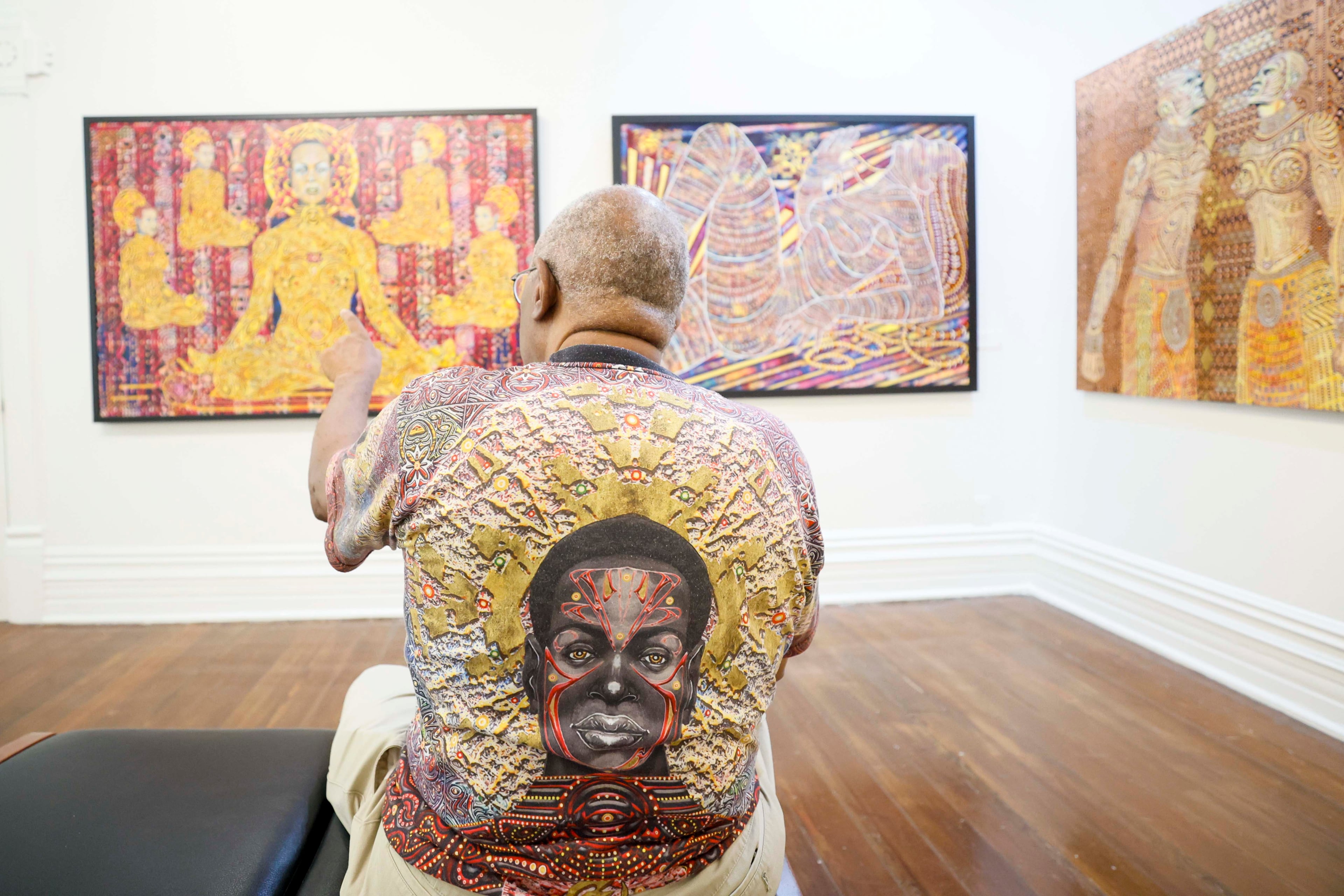
“(Allen) believes it’s the ancestors flowing through him, inspiring him to do this,” Ross said. “What he’s doing now is different from where he started.”
Hammonds House Museum gallery manager Lydia Kimbrough added a guide to the downstairs exhibition to help visitors understand the West African spiritual symbols in Allen’s paintings.
“I love that I can see the math within his artwork,” she said. “He enjoys talking about that and letting people know about all the symbols that go into each piece.”
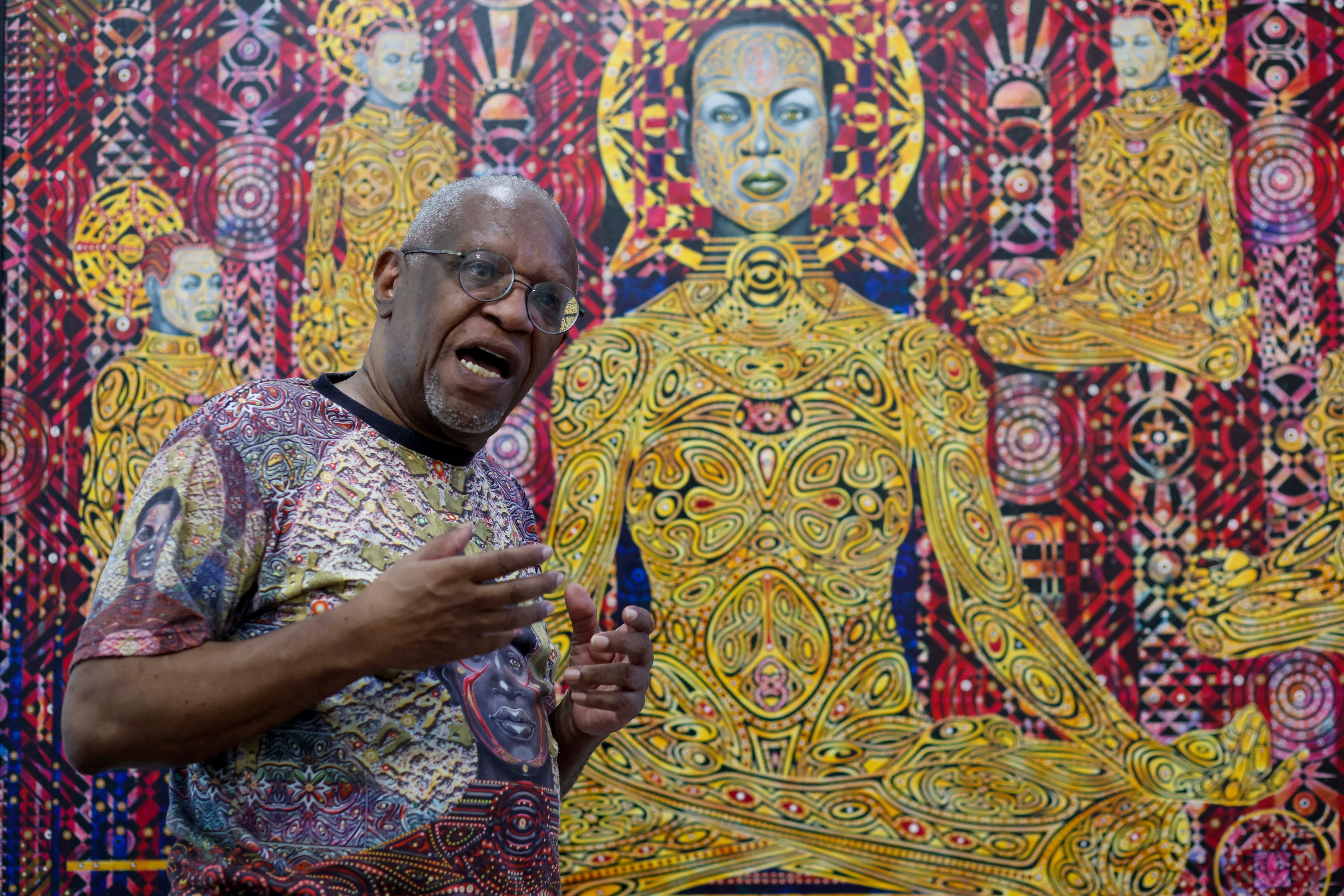
Allen also encourages younger generations to give deference to Black American history.
He said he has donated nearly $2 million worth of artwork to historically Black colleges and universities, including Florida A&M and Stillman College in Alabama.
The Atlanta University Center’s Robert W. Woodruff Library also received works from Allen valued at $370,000.
Allen says he wants Black Americans to reconnect with their roots and take pride in their history and culture, using his art to explore that inheritance through color, patterns and symbolism.
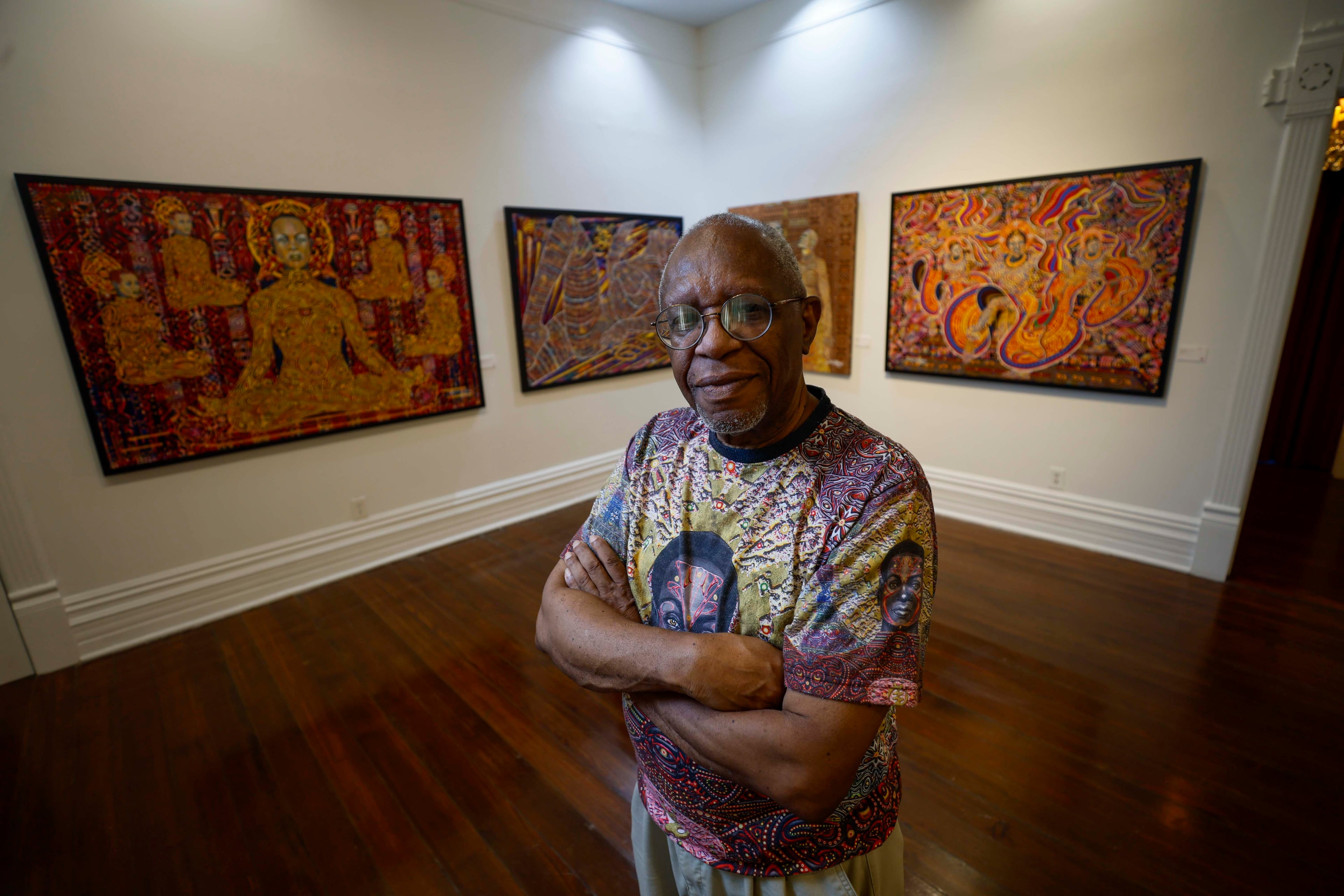
“This is just an infinite progression and integration of what has been and what we are,” Allen said. “This is a testament to how fantastic, how great, how strong we are mentally, psychologically.”
IF YOU GO
Infinite Inheritance & O Jogo Bonito (The Beautiful Game) Works by Steve R. Allen
11 a.m.-5 p.m. Saturday and 12 p.m.-5 p.m. Sunday. Hammonds House Museum, 503 Peeples St. SW, Atlanta. 404-612-0481. hammondshousemuseum.com