
Atlanta nonprofit Nerds for Literacy wants to get more kids reading on their terms
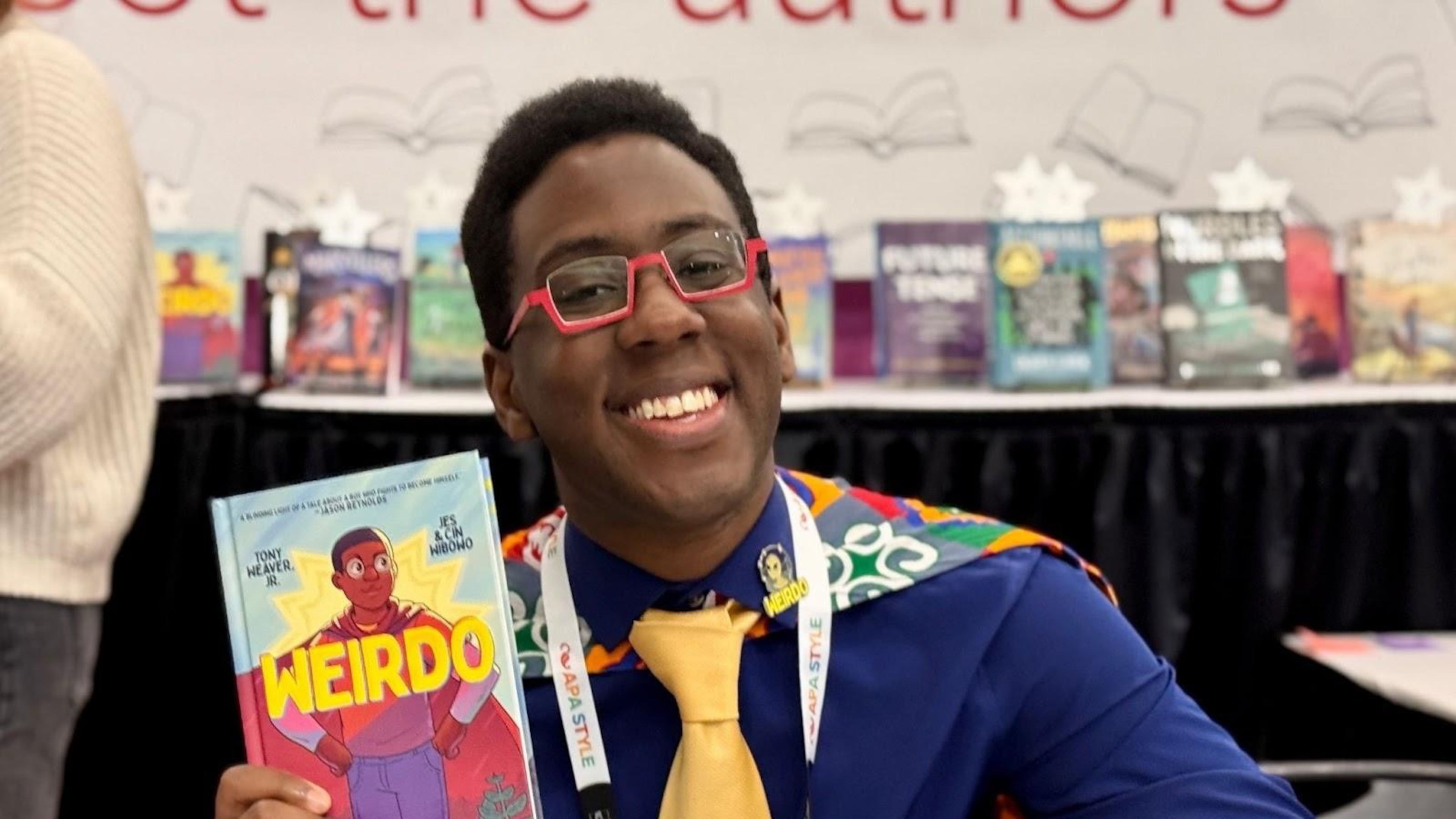

Nerds for Literacy seeks to change the youth literacy narrative — especially if that means finding alternate books for children to read.
Spearheaded by Atlanta native Tony Weaver Jr., the nonprofit organization tackles low reading levels among economically marginalized middle school students. Weaver believes children need to read more books and topics that interest them, rather than educators basing their academic success on reading comprehension from dated literary classics.
Growing up in Decatur, Weaver said reading was important to him but he was struck by the lack of literacy among his peers. He felt his sixth-grade classmates were just as smart as he was, but was confused as to why they were not designated as academically gifted students.
Weaver’s award-winning graphic memoir “Weirdo” was published in 2024. Based on his childhood, the book tackles Weaver’s wavering self-confidence as he is bullied for his interest in anime and video games.
The book has been honored by the New York and Chicago public libraries, Publishers Weekly and named one of People Magazine’s best books of the year.
In 2018, Weaver was recognized by Forbes 30 Under 30.
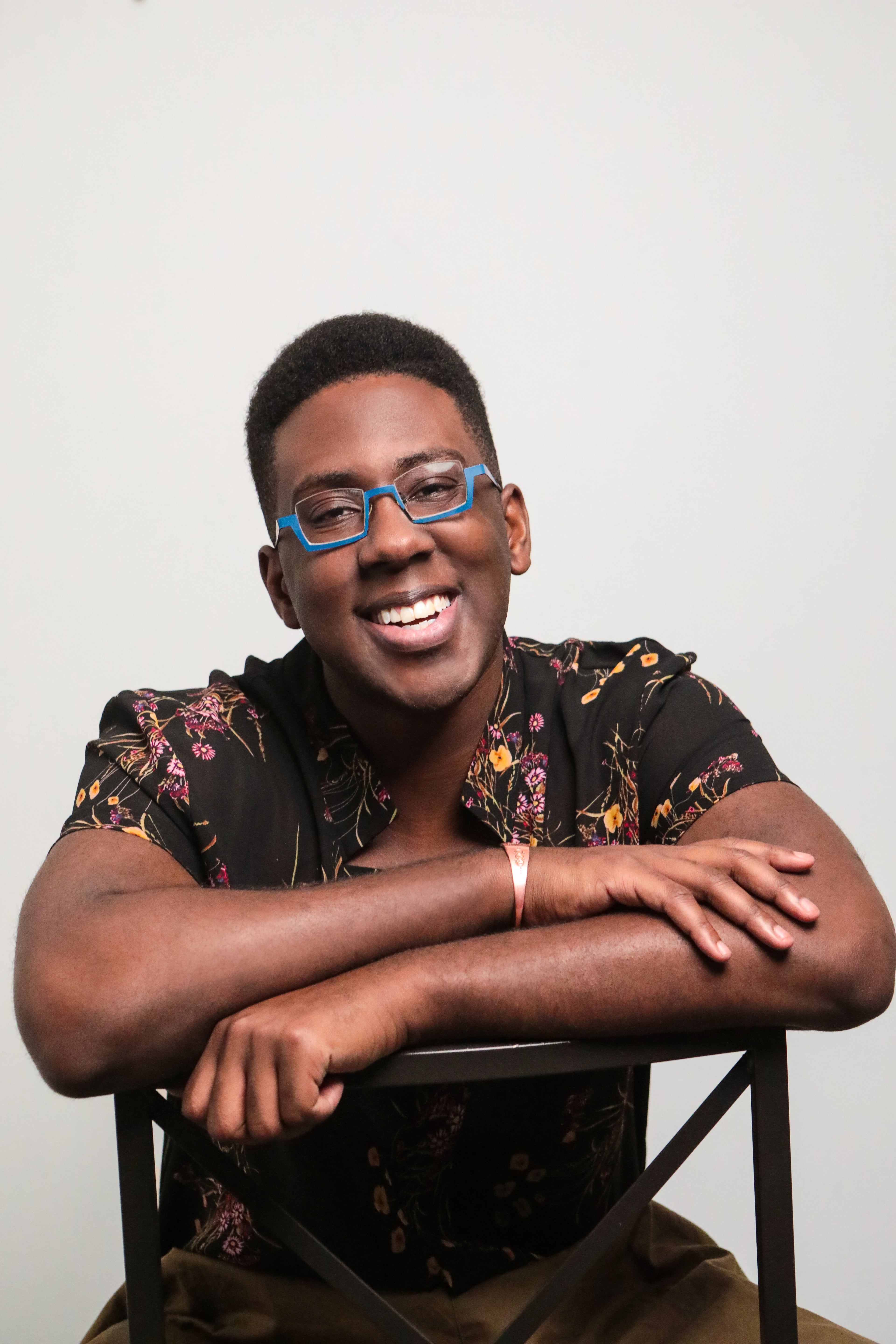
In 2025, Weaver launched Nerds for Literacy as a call to action to help other kids explore their hidden talents and interests.
With a team of seven members, Nerds for Literacy has initiated its second annual fundraiser to purchase books to deliver to schools and libraries across the country. As the nonprofit gets underway to reach its goal of $200,000, Weaver discusses gaps in youth literacy with The Atlanta Journal-Constitution.
This interview has been edited for brevity.
Q: At what point did you realize there was a youth literacy issue?
Weaver: My mom is a public educator, and she really cares about reading. In my household, (reading) was a very important thing. My dad would take me to Borders once a week and let me grab a book to read.
I would notice my classmates that were struggling, specifically in English and language arts. In my head I was like, “You’re just as smart as me, but we’re at different levels in this specific skill.” I’m wondering why that is. What it boils down to is because I was labeled as the smart kid, I was supported as a smart kid, I was socialized to be the academic kid.
If what you’re telling me is that I’m unintelligent and that I’m so behind and I’m never going to catch up, why would I want to pick up a book? We built a system full of cracks, and we’re blaming kids for falling through them.
Q: How are children falling through literacy cracks?
Weaver: There are business interests at play, whether that’s with the companies that are getting contracts for tech platforms, textbook suppliers or curriculum developers.
In many ways, U.S. public education is used to put kids in a very specific box, and the way that we treat literacy is based on that box. You have a Western canon where majority of the books were written and published at a time when people that look like me weren’t legally allowed to know how to read or write. Then, you take those books and you say, “These are the books that you need to know. This is what makes you smart.”
The way that reading programs for kids are set up right now is that you either learn how to read in the way that I’m telling you, or you don’t read at all.
Q: What is Nerds for Literacy’s approach to reading?
Weaver: When it comes to youth literacy, we’re in a major crisis. People spend a lot of time on the elementary school students. But there’s a kid who was not reading in the third grade. He’s in the sixth grade now, and that kid needs love, and that kid needs encouragement. Nerds for Literacy was really founded to support kids in that area.
We have a youth advisory board where we get to hear directly from young people about what they’re experiencing in places where they need support.

Q: What’s the magic sauce to get kids to read?
Weaver: For Nerds for Literacy, we put agency at the front of every child’s reading journey.
We do an annual fundraiser every year that we’re in the process of right now. Members of the nerd community — out of their own pocket, of their own volition — come together and support. They make those donations. Once they make those donations, we open for teachers and libraries. Nerds for Literacy looks at that data, and we kind of identify where our key regions are. So, we set it up a kind of book tour.
Sometimes, I bring my buddies with me and we pop up. We talk to the kids about reading, and we surprise them. “Hey, we’ve got all these books. These are for you. You get to pick one to take home.” Then, we leave a significant trove of books in their library because the idea is you’re going to pick this one book and you’re going to take it home. But once you’re done with that, you’re going to want something else.

We try to be like the Scholastic Book Fair, but free.
(Founded in 1981, the Scholastic Book Fair has been a popular pop-up shop for elementary and middle school students.)
Q: Who is a literacy icon you revere?
Weaver: Dolly Parton is such a fundamental figure in the literacy space. She’s a titan for youth literacy.
In the same way that the Dolly Parton Imagination Library is this kind of massive infrastructure of nonprofit organizations that are giving books directly to homes and families, (Nerds for Literacy) wants to build a national network of nerdy educators and nerdy education institutions.
When Miss Dolly started in 1995, in that first year, she gave out about 1,700 books. In our first year, we’ve impacted about 19,000 kids with our book giveaways, and I like to think that we’re well on our way.
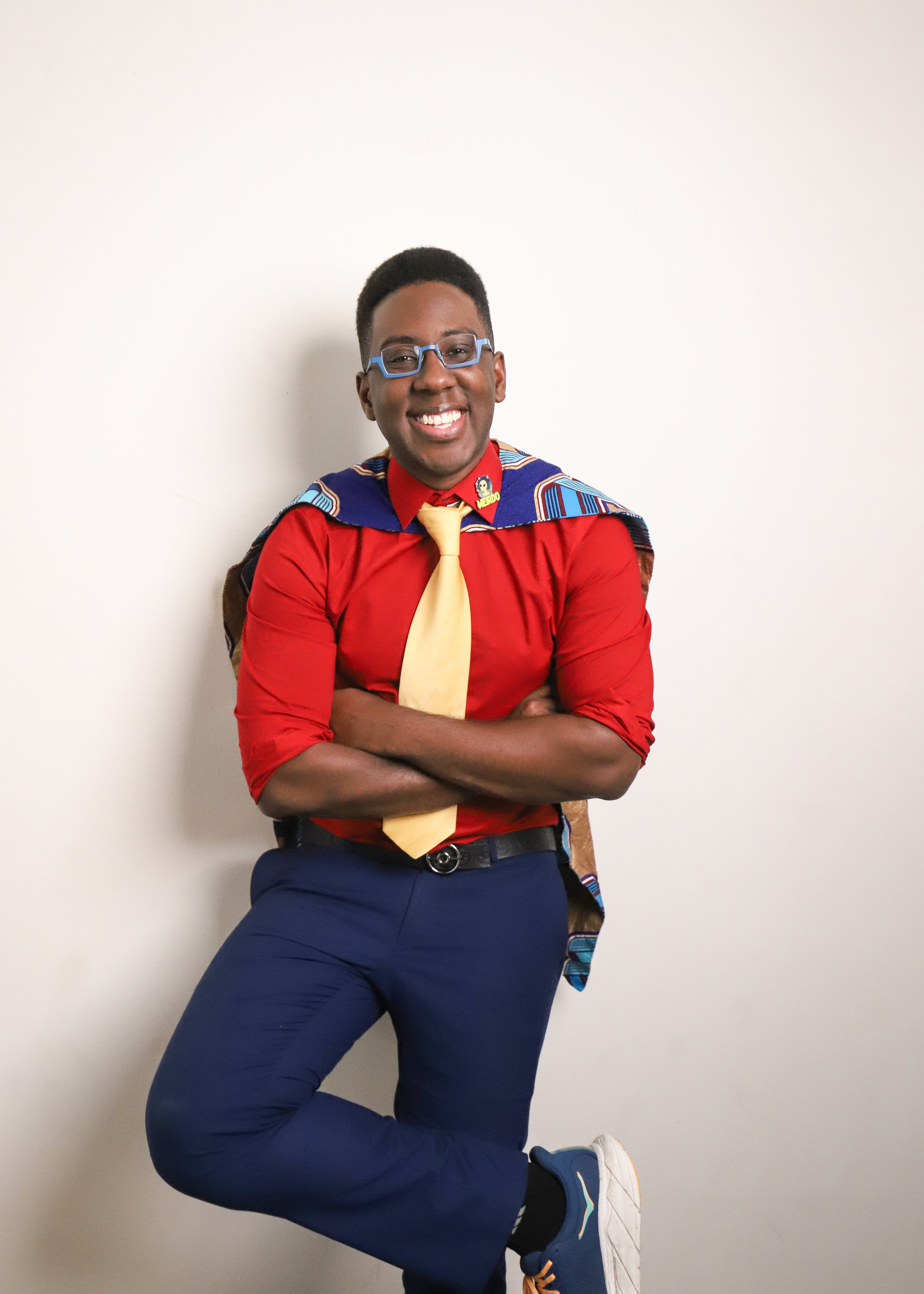
Q: What is a “nerd”?
Weaver: Everybody is a nerd. Part of the reason that we’re Nerds for Literacy is because I think “nerdom” is the expertise that happens when people are given the agency to go after the things that bring them joy.
The question is: Do you live in a space where you are free enough to be (a nerd), where you’re allowed to be (a nerd)? Nerds for Literacy wants to create a space where everybody has the freedom to do that.