
Kathleen Neal Cleaver exhibit reveals the woman beyond the Black Panthers

A new exhibition at the Auburn Avenue Research Library on African American History and Culture invites visitors to see Kathleen Neal Cleaver beyond the image that made her famous as a leader of the Black Panther Party.
Through dozens of photographs spanning her childhood, years as a Black Panther, political exile, legal career and family life, “The World(s) She Made: Composing the Radical Lives of Kathleen Neal Cleaver” reveals the private moments behind one of the Civil Rights Movement’s most recognizable public figures.
Drawn from Cleaver’s personal collection and photographs by other artists, the exhibition follows her journey from the daughter of civil rights activists to Black Panther leader, lawyer, professor, mother and advocate.
The exhibition opened July 30 and runs through Jan. 4, 2027.
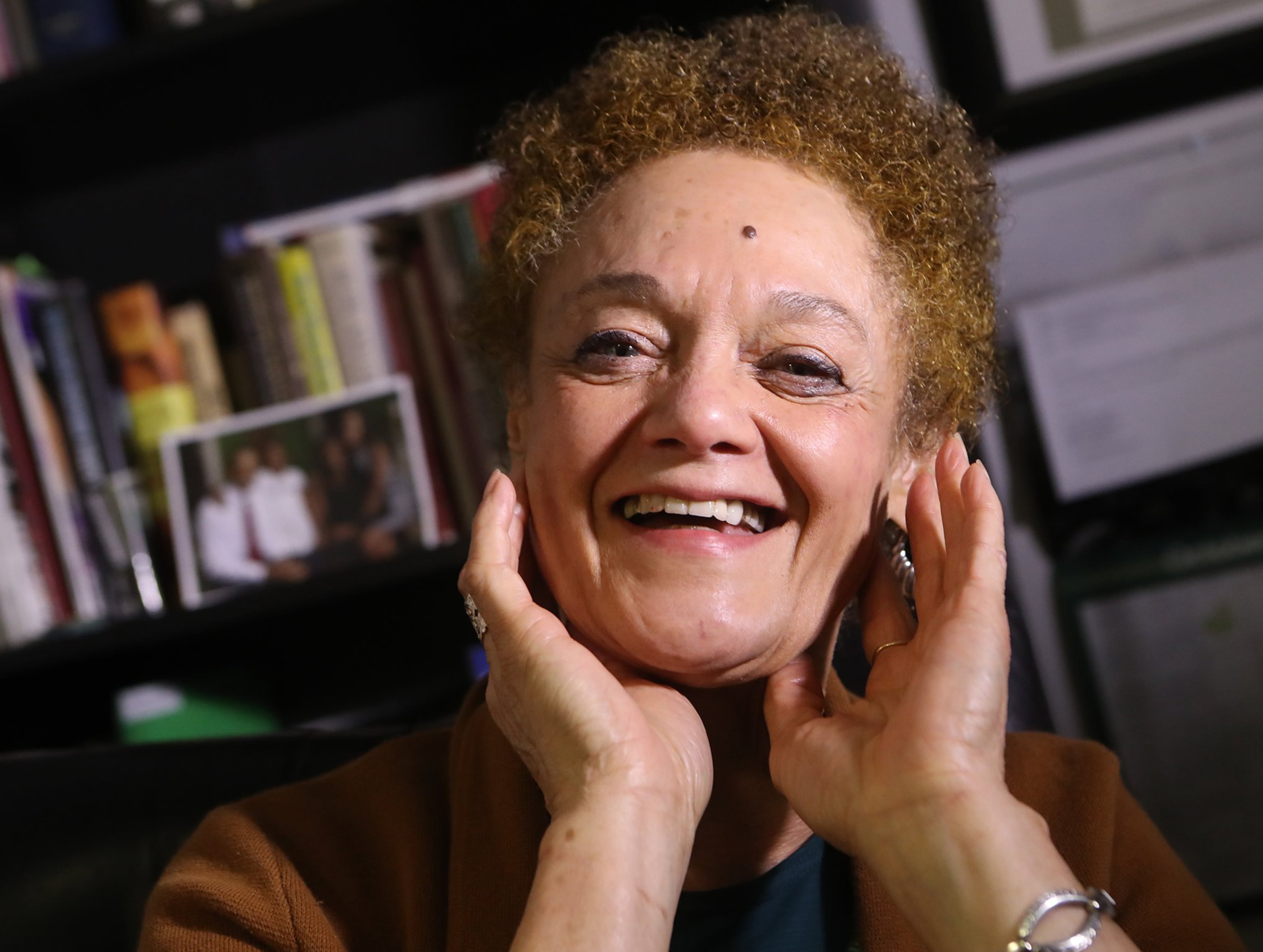
For co-curator Sierra King, the exhibition is about expanding the public’s understanding of Cleaver’s life beyond her years with the Panthers.
“She was the only woman that was directly connected to and working with people like Huey Newton, Bobby Seale and Eldridge Cleaver,” King said. “There were different phases of being a communications secretary, but she also stepped into other places in the Black Panther Party that needed visibility and needed a voice.”
Revealing the woman behind the icon
Along with King, the co-curators, Stephanie Alvarado, Lia T. Bascomb, and John Stephens, began developing the project in 2017 as a way to build a photo repository of Cleaver’s life.
King said Cleaver’s spirit and humor came through as she worked with the curators and recounted memories behind the photos.
“Even in times where we were describing things that may have been hard for her to remember, she was still very upbeat about getting the work done and making sure that her story was told in her own words,” King said. " It helped me appreciate more the conversations that we have with our elders.”
In 2020, Emory University acquired Cleaver’s papers, which included personal and professional correspondence, books and photographs, as well as other digital materials.
But as the co-curators worked alongside Cleaver to collect photos from separate eras of her life, their project evolved into a larger-scale exhibition that could seamlessly illustrate the full story of her personal and public worlds.

From SNCC to the Black Panther Party
Cleaver, 81, was born in Dallas, Texas, to activist parents.
Because her father served in the U.S. Foreign Service, Cleaver spent much of her childhood overseas, an experience that helped shape her passion for civil and human rights.
In 1966, she joined the Student Nonviolent Coordinating Committee. A year later, she met and married Eldridge Cleaver, the minister of information for the Black Panther Party, and moved to San Francisco to join the organization.
Though there were many women in the organization at the time, Cleaver’s position as the communications secretary made her the first female member of the Party’s decision-making body.
In addition to speaking on behalf of the Party, she assisted in overseeing its landmark breakfast program and health clinics. During her time with the Panthers, she ran for California’s 18th state assembly district.
In 1968, Eldridge Cleaver was involved in a shootout with Oakland police officers and fled to Cuba and later Algeria. Kathleen reunited with Elridge in Algeria a year later and accompanied him in political exile to North Korea and France as her husband continued his legal battle.
The exhibition’s photographs trace that evolution, capturing Cleaver as she grows from a young activist into one of the defining voices of the Black Power movement.
Life after the Panthers
After returning to the country and leaving her husband, Cleaver returned to college and earned a bachelor’s and law degree from Yale University.
She spent several years working in law and as a professor before she retired from her role as senior lecturer at Emory University School of Law in 2020.
In 1999, she published her memoir “Memories of Love and War,” reflecting on her years as an activist, wife and mother.

King joined the project as a photographer and learned archival skills throughout the curation process. She said the exhibit uniquely highlights the interiority of Cleaver’s life and how her travels have shaped her work and journey as a mother.
What she hopes visitors take away from the exhibition is how much Cleaver’s life has evolved beyond her activism.
“Everything after the Black Panther Party is really the most important, because it allows you to see how someone continued after a historic part of their life,” she said. “She still went to college, still became a lawyer, and still became a grandmother. It’s continuous.”

History coming home
King said the exhibit’s presence in Atlanta highlights how historical icons, too, are everyday people who continue to live in and interact with their communities. She hopes that people can also recognize the pivotal role that the South played in the Black Panther Party.
“(Cleaver) learned how to be a leader and learned to communicate through SNCC. She took that work and that mindset into the Black Panther Party,” she said. “So, the Southern roots of coming back to Atlanta and sharing that story on Auburn Avenue, which is down the street from the original SNCC office, is (symbolic).”

You can read more about the exhibition at theworldsshemade.com.