
Juneteenth: 19 artifacts that reflect Atlanta’s Black history
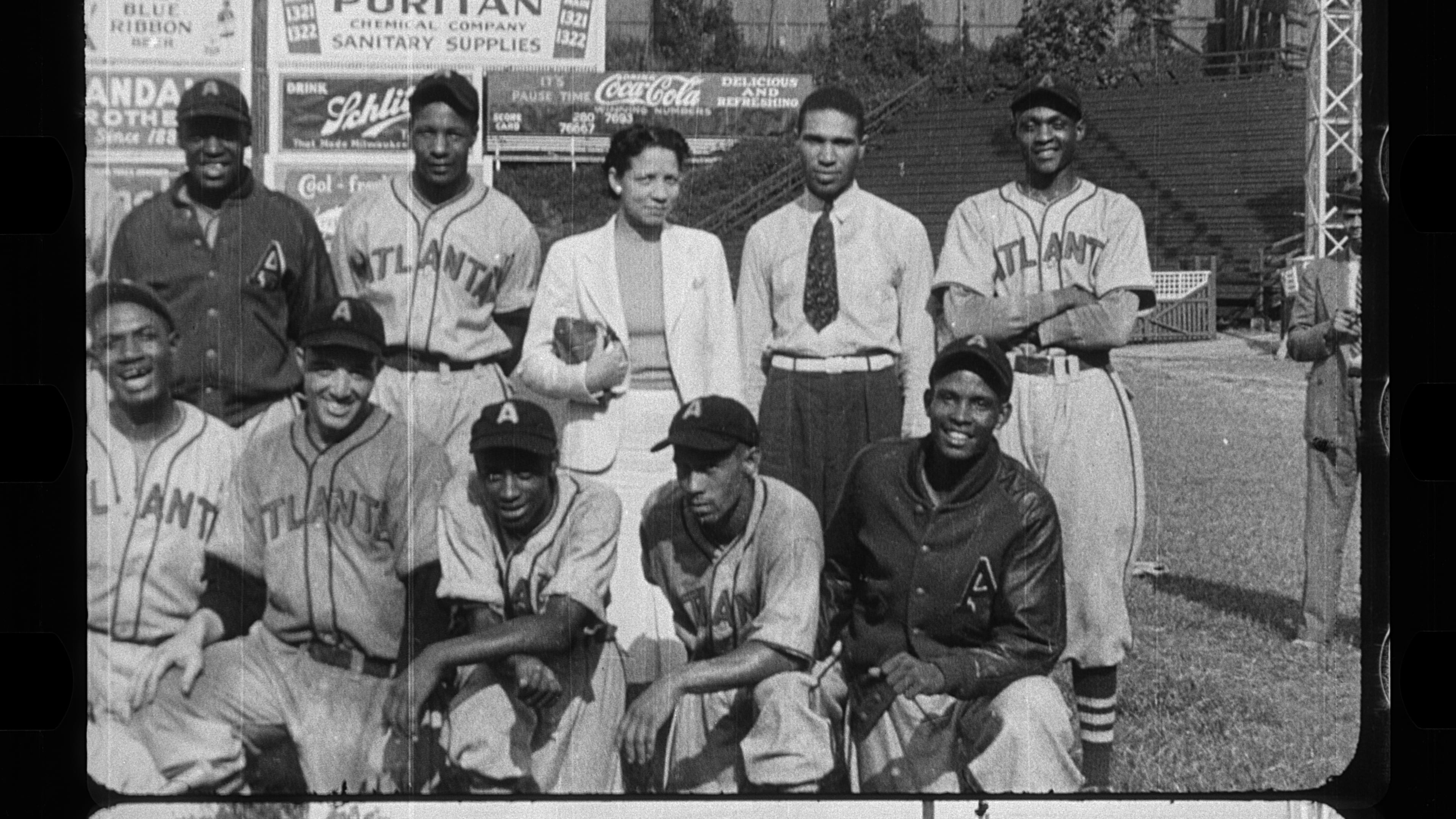
Midway through a 1939 promotional film celebrating Black Atlanta, a wedding party appears on screen.
First come five bridesmaids, standing proudly before the camera. Then the lens settles on the newlyweds. The groom, in a white dinner jacket and black bow tie, smiles nervously. Beside him, the bride beams.
In the flickering black-and-white footage, they are all beautiful.
The film moves from scene to scene: students strolling across the campuses of Morehouse and Morris Brown colleges; girls playing soccer; businessmen gathering along Auburn Avenue; homecoming queens waving to crowds; couples flirting at social events; golfers teeing off; and families posing in front of stately brick homes. Ella Fitzgerald appears, along with rare footage of the Atlanta Black Crackers, the city’s Negro League baseball team.
Near the end, a group of Black children in their Sunday best parade through a park wearing crowns and carrying cardboard swords. Tinsel hangs from homemade costumes and floats as they march past the camera.
The film is “Parade of Progress of Colored Atlanta,” a 30-minute newsreel produced by Atlanta Life Insurance Company and its public relations director, J. Richardson Jones. It was designed to showcase a side of Black life rarely seen on movie screens during the Jim Crow era.
Nearly nine decades later, the film is a historical gem.
A rare portrait of a city shaped by African American ambition, entrepreneurship and civic pride, it is preserved in the Atlanta History Center’s collection and featured in “Atlanta in 100 Objects,” the book and exhibition anchoring the center’s centennial celebration.
“Not only do we see the progress of Black folks educationally, we see the institutions, leaders and communities that helped shape Atlanta,” said La’Neice Littleton, a historian at the Atlanta History Center and the director of community collaborations, about the collection.
To mark Juneteenth, The Atlanta Journal-Constitution and UATL combed through the Atlanta History Center’s vast collection of artifacts, archives and manuscripts to identify 19 objects that tell the story of Black Atlanta.
The number reflects June 19, 1865, the day Union troops arrived in Galveston, Texas, and informed an estimated 250,000 enslaved people that they were free, more than two years after the Emancipation Proclamation.
The items collected range from letters and clothing to Ralph David Abernathy’s boots, Alonzo Herndon’s barber pole and Dallas Austin’s synthesizer.

For Littleton, the “Parade of Progress of Colored Atlanta” is more than a snapshot of the past.
It is one of thousands of stories preserved in the center’s collection that document how Black Atlantans “progressed socially, culturally and politically in such a short amount of time” after emancipation.
The 19 objects that follow tell that story through the artifacts they left behind. Together, they trace generations of Black Atlantans who built businesses, led movements, created culture and transformed Atlanta.
Spelman College Bulletins (1884-1927)

Following the founding of Atlanta History Center in 1926, these programs were the first objects donated. Spelman began with 11 students in a church basement and has since become the nation’s most influential institution for Black women. These bulletins trace the growth of a school founded shortly after the Civil War to educate newly freed Black women. Generations of graduates would go on to shape business, politics, culture and the Civil Rights Movement. Along with Morehouse, Clark College, Atlanta University and Morris Brown College, Spelman helped establish Atlanta as a center of Black higher education.
Jefferson Franklin Long Autograph Book (1871)

Born enslaved in central Georgia in 1836, Jefferson Franklin Long made history in 1870 as Georgia’s first Black member of Congress. While in Washington, Long spoke out against efforts to restore power to former Confederates. During his brief tenure in office, from Dec. 20, 1870, to March 3, 1871, Long maintained this autograph book containing signatures of his fellow members of the 41st Congress. The autograph book offers a glimpse into a transformative moment when Black political leadership emerged in the South. It would be a century before another Black person represented Georgia in Congress: Andrew Young, who was elected in 1972.
1906 Atlanta Race Massacre Death Records (1906)

These death records document one of the darkest episodes in Atlanta history. On Sept. 22, 1906, in an event known as the Atlanta Race Massacre, white mobs rampaged through downtown Atlanta, attacking Black residents and businesses after false reports of assaults on white women. While the city coroner issued only 10 death certificates for Black victims, historians estimate at least 25 people were killed and hundreds more injured. The records document some of those killed that day. Among them were a Black barber shot by a mob at his shop on Peachtree Street, a 13-year-old schoolboy who died from injuries after being taken to Grady Hospital and an 18-year-old messenger who succumbed to stab wounds. Still, as the massacre shattered lives and reshaped Black Atlanta, it remained largely absent from the city’s official story for decades.
Alonzo Herndon’s Barber Pole (1890)
Before he founded Atlanta Life Insurance Company, Alonzo Herndon built his fortune with a barbershop. Born enslaved in Georgia, Herndon became one of Atlanta’s first Black millionaires, serving wealthy white clients while investing in Black businesses and institutions. His Peachtree Street shop, one of three he owned, was known for its gold fixtures and crystal chandeliers. His success helped establish Sweet Auburn as one of the nation’s most important Black business districts. This barber pole, which marked the location of one of his shops, symbolizes both entrepreneurship and self-determination in post-Reconstruction Atlanta.

Solomon and Nancy Luckie (1860)
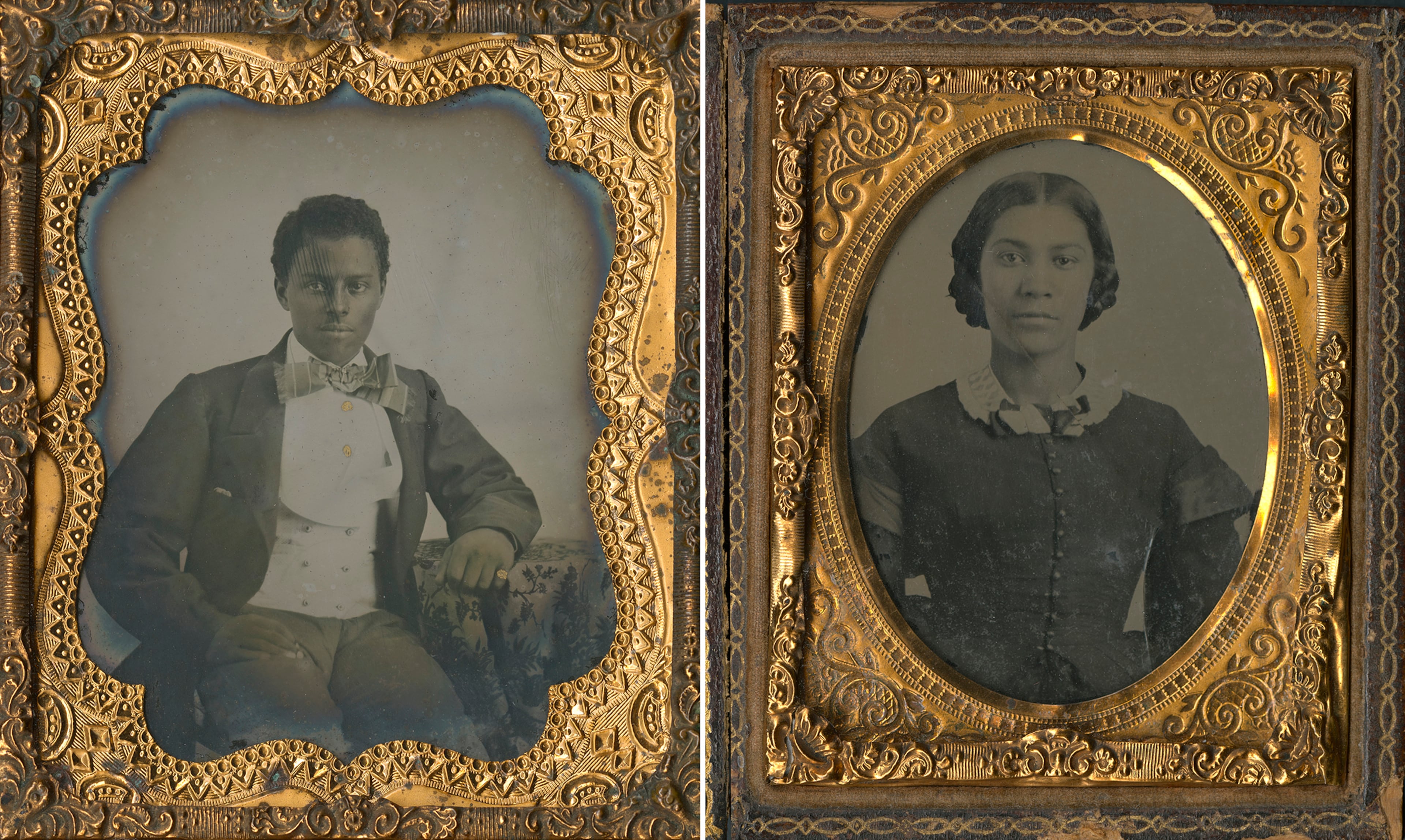
In the years before the Civil War, Solomon Luckie was among Atlanta’s most successful Black entrepreneurs. A free Black businessman, he built wealth through a barbershop and bathhouse in the young city. These portraits of Solomon and his wife, Nancy, reflect that success despite laws that restricted where free Black residents could live, work and travel. Elegantly dressed and wearing a gold ring, Luckie projected the confidence of a prosperous businessman, while Nancy posed with the dignity and poise of a free Black woman in an era when such freedoms remained rare. Luckie’s story ended tragically. In August 1864, as Union forces bombarded Atlanta, a shell exploded near Whitehall and Alabama streets. Shrapnel struck Luckie as he leaned against a lamppost. He died from his wounds. Today, both portraits and the lamppost survive in the Atlanta History Center’s collection.

Ann Moore, Couturière (1950-1970)

Atlanta native Ann Moore pursued fashion at a time when few Black women had access to elite design schools. After studying in New York at the Traphagen School of Fashion and the Fashion Academy, then, in Paris at École Guerre Lavigne, established her own fashion house and gained recognition in publications including Vogue and Jet. Her work blended European haute couture techniques with a personal design philosophy. Moore’s career opened doors for future generations of Black designers and fashion entrepreneurs. After retiring and returning to Atlanta in 1982, Moore donated nearly 30 garments and accessories to the Atlanta History Center, preserving examples of the elegant designs that made her one of Atlanta’s pioneering fashion figures.
Atlanta Daily World UPI Machine (1940)
Founded in 1928 by W.A. Scott II, at a time when mainstream media often ignored Black communities, the Atlanta Daily World emerged as one of the nation’s most influential Black newspapers. The paper chronicled the political, economic and cultural life of Sweet Auburn and beyond. This teletype machine connected the newspaper to national and international news networks. The newspaper’s name reflected its mission to keep Black Atlantans informed about both local events and the wider world.

The Souls of Black Folk (1903)

In 1903, while teaching at Atlanta University, scholar and activist W.E.B. Du Bois wrote “The Souls of Black Folk,” one of the most influential books in American history. In the book, Du Bois challenged accommodation to segregation and argued for full political and social equality. The book introduced concepts such as “double consciousness,” a heightened awareness of one’s own identity alongside the perception of how others, particularly the dominant group, view them, and helped shape generations of Black intellectual thought. More than a century later, it remains essential reading for understanding race, identity and democracy in America.
Atlanta Salutes Hank Aaron (1974)
In 1973 and 1974, as Hank Aaron approached Babe Ruth’s home run record, he faced racist threats and hate mail from across the country. Atlanta responded with a citywide billboard campaign celebrating Aaron’s achievement and defending his place in baseball history. The billboards appeared throughout Atlanta with an illustration of a swinging Aaron superimposed over Babe Ruth’s profile with the words, “Atlanta Salutes Hank Aaron.” This print, never pasted onto a billboard, was saved by Mike Dillon, a member of the installation crew. Dillon preserved it for 50 years before donating it to the Atlanta History Center.

Auburn Avenue Rib Shack Sign (1965)

For more than three decades, the Auburn Avenue Rib Shack served barbecue in the heart of Sweet Auburn. Owned by A.J. and Mary Taylor, the restaurant, which opened in 1963, fed neighborhood residents, visitors and civil rights activists working nearby. Its story reflects both the success of Black-owned businesses and the challenges they faced. The construction and later expansion of Interstate 20 through Sweet Auburn ultimately disrupted the neighborhood and contributed to the restaurant’s decline. The rib shack closed in 1995.
Bagley Park (1921)

Long before Buckhead became one of Atlanta’s wealthiest areas, Black families built thriving communities, including one known as Macedonia Park. In 1928, William and Ida Bagley, who had been expelled from Forsyth County during the 1912 racial cleansing, purchased land in the area, which became known as Bagley Park. In the 1940s, Fulton County officials used eminent domain to remove residents and convert the neighborhood into public parkland. The park retained the Bagley name until 1980, when city officials renamed it in honor of local baseball umpire Frankie Allen. Descendants of the Bagleys saved the historic Bagley Park sign, a reminder of a largely forgotten Black community and the forces that displaced it. In 2022, the Bagley name was restored to the park.
Black Voter Registration Pamphlets (1949-1964)

These pamphlets reflect decades of organizing to overcome barriers designed to keep Black Georgians from voting. Poll taxes, literacy tests and intimidation limited participation throughout much of the 20th century. Grassroots groups encouraged registration campaigns that helped expand Black political power in Atlanta. Their efforts laid the foundation for the city’s future influence in state and national politics.
Civil Rights Correspondence (John Wesley Dobbs) (1956)

In 1956, when a prominent white Atlanta pastor spoke against integration, civil rights leader John Wesley Dobbs responded with a sharply worded letter grounded in both faith and democracy. Dobbs, often called the unofficial mayor of Auburn Avenue, spent decades fighting for voting rights, public services and equal opportunity. In the letter, he challenged the pastor’s interpretation of Christianity and articulated the moral arguments driving the Civil Rights Movement. The exchange also reflected Atlanta’s growing Black political influence. Two decades after the letter, Dobbs’s grandson, Maynard Jackson, was elected Atlanta’s first Black mayor.
Mayor Maynard Jackson in Great Speckled Bird (1973)
Maynard Jackson’s election as Atlanta’s first Black mayor marked a turning point in the city’s history. At just 35 years old, Jackson inherited enormous expectations and intense scrutiny. He expanded opportunities for minority-owned businesses, oversaw major infrastructure projects and helped redefine who held power in Atlanta. His legacy remains visible throughout the city, including at the world’s busiest airport, which now bears his name. The Great Speckled Bird, a radical alternative weekly published from 1968 to 1976, was known for skewering the status quo. Covering Jackson’s successful mayoral campaign in 1973, the newspaper tried to balance its skepticism of authority with the possibility of change.

The Atlanta Way (Letter to Andrew Young) (1982)

Few phrases are more closely associated with the city than “the Atlanta Way.” The term describes a tradition of behind-the-scenes cooperation among business leaders, elected officials and community advocates to address major civic challenges. This letter to Mayor Andrew Young from Atlanta businessman Charlie Loudermilk reflects a period when Black political leadership and white business leadership worked together to guide Atlanta’s growth. Supporters viewed it as pragmatic progress; critics saw it as power operating beyond public scrutiny.
Railroad Porter Hat (1942)

For decades, Pullman porters formed the backbone of Black America’s traveling workforce. Their jobs provided steady income and middle-class opportunities, even as they endured long hours and discrimination. Porters also carried information, newspapers and connections between Black communities across the country. This hat, worn circa 1942 by Willie Leonard Sims of Atlanta, symbolizes both economic mobility and the labor activism that helped fuel later civil rights gains.
An Appeal to Human Rights (1960)
Published by students from Atlanta’s historically Black colleges in the spring of 1960, this manifesto challenged the city to live up to its reputation as “the city too busy to hate.” The document called attention to segregation in education, housing, employment and public life. Six days after publishing the appeal in three Atlanta newspapers, students launched a wave of sit-ins across Atlanta. Their efforts helped transform the city and establish the Atlanta Student Movement as a major force in the Civil Rights Movement.

Reverend Ralph David Abernathy Protest Boots (1960s)

These worn boots belonged to the Rev. Ralph David Abernathy, one of the Civil Rights Movement’s most important but often overlooked leaders. Marching beside Martin Luther King Jr., Abernathy helped organize campaigns from Montgomery to Memphis and later led the Southern Christian Leadership Conference. The boots are a reminder that the movement was carried forward not only through speeches and court cases, but also through countless miles walked in protest. They embody the physical sacrifice behind the struggle for justice.
Dallas Austin Synthesizer (2006)

Dallas Austin arrived in Atlanta as a teenager with big ambitions and little certainty about how to achieve them. By the 1990s, he had become one of the architects of modern R&B, producing hits for TLC, Boyz II Men and dozens of other artists. Austin’s work helped establish Atlanta as a global center of Black music and culture, shaping the sound of popular music for a generation. His success helped make Atlanta one of the world’s most influential music capitals.