
FAMU’s first woman head drum major prepares for her next act in London


After becoming the first woman to lead Florida A&M University’s renowned Marching 100, Oluwamodupe “Dupe” Oloyede is preparing for her next performance in Europe.
In September, Oloyede — who performed in a musical number at the 98th Academy Awards and was featured in an exhibit at the College Football Hall of Fame — will begin classes at the London Academy of Music and Dramatic Art.
“I feel very grateful. I feel like (there’s) a new wave of energy,” Oloyede said. “I should use this momentum to chase after what I aspire.”
In 2025, the Atlanta native took command of FAMU’s Marching 100, becoming the celebrated band’s first woman head drum major.
In July, Essence magazine recognized her as a trailblazer within the HBCU community.

Oloyede graduated from FAMU this spring with a degree in theater. Her interest in international performance and storytelling had already taken her beyond American stages and traditions.
Before her senior year in college, Oloyede trained in London through the British American Drama Academy’s Black British Theatre program. The academy also trained the late actor Chadwick Boseman.
The program incorporated the history of the African diaspora into its curriculum, giving Oloyede the opportunity to explore Black stories from across the world.
Raised by Nigerian parents while growing up in DeKalb County, she was immersed in Yoruba culture at home while navigating American customs beyond it.
“It’s a microcosm of having a very Nigerian experience inside an American world,” said Oloyede’s older sister, Stella Oloye.
Oloyede said studying with British professors in a program centered on the African diaspora deepened her understanding of her own Black identity.

“This beautiful triangle, I like to call it,” Oloyede said. “How America is influencing the UK, Africa is influencing all three, and we’re all just influencing each other in our stories of being people in the diaspora.”
Stella Oloye described the family’s move from Ilé-Ifẹ̀ in Nigeria’s Osun State as a “quintessential immigrant experience,” marked by hardship and a constant struggle to establish themselves in the United States.

She said she had fewer opportunities to explore her own creativity because the family was focused on surviving in a new country. As the youngest sibling, however, Oloyede was “afforded the opportunity” to pursue an artistic path.
Stella Oloye added that her sister modeled her work ethic after their mother.

That support helped give Oloyede the freedom to pursue the artistic training that will now take her back to London.
At LAMDA, Oloyede will begin with a semester-long course in classical acting. The course will focus on heightened texts, including centuries-old works whose language and themes actors learn to interpret for contemporary audiences.
“In contemporary work, I can do anything,” Oloyede said. “But in a Shakespearean piece, it’s different. If you can master classical acting, you can do anything.”
Calling her “a light in the darkness,” Stella Oloye said she believes Oloyede’s ambitions will continue to grow.
“I seek to encourage her fearlessness, her tenacity, to where even when she doubts what’s possible, she hears a very clear voice that cogently tells her everything works out in your favor,” Stella Oloye said.

After completing the course, Oloyede will decide whether to continue her performance training or begin working professionally in the arts.
Like Paul Robeson, the pioneering Black actor and activist who became the first Black performer to play Othello in a major American production, Oloyede hopes to pursue roles that extend beyond entertainment and contribute to social justice.
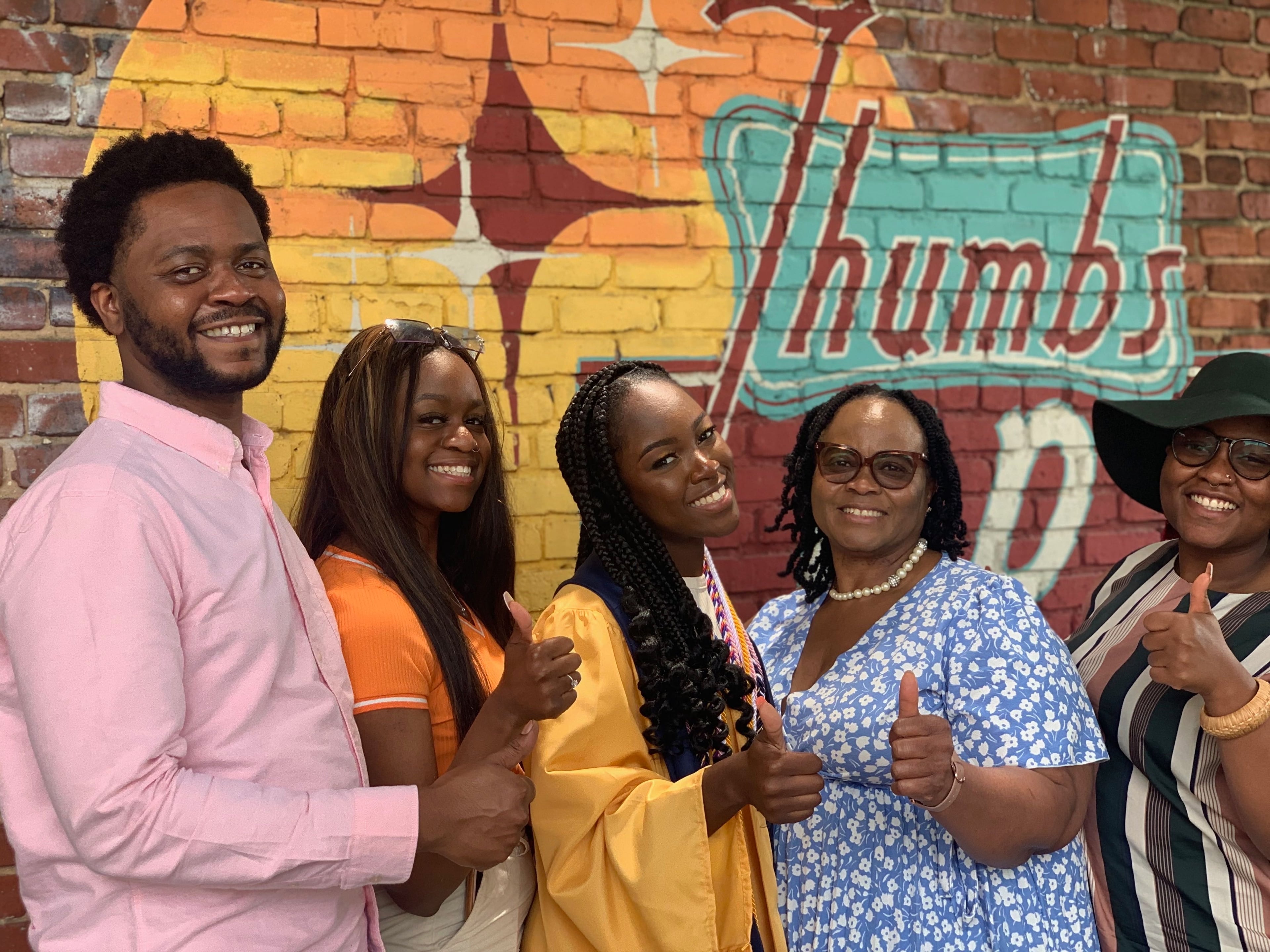
No matter which professional path she chooses, Oloyede wants to explore every dimension of performance — acting, singing, dancing and writing — and become the fullest version of herself as a storyteller.
“I want to be the fullness of myself,” Oloyede said. “The performer I want to be is the one who uses her skills, her talent, her influence to help the world and help other people see that art makes people better people.”