
Hank Stewart’s 35-year journey from poetry to purpose

On Nov. 7, 1991, Hank Stewart came home from a long day of work at UPS, turned on the television and saw the news was all the typical things like inflation, carjacking and football.
But what pushed him to the edge that day was watching basketball superstar Magic Johnson announce he was HIV positive.
“There was a war going on in Desert Storm, murder, the weather was hard that day,” he said. “And then on top of all of that, Magic Johnson declared he has HIV.”
The announcement shook him so much, he picked up a pen and wrote his first poem, a prayer to God titled “Can You Hear Me?”

“Lord, there’s times where nothing is going right.”
“Lord, there’s times when I cry, I wonder do you hear me, Lord?”
“Can you hear me, Lord? Can you hear me?”
After asking God for a sign, Stewart said he felt Christ answer him.
“I died on a Friday because I heard your cry, but I rose on a Sunday because I heard your cry,” Stewart said, recounting Jesus’ march to Calvary. “Now, my child, you have it all simply because I heard your cry.”
That moment was the birth of his poetic career.
The best years
Over the next 35 years, that single prayer would become the foundation of a career in verse, civil rights and youth leadership that has helped shape Atlanta’s cultural landscape.
But nearly a decade later, another chapter of his life transformed not only what he wrote about but why he wrote at all.
From 2000 to 2005, Stewart worked for the Rainbow PUSH Coalition alongside the Rev. Jesse Jackson, Joe Beasley and Janice Mathis at the organization’s Atlanta office in the Atlanta Life Building.
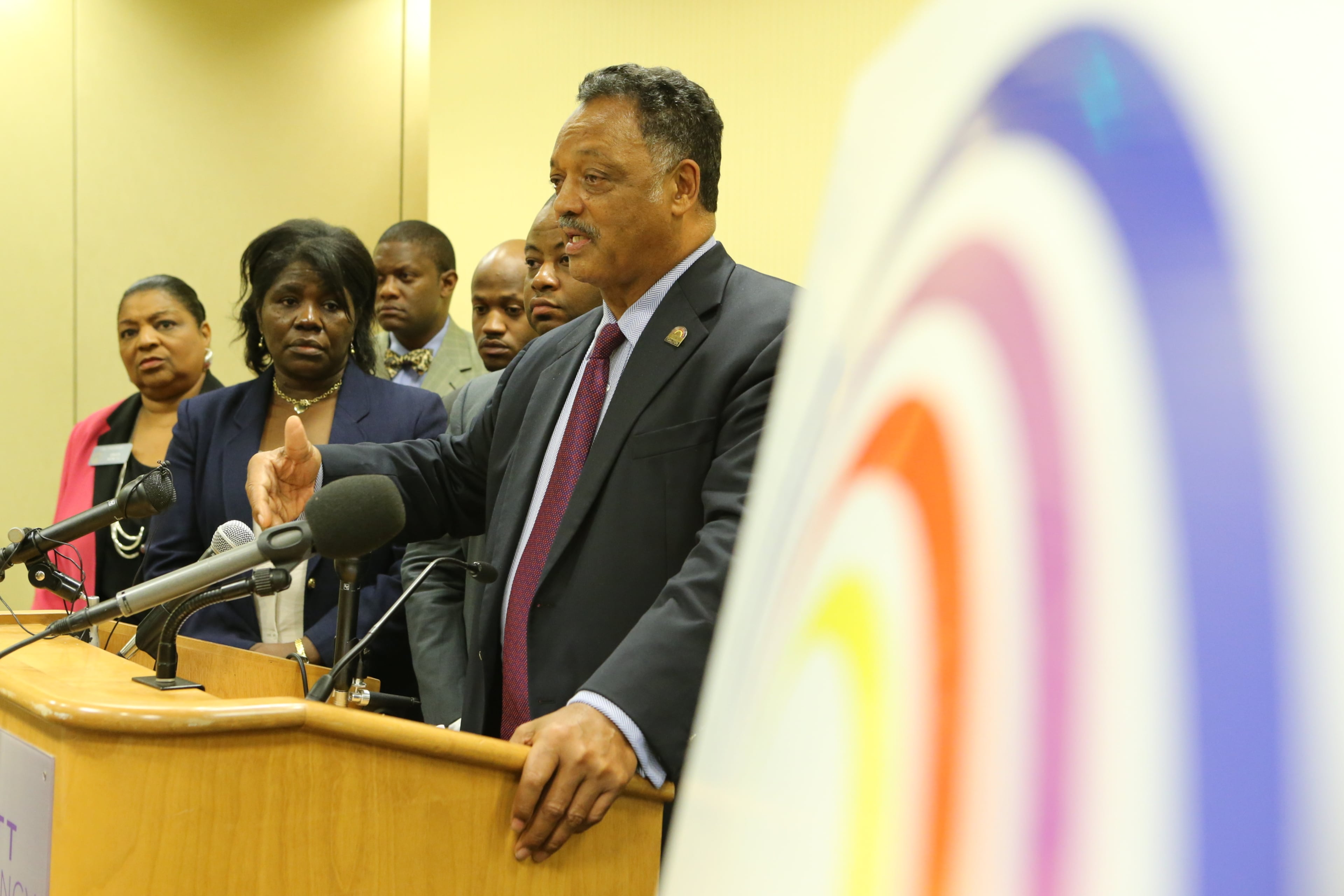
“Those were some of the best years of my life,” Stewart said. “I was already writing poetry, but the experience made me more civic-minded and socially conscious as a poet.”
Others who worked alongside Stewart say those years transformed him into a cultural voice for Atlanta’s civil rights movement.
Helen Butler, executive director of the Georgia Coalition for the Peoples’ Agenda, first met Stewart when her organization and Rainbow PUSH shared offices in the Atlanta Life Building.
Every Tuesday, leaders such as the Rev. Joseph Lowery and Rita Samuels gathered to discuss voting rights, public policy and challenges facing Black communities. Stewart became the poet they called on to open those meetings.

To Butler, Stewart’s work has always blended art with activism.
“To us, he was like Harry Belafonte was to Martin Luther King Jr.,” she said, referring to how Belafonte inspired the movement through performance. “Hank has always been there to do what he can for the civil rights movement.”
Building a foundation
Stewart met his future business partner, Gwen Mason, while organizing a breast cancer awareness event honoring his sister, Bobbie Jean Smith.
Together, they started the Stewart Foundation, with Mason serving as executive director.
“We started talking about the great leaders in our communities growing up,” Mason said. “I said to him, Let’s not talk about leadership. Let’s do something about leadership. Why don’t we start a youth leadership development program?’”
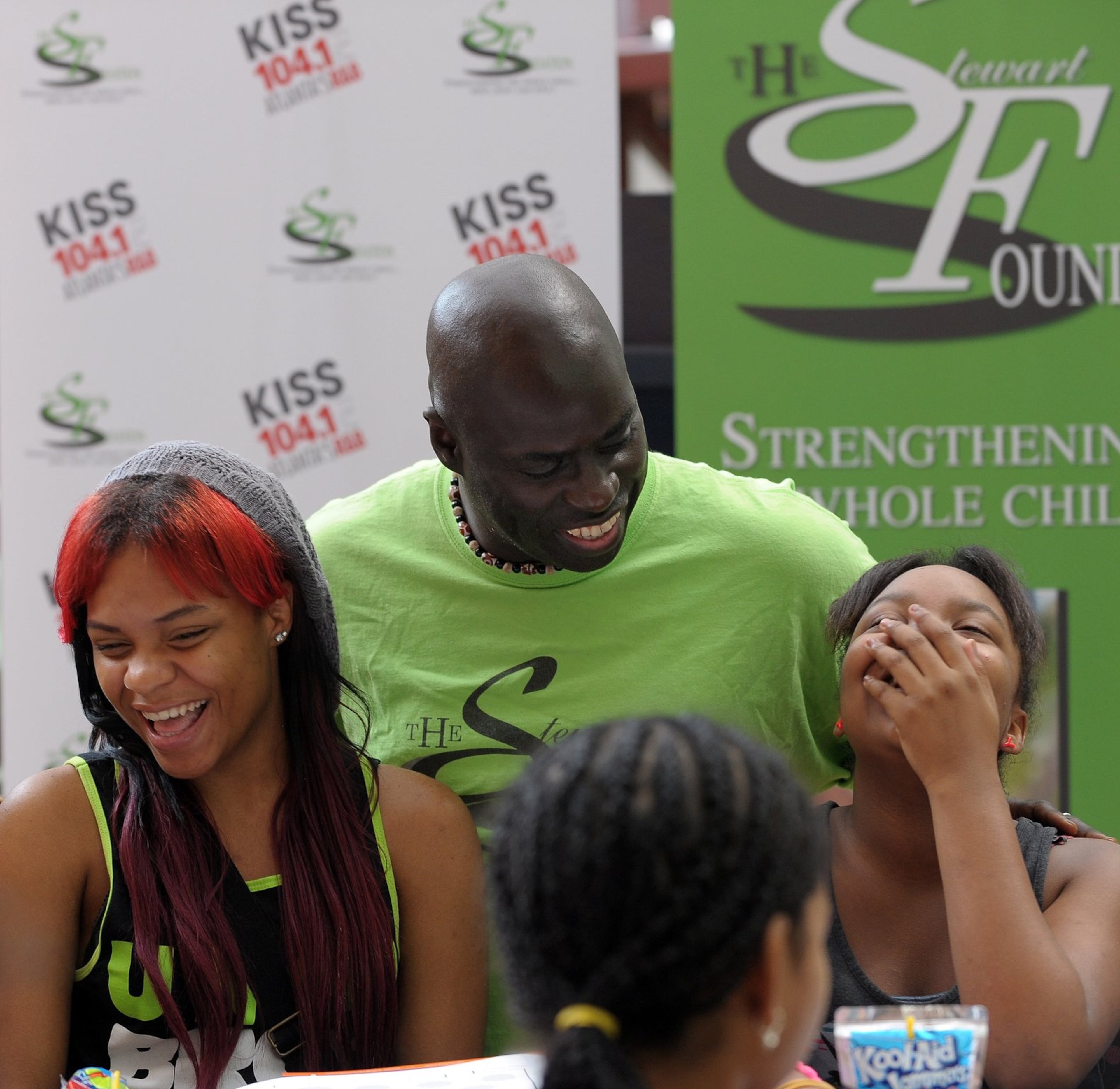
The foundation’s mission also reflected values Stewart learned from his family, particularly Bobbie Jean Smith.
“My whole family is community-conscious, but I saw my sister’s commitment to giving back in full effect,” Stewart said.
Smith worked for the Federal Aviation Administration for 36 years before her death from breast cancer in 2011. Stewart later directed part of her estate to a Prince George’s County women’s facility, where it purchased Bibles in English and Spanish for incarcerated women.
“That commitment to giving back came from my parents, and it definitely came through her,” he said.
The Stewart Foundation has since served more than 41,000 children and families and raised more than $2 million over the past two decades.
Butler said Stewart’s commitment to students has never stopped with fundraising. Through the foundation, Stewart regularly brought students to the Peoples’ Agenda’s weekly empowerment meetings to hear directly from community leaders.
“He wanted young people to understand what the Civil Rights Movement was all about,” Butler said. “They got to hear conversations about the issues impacting our communities, how we can change them and why civic engagement matters.”
The goal, Stewart said, was to prepare the next generation to lead their own communities. He smiles when talking about some of his former students who are now doctors, lawyers or entrepreneurs.
“I like just being able to see kids who go home better than when they came and becoming assets to their community,” Stewart said.
White Linen
About a decade after writing “Can You Hear Me?,” Stewart launched the White Linen Affair to support his poetry career.
It evolved into one of Atlanta’s signature cultural events and the Stewart Foundation’s primary fundraiser, blending spoken word, music, philanthropy and Black culture into a classy summer gathering.

Mason believes the event has endured because it reflects Atlanta itself.
“People annually look forward to seeing what’s next, what’s new, who’s the who,” Mason said. “The beautiful thing is they get to do it with a cause and a purpose.”
Rosa and FLOTUS
Stewart moved to Atlanta from Jacksonville in 1983 to attend Massey Business College, eventually building a successful corporate career before trading boardrooms for stages after discovering poetry on that rainy day in 1991.
His poetry eventually took him from churches and community centers to national stages. Stewart wrote and appeared in McDonald’s commercials, won Emmy Awards and performed at the Essence Festival.
But there are two moments that stand out to Stewart above the rest.
In the 1990s, Stewart recited his poem, “I Couldn’t Just Sit There,” before Rosa Parks during one of her speaking tours. Nearly two decades later, he performed “It” at the 120th First Ladies Luncheon honoring Michelle Obama.
“I thought Rosa Parks was the pinnacle. I thought that was the top,” Stewart said. “In the 1990s, we didn’t know there would be an African American first lady, of course, so the opportunity to recite probably remains one of my greatest events of all time.”
Writing a legacy
After 35 years as a poet, Stewart hopes his work will endure long after he’s gone, like Maya Angelou and Langston Hughes.
“We still recite ‘Still I Rise’ and ‘Phenomenal Woman,’” he said of poems written by Maya Angelou. “So, I try to write in a way that my poems are not dated. I want them to outlive me.”

Ultimately, though, Stewart hopes his greatest legacy won’t be measured by White Linen, awards or even the poems he has written. He hopes it will be found in the people who carry his work forward.
Stewart says his greatest blessings have been his son, Austin O’Connell Stewart, and grandson, Amir Wesley Nicholas Stewart.
Stewart imagines his grandson growing up with his chest out and head held high, proud of the legacy his grandfather left behind.
“When I look at the fact Dr. King’s granddaughter is able to read and be proud of his speeches,” Stewart said. “I want my grandson to have the same. To say ‘That’s my grandpa.’”
The 25th annual White Linen Affair will be held on July 25 at 5 p.m. at Atlanta Marriott Marquis, 265 Peachtree Center NE, Atlanta.