
After transforming Georgia politics, Black women seek power of their own
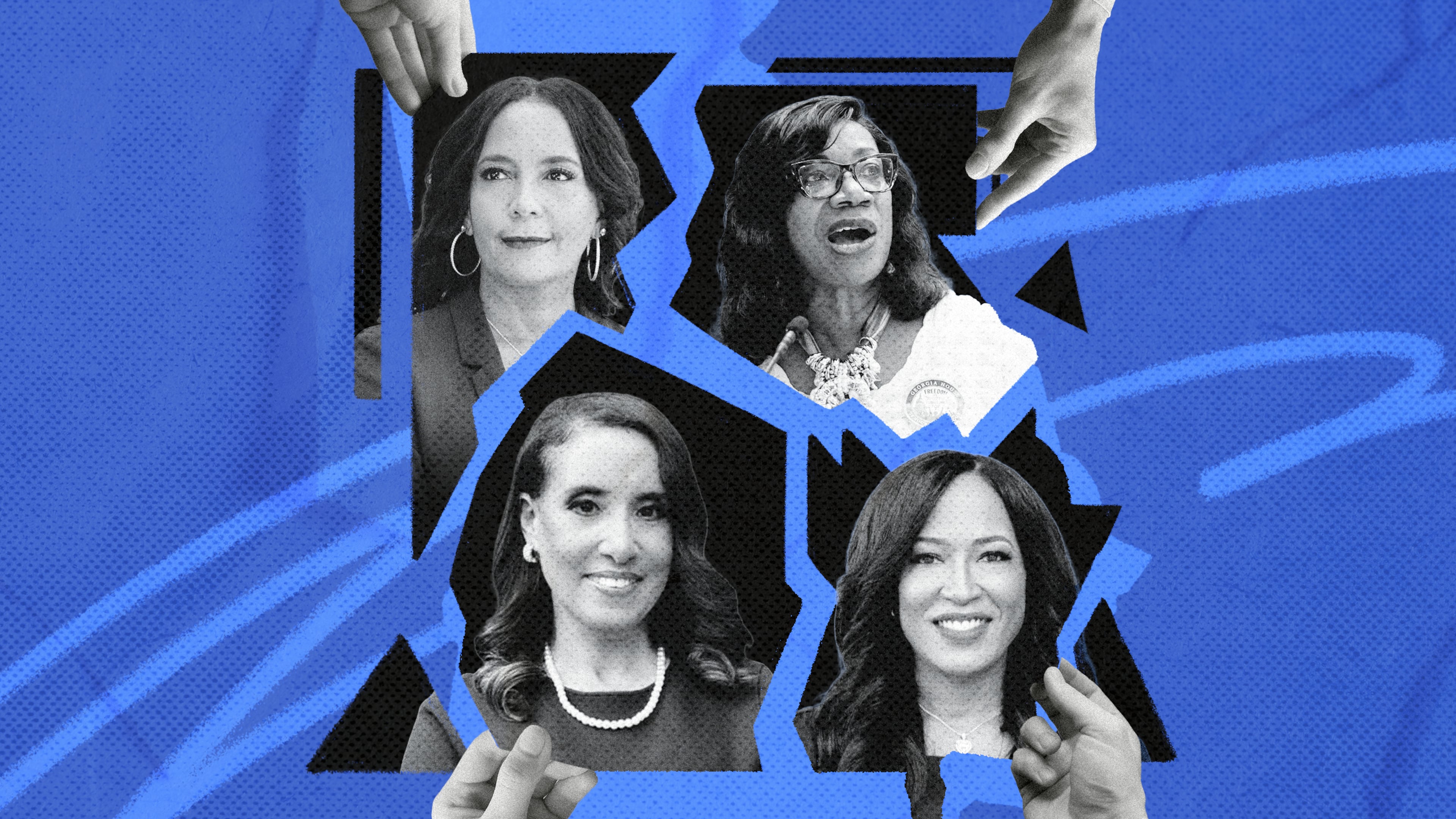
Keisha Lance Bottoms wants to be Georgia’s next governor. Penny Brown Reynolds is running to oversee the state’s elections. Tanya Miller wants to become its chief legal officer. And Carolyn Hugley could become one of the most powerful lawmakers under the Gold Dome.
All four are Black women. All four are Democrats. And each could make history in a state where Black women have long helped others win elections but have rarely held its highest offices.

They are part of a larger slate of Black women seeking state offices in Georgia.
For generations, Black women have helped power Georgia’s Democratic Party, organizing communities, registering voters and delivering victories.
“We (are not always) in the limelight, but we’re always in the background making things happen,” said Helen Butler, executive director of the Georgia Coalition for the People’s Agenda.
Butler, a veteran civil rights activist, who worked closely with the late Rev. Joseph E. Lowery, said she is still amazed by what she is seeing on the upcoming midterm ballot. She is not alone.
Bottoms could become the first Black woman elected governor in American history, while Hugley, Miller and Reynolds could each break barriers in offices that have never been held by Black women in Georgia.

Audrey Haynes, a University of Georgia political scientist, said what is happening in Georgia is proof that Black women have gained influence through consistent political participation.
“They show up to vote. They show up to voice their concerns,” Haynes said. “When you show up and you vote, people start talking to you. Politicians start talking to you.”
According to an AJC analysis of Georgia secretary of state data, more than 835,000 Black women voted in the 2020 presidential election, nearly 100,000 more than in 2016. That number rose to more than 875,000 in 2024.
Groups including the Georgia Coalition for the People’s Agenda, Black Voters Matter and the New Georgia Project have helped register voters, protect ballot access and make Georgia more competitive.
Emory University political scientist Andra Gillespie said Georgia’s growing diversity has created opportunities for Democrats, although Republicans have continued to retain key executive and legislative seats.
“Georgia has the makings where you can put together a multiracial coalition that could benefit the Democratic Party in ways that neighboring states just don’t have the same level of diversity,” she said.
Black women’s role in building Georgia’s Democratic gains has not always translated into political power of their own.
“We have to acknowledge the ways that Black women are coming into their own, leadership-wise, and are standing up and asserting themselves and demanding that they be taken seriously as leaders,” Gillespie said.
Brionté McCorkle, executive director of Georgia Conservation Voters, said Black women running for office face greater scrutiny from donors and political organizations over their qualifications, experience and ability to win.
“What I know to be true is that people have more confidence in a male candidate and a white candidate than they do a Black female candidate,” McCorkle said. “The minute a candidate is Black and female, there’s all these questions.”
For McCorkle, the current slate of statewide Democratic candidates challenges those assumptions.

“They threw their names in the hats and the electorate spoke and they picked Black women because they trust Black women to deliver on the progressive agenda,” she said.
The possibility of a breakthrough is not new. In 2014, five Black women appeared on Georgia’s statewide ballot as Democratic nominees. None won.
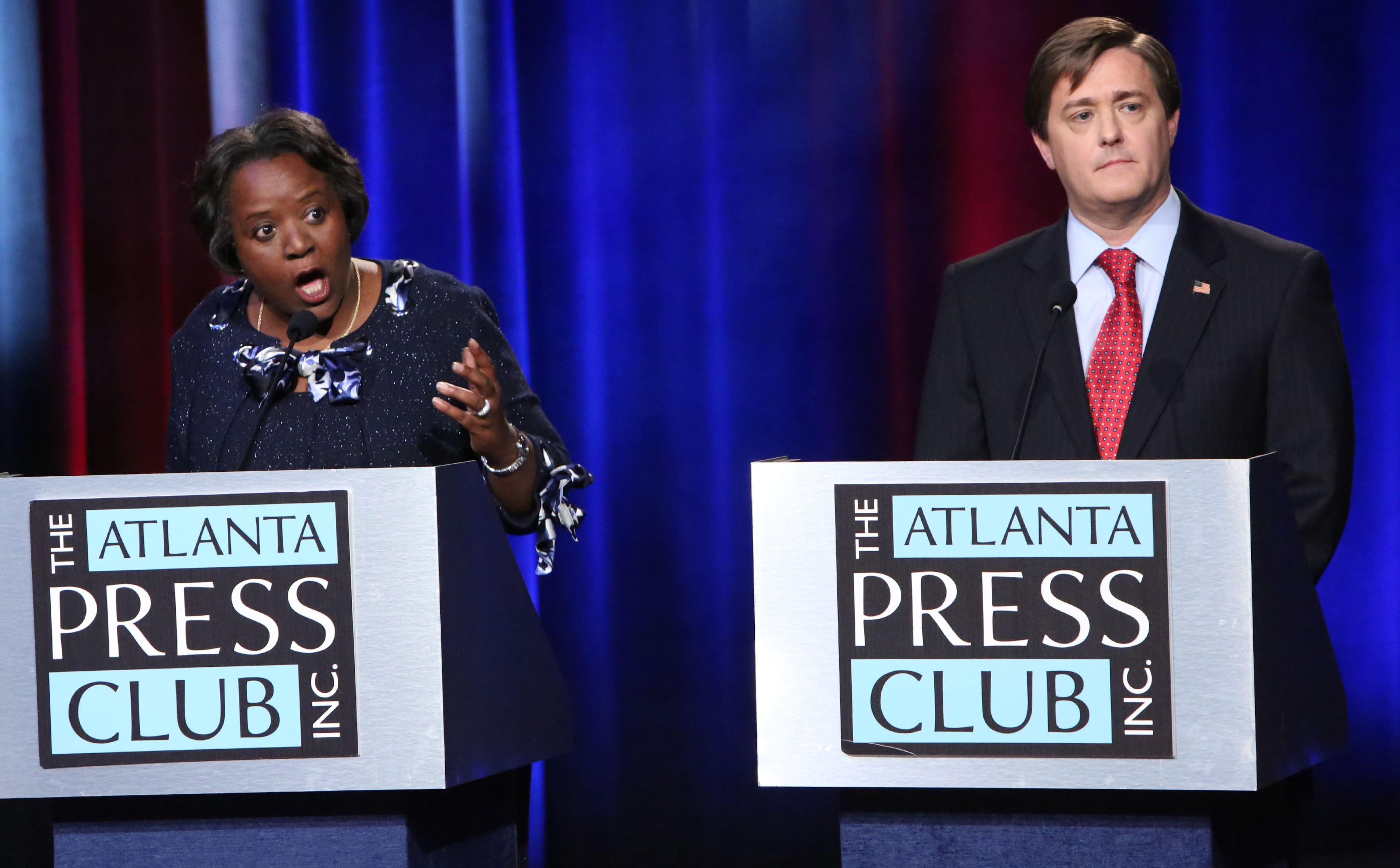
Robbin Shipp, the 2014 Democratic nominee for labor commissioner, remembers the disappointment.
“Certainly when you qualify for a seat, you do so full of optimism,” Shipp said. “It was certainly highly disappointing when none of us were able to get it across the finish line.”
But Shipp considers the experience part of a longer struggle for political representation.
“We’ve all built on our collective history,” she said. “So to just be a part of that history is a tremendous honor for me.”
Stacey Abrams’ 2018 campaign for governor against Republican Brian Kemp helped energize Democratic organizing, despite her defeat.
About 710,000 Black women cast ballots in that election, according to the AJC’s analysis of state voting data.
“That campaign was not a failure,” McCorkle said. “There would be no Keisha if Stacey hadn’t run.”
State Sen. Adrienne White Carden, a Gwinnett County Democrat who in 2026 became the first Black person elected to represent her district, said Abrams mentored her as she considered running for office.
“When I qualified, she was one of the first calls I made,” Carden said.
In 2020, Joe Biden won Georgia by just 11,779 votes, the first Democrat to carry the state since 1992. Two months later, Raphael Warnock became Georgia’s first Black U.S. senator, while Jon Ossoff won the other Senate seat.
But Democratic gains have been uneven. When Abrams challenged Kemp again in 2022, the number of Black women voting fell to 643,000, and she lost by a wider margin.
Donald Trump reclaimed Georgia in 2024. Republicans still control the governor’s office and both chambers of the Legislature.
“We’ve been here before,” Butler said. “What’s different now is people have begun to make the connection between public policy and how that really impacts their lives.”

A historic opportunity, a competitive race
Bottoms, a former Atlanta mayor and Biden administration official, is seeking to end 23 years of Republican control of the governor’s office.
Republican Rick Jackson, a billionaire healthcare executive, has put at least $108 million of his own money into the race.
An Atlanta Journal-Constitution poll conducted Oct. 7-15 found Jackson leading Bottoms 46% to 45%, well within the survey’s 3.1-percentage-point margin of error. Eight percent of likely voters remained undecided.
The survey also found that Bottoms was drawing support from 88% of Black voters and 63% of voters younger than 30.
Bottoms, however, has largely avoided emphasizing the historic nature of her candidacy, focusing instead on affordability, public safety and health care.
“Obviously the historical context to it could be significant. But when I’m talking to voters across the state, they’re concerned about how a leader will deliver for their communities,” Bottoms told the AJC. “The question of whether it would be a woman, a Black woman, doesn’t come up. It’s just about how will you make my life better.”
Beyond the Governor’s Mansion
In the attorney general’s race, an AJC poll found Miller and Republican state Sen. Brian Strickland tied at approximately 44%.
National organizations from both parties have invested millions in the contest for an office that represents state agencies in legal disputes involving abortion, voting rights and federal authority.
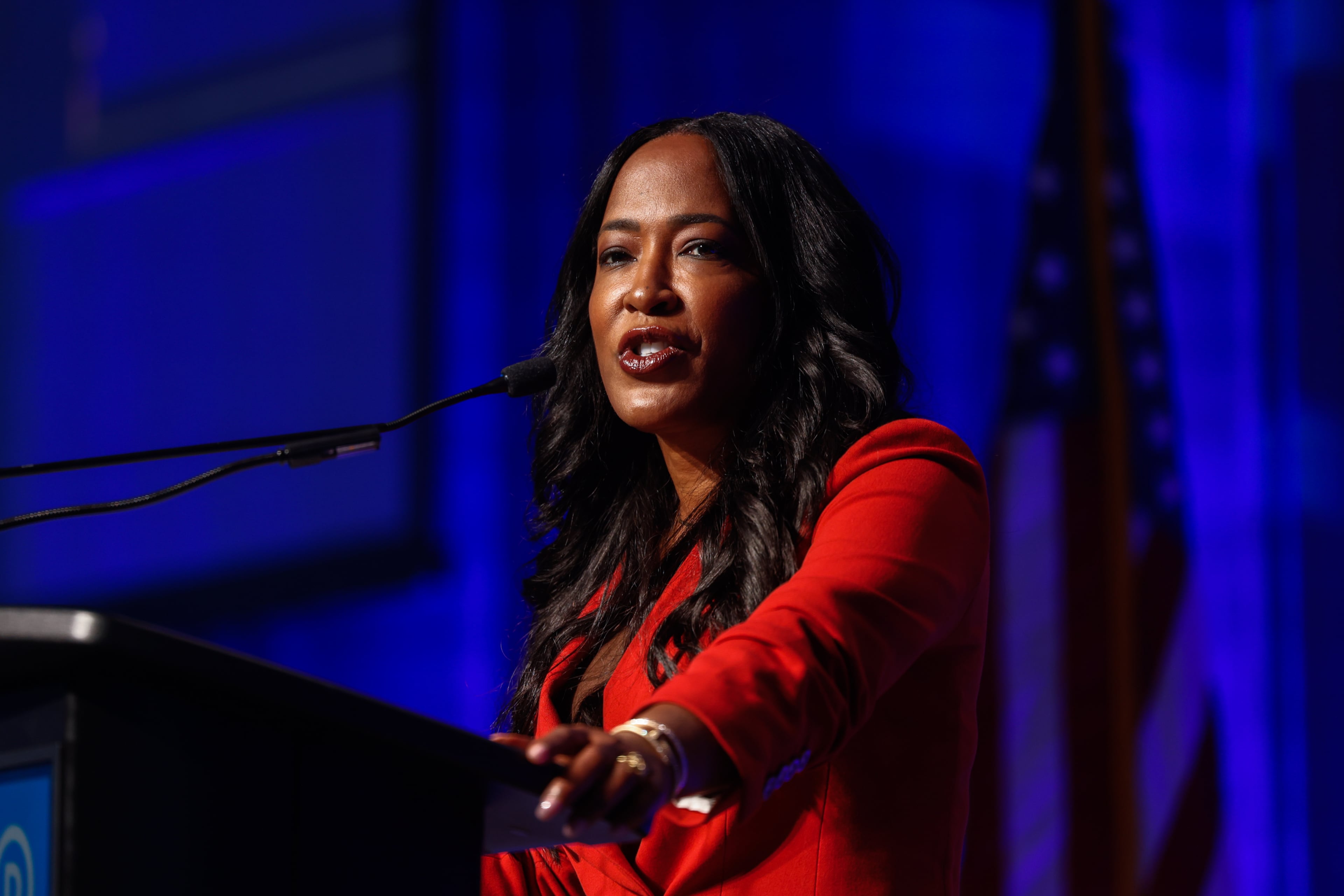
Reynolds, a former judge and Biden administration civil rights official, is seeking an office that has become one of the most closely watched in American politics.
The office drew national attention when Republican Brad Raffensperger resisted Trump’s efforts to overturn his 2020 defeat in Georgia.
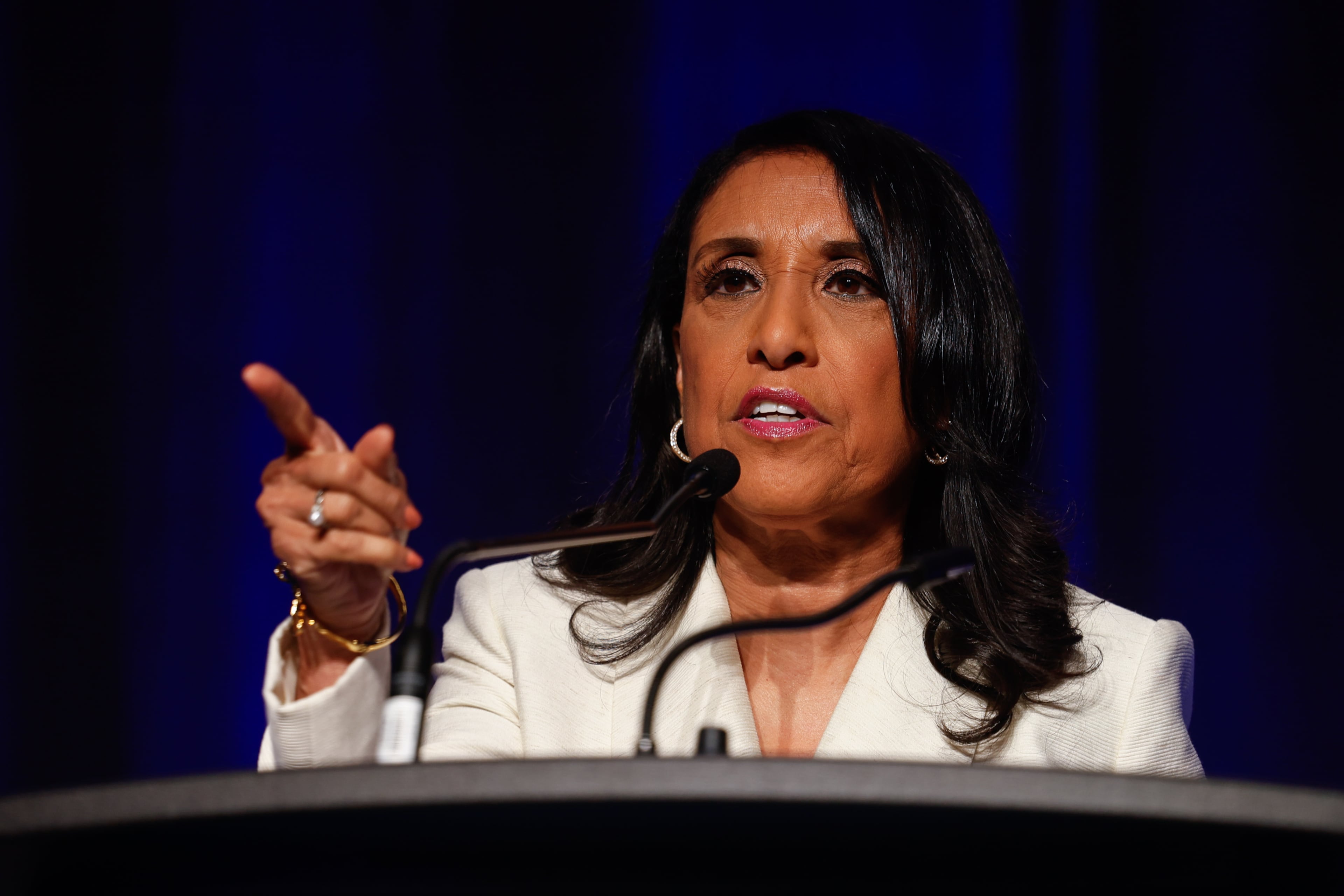
A fourth potential breakthrough could unfold inside the state Capitol with Hugley.
Democrats currently hold 81 seats in the 180-member Georgia House and would need a net gain of 10 seats to secure a majority.
A lawmaker for more than three decades, Hugley became House minority leader in 2025, tasked with setting Democratic priorities and expanding the party’s ranks.
If the state flips, Hugley could be positioned to become the first Black woman House speaker, where she will control committee assignments and have significant influence over which legislation advances.

The slate of Black women seeking statewide office extends beyond those races.
Nikki Porcher is running for labor commissioner, Keisha Waites for insurance commissioner, Katherine Juhan-Arnold for agriculture commissioner and Lydia Powell for state school superintendent. Shelia Edwards is seeking a seat on the Georgia Public Service Commission.
The four candidates for statewide executive offices face Republican incumbents, while Edwards is competing for an open commission seat. Their races offer additional opportunities for historic firsts, though they would have to topple the Republicans currently holding the offices they are seeking.
Turning political influence into votes
As of Thursday, more than 300,000 Black women had already voted in Georgia’s midterm election, compared with 260,000 at the same point in 2022, according to the AJC analysis. Black women accounted for the second-largest group of early voters, behind white women, who had cast about 400,000 ballots.
In Black Southern Women’s Collaborative focus groups, McCorkle said participants wanted more information about down-ballot candidates. Some were surprised to learn how many Black women were running statewide.
“You could just see this lift up,” McCorkle said.
Shipp has seen similar interest among friends and retired neighbors distributing campaign signs.
“Just from the excitement generated around, ‘I need more yard signs,’” she said. “There is huge enthusiasm.”
But Carden worries that interest has not translated into traditional campaign volunteering.
“I think people continue to be exhausted,” Carden said. “There are fewer volunteers. And that’s across the board.”
Whether that interest will translate into electoral victories on Nov. 3 remains uncertain.
For Butler, who has spent decades fighting to expand political participation, the candidacies represent another step in the struggle for political power.
“And since Black women do that so well, why not step up to the plate and be that change that we want to have?” she said.
Charles Minshew, deputy managing editor of data journalism, AI and newsroom innovation, contributed to this report.