
The midterm election is personal for Atlanta’s Black college students


The atmosphere inside Clark Atlanta University’s Student Center on Thursday felt as much like a campus party as a political rally.
A DJ played music, pizza was served, and the university’s cheerleading squad welcomed hundreds of students and visitors who had gathered to hear former Vice President Kamala Harris campaign for U.S. Sen. Jon Ossoff.
Students from across the Atlanta University Center even broke into a friendly rivalry, trading school cheers until Harris interrupted them.

“Don’t ever let anybody take your power from you. Don’t ever let anybody tell you who you are, you tell them who you are,” said Harris, a graduate of Howard University. “You have a right to have the best of what the world has to offer.”
Across Atlanta’s college campuses, Black students are weighing the stakes of the Nov. 3 midterm election.
From rising tuition and housing costs to healthcare affordability and voting rights, they say decisions made at the ballot box could have lasting consequences for their education, economic security and futures.
And in the final days before the election, they are making their voices heard.

Two days before Harris’ visit, hundreds of Atlanta University Center students marched from the Robert W. Woodruff Library to Friendship Baptist Church to vote early.
The destination carried historical significance. Spelman College was founded in the church’s basement in 1881, and Morehouse College held classes there after moving to Atlanta in 1879.
Before the march, Morehouse senior Damarion King led students in prayer for justice and “for those who have been killed in the hands of those who have oppressed us and kept us bound.”

Wearing everything from Uggs and Air Jordans to a pair of patent red leather pumps, they made their way down Thomas W. Cole Jr. Way, joined by Atlanta Mayor Andre Dickens and U.S. Rep. Nikema Williams.
“This is a class about your future and what matters,” said Williams, who wore a sweater from her alma mater, Talladega College.
For George Bridgers, the stakes of the election are personal.
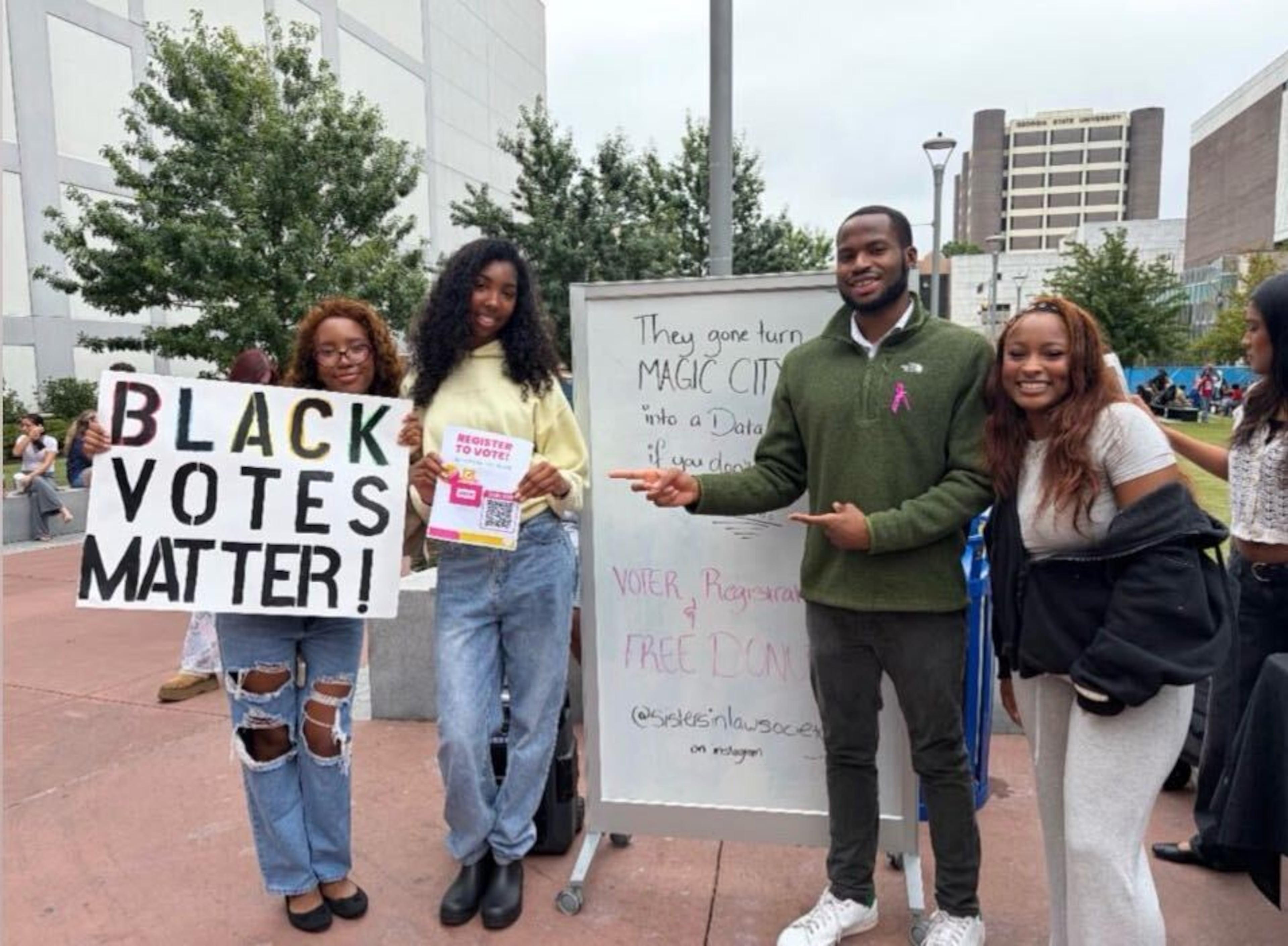
As vice president of the nonpartisan group CAU Votes, the Clark Atlanta University sophomore has spent the semester encouraging classmates to register and vote.
But Bridgers is also juggling classes and a job while trying to ease the financial burden on his mother back home in New Jersey. And with his university meal plan limited to 10 meals a week, he has to carefully consider when and where he’ll eat.
“I have to really strategically plan my swipe uses, and then maybe I have to start meal prepping throughout the week,” Bridgers said.

“It just gets a little ridiculous,” he said. “I’m in college, so we’re already struggling as it is.”
As of Tuesday, more than 2 million Georgians had cast their votes for a U.S. senator for Georgia, governor, lieutenant governor, secretary of state, attorney general and state school superintendent.
Former Atlanta Mayor Keisha Lance Bottoms is on the Democratic ticket for governor. If she wins, she would be the first Black woman elected governor in the nation’s history.
Healthcare billionaire and Trump-backed Rick Jackson is running as the Republican candidate.
Nationally, Democrats are hoping to regain control of Congress, which could give them greater power to challenge Republican policies, including provisions of the so-called “one big beautiful bill.”
According to a 2024 Pew Research study, Black voters both with (79%) and without college degrees (85%) remain overwhelmingly Democratic in their party affinity.

Bridgers said the party’s policies align with his interests, while Georgia Tech sophomore Joseph Francis said he believes Bottoms’ previous policy work is adequate experience for her to be governor.
“Gas prices and other financial stresses are hitting a lot of people really hard,” Francis said. “(Democrats) can at least start arbitrating and changing bills to start reversing some of the policies put in place.”
He said he wasn’t very optimistic about the outcome of the election, but he’s hopeful.
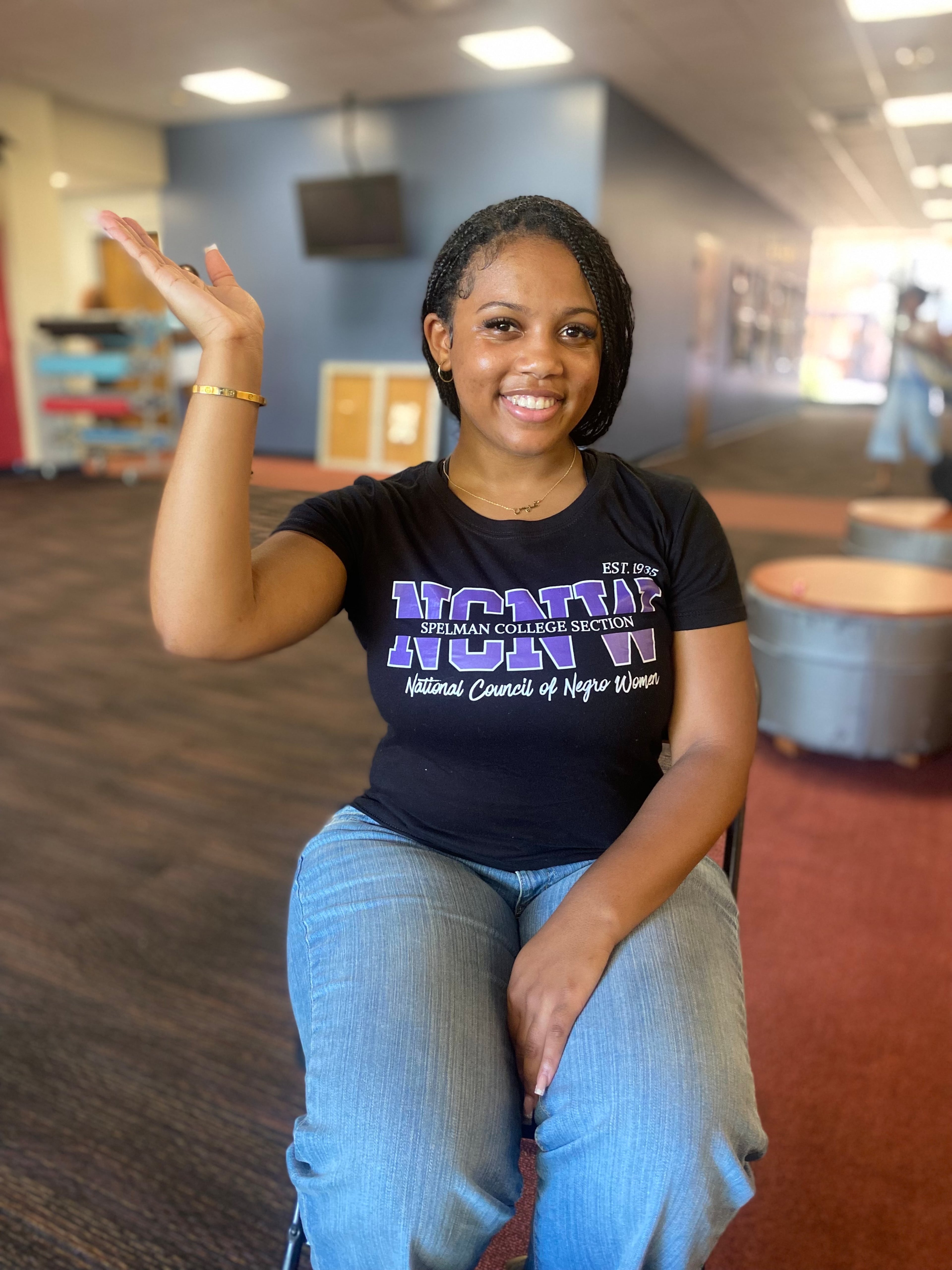
Spelman College senior Sierra Grace Harris, from Maryland, registered to vote in Georgia because she felt her vote would carry more weight here.
“I wanted to make sure that my voice could be heard here, where I feel like I might have more of an impact,” she said.
The cost of living gets ‘a little ridiculous’
The increased cost of living has become a priority for many college students.
Makeda Nichols and her daughter Jael Bennett are both enrolled as sophomores at Morris Brown College.
They said they are voting for Bottoms because she plans to expand Medicaid. Nichols doesn’t have health insurance, and her daughter’s is limited.
“Having Medicaid expansion allows us to have insurance — even if we have to pay a small portion a month, we’re still able to go to the doctor,” Nichols said.
Grocery costs are another concern.
Brazil Gibbs, a junior at Georgia State University who voted early as a Democrat, said it costs $2,000 a month for her and her roommate to buy groceries, toiletries and other household essentials.
She said they try to “stock up on as much as possible” to help friends and classmates who may not be able to afford meals.
“It’s not just us we’re accounting for,” Gibbs said. “It’s the people around us too.”
Housing accessibility and homelessness
Morehouse College junior Michael Wilbert knows what it’s like to struggle with housing instability.
After his mother lost her job and home in Michigan, Wilbert nearly faced a housing crisis of his own because of high rents and a shortage of on-campus housing.
Financial aid covered only one month’s rent for his off-campus apartment, forcing him to get a job to support himself.
Though he’s voting in Michigan, Wilbert recognizes that housing affordability is an issue affecting students across state lines.
“I definitely know what it feels like to be in a housing crisis,” Wilbert said. “It showed me a lot about how meaningful it is … for everybody to have somewhere to sleep.”

Concerns about voting access
Students across campuses are scared about voter suppression and hurdles keeping voters from accessing the ballot.
CAU Associate Vice President of Governmental Affairs & Community Relations Marshall J. Taggart Jr. said that in 2024, about 1,000 students on campus had their votes challenged because they all listed the school as their address.
Because they all essentially shared the same location, Taggart said it raised an alarm with someone at the Fulton County Board of Elections.
For two weeks, Taggart manually went through the list of students and had each of them verify their exact addresses so they could vote.

He added that requiring students at CAU — a private university — to have state-issued identification rather than their school IDs is another form of voter suppression.
“Don’t make this another form of what I want to call ‘Jim Crowism,’” he said, referencing racially-motivated voting restrictions.
After President Donald Trump said he would do “anything necessary” to ensure election integrity, CAU sophomore Symphanie Williams is worried U.S. Immigration and Customs Enforcement agents could possibly use tactics to intimidate voters and discourage turnout.
“Not only do ICE agents operate in amoral and heinous ways that affect both citizens and noncitizens alike, but it’s deplorable to use the fear ICE creates to attempt to lower voter turnout and influence election outcomes,” Williams said.
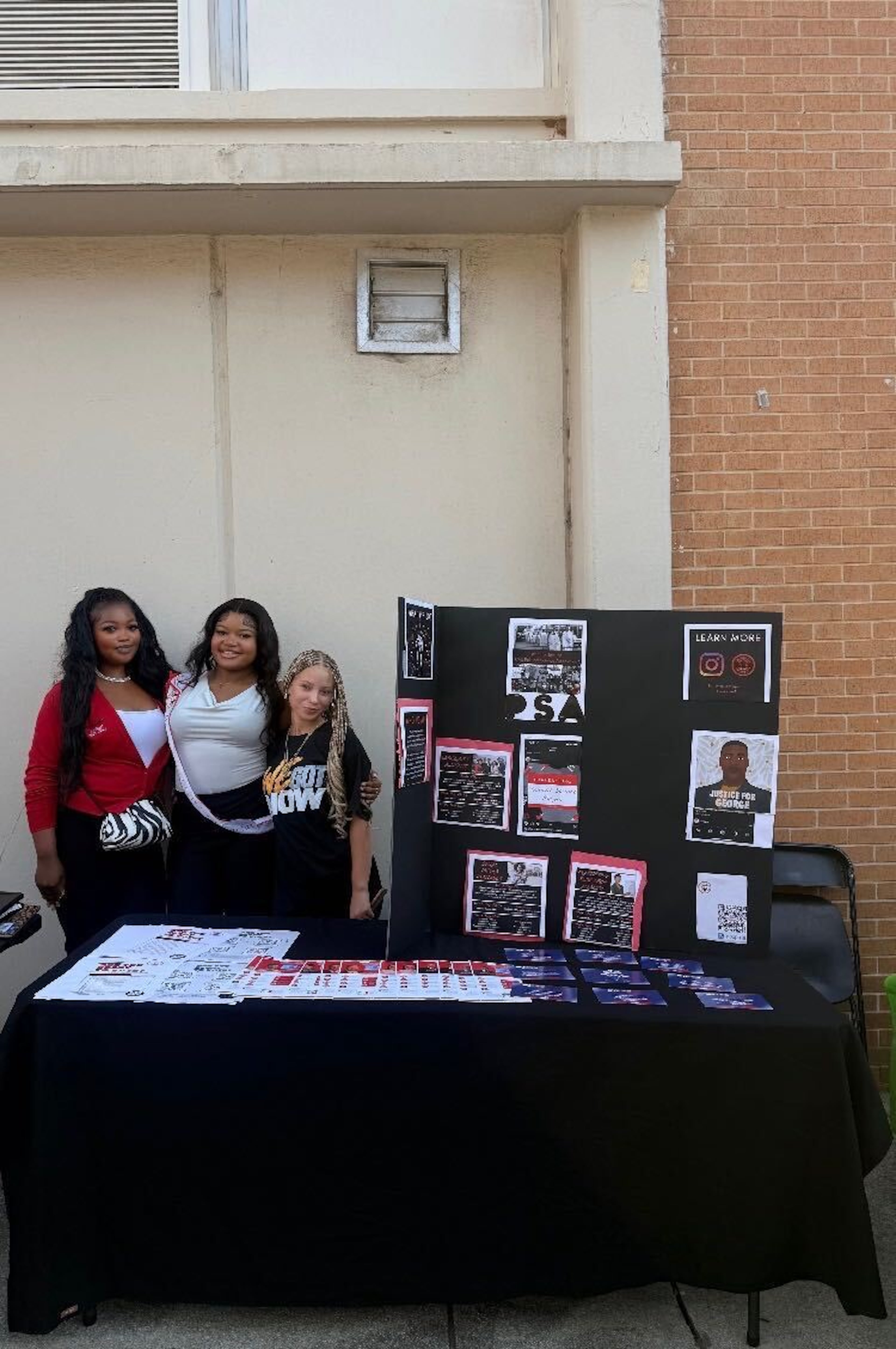
Similarly, Emory University junior Jadyn Hill said there needs to be fewer restrictions in voter registration and more assurance that election laws will not disproportionately affect people of color and lower-income voters.
“I am concerned about efforts to restrict voting access,” she said. “These national issues have direct consequences on Georgia. Federal policies shape funding and civil rights protections, while our state government determines how many of those protections are upheld, restricted or expanded.”
‘Pay it forward’
For many students, voting is about more than the policies affecting them today. It’s also about creating opportunities for those who come after them.
Melanie Campbell, president and CEO of the National Coalition on Black Civic Participation who attended Stroll to the Polls at the AUC, believes Black students are in tune with one another because of the political and social climate.
Campbell also noted that students are currently unable to afford college because of a federal decrease in school funding and cuts to federal loan programs.

According to the Education Data Initiative, a think tank focused on higher education in the U.S., Black students borrow more in federal student loans than any other demographic.
She said she wants students to succeed.
“Not just for them to have a good future when they leave these universities, but to make sure that they pay it forward for those who are coming behind them,” she said.
Bridgers has ambitions beyond organizing voter drives.

The political science major hopes to attend law school, enter politics and eventually run for president.
But even those dreams come with financial considerations. Whether he pursues a law degree could depend on whether he can afford it.
“Everyone’s pathway is different,” Bridgers said. “I’m just trying to make sure I stay in the moment (and) really take everything and get all the lessons I can.”