
Why 4 Black Georgians say they vote Republican


It’s a week before Georgia’s midterm election, and Gavi Steele is buzzing.
The Douglasville resident just left her early voting precinct, where she checked boxes for Republican gubernatorial candidate Rick Jackson, U.S. Senate nominee Mike Collins and other conservatives.
At 44, she’s a millennial who voted for President Barack Obama in 2008 and again in 2012. A switch from the Democratic to Republican Party followed. She voted for President Donald Trump in all three of his White House runs.
Conversation shifts to the 2024 election and how Trump made gains with Black male voters in Georgia. Steele’s not sure why that’s a surprising development.
“I don’t understand this fear of the Republican Party,” she said. “Black Americans, the Republican Party was originally your party.”
She’s not alone in that sentiment.
As Republicans in Georgia move to expand their appeal ahead of Tuesday’s election, the party’s Black voters are spreading its gospel.
Across generations, they describe different paths to conservatism. They share concerns about economic opportunity, public safety and the challenges of embracing a political identity that remains uncommon among Black voters.
They see it not just as a developing trend, but a return to days past.
What’s old is new
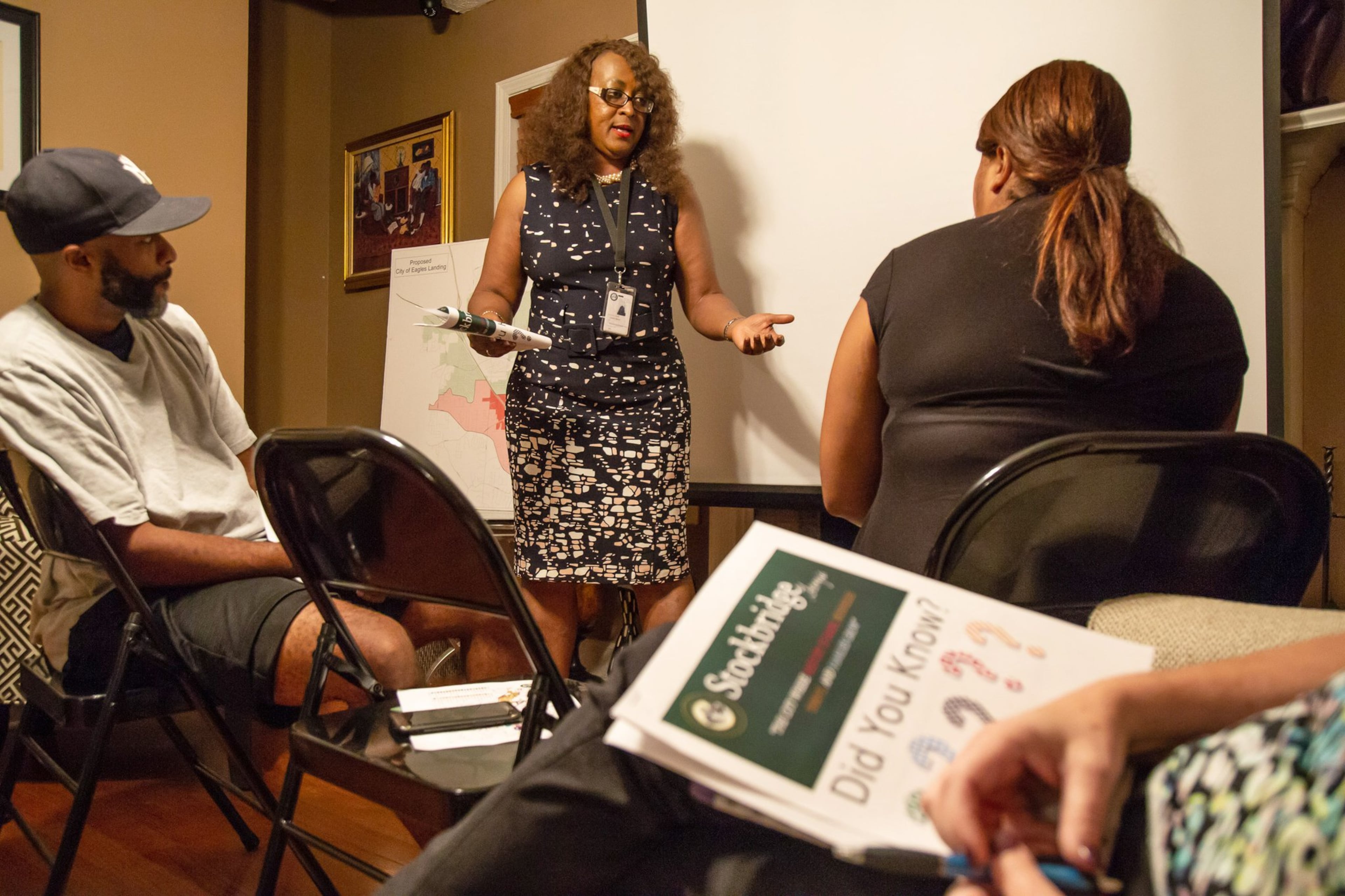
Whenever Steele has to educate undecided or curious voters on the GOP and its relationship with Black communities, she often quotes her mentor, Camilla Moore.
Since 2021, Moore has served as chairman for the Georgia Black Republican Council. Moore likes to tell folks, “I grew up in the Republican Party here in Georgia,” and started working for the GOP as a 21-year-old intern.
She was the first Black person to serve as the state GOP’s vice chairman. Now, 67 and retired, her focus is on recruiting Black conservative candidates and building engagement efforts.
Her challenge: combating skepticism of Black GOP voters’ motivations and historical narratives about the party’s negative impact on communities of color.
“I don’t want people to get caught up in the Kool-Aid about Black Republicans being … sellouts. Black Republicans are the true Black Georgians,” she said.
And what about publicly supporting a candidate like Collins, who has come under fire for his son-in-law, a social media influencer who posted neo-Nazi imagery along with white nationalist tropes, online?
“I know for a fact he’s not a racist,” Moore said. “We should be the first people who reject this idea of guilty by association.”
Black voters were once a central constituency of the Republican Party, particularly after emancipation and Reconstruction.
But their political allegiance began shifting toward Democrats during Franklin D. Roosevelt’s New Deal in the 1930s, a realignment that deepened during the civil rights era through the Voting Rights Act of 1965.
Raised in Warner Robins by her father, Moore thought every Black person was a Republican. Her dad served in the Air Force. Her grandparents were farmers living in Forsyth. They would make remarks about Republican governments better protecting their farmland than Democrats would.
Around that time, in 1976, the Republican National Committee launched Black councils in all 50 states.
Part of Moore’s role as GABRC chairman involves leading the Lazarus Project, an effort to boost Black voter turnout for Republican candidates. She considers herself a religious conservative.
Through her work with the GABRC, Moore has one prevailing vision. “I’m hoping there will soon be a return to the party of Lincoln,” she said.
What Black GOP voters want
Eric Helvy sits on GABRC’s board with Moore. The 53-year-old Ben Hill resident and educator is also a state Senate candidate for District 38. Helvy is facing Democratic incumbent ReShaun Kemp. A first-time candidate, Helvy gained confidence through connections made with organizations like the GABRC.
Because of what Helvy calls a Democratic focus on “social” issues, he is seeing changes in how Black voters interact with the GOP in 2026.
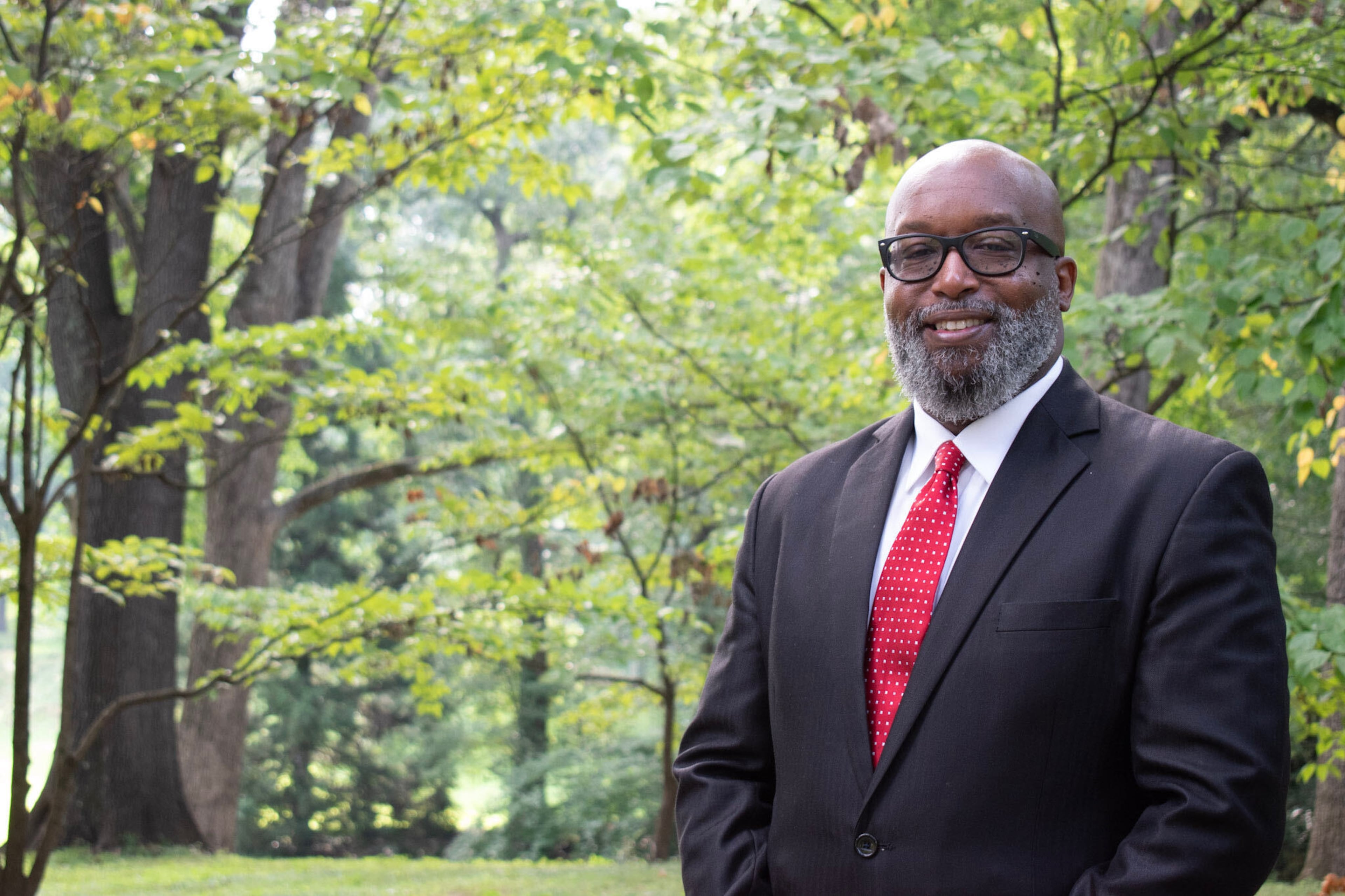
“I think that more Black men, or Blacks in general, are taking the time to listen to what candidates are saying and understanding the platform. Black men who sat out in ’24, they’re now listening to a different opinion,” he said.
On the campaign trail, Helvy said of cost of living, economic opportunity in addition to healthcare costs and access are key issues driving Black voters to explore all their options.
Helvy’s district includes Atlanta, Sandy Springs, city of South Fulton, Fairburn, East Point, Union City, Palmetto and Chattahoochee Hills
As a candidate, his platform focuses on public safety, community stability, tax relief, economic growth and expanding educational opportunities.
The father of six, teacher and public safety advocate is also noticing generational shifts in his party. “There’s a huge, I’ll say, onslaught of many young adults that are coming into the party, particularly Black,” he said.
The next generations
Growing up in the Bronx and Staten Island, a product of immigrant parents from Trinidad and Tobago, Steele said she typically just voted for who her family chose.
“I think a lot of us were in the position where we want to support this man who everyone’s telling us is the first Black president. And then he starts doing things toward the latter end of his term when he’s leaving that just doesn’t make any sense,” she said.
Steele noted a decrease in military spending, and cost of Obamacare as concerns that shifted her vote to the Republican ticket.
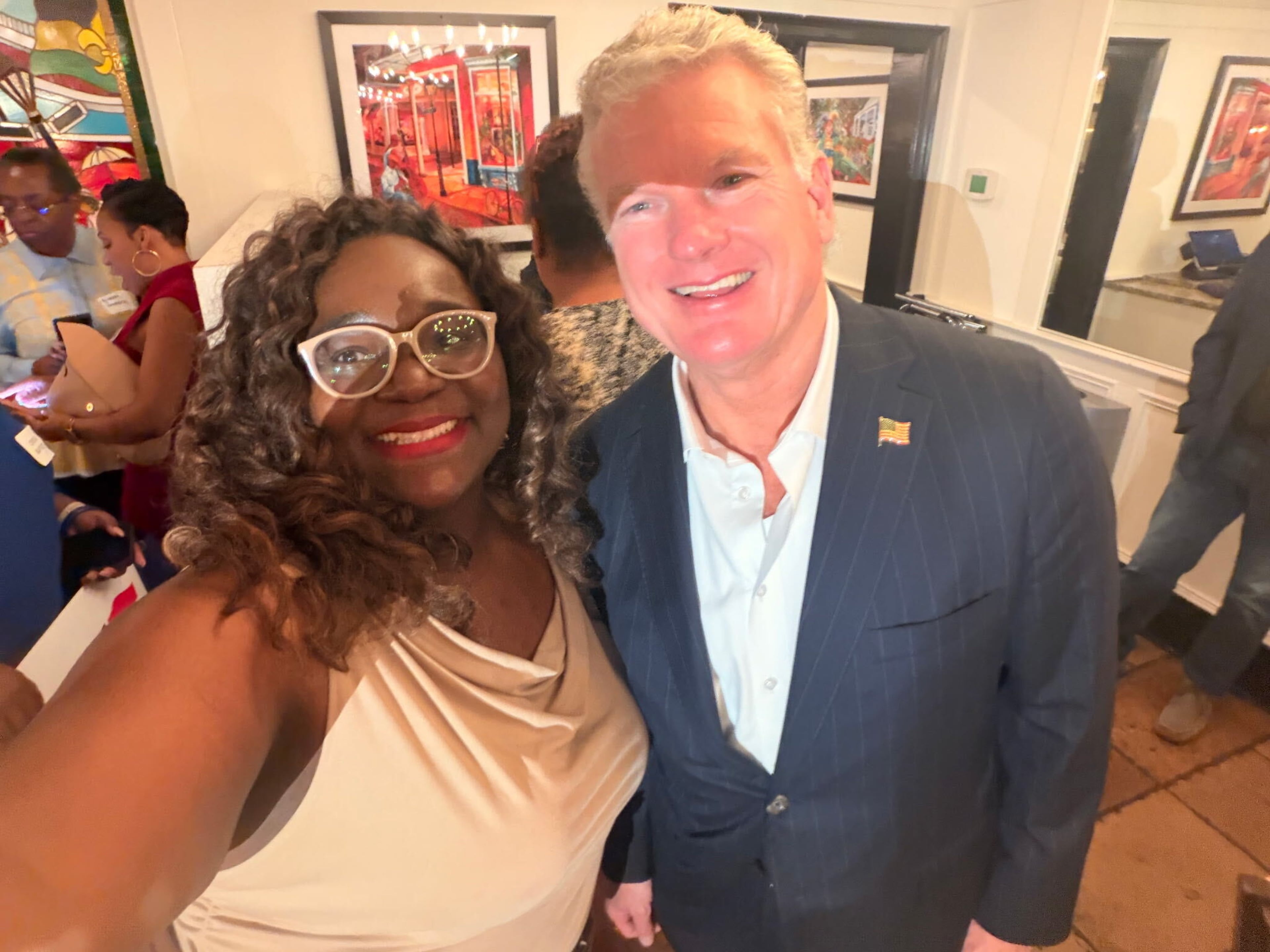
She moved to Georgia after accepting a transfer from her job with Delta. She no longer works with the airline and did not want to share her employment specifics for this story.
She’s anti-abortion, having led an Atlanta campaign for “40 Days of Life,” a national pro-life initiative.
Historically, the Republican Party has aligned with her views on reproductive rights.
As for what she wants from Republicans, Steele said she hopes the president and Congress will increase military spending.
She’s called Douglasville home for nearly five years, and says border and national security are issues she feels Republican candidates are addressing better than their Democratic counterparts.
Like Steele, Lithonia native Nate Williams, 26, can pinpoint when he embraced the GOP as a voter. Williams works in finance and will serve as the next vice president of Atlanta Young Republicans.
As a student at Mississippi State University, he was on the speech and debate team. He enjoyed sparring with other students over hot-button issues but didn’t consider himself political.
That changed in 2022.
Growing up, he says his mom was “apolitical,” but dad was and still is a staunch Democrat. One thing the family all agree on is the Second Amendment. For Williams’ 21st birthday, his parents bought him a handgun.
After Gov. Brian Kemp signed Georgia’s “conceal carry” law in 2022, Williams decided to support Kemp and began identifying as a Republican.
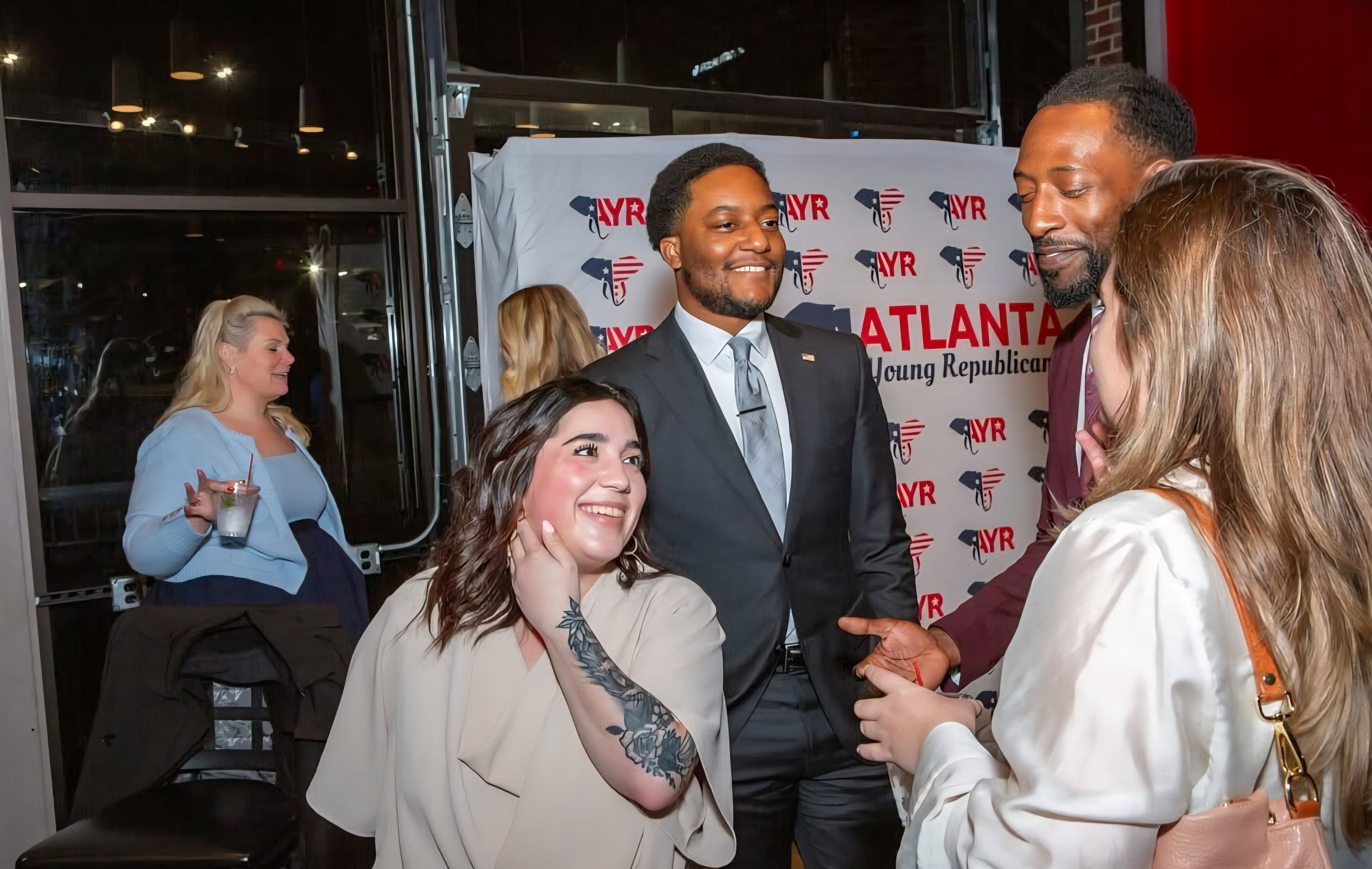
He eventually bought a home and lives in Buckhead. Williams started caring more about where his taxes were going.
Williams is a history buff, and in conversation, his encyclopedic stream of consciousness jumps from quoting Theodore Roosevelt to Frederick Douglass’ 1865 speech, “What the Black Man Wants.” He’s included in the 16% of Black men who voted for Trump in 2024. His mom voted for Kamala Harris and plans on voting for Democratic gubernatorial candidate Keisha Lance Bottoms.
He’s motivated by candidates addressing the cost of living, housing and immigration. He voted for Jackson and Collins, but it’s Jackson’s race that gets his full attention because of its local implications.
Williams wants more Republican leaders to prioritize Georgia’s economy and said he believes Gov. Brian Kemp did during the COVID-19 pandemic. As a homeowner, he supports Jackson’s proposed plan to freeze property taxes. He wants to see more proposed legislation like it.
For him, it’s less about party allegiance and more about feeling a greater sense of civil autonomy.
“I think it is important for Black Americans to have freedom and independence in absence of the government regardless of what party,” he said. “The reality is the only reason why I align more with the Republicans is because they’re the closest thing I’ll ever get to such freedom.”
Asked what he expects from Republicans, Williams offered a different perspective.
“It’s not like I’m voting for them because I’m expecting something in return. It’s actually the quite opposite,” he said.
“I want them to leave me alone. I want to empower myself.”
But, ‘why?’
So, how do Williams, Steele, Helvy and Moore see themselves within a Black electorate that’s historically leaned Democratic? Online furor follows celebrities such as Nicki Minaj syncing up with Trump and other Republican leaders, but what about locals?
“I get a hard time about it all the time, and I find it weird, honestly,” said Williams, who notes his parents vote Democrat, but they share several ideals that align with Republican ideology.
For Helvy, the query is always the same. “What I run into is, people want to know ‘why?’”

He was born in Pittsburgh and raised in the Midwest. Now running for public office, Helvy embraces opportunities to share his views.
“As long as I can explain why I believe in my position, usually there’s not no kickback from that,” he said.
If there is kickback, hate or smoke, neither Moore nor her mentee, Steele, is backing down.
Moore said her decades of work with the party speak for themselves.
She’s never told anyone, even her two sons, to vote Republican. She simply just shares why she does.
When challenged, Steele notes first, “I’m grown,” then said she responds, “one fact at a time.”
“You’re not going to change my mind by yelling at me. You’re not going to change my mind by saying the most nastiest thing you can about Trump. You’re not going to change my mind by belittling me,” she said.
2026 and beyond
Despite signs of growing Republican interest, Democrats retain an overwhelming advantage with the broader Black electorate.
According to a 2024 Pew Research Center study, 83% of Black registered voters nationwide identified with or leaned toward the Democratic Party, compared with 12% who identified with or leaned toward Republicans.
As noted, all four voters have cast ballots for 2026 already. All four voted Republican down the ballot.
They like Jackson’s business track record and outsider mentality. Collins has shown up at and engaged with Black voters, despite family drama.
For her part, Moore is encouraged by even slight shifts from Black voters back toward conservatism.

She’s impressed by younger folks like Steele and Williams.
“They don’t want to be stigmatized or labeled, and they’re more business-oriented. When you talk to the young Black conservatives, you’ll see they’re very policy driven” she said.
To that end, Helvy sees more Black conservative leaders like himself taking next steps toward running.
“I think there’s a lot more local candidates or individuals who are just community leaders who are Republicans who are starting to become way more engaged in the process,” he said.
“It’s going to shape how different communities act and change how we see our political identity in Georgia.”