
10 themes ‘A Different World’ wasn’t afraid to tackle
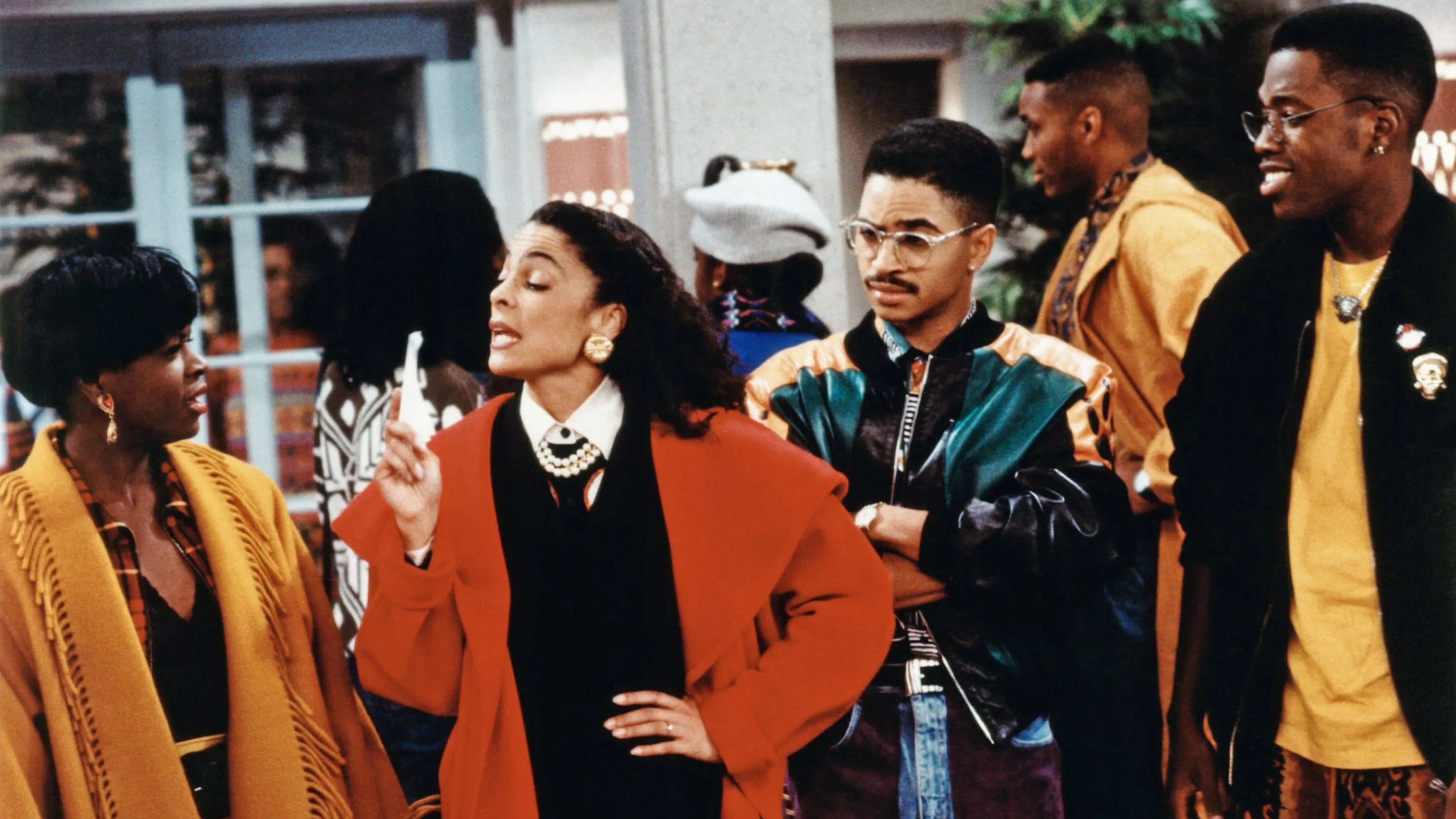
For six seasons, NBC’s “A Different World” brought humor, Black culture, social consciousness and Black colleges to primetime television.
Led creatively by producer Debbie Allen, “A Different World” used the fictional Hillman College to explore race, gender, romance, politics, history, identity and health while capturing the rhythms and traditions of Black college life.
Ahead of Netflix’s reboot of “A Different World,” which premieres Thursday, here are 10 themes the original series explored through episodes that mixed serious social issues with the show’s signature humor.

HBCUs vs. PWIs
In Season 3’s “Here’s to Old Friends,” Dwayne Wayne’s (Kadeem Hardison) childhood friend visits Hillman College and tries to convince him to consider transferring from the HBCU to a predominantly white institution.
The episode takes on a debate that remains familiar at HBCUs: whether attending a Black institution limits students’ opportunities or provides something predominantly white institutions cannot.
Dwayne’s friend argues that Hillman won’t give him the same access to influential people or prepare him for the “real world.” Whitley counters that she chose Hillman over Georgetown because of the sense of belonging she found there and because racial discrimination had prevented her grandfather from attending an Ivy League school.
HIV/AIDS
Season 4’s “If I Should Die Before I Wake” confronts HIV/AIDS, sexual health and the stigma surrounding the disease.
The episode uses Hillman’s reaction to a student’s diagnosis to confront fear, misinformation and the stigma surrounding HIV.
Whitley considers losing her virginity to Dwayne until Josie, a student in her public speaking class (Tisha Campbell), reveals during a presentation that she contracted AIDS from her high school boyfriend.
The news creates fear and stigma across the student body until Kimberly Reese (Charnele Brown), a pre-med student, and The Pit manager Vernon Gaines (Lou Myers) help dispel misconceptions about how the disease is transmitted.
Whoopi Goldberg also guest stars as the professor.
Racism
What begins as a bet between fans of rival football teams Hillman College and Virginia A&M escalates into an examination of racial prejudice and stereotypes.
By putting Black and white students in conflict and then in the same holding cell, the episode forces its characters to confront how racial stereotypes shape the way they see one another.
In Season 5’s “The Cat’s in the Cradle,” Ron Johnson (Darryl M. Bell) wins a bet that turns into a verbal and physical fight after a racial slur is spray-painted on his car.
Ron and Dwayne end up in a holding cell with the three white male students, where the confrontation forces them to reckon with their racial biases.
A young Dean Cain makes a guest appearance.
Fraternities and sororities
Friendship and loyalty are tested in two episodes that examine Greek life from both male and female perspectives while questioning aspects of the pledging process.
Season 2’s “It’s Greek to Me” focuses on Ron and Dwayne going through the pledging process to become members of the fictional Kappa Lambda Nu.
Ron, whose father is a member of the fraternity, endures the pledging and hazing while Dwayne quits and questions whether joining the brotherhood has value. Despite not joining the fraternity, Dwayne still participates in a youth program with Ron as the final requirement for membership.
Two years later, in Season 4’s “Sister to Sister, Sister,” Kim pledges the sorority Alpha Delta Rho with Whitley as her stern dean of pledges.
Meanwhile, Ron has become Kappa Lambda Nu’s strict dean and teaches Terrence Taylor (Cory Tyler) and his line brothers humility and brotherhood.
Domestic violence
Season 5’s “Love Taps” explores intimate partner violence through student Gina Deveaux (Ajai Sanders), whose boyfriend, popular campus rapper Dion (Edafe Okurume), physically and verbally abuses her.
The episode shows how abuse can be hidden behind popularity and charm while also exploring how friends and a campus community respond when they recognize the warning signs.
When Lena questions Gina about Dion’s behavior, the abuse escalates. Gina initially attributes his behavior to stress before performances.
Whitley organizes a domestic violence discussion and campus buddy system for female students. After Dion gives Gina a black eye, she suggests that he seek counseling.
Dion returns in a Season 6 episode and attempts to reunite with Gina.
Date rape
Season 2’s “No Means No” centers consent and accountability, showing how sexual assault can begin with attitudes that dismiss a woman’s right to say no.
Free-spirited Freddie Brooks (Cree Summer) agrees to attend a dance with star athlete Garth (Taimak), who brags to Dwayne about forcing himself on women.
Dwayne later saves Freddie from Garth after she rejects his advances. The episode ends with Freddie and another survivor coming forward about Garth’s conduct.
Marriage
In Season 5’s two-part season finale, “Save the Best for Last,” Dwayne and Whitley (finally) tie the knot.
After years of breakups, reconciliations and romantic tension, the wedding became the payoff to the relationship at the heart of much of the series.
Few moments in the series are more memorable than Dwayne crashing Whitley’s wedding to politician Byron Douglas III (Joe Morton) and pleading with her to marry him instead.
Whitley leaves Byron at the altar and says yes to Dwayne.
The rest is history.
Los Angeles uprising
The sixth and final season’s two-part opener “Honeymoon in L.A.” revolves around Dwayne and Whitley sharing stories about their honeymoon in Los Angeles.
By placing Dwayne and Whitley amid the unrest, the series brought a major contemporary event directly into the lives of its characters rather than treating it as something happening beyond Hillman.
The couple travels to Los Angeles after a jury acquits four Los Angeles police officers charged in the videotaped beating of Rodney King.
The newlyweds become separated in the city and find themselves amid the looting and rioting that follow the verdict.
Activist Sister Souljah, comedians Gilbert Gottfried, Roseanne Barr and Tom Arnold guest star.
Colorism
“Mammy Dearest” in Season 5 deals with historical depictions of Black women and the perpetuation of racial stereotypes.
Through Kim’s experience, the episode examines how racist imagery and colorism can shape Black women’s perceptions of beauty, identity and self-worth.
Kim relives childhood trauma about her darker skin and body image after Whitley includes blackface and mammy images in an on-campus art exhibit.
Whitley also feels guilty after learning from Lena James (Jada Pinkett Smith) that the Gilbert family owned enslaved people.
The episode concludes with Kim changing from subservient maid attire to African fabric to deliver a powerful reading of late poet Nikki Giovanni’s poem “Ego Tripping” as a celebration of Black womanhood.
Apartheid
Season 3’s “A World Alike” explores the complexities of activism as Hillman students organize a boycott against corporations with ties to South Africa’s apartheid regime.
Freddie and transfer student Julian Day (Dominic Hoffman) support the boycott, but the issue becomes personal when Kim receives a need-based scholarship funded by one of the companies being protested.
As South African students offer different perspectives on apartheid and the role of American activism, Kim must decide whether to accept financial assistance she needs from a company whose business practices she opposes.
The episode complicates the idea of activism by asking what happens when taking a principled stand carries a personal financial cost.